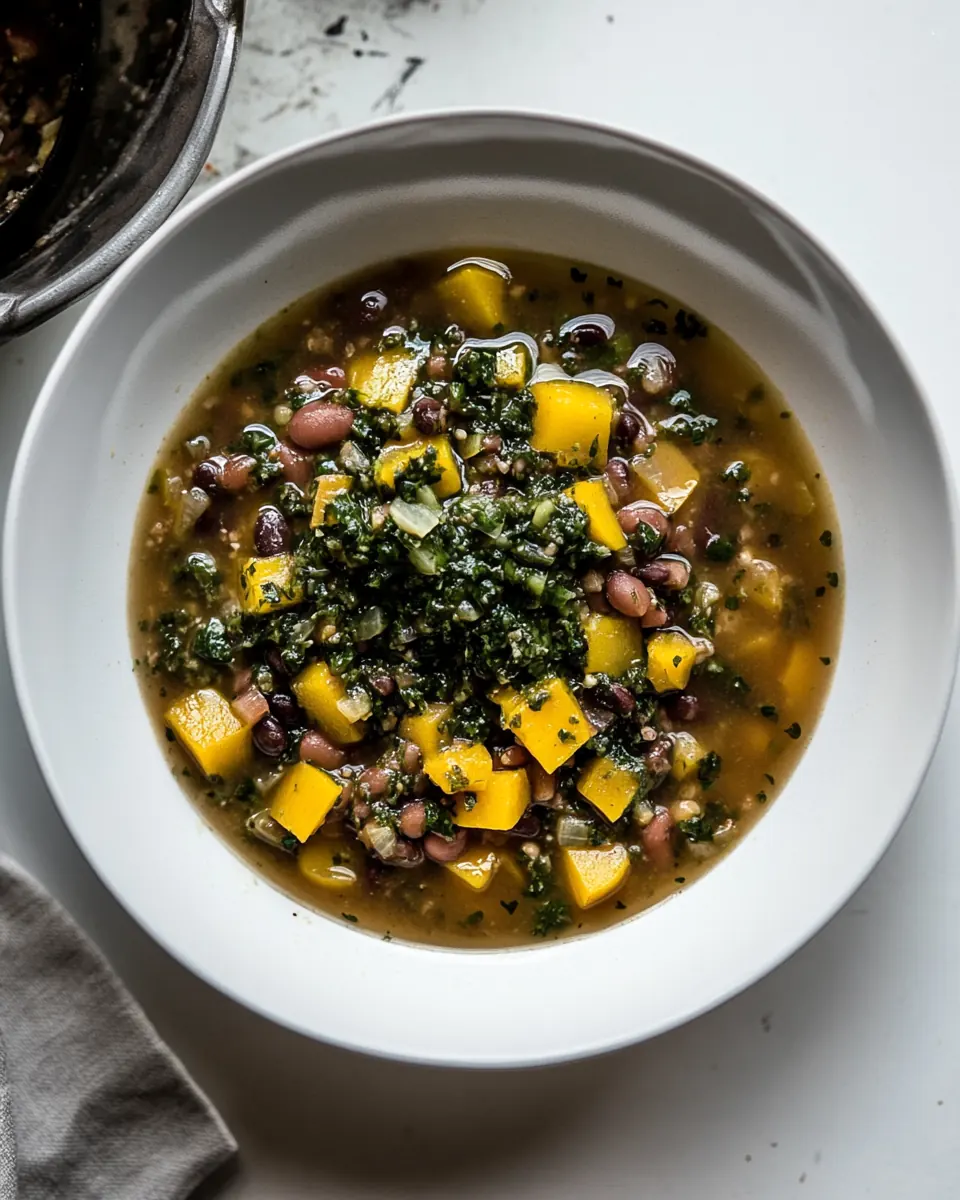
Make the chimichurri according to the directions, set aside.: The chimichurri brings a fresh, bright aroma and a slight acidic snap, which will be most vivid if you make it ahead and let it rest. When the herbs sit with oil and acid, the flavors meld and the sauce loses any raw edge, becoming more integrated. Be cautious with the salt in the sauce if your vegetable broth is already salted, because over seasoning can flatten the stew. A common mistake is serving chimichurri straight from the blender without tasting for acidity and salt balance; adjust before spooning it over the finished bowls.
Mince the onion and garlic. Heat a stock pot over medium heat. Add the olive oil followed by the minced onion. Cook until the onion is tender; 6 minutes or so. Add in the garlic and cook for a minute more.: As the onion softens it will release a sweet perfume and the pan will start to shimmer, signaling the right temperature. The sound changes subtly to a gentle sizzle, and the aroma should be mellow, not sharp. Adding the garlic later prevents burning and bitterness, preserving its mellow warmth. Stir frequently so nothing sticks and turn the heat down if the edges brown too quickly. A common pitfall is rushing this stage on high heat, which can create burnt notes rather than the sweet base you want.
Cut the delicata squash in half, lengthwise. Scoop out the seeds and place the squash, cut-side down. Slice the squash into half-circles, roughly 1/4” thick. Add to the pot with the onion and garlic, stirring to coat. Measure in the pinto beans and 2 cups of the vegetable broth. Bring to a boil, reduce to a simmer, and cook until the squash is tender; 10 to 15 minutes. Taste and adjust salt as needed. If the stew is too thick, add 1/2 cup vegetable broth as needed.: When you add the delicata squash , notice the contrast between the translucent, softened onion and the pale, firm squash slices. Stirring coats the squash in the flavored oil so it browns gently and starts to release its natural sugars, which add sweetness to the stew. The slices should be uniform so they cook evenly; uneven pieces will result in a mix of underdone and overcooked textures. Avoid cutting pieces too thick, or they will take much longer to become tender in the simmering broth.
Divide the stew into two bowls and top with 2 to 3 tablespoons of the chimichurri and extra crushed red pepper (optional).: Adding the pinto beans and vegetable broth creates the stew's body while combining starch from the beans with the liquid for a silky mouthfeel. At this point the pot will emit a savory, homey scent as the flavors mingle. If your beans are canned, rinsing beforehand removes excess packing liquid that can taste metallic or overly salty. A common error is adding too much liquid initially; start with 2 cups and gauge the thickness as it simmers, adding more broth only if needed.
Bring to a boil, reduce to a simmer, and cook until the squash is tender; 10 to 15 minutes: As the stew comes to a boil you will see lively bubbling and a steam rush full of roasted vegetable notes. Reducing to a simmer calms the motion and allows the flavors to knit while the delicata squash softens. The visual cue is when the squash becomes translucent and yields easily to a spoon, and the broth will thicken slightly from bean starch. Avoid a rolling boil for the entire time since it can break down the squash and make the beans mealy. A frequent mistake is under simmering, leaving the squash too firm and the flavors underdeveloped.
Taste and adjust salt as needed. If the stew is too thick, add 1/2 cup vegetable broth as needed: Tasting now lets you correct seasoning and texture so the final bowl is balanced. Salt amplifies the natural sweetness of the delicata squash and the savory depth of the pinto beans . If the stew seems gluey or overly dense, the gentle addition of small amounts of vegetable broth will loosen it while preserving flavor. Be careful not to dilute the stew by adding too much liquid at once. A common oversight is failing to re taste after adjustments, which can lead to over seasoning or a watery finish.
Divide the stew into two bowls and top with 2 to 3 tablespoons of the chimichurri and extra crushed red pepper (optional): At plating, the contrast of steaming stew and cool, herbaceous chimichurri is immediately apparent, with the sauce releasing a fresh green aroma over the warm bowl. The bright, slightly acidic sauce elevates the texture and prevents the stew from tasting flat. A small sprinkle of crushed red pepper adds a lively heat that lingers behind the herb notes. Watch portion size so the sauce does not overwhelm the stew; starting with a moderate spoonful and adding more to taste avoids overpowering the base flavors. A common mistake is stirring all the chimichurri into the pot, which can mute its herb freshness; I prefer it spooned on top so it stays distinct.