Quinoa Tabbouleh
Quinoa Tabbouleh is the kind of recipe I reach for when I want something bright, herbaceous, and surprisingly filling without feeling heavy. The first time I made this salad I was juggling a busy week and a fridge full of odds and ends, and the way the tang of lemon met the grassy bite of parsley felt like a reset button for my weeknight routine. I loved how the quinoa gave the salad a nutty background note, soaking up the olive oil and lemon so each forkful had texture and flavor.
Since then, I keep a jar of quinoa on hand, because it takes very little to turn a handful of chopped herbs and vegetables into a meal that travels well, holds up for lunches, and makes guests think you spent way more time on it than you did. I remember serving this at a summer potluck and watching people come back for seconds, praising the bright lemon dressing and the fresh hit from the parsley and mint. It felt good to offer something that was both simple and satisfying.
I also love that Quinoa Tabbouleh is forgiving. If your cucumber is extra watery, you can drain it a bit, and if your herbs are huge and unruly, a rough chop still lets them shine. Over the years I developed a few small habits, like rinsing the quinoa well and letting it cool before tossing, that keep the salad light and bright. Those little choices make a big difference in texture and balance, and they’re the kind of details I share with friends when they ask how to make the salad taste like it does at a restaurant.
Recipe Snapshot
30 mins
15 mins
15 mins
Easy
220 kcal
Mediterranean
Vegan, Gluten-Free
Salads
Saucepan, Fine mesh strainer, Large bowl, Fork
Why This Quinoa Tabbouleh Works
Bright Freshness That Lasts
I adore how Quinoa Tabbouleh delivers a burst of fresh herb flavor in every bite. The parsley and mint are star players, and their freshness is preserved by the lemon juice and olive oil. I find this combination keeps well in the fridge for several days, so you get that same lively flavor even as the salad mellows. I often make a double batch because the bright profile holds up and makes weeknight meals feel special.
Comforting, Nutty Base
The quinoa gives this dish substance without weighing it down. I like the gentle chew and the slightly nutty aroma that develops as it cooks. It soaks up dressing beautifully, which means each forkful is cohesive and satisfying. For me, that texture makes Quinoa Tabbouleh more filling than a lettuce based salad, yet lighter than grain heavy sides.
Flexible and Crowd Friendly
This recipe is one of my go to dishes for gatherings because it travels well and appeals to many palates. You can prep most of it ahead, and it’s easy to scale. I remember bringing it to a family lunch where everyone had a different dietary preference, and it was one of the rare dishes that suited almost everyone. That versatility makes it a recipe I keep returning to.
Simple Techniques, Big Payoff
The steps are straightforward, but a couple of technique notes really change the result. Rinsing the quinoa removes bitterness, and letting it rest covered after cooking yields fluffy grains instead of a gummy clump. I always recommend tasting and adjusting the salt and lemon at the end, because small tweaks lift the whole dish. Those small technical details are why the final salad tastes intentional and balanced.
Fresh Without Fuss
I appreciate how little fuss is required for such a bright salad. The dressing is essentially a few ingredients whisked together, and the vegetables are minimal but impactful. That simplicity means you can focus on quality, like using a good extra virgin olive oil or a ripe tomato, and those choices really sing in the finished dish.
Essential Ingredients for Quinoa Tabbouleh
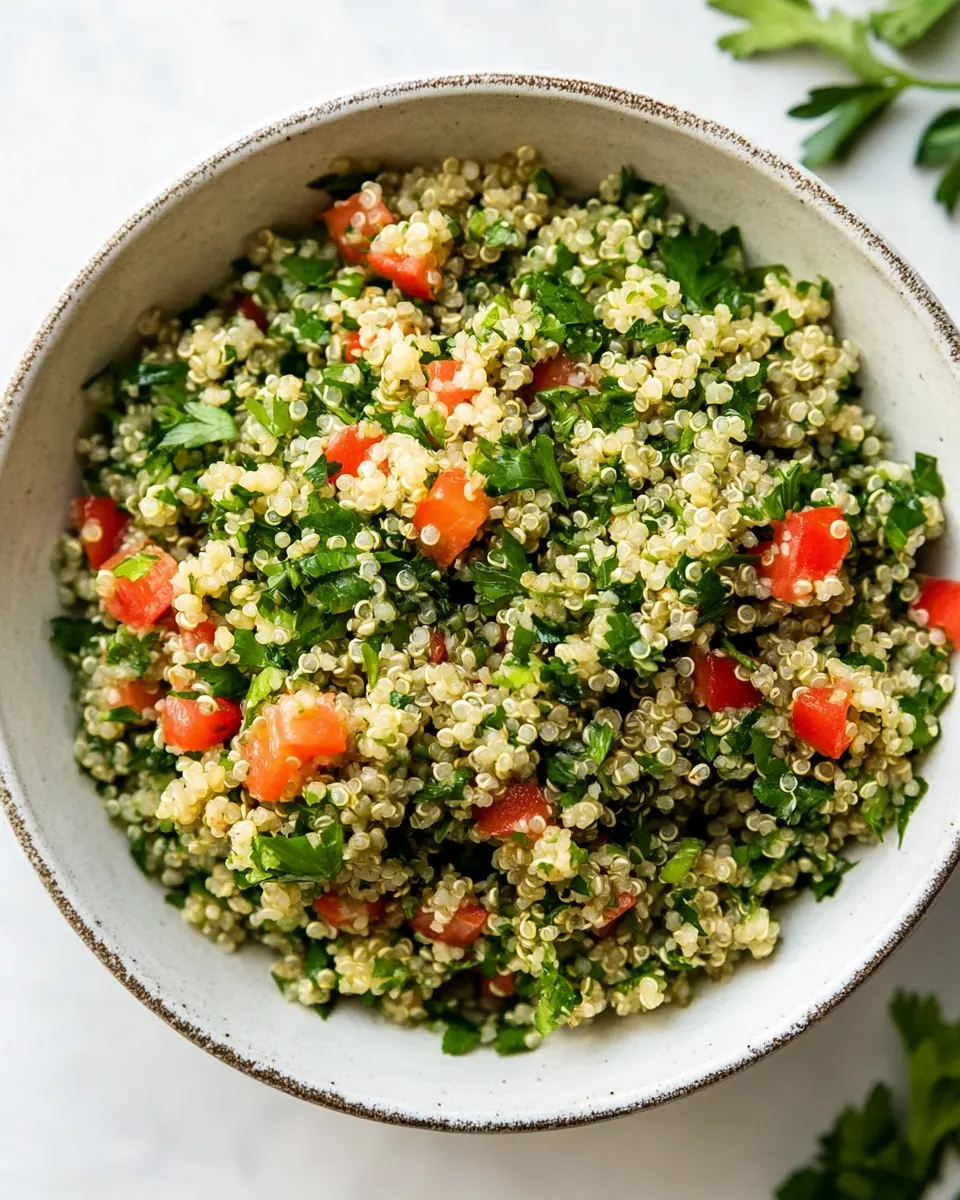
This ingredient list is all about harmony. Each item plays a clear role: the quinoa supplies a nutty, chewy base that soaks up the dressing, the olive oil and lemon juice form a simple bright vinaigrette, and the fresh herbs and vegetables bring vibrant texture and lift. These are straightforward components that together create balance, where acidity, fat, herbaceousness, and body each have their moment.
- 1 cup uncooked quinoa: Provide fluffy, protein-rich cooked grains that serve as the salad base; rinse well before cooking to remove bitterness and cook until tender but slightly chewy. Absorb dressing flavors and add a hearty texture that contrasts with the fresh herbs and vegetables in the tabbouleh. Cool completely before mixing to prevent wilting delicate ingredients.
- 1/4 cup extra virgin olive oil: Dress the salad with a fruity, peppery fat that helps carry flavors and coat the quinoa evenly; choose a high-quality extra virgin variety for best aroma. Balance the lemon juice and salt while adding richness and mouthfeel to each bite. Use sparingly at first and adjust to taste so it doesn't overpower the herbs.
- 1 1/2 teaspoons fine sea salt (divided; I use Real Salt brand): Season the quinoa and dressing to enhance all flavors, with part added to cooking water and part reserved for the dressing to ensure even seasoning. Use fine sea salt for a clean, mineral finish and divide the amount so the grains and final salad are both properly salted. Taste and adjust after mixing because herbs and vegetables can mute saltiness.
- 3 tablespoons lemon juice: Brighten and acidify the salad with fresh lemon juice that lifts the herbs and balances the oil; freshly squeezed is best for a clean, zesty flavor. Help tenderize and meld the mix of quinoa, herbs, and vegetables while adding a vibrant citrus note. Start with the listed amount and increase slightly if more brightness is desired.
- 1 garlic clove: Infuse the dressing with a pungent, savory note when minced or pressed into the vinaigrette; one clove provides gentle garlic flavor without overwhelming. Enhance complexity by rubbing or crushing into a paste with salt before whisking into the lemon and oil. Adjust quantity based on personal preference for raw garlic intensity.
- 1 medium cucumber, diced: Add cool, crisp texture and mild vegetal flavor when diced into small, uniform pieces that blend with the herbs without dominating. Contribute moisture and subtle crunch that lighten the salad, making each bite refreshing. Peel if skin is tough or waxy for a more pleasant mouthfeel.
- 1 large tomato, diced (see notes): Provide juicy, slightly acidic sweetness and color when diced, complementing the herbs and balancing the lemon and oil; remove seeds if excess moisture is a concern. Contribute softness and fresh tomato aroma that contrasts with the grainy quinoa and bright herbs. Choose a ripe, firm tomato for best texture.
- 3 green onions, chopped: Offer a mild oniony bite and delicate crunch when thinly sliced or chopped; green onions add both white sharpness and green freshness. Distribute flavor throughout the salad without overpowering the parsley and mint, and use both white and green parts for color variation. Slice thinly to avoid large, pungent chunks.
- 1 cup flat-leaf parsley, chopped: Deliver the classic herbaceous backbone of tabbouleh with vibrant, slightly peppery leaves that should be finely chopped for even distribution. Provide bulk and fresh green flavor that defines the salad, marrying with lemon and oil to create the signature taste. Pack loosely when measuring to avoid over- or underestimating quantity.
- 1/4 cup fresh mint, minced: Contribute cool, bright mentholated notes and aromatic lift when minced very finely to disperse evenly through the salad. Complement the parsley and add a refreshing contrast that makes each bite more complex and fragrant. Use fresh leaves and adjust amount to personal preference for mint intensity.
Making Quinoa Tabbouleh
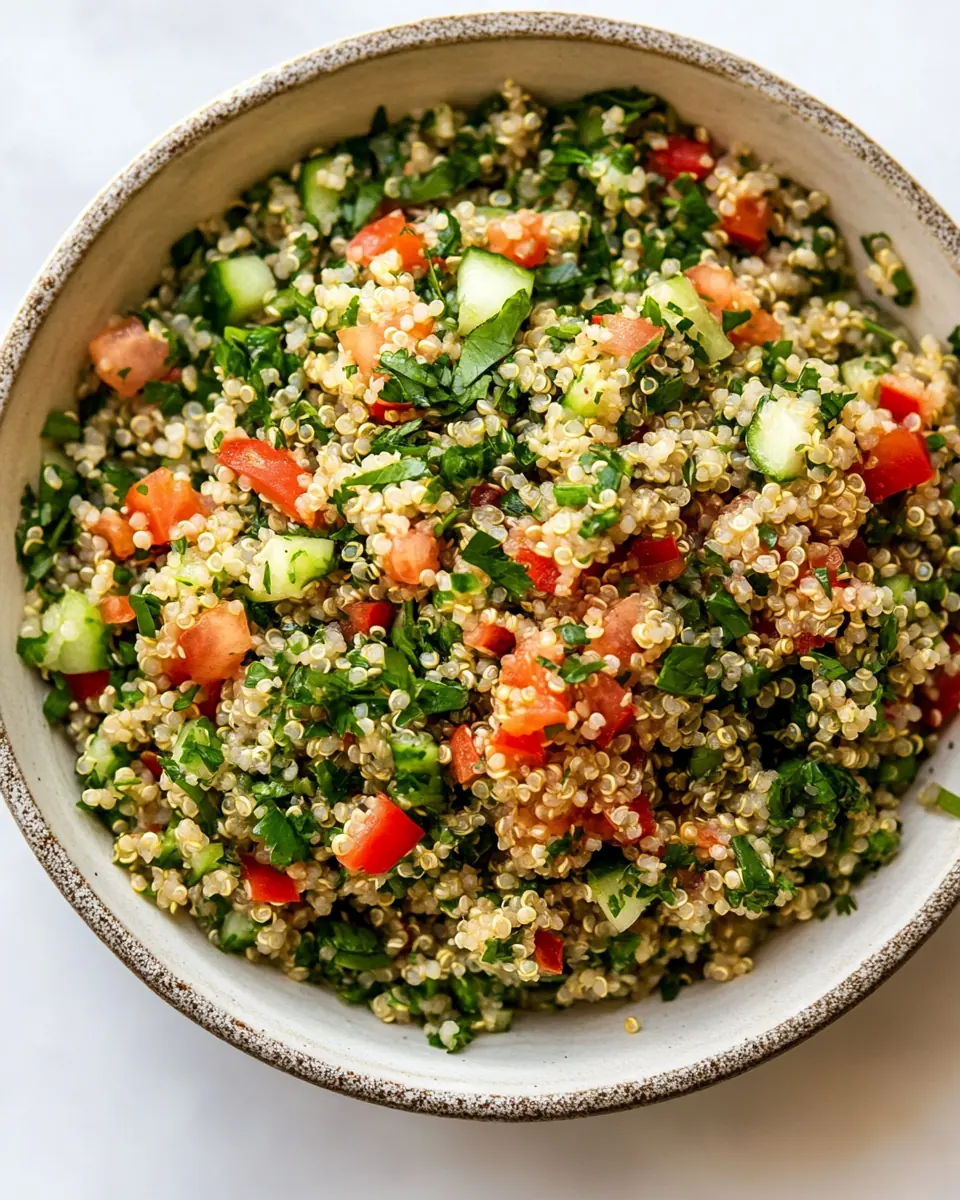
This recipe moves from cooking the quinoa to tossing vegetables and dressing, and it rewards gentle handling. Follow the steps in order and take your time with rinsing and resting the grain so the final salad has a clean texture and vibrant flavor.
- To cook the quinoa, rinse it under running water in a fine mesh strainer for 30 seconds. This will help remove any bitter flavor. Transfer the drained quinoa to a saucepan and cover it with 1 1/2 cups of fresh water. Add in a 1/2 teaspoon of salt and bring the liquid to a boil.: The immediate sensation is cool water washing over the tiny grains, and you may hear the faint clink as they tumble in the strainer. Rinsing removes the natural coating that can taste bitter, which is why the salad smells fresher after this step. When you transfer the drained quinoa to the saucepan and cover it with water, the pot will give off a light earthy aroma as it heats. A common error is skipping the rinse, which can leave a residual bitterness, so take this time to clean the grains thoroughly. Also, ensure your strainer is fine enough so the tiny grains do not slip through.
- Once the liquid is boiling, lower the heat to a gentle simmer and cover the pot. Set a timer for 10 minutes. When the timer goes off, remove the pan from the heat but keep the lid on for 5 more minutes. This will let the quinoa finish cooking without burning to the bottom of the pan. Then remove the lid and fluff the quinoa with a fork.: As the water warms, the steam will carry a toasty scent of the quinoa . Bringing the liquid to a boil concentrates that aroma and signals the transition toward tenderness. The visual cue to watch for is the water starting to move actively with small bubbles, not a furious boil. If the heat is too high, the grains can jostle and split instead of cooking evenly, so maintain a gentle, steady boil to prepare for the simmer stage. Use a pot with a snug lid to hold in steam.
- While the quinoa cooks, add the olive oil, lemon juice, garlic, and 1/2 teaspoon of salt to a large bowl. You can also add in the chopped cucumber, tomato, green onions, parsley, and mint. Once the quinoa has cooled slightly, add it to the bowl.: The smell sharpens slightly as the salt dissolves, and it seasons the grain from the inside out. Salt in the cooking liquid prevents bland quinoa, and I find that salting early gives a more balanced backbone than only salting at the end. Avoid over salting by measuring carefully; too much will make the whole salad taste uneven and require dilution with additional quinoa.
- Stir well, so everything is evenly coated in the dressing. Then season with another 1/2 teaspoon of salt, if needed. (If the salad tastes bland, you know it needs more salt! I always use 1 1/2 teaspoons total.) You can serve this right away, or let it chill in the fridge until you're ready to serve.: The auditory cue here is the transition from vigorous bubbling to a soft, rhythmic whisper as the pot simmers. Covering traps steam which finishes cooking the quinoa gently, maintaining separate grains rather than collapsing them. Set a timer for 10 minutes, because precise simmer time keeps the texture light. A common mistake is lifting the lid repeatedly, which releases steam and alters cooking time, so resist the urge to peek often.
- Leftover quinoa tabbouleh can be stored in an airtight container in the fridge for up to 5 days. Brighten up the flavor with an extra squeeze of lemon juice or a pinch of salt, if needed. (Cold food will have a more muted flavor when compared to serving it at room temperature.): While timers are mechanical, the sensory clues during these minutes are subtle; you may notice a faint nutty scent as moisture is absorbed. After the timer goes off, remove the pan from the heat but keep the lid on for 5 more minutes to let the quinoa finish steaming evenly without scorching the bottom. This resting period produces fluffy, separate grains; without it, the texture can be gummy. If you skip the rest, the heat will continue to cook the quinoa unevenly and risk a sodden bottom layer.
- When the timer goes off, remove the pan from the heat but keep the lid on for 5 more minutes: In this quiet resting moment the trapped steam gently completes the cooking and the grains relax. When you later remove the lid you should see small translucent rings around each grain, and fluffing with a fork will release tiny clouds of steam. Fluff immediately and let the quinoa cool slightly before adding to the salad so the dressing does not wilt the herbs. A common misstep is adding hot grains to the herbs too quickly, which can make them limp and less vibrant.
- Then remove the lid and fluff the quinoa with a fork: The tactile feel of separating grains with a fork is satisfying, and the visual cue is individual plump grains that no longer look wet or clumped. Fluffing incorporates air, keeping the texture light. If you see clumps, gently tease them apart rather than smashing, and if the quinoa seems sticky, let it sit uncovered for a few minutes to release steam. Over stirring can break the grains and result in a paste like texture, so be gentle.
- While the quinoa cooks, add the olive oil, lemon juice, garlic, and 1/2 teaspoon of salt to a large bowl: The immediate aroma is bright citrus mingled with pungent garlic and the fruity notes of olive oil . Whisking briefly emulsifies the dressing so it coats the quinoa and vegetables evenly, and the salt anchors the flavors. If the dressing separates, whisk a bit more or add the lemon slowly to help it bind. A mistake here is over crushing the garlic, which can create an overpowering raw bite; mince or press it to the desired intensity.
- You can also add in the chopped cucumber, tomato, green onions, parsley, and mint: As you combine the vegetables the bowl becomes a riot of color and fresh aromatics, with herbaceous and vegetal scents rising together. Adding the ingredients now allows them to mingle with the dressing and start to macerate slightly, which deepens the flavor. Chop uniformly so each bite has balance, and avoid making pieces too large which can upset the texture ratio. If the vegetables are very juicy, lightly drain them before adding to prevent watering down the dressing.
- Once the quinoa has cooled slightly, add it to the bowl: The contrast of warm grain and cool vegetables creates an inviting steam and scent profile, and the slightly warm quinoa helps the dressing absorb evenly. Gently toss so the dressing clings to the grains and herbs, allowing the flavors to marry. If the quinoa is too hot it will soften the herbs and make the salad less vibrant, so let it rest until just warm. A common error is adding piping hot grain, which can wilt the herbs and change the fresh character.
- Stir well, so everything is evenly coated in the dressing: You should see glints of oil and lemon across the herbs and grains, and the texture will look glossy and cohesive. Tasting at this point is essential because small seasoning tweaks transform the salad. If it tastes flat, add the remaining 1/2 teaspoon of salt or a little more lemon juice . Over mixing can bruise herbs, so toss gently and with intention to preserve texture.
- Then season with another 1/2 teaspoon of salt, if needed: The finishing salt brings brightness and depth, and a tiny sprinkle can unlock the salad. I always recommend tasting before adding more, because quinoa absorbs flavors differently depending on cooking. A typical mistake is adding too much salt at once, which can be hard to correct without diluting the salad with more ingredients.
- You can serve this right away, or let it chill in the fridge until you're ready to serve: Serving immediately yields a lively contrast of slightly warm grain with cool herbs, while chilling melds flavors and makes the salad more cohesive. If you refrigerate, the dressing will settle into the quinoa and the overall flavor will mellow; a quick squeeze of fresh lemon before serving revives brightness. Avoid leaving it out at room temperature for extended periods, especially on hot days, to preserve freshness.
- Leftover quinoa tabbouleh can be stored in an airtight container in the fridge for up to 5 days: As it rests the flavors will continue to meld and often taste better the next day. If the salad seems muted after chilling, add a splash more lemon juice or a pinch of salt to wake it up. One common oversight is storing loosely covered, which can dry the salad; an airtight container keeps the texture and aroma intact.
Expert Tips about Quinoa Tabbouleh
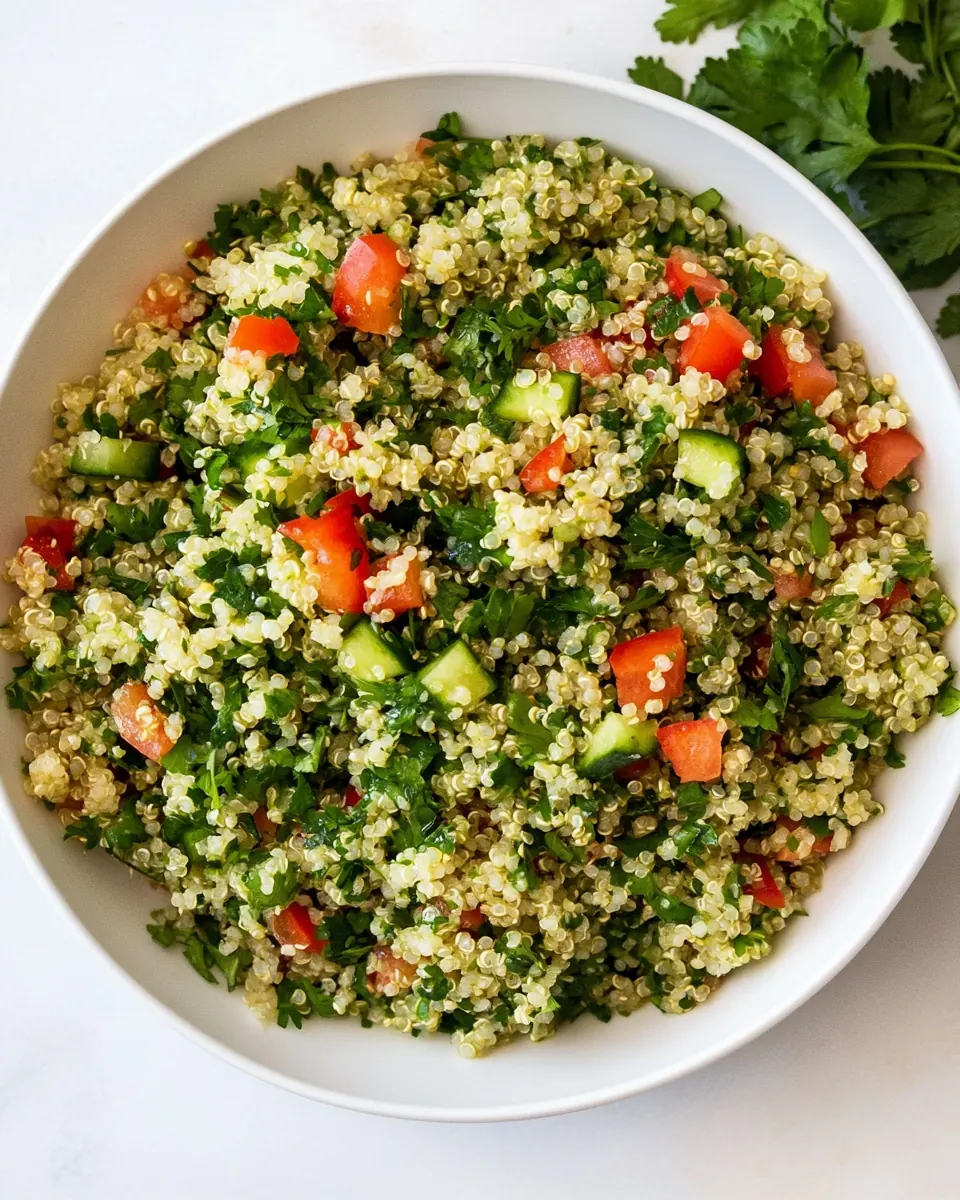
I often share a few guiding tips when I teach friends this recipe, because small choices yield big flavor. Below are practical notes I use every time I make Quinoa Tabbouleh, expanded so you can adapt with confidence.
- Rinse the quinoa well to remove any bitter saponins. Use a fine mesh strainer and run cool water for at least 30 seconds, rubbing the grains gently. This simple step makes the difference between a bright salad and one with an off puttering edge.
- Watch your simmer so the quinoa cooks gently. A too aggressive boil can split grains and produce a mushy texture. Keep the heat low and resist lifting the lid during the timed cook and rest period.
- Cool the grains slightly before tossing with herbs. Warm grains will wilt the parsley and mint, reducing their freshness, so let the quinoa rest until just warm to preserve vibrant color and texture.
- Use fresh lemon juice over bottled for the cleanest acidity. Fresh juice brightens the salad and brings vibrant aromatics that bottled juice lacks, improving the overall balance significantly.
- Chop uniformly so every bite has balance. Keep vegetable pieces similar in size to the quinoa grains so the texture and flavor are consistent across each spoonful.
- Adjust salt incrementally because salt is easier to add than remove. Season in stages, tasting as you go, to avoid oversalting and to allow the flavors to develop harmoniously.
Great Combinations for Quinoa Tabbouleh
This salad works wonderfully in many serving situations because it is both refreshing and substantial. Below are ideas for pairings, occasions, and storage that reflect practical ways I serve Quinoa Tabbouleh throughout the year.
- Light lunch or meal prep: Pack the salad in an airtight container for grab and go lunches. It holds up well and makes a satisfying single dish when paired with a simple protein for those who want more substance.
- Side for gatherings: Offer it alongside hummus and pita for a Mediterranean spread. Its herb forward profile complements creamy dips and warm breads, and it scales easily for a crowd.
- Seasonal outdoor meals: Bring it to picnics or potlucks in spring and summer, when tomatoes and cucumbers are at their best. The bright flavors feel right for warm weather menus and alfresco dining.
- Ramadan and communal meals: Use it as a refreshing side during evening iftars, where its lightness and freshness provide balance to richer mains. It travels well and stays flavorful when chilled.
- Storage tips: Refrigerate in an airtight container for up to 5 days. Before serving leftovers, stir and add a splash of fresh lemon juice to revive brightness and refresh the herbs.
- Occasion pairing: It pairs nicely with grilled vegetables or a simple bowl of chickpeas for a meatless dinner option, and it adapts well to family style service where guests can add accompaniments.
FAQ
Conclusion
Quinoa Tabbouleh stands out because it combines nutty, chewy quinoa with a bright lemon and herb dressing for a salad that is both refreshing and satisfyingly substantial. I encourage you to give it a try, whether for a quick lunch, a picnic, or as part of a larger spread, because its balance of flavors and ease of assembly make it a dependable favorite. It’s one of those dishes that rewards small, thoughtful steps, like rinsing the quinoa and tasting for salt, and once you make it a couple times you’ll have your preferred rhythm and proportions.
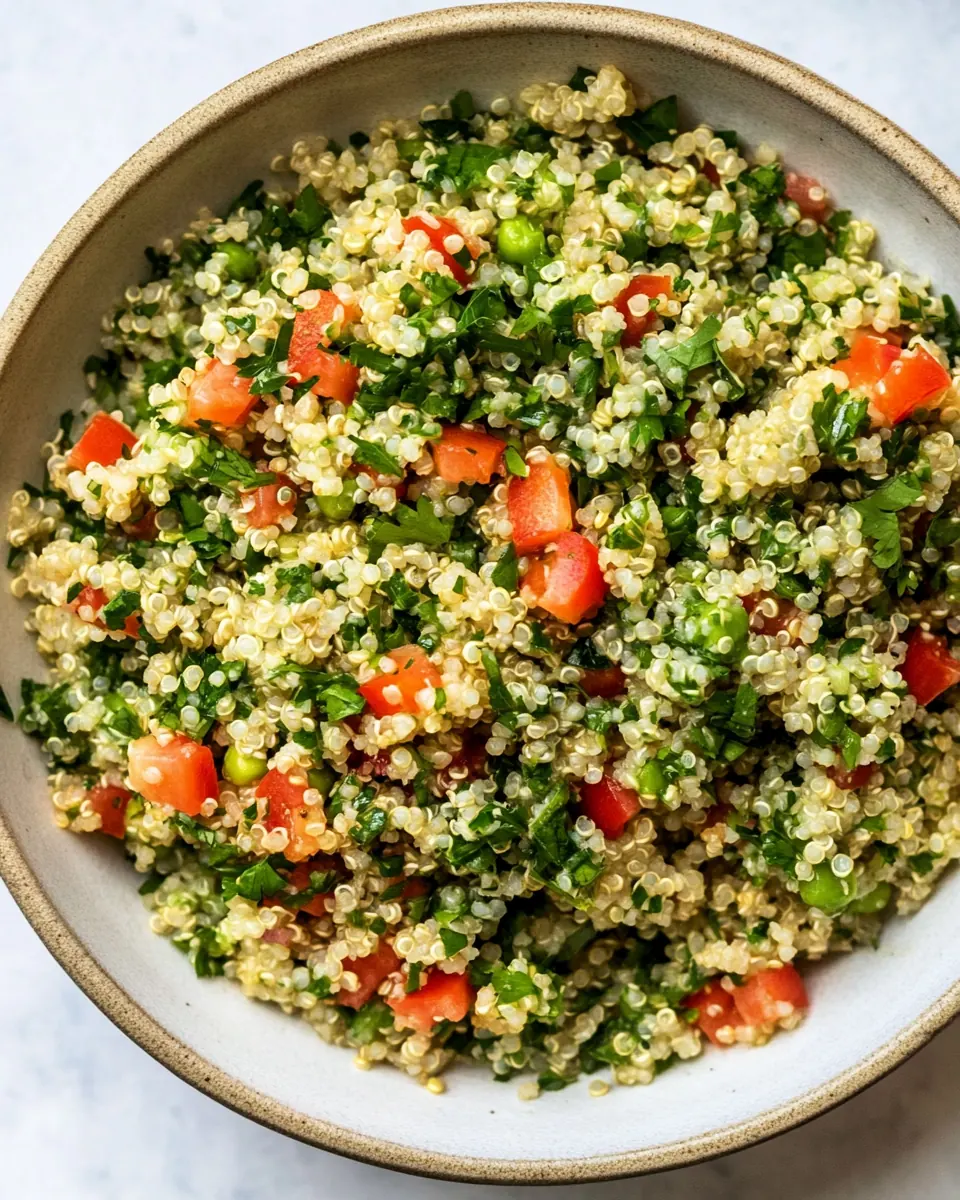
Quinoa Tabbouleh
Ingredients
Equipment
Method
- To cook the quinoa, rinse it under running water in a fine mesh strainer for 30 seconds. This will help remove any bitter flavor. Transfer the drained quinoa to a saucepan and cover it with 1 1/2 cups of fresh water. Add in a 1/2 teaspoon of salt and bring the liquid to a boil.: The immediate sensation is cool water washing over the tiny grains, and you may hear the faint clink as they tumble in the strainer. Rinsing removes the natural coating that can taste bitter, which is why the salad smells fresher after this step. When you transfer the drained quinoa to the saucepan and cover it with water, the pot will give off a light earthy aroma as it heats. A common error is skipping the rinse, which can leave a residual bitterness, so take this time to clean the grains thoroughly. Also, ensure your strainer is fine enough so the tiny grains do not slip through.
- Once the liquid is boiling, lower the heat to a gentle simmer and cover the pot. Set a timer for 10 minutes. When the timer goes off, remove the pan from the heat but keep the lid on for 5 more minutes. This will let the quinoa finish cooking without burning to the bottom of the pan. Then remove the lid and fluff the quinoa with a fork.: As the water warms, the steam will carry a toasty scent of the quinoa . Bringing the liquid to a boil concentrates that aroma and signals the transition toward tenderness. The visual cue to watch for is the water starting to move actively with small bubbles, not a furious boil. If the heat is too high, the grains can jostle and split instead of cooking evenly, so maintain a gentle, steady boil to prepare for the simmer stage. Use a pot with a snug lid to hold in steam.
- While the quinoa cooks, add the olive oil, lemon juice, garlic, and 1/2 teaspoon of salt to a large bowl. You can also add in the chopped cucumber, tomato, green onions, parsley, and mint. Once the quinoa has cooled slightly, add it to the bowl.: The smell sharpens slightly as the salt dissolves, and it seasons the grain from the inside out. Salt in the cooking liquid prevents bland quinoa, and I find that salting early gives a more balanced backbone than only salting at the end. Avoid over salting by measuring carefully; too much will make the whole salad taste uneven and require dilution with additional quinoa.
- Stir well, so everything is evenly coated in the dressing. Then season with another 1/2 teaspoon of salt, if needed. (If the salad tastes bland, you know it needs more salt! I always use 1 1/2 teaspoons total.) You can serve this right away, or let it chill in the fridge until you're ready to serve.: The auditory cue here is the transition from vigorous bubbling to a soft, rhythmic whisper as the pot simmers. Covering traps steam which finishes cooking the quinoa gently, maintaining separate grains rather than collapsing them. Set a timer for 10 minutes, because precise simmer time keeps the texture light. A common mistake is lifting the lid repeatedly, which releases steam and alters cooking time, so resist the urge to peek often.
- Leftover quinoa tabbouleh can be stored in an airtight container in the fridge for up to 5 days. Brighten up the flavor with an extra squeeze of lemon juice or a pinch of salt, if needed. (Cold food will have a more muted flavor when compared to serving it at room temperature.): While timers are mechanical, the sensory clues during these minutes are subtle; you may notice a faint nutty scent as moisture is absorbed. After the timer goes off, remove the pan from the heat but keep the lid on for 5 more minutes to let the quinoa finish steaming evenly without scorching the bottom. This resting period produces fluffy, separate grains; without it, the texture can be gummy. If you skip the rest, the heat will continue to cook the quinoa unevenly and risk a sodden bottom layer.
- When the timer goes off, remove the pan from the heat but keep the lid on for 5 more minutes: In this quiet resting moment the trapped steam gently completes the cooking and the grains relax. When you later remove the lid you should see small translucent rings around each grain, and fluffing with a fork will release tiny clouds of steam. Fluff immediately and let the quinoa cool slightly before adding to the salad so the dressing does not wilt the herbs. A common misstep is adding hot grains to the herbs too quickly, which can make them limp and less vibrant.
- Then remove the lid and fluff the quinoa with a fork: The tactile feel of separating grains with a fork is satisfying, and the visual cue is individual plump grains that no longer look wet or clumped. Fluffing incorporates air, keeping the texture light. If you see clumps, gently tease them apart rather than smashing, and if the quinoa seems sticky, let it sit uncovered for a few minutes to release steam. Over stirring can break the grains and result in a paste like texture, so be gentle.
- While the quinoa cooks, add the olive oil, lemon juice, garlic, and 1/2 teaspoon of salt to a large bowl: The immediate aroma is bright citrus mingled with pungent garlic and the fruity notes of olive oil . Whisking briefly emulsifies the dressing so it coats the quinoa and vegetables evenly, and the salt anchors the flavors. If the dressing separates, whisk a bit more or add the lemon slowly to help it bind. A mistake here is over crushing the garlic, which can create an overpowering raw bite; mince or press it to the desired intensity.
- You can also add in the chopped cucumber, tomato, green onions, parsley, and mint: As you combine the vegetables the bowl becomes a riot of color and fresh aromatics, with herbaceous and vegetal scents rising together. Adding the ingredients now allows them to mingle with the dressing and start to macerate slightly, which deepens the flavor. Chop uniformly so each bite has balance, and avoid making pieces too large which can upset the texture ratio. If the vegetables are very juicy, lightly drain them before adding to prevent watering down the dressing.
- Once the quinoa has cooled slightly, add it to the bowl: The contrast of warm grain and cool vegetables creates an inviting steam and scent profile, and the slightly warm quinoa helps the dressing absorb evenly. Gently toss so the dressing clings to the grains and herbs, allowing the flavors to marry. If the quinoa is too hot it will soften the herbs and make the salad less vibrant, so let it rest until just warm. A common error is adding piping hot grain, which can wilt the herbs and change the fresh character.
- Stir well, so everything is evenly coated in the dressing: You should see glints of oil and lemon across the herbs and grains, and the texture will look glossy and cohesive. Tasting at this point is essential because small seasoning tweaks transform the salad. If it tastes flat, add the remaining 1/2 teaspoon of salt or a little more lemon juice . Over mixing can bruise herbs, so toss gently and with intention to preserve texture.
- Then season with another 1/2 teaspoon of salt, if needed: The finishing salt brings brightness and depth, and a tiny sprinkle can unlock the salad. I always recommend tasting before adding more, because quinoa absorbs flavors differently depending on cooking. A typical mistake is adding too much salt at once, which can be hard to correct without diluting the salad with more ingredients.
- You can serve this right away, or let it chill in the fridge until you're ready to serve: Serving immediately yields a lively contrast of slightly warm grain with cool herbs, while chilling melds flavors and makes the salad more cohesive. If you refrigerate, the dressing will settle into the quinoa and the overall flavor will mellow; a quick squeeze of fresh lemon before serving revives brightness. Avoid leaving it out at room temperature for extended periods, especially on hot days, to preserve freshness.
- Leftover quinoa tabbouleh can be stored in an airtight container in the fridge for up to 5 days: As it rests the flavors will continue to meld and often taste better the next day. If the salad seems muted after chilling, add a splash more lemon juice or a pinch of salt to wake it up. One common oversight is storing loosely covered, which can dry the salad; an airtight container keeps the texture and aroma intact.
Notes
- Rinse the quinoa well to remove any bitter saponins. Use a fine mesh strainer and run cool water for at least 30 seconds, rubbing the grains gently. This simple step makes the difference between a bright salad and one with an off puttering edge.
- Watch your simmer so the quinoa cooks gently. A too aggressive boil can split grains and produce a mushy texture. Keep the heat low and resist lifting the lid during the timed cook and rest period.
- Cool the grains slightly before tossing with herbs. Warm grains will wilt the parsley and mint, reducing their freshness, so let the quinoa rest until just warm to preserve vibrant color and texture.
- Use fresh lemon juice over bottled for the cleanest acidity. Fresh juice brightens the salad and brings vibrant aromatics that bottled juice lacks, improving the overall balance significantly.
- Chop uniformly so every bite has balance. Keep vegetable pieces similar in size to the quinoa grains so the texture and flavor are consistent across each spoonful.
- Adjust salt incrementally because salt is easier to add than remove. Season in stages, tasting as you go, to avoid oversalting and to allow the flavors to develop harmoniously.