Ribeye Roast
Ribeye Roast has been my go to centerpiece on cold winter nights when family and friends gather around the table. The first time I slow roasted one I remember the way the kitchen filled with the warm, savory scent of searing meat and herbs, and how everyone paused conversation to listen to the knife sliding through that perfectly rested roast. That memory still shapes how I prepare and present this cut, choosing simple, high impact techniques so the beef can really sing.
Over the years I refined a few little rituals that make a big difference, like letting the roast come up to room temperature, tying it evenly so it cooks uniformly, and slathering a fragrant herbed butter to encourage browning and flavor. I don’t complicate things with a laundry list of ingredients, I let the quality of the ribeye speak, while the herbs and butter amplify what is already there. When guests arrive, I often start by rubbing the roast so it becomes a tactile part of the evening, and that small hands on moment connects me to the meal.
There is something almost ceremonial about the resting period, when the juices settle and the crust relaxes into a glossy, savory sheen. I usually slice slowly, offering choice cuts to those who like a pink center and slightly more done edges to those who prefer it that way. Sharing a roast like this becomes less about strict rules and more about the way food brings people together, and that’s why I keep coming back to this classic method. It’s reliable, impressive, and deeply comforting in the colder months.
Recipe Snapshot
2 hr 5 mins
20 mins
105 mins
Hard
500 kcal
American
Keto, Gluten-Free
Dinner
Roasting pan, Roasting rack, Butcher’s twine, Instant read thermometer, Sharp carving knife
Why This Ribeye Roast Shines
Rich, beef forward flavor
I love how Ribeye Roast delivers a concentrated beef flavor, thanks to the marbling in the cut. When you sear and then roast, those fat pockets render slowly, bathing the meat in flavor. I always notice how a simple rub of butter and herbs can elevate the natural taste without masking it.
Impressive presentation with minimal fuss
There’s an elegant look to a tied, glossy roast that makes any dinner feel special. I often serve it straight from the board and watch conversations shift from small talk to admiration. The technique is straightforward, yet the results read as restaurant quality.
Versatile for occasions
We use this roast for intimate family dinners and larger gatherings, because it scales and holds well. I appreciate that it pairs with so many sides and sauces, allowing me to adapt to seasonal produce or guest preferences without reworking the whole plan.
Textural contrast and aroma
The initial high heat creates a deep brown crust that crackles slightly when you slice into it, while the interior stays tender and juicy. I find that the scent of roasting garlic and rosemary fills the house in a way that signals warmth and comfort to everyone nearby.
Reliable timing and technique
Once you master the sear, roast, and rest routine, the results are consistent. I like routines I can trust, and this roast responds well to the same sequence every time, which makes it a dependable choice when feeding a group.
Ingredients to Make Ribeye Roast
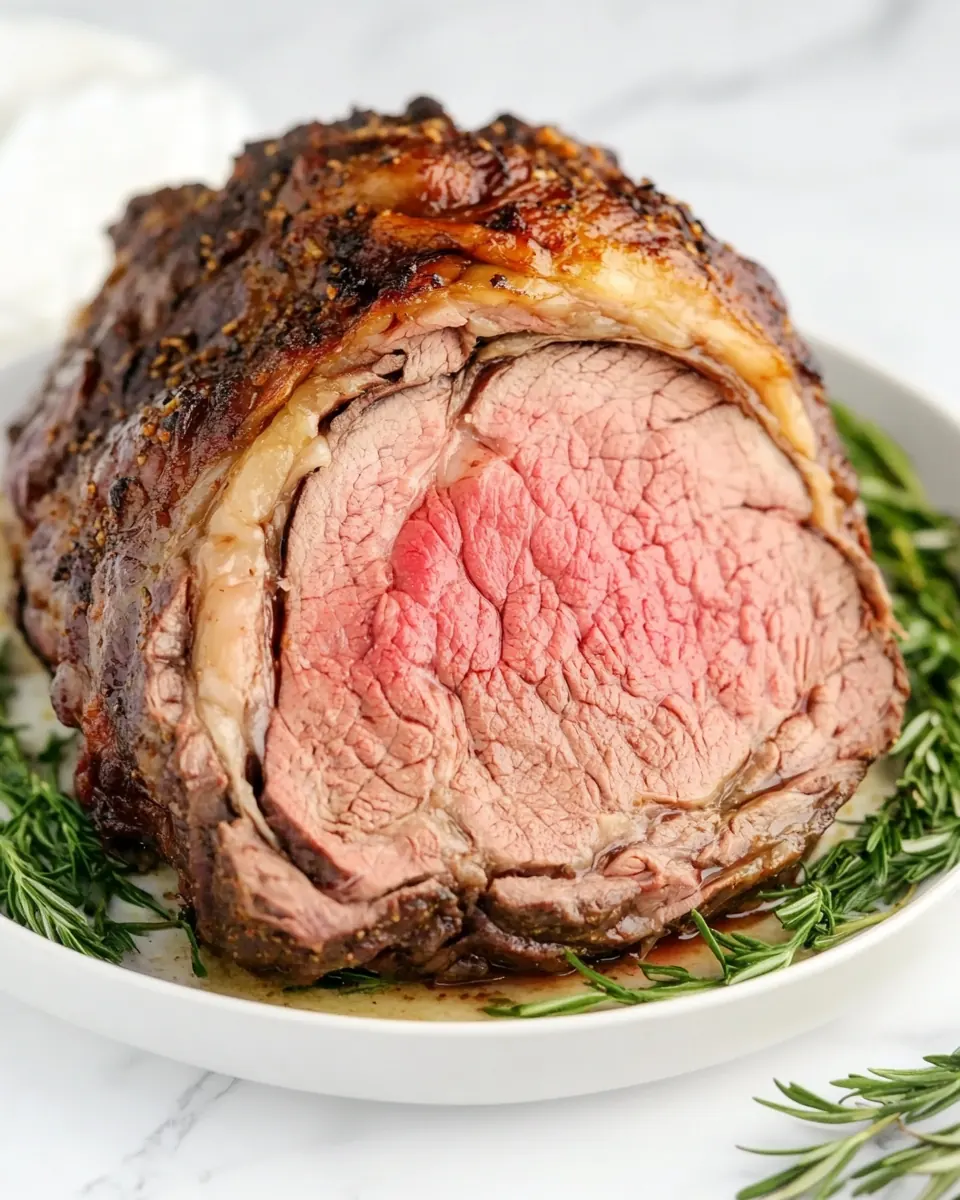
These ingredients are direct and purposeful. The ribeye provides marbling and primary flavor, while the butter compounds that richness and helps develop a brown crust. The fresh herbs and garlic add aromatic lift and bright herbal notes, and the salt and pepper are the simple but essential seasoning framework. Together they produce a roast that is at once savory, aromatic, and crowd friendly.
- 6 pound boneless ribeye roast: Roasting to tender perfection, provides the primary cut of meat and delivers rich marbling and deep beef flavor; choose a well-trimmed boneless ribeye roast of about six pounds for even cooking. Allow to come to room temperature before roasting to promote uniform doneness and rest after cooking to retain juices.
- 1 cup unsalted butter, room temperature: Softening to spread easily, contributes a creamy, rich base for an herbed butter rub that enhances browning and mouthfeel; use unsalted butter at room temperature to control seasoning. Combine with aromatics so it melts into the roast surface during searing or initial high heat.
- 2 teaspoons ground black pepper: Seasoning to build heat and balance, adds pungent warmth and aromatic bite that complements beef’s richness; freshly ground black pepper offers a brighter, more vibrant flavor than pre-ground. Apply evenly to create a peppery crust when seared or roasted at high temperature.
- 4 tablespoons kosher salt: Drawing out natural beef flavors, supplies necessary salting for seasoning and helps form a flavorful crust through surface moisture reduction; kosher salt’s larger flakes allow for better control and even distribution. Use measured tablespoons to ensure proper seasoning for the six-pound roast and avoid over-salting.
- 2 tablespoons fresh rosemary, chopped: Infusing a piney, resinous herbal note, adds aromatic freshness and complements beef with savory, woodsy flavors; chop fresh rosemary to release oils and distribute evenly in the butter rub. Press into the roast surface so heat blooms the herb’s fragrance during cooking.
- 1 tablespoon fresh thyme, chopped: Lending delicate, lemony-woodsy undertones, contributes subtle savory complexity and pairs well with rosemary and garlic; chop fresh thyme finely to avoid woody stems in the rub. Incorporate into the butter mixture to create layered herb flavors that permeate the roast.
- 4 tablespoons fresh garlic, minced: Providing sharp, savory depth, supplies intense garlic flavor that caramelizes and enhances the roast’s umami when minced finely and mixed into the butter; fresh garlic browns quickly so monitor heat. Massage into the roast surface to ensure even distribution and flavorful crust development.
How to Assemble Ribeye Roast
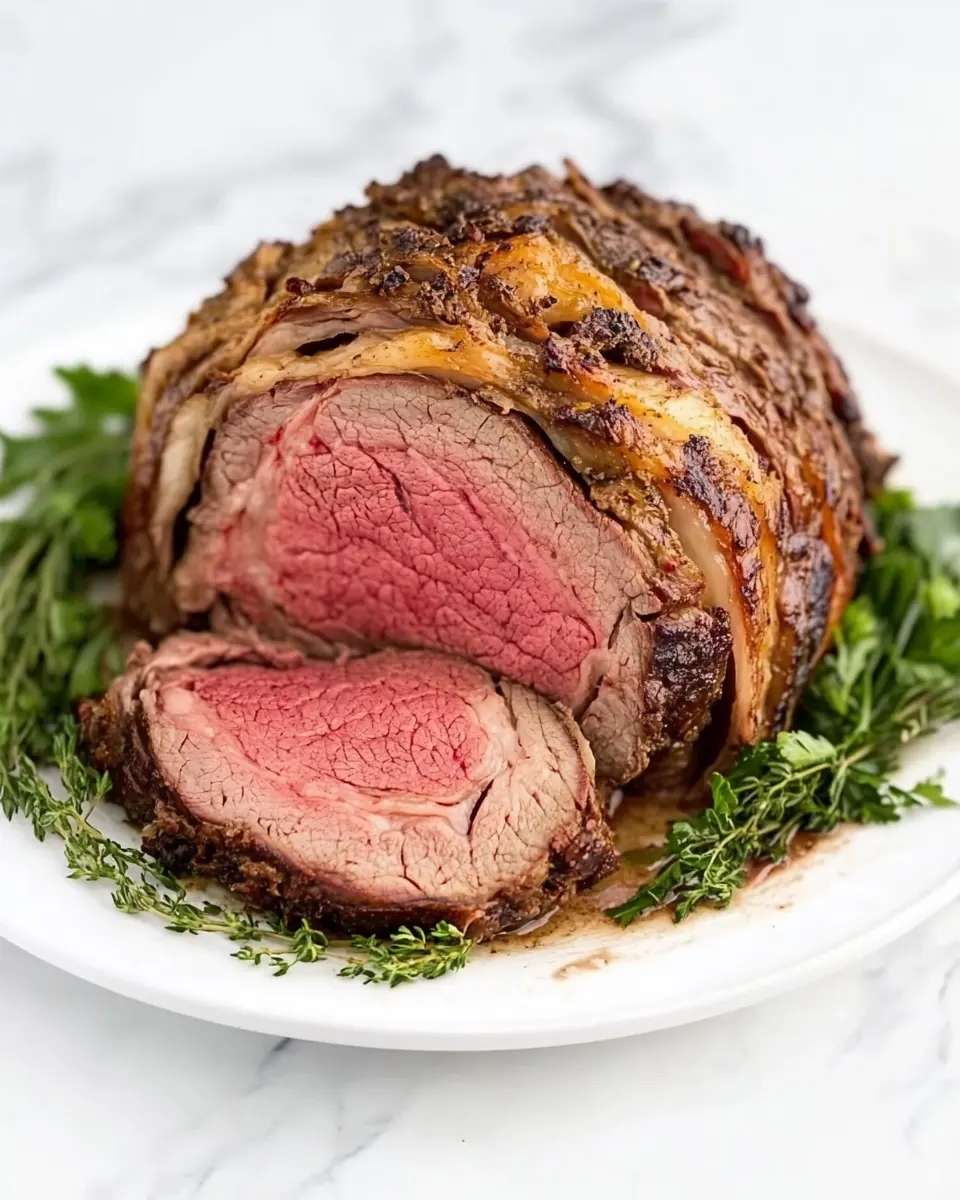
Assembling this roast is an enjoyable, tactile process. Take your time to prep the meat and compound butter, then follow the roasting sequence so the exterior browns and the interior cooks gently to the temperature you want. I find that small attentions during each stage reward you with confident results.
- Place a roasting rack in a large roasting pan. Remove the 6 pound boneless ribeye roast from the refrigerator and tie butcher's twine tightly around it every 1 1/2-2 inches. Place the roast in the roasting pan. Set aside and let it sit for up to 2 hours so it can come to room temperature.: You'll notice the cool metal under your hands and the hollow echo when you set the pan down, it helps ensure air circulates around the roast so the bottom does not steam. This step matters because elevating the ribeye promotes even roasting and a more consistent crust. A common mistake is skipping the rack and ending up with a soggy underside, so always use one when possible. Watch for the sound of the roast settling on the rack and the visual cue of space beneath the meat.
- Prepare the herbed butter by combining the softened 1 cup unsalted butter, with the 4 tablespoons kosher salt, 2 teaspoons ground black pepper, 2 tablespoons fresh rosemary, 1 tablespoon fresh thyme, and 4 tablespoons fresh garlic.: The chill leaves the meat firm and easier to handle, and tying creates an even cylinder so heat penetrates uniformly. The tactile resistance of the twine pulling snug will tell you it's secure. This technique helps the roast cook evenly and hold its shape for a uniform slice. Avoid tying too loosely which can lead to uneven cooking, or too tightly which can squish the meat's grain. You should see a neat, even profile when finished.
- Once the meat is ready to roast, heat the oven to 475 degrees Fahrenheit. Rub the butter all over the outside of the meat.: Setting the roast into the pan is a quiet, deliberate motion, the meat settling into its cradle. Position it centered on the rack so air can circulate on all sides, and leave space around the roast for even heat. Proper placement reduces hot spots and encourages uniform browning. A typical error is crowding the pan, which traps steam and prevents that desirable crust; leave breathing room instead.
- When the oven is ready, roast at 475 for 15 minutes before lowering the heat to 350 degrees Fahrenheit. Cook for an additional 13-15 minutes per pound until the center of the roast reaches 125 degrees Fahrenheit for medium-rare doneness. For alternative doneness, see the tips section.: As the roast warms, its texture relaxes and the internal temperature rises gradually, which prevents the center from being too cold when it hits the oven. You'll feel the meat soften slightly as it loses its refrigerator chill. This equilibration promotes a more even final doneness. Don't skip this, because roasting straight from cold will lead to an overcooked exterior and undercooked center.
- Remove the roast from the oven, transfer to a plate, and cover it with foil. Let it rest for 25-30 minutes before slicing and serving. Serve with au jus and horseradish, if desired.: Mixing these creates a fragrant compound butter where the herbs and garlic infuse the fat. The texture should be smooth and spreadable, with flecks of green and bits of minced garlic . This compound butter is crucial because it bastes the surface, encourages browning, and imparts aromatic flavor during roasting. If the butter is too cold it won't blend; if it's too warm it will separate, so aim for room temperature consistency.
- Once the meat is ready to roast heat the oven to 475 degrees Fahrenheit: That initial high heat sears the exterior quickly, creating a deep brown crust and sealing flavors. The oven will emit a dry hot air scent as it reaches temperature, signaling it's ready. This blast of heat matters because it jump starts the Maillard reaction, producing the savory crust you want. A common oversight is preheating insufficiently, yielding a pale exterior instead of a properly seared crust.
- Rub the butter all over the outside of the meat: As you smear the herbed butter , you'll feel a smooth, cool layer coating the surface and see the herbs stick to the meat. This tactile step ensures every inch carries flavor and that the surface will brown evenly. The butter also acts as a medium for heat transfer and flavor delivery. Avoid skimping on coverage, or you risk pale patches and uneven flavor development.
- When the oven is ready roast at 475 for 15 minutes before lowering the heat to 350 degrees Fahrenheit: That loud, energetic oven blast crisps the exterior, and after 15 minutes you'll notice a pronounced brown crust forming and a fragrant aroma filling the kitchen. Reducing the oven to 350 sets a gentler environment to cook the interior without overcooking the outside. This two stage method balances crust formation with controlled internal cooking. Jumping to a lower temperature too soon can prevent that deep crust from forming, and leaving it at high heat too long risks an overbrowned exterior.
- Cook for an additional 13 to 15 minutes per pound until the center of the roast reaches 125 degrees Fahrenheit for medium rare doneness: During this period the oven hums and the roast's surface darkens further, while internal juices migrate toward the center. I use an instant read thermometer to check the thickest part, seeking that 125 degree mark for a rosy medium rare finish. This timing gives you the balance of a browned exterior and a tender, juicy interior. A mistake to avoid is relying solely on time without checking temperature, because ovens and roast sizes vary, so always probe the center.
- For alternative doneness see the tips section: Different diners prefer different centers, and temperature adjustments will shift the final result. Knowing the target temperatures makes deciding easier and keeps expectations realistic. If you aim for a different doneness, increase or decrease the final target accordingly while remembering the roast will climb a few degrees during resting. Guessing without guidance may lead to overcooking, so check the tips for precise targets.
- Remove the roast from the oven transfer to a plate and cover it with foil: The first visual cue is the glossy crust and the faint steam rising as you move the roast. Covering it with foil creates a gentle environment for juices to redistribute back into the meat. This rest period is where the roast achieves ideal juiciness, as the temperature evens out and proteins relax. A common error is slicing too soon, which causes precious juices to run out and the slices to be drier than intended.
- Let it rest for 25 to 30 minutes before slicing and serving: During this wait the meat's fibers relax and juices reabsorb, leaving you with succulent slices. The residual warmth will make slicing easier, and you'll see a beautiful gradation of color from crust to center. Resting is as important as any cooking step for texture and flavor. Rushing this will yield a moistness loss and a less satisfying mouthfeel.
- Serve with au jus and horseradish if desired: The final moment is about pairing and presentation, offering the deep beef juices or a sharp condiment to enhance the roast. The au jus adds warm savory liquid, while horseradish gives a bright, spicy contrast. Presenting these on the side lets guests customize each bite. Don't force a heavy sauce if your roast is well seasoned; let the meat's flavor remain the centerpiece.
Helpful Notes about Ribeye Roast
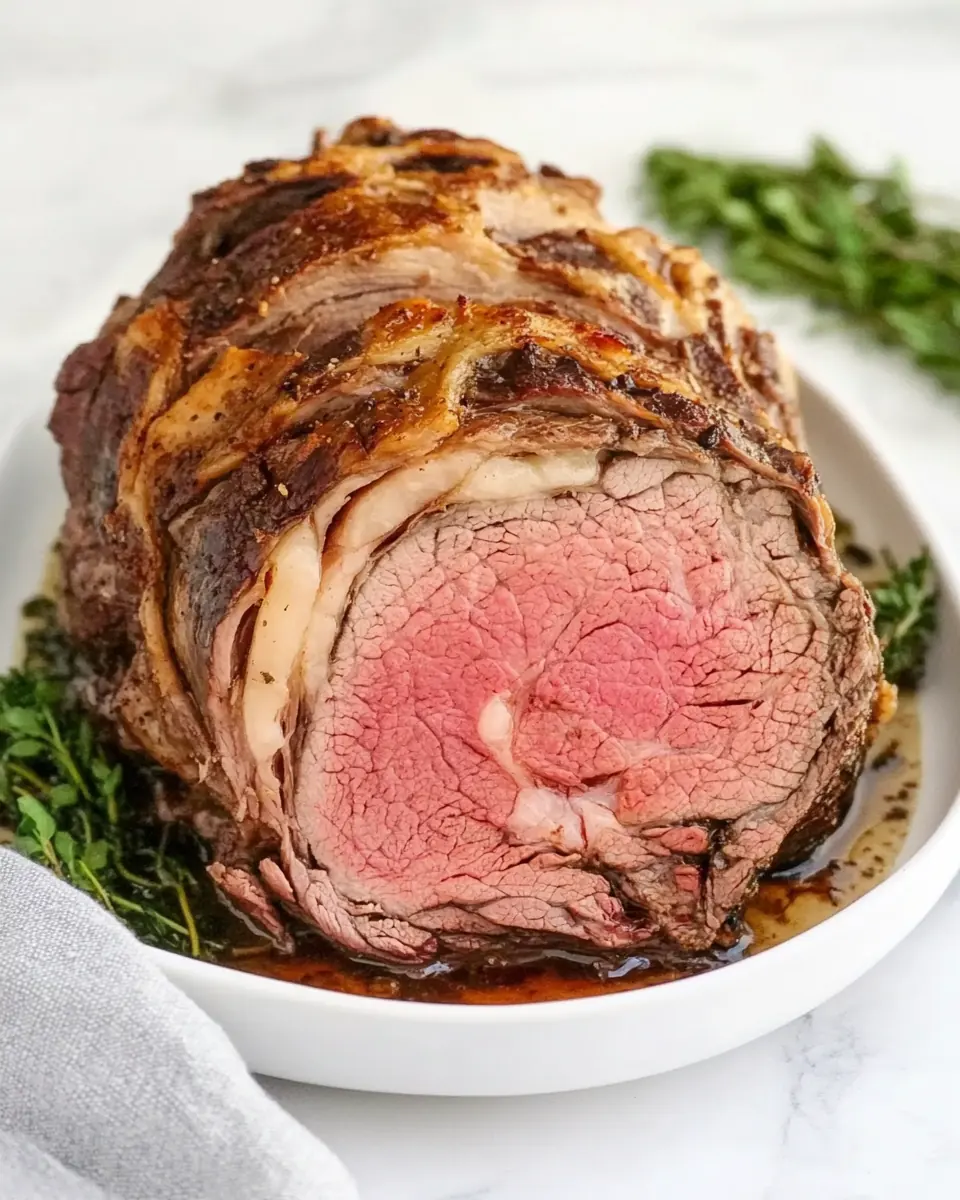
This set of notes expands on temperature targets and small technique details that will help you get the exact doneness and flavor you want. Use them as quick reference points while you cook and slice, and keep them near your workstation for a smoother roasting experience.
- Target temperatures Use an instant read thermometer to hit your preferred doneness. For medium rare aim for 125 degrees Fahrenheit before resting, rare is around 115 to 120, medium is 135, and remember the roast will gain 5 to 10 degrees while resting.
- Butter consistency Make sure the 1 cup unsalted butter is room temperature and spreadable but not melted. This allows you to create an even layer that adheres to the roast and promotes uniform browning during the initial high heat sear.
- Herb distribution Chop the 2 tablespoons fresh rosemary and 1 tablespoon fresh thyme finely so the herbs distribute evenly in the compound butter and create small flecks of aroma across the roast surface when seared.
- Garlic handling Mince the 4 tablespoons fresh garlic finely so it integrates with the butter and lightly caramelizes on the crust without burning. If garlic pieces are too large they can char and taste bitter at high heat.
- Oven calibration If you suspect your oven runs hot or cold, use an oven thermometer near the roast. Accurate oven temperature matters for the initial 475 degree sear and the subsequent 350 degree gentle roast.
- Slicing technique Use a sharp carving knife and cut across the grain for tender slices. Let the roast rest fully first so the juices stay put and your slices remain juicy and uniform.
Best Served With
A good roast invites thoughtful but uncomplicated accompaniments. I like sides that offer textural contrast, like crisp vegetables and silky mashed potatoes, and condiments that cut through the richness, such as a sharp horseradish. This roast is ideal for winter gatherings and special dinners where you want a comforting main that still feels celebratory.
- Classic potatoes Mashed or roasted potatoes provide a creamy or crisp counterpoint to the ribeye‘s richness and can soak up au jus.
- Roasted vegetables Root vegetables like carrots and parsnips, roasted until caramelized, add sweetness and a pleasant bite alongside the savory meat.
- Fresh green salad A simple dressed salad gives a crisp, acidic contrast that keeps the plate balanced and bright.
- Au jus Serve warm pan juices strained for a glossy finishing sauce that enhances each slice without overpowering the meat.
- Horseradish Provide a prepared or fresh horseradish option for guests who want a punchy, spicy contrast to the fatty ribeye.
- Occasions This roast shines at winter dinners, holiday gatherings, and milestone celebrations where a substantial, shareable main is appropriate.
- Storage tips Refrigerate leftover slices wrapped tightly and use within three to four days, or freeze for longer storage. Reheat gently to preserve texture.
- Seasonal pairings In winter pair with roasted squash and braised greens, in milder months choose lighter vegetable sides to balance the plate.
FAQ
Conclusion
This Ribeye Roast stands out for its simple but powerful combination of a well marbled cut with a fragrant herbed butter and a two stage roast method that produces a crisp crust and a tender, juicy interior. Give it a try the next time you want a show stopping main that still feels approachable. With a few straightforward steps and minimal hands on time, you can serve a restaurant quality roast that brings people together around the table.
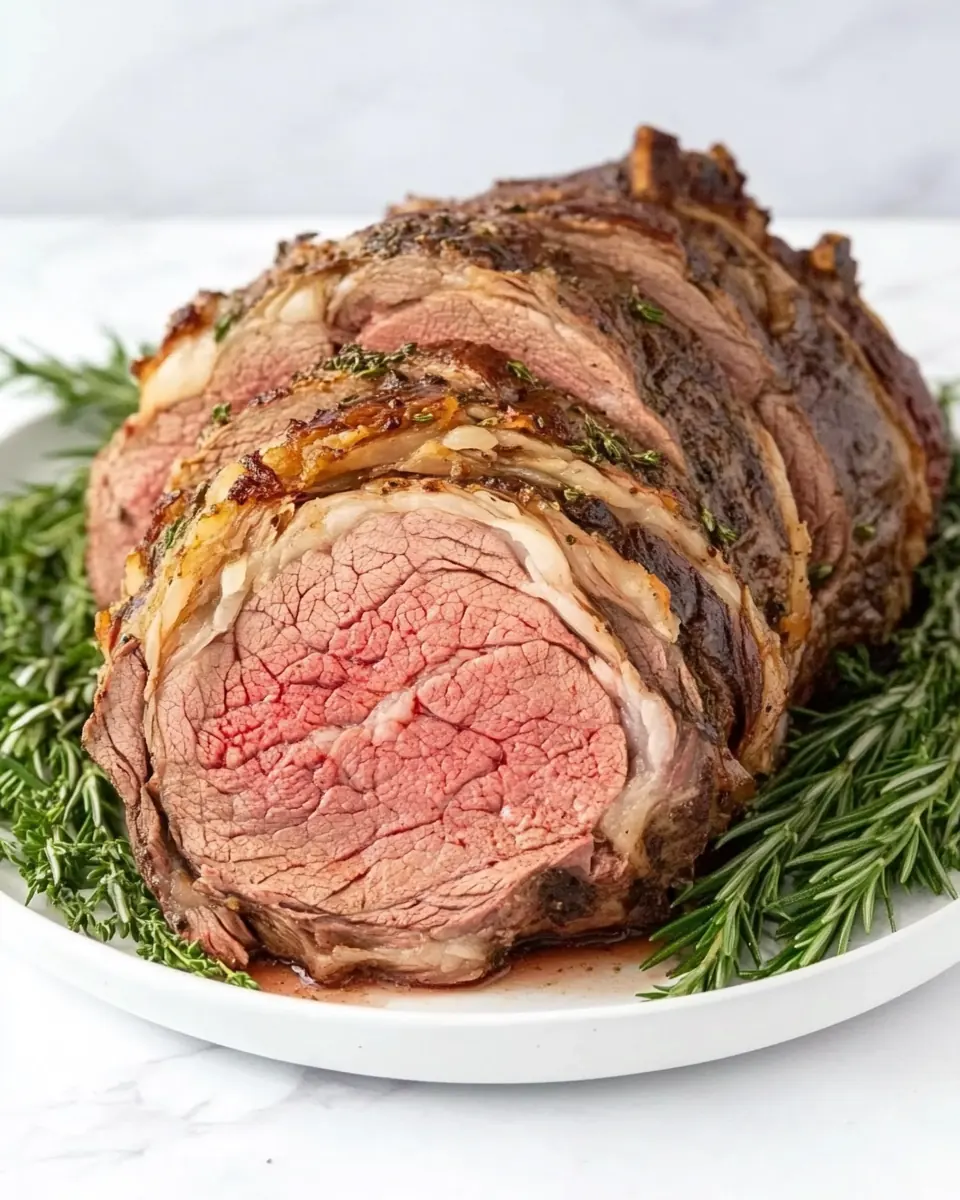
Ribeye Roast
Ingredients
Equipment
Method
- Place a roasting rack in a large roasting pan. Remove the 6 pound boneless ribeye roast from the refrigerator and tie butcher's twine tightly around it every 1 1/2-2 inches. Place the roast in the roasting pan. Set aside and let it sit for up to 2 hours so it can come to room temperature.: You'll notice the cool metal under your hands and the hollow echo when you set the pan down, it helps ensure air circulates around the roast so the bottom does not steam. This step matters because elevating the ribeye promotes even roasting and a more consistent crust. A common mistake is skipping the rack and ending up with a soggy underside, so always use one when possible. Watch for the sound of the roast settling on the rack and the visual cue of space beneath the meat.
- Prepare the herbed butter by combining the softened 1 cup unsalted butter, with the 4 tablespoons kosher salt, 2 teaspoons ground black pepper, 2 tablespoons fresh rosemary, 1 tablespoon fresh thyme, and 4 tablespoons fresh garlic.: The chill leaves the meat firm and easier to handle, and tying creates an even cylinder so heat penetrates uniformly. The tactile resistance of the twine pulling snug will tell you it's secure. This technique helps the roast cook evenly and hold its shape for a uniform slice. Avoid tying too loosely which can lead to uneven cooking, or too tightly which can squish the meat's grain. You should see a neat, even profile when finished.
- Once the meat is ready to roast, heat the oven to 475 degrees Fahrenheit. Rub the butter all over the outside of the meat.: Setting the roast into the pan is a quiet, deliberate motion, the meat settling into its cradle. Position it centered on the rack so air can circulate on all sides, and leave space around the roast for even heat. Proper placement reduces hot spots and encourages uniform browning. A typical error is crowding the pan, which traps steam and prevents that desirable crust; leave breathing room instead.
- When the oven is ready, roast at 475 for 15 minutes before lowering the heat to 350 degrees Fahrenheit. Cook for an additional 13-15 minutes per pound until the center of the roast reaches 125 degrees Fahrenheit for medium-rare doneness. For alternative doneness, see the tips section.: As the roast warms, its texture relaxes and the internal temperature rises gradually, which prevents the center from being too cold when it hits the oven. You'll feel the meat soften slightly as it loses its refrigerator chill. This equilibration promotes a more even final doneness. Don't skip this, because roasting straight from cold will lead to an overcooked exterior and undercooked center.
- Remove the roast from the oven, transfer to a plate, and cover it with foil. Let it rest for 25-30 minutes before slicing and serving. Serve with au jus and horseradish, if desired.: Mixing these creates a fragrant compound butter where the herbs and garlic infuse the fat. The texture should be smooth and spreadable, with flecks of green and bits of minced garlic . This compound butter is crucial because it bastes the surface, encourages browning, and imparts aromatic flavor during roasting. If the butter is too cold it won't blend; if it's too warm it will separate, so aim for room temperature consistency.
- Once the meat is ready to roast heat the oven to 475 degrees Fahrenheit: That initial high heat sears the exterior quickly, creating a deep brown crust and sealing flavors. The oven will emit a dry hot air scent as it reaches temperature, signaling it's ready. This blast of heat matters because it jump starts the Maillard reaction, producing the savory crust you want. A common oversight is preheating insufficiently, yielding a pale exterior instead of a properly seared crust.
- Rub the butter all over the outside of the meat: As you smear the herbed butter , you'll feel a smooth, cool layer coating the surface and see the herbs stick to the meat. This tactile step ensures every inch carries flavor and that the surface will brown evenly. The butter also acts as a medium for heat transfer and flavor delivery. Avoid skimping on coverage, or you risk pale patches and uneven flavor development.
- When the oven is ready roast at 475 for 15 minutes before lowering the heat to 350 degrees Fahrenheit: That loud, energetic oven blast crisps the exterior, and after 15 minutes you'll notice a pronounced brown crust forming and a fragrant aroma filling the kitchen. Reducing the oven to 350 sets a gentler environment to cook the interior without overcooking the outside. This two stage method balances crust formation with controlled internal cooking. Jumping to a lower temperature too soon can prevent that deep crust from forming, and leaving it at high heat too long risks an overbrowned exterior.
- Cook for an additional 13 to 15 minutes per pound until the center of the roast reaches 125 degrees Fahrenheit for medium rare doneness: During this period the oven hums and the roast's surface darkens further, while internal juices migrate toward the center. I use an instant read thermometer to check the thickest part, seeking that 125 degree mark for a rosy medium rare finish. This timing gives you the balance of a browned exterior and a tender, juicy interior. A mistake to avoid is relying solely on time without checking temperature, because ovens and roast sizes vary, so always probe the center.
- For alternative doneness see the tips section: Different diners prefer different centers, and temperature adjustments will shift the final result. Knowing the target temperatures makes deciding easier and keeps expectations realistic. If you aim for a different doneness, increase or decrease the final target accordingly while remembering the roast will climb a few degrees during resting. Guessing without guidance may lead to overcooking, so check the tips for precise targets.
- Remove the roast from the oven transfer to a plate and cover it with foil: The first visual cue is the glossy crust and the faint steam rising as you move the roast. Covering it with foil creates a gentle environment for juices to redistribute back into the meat. This rest period is where the roast achieves ideal juiciness, as the temperature evens out and proteins relax. A common error is slicing too soon, which causes precious juices to run out and the slices to be drier than intended.
- Let it rest for 25 to 30 minutes before slicing and serving: During this wait the meat's fibers relax and juices reabsorb, leaving you with succulent slices. The residual warmth will make slicing easier, and you'll see a beautiful gradation of color from crust to center. Resting is as important as any cooking step for texture and flavor. Rushing this will yield a moistness loss and a less satisfying mouthfeel.
- Serve with au jus and horseradish if desired: The final moment is about pairing and presentation, offering the deep beef juices or a sharp condiment to enhance the roast. The au jus adds warm savory liquid, while horseradish gives a bright, spicy contrast. Presenting these on the side lets guests customize each bite. Don't force a heavy sauce if your roast is well seasoned; let the meat's flavor remain the centerpiece.
Notes
- Target temperatures Use an instant read thermometer to hit your preferred doneness. For medium rare aim for 125 degrees Fahrenheit before resting, rare is around 115 to 120, medium is 135, and remember the roast will gain 5 to 10 degrees while resting.
- Butter consistency Make sure the 1 cup unsalted butter is room temperature and spreadable but not melted. This allows you to create an even layer that adheres to the roast and promotes uniform browning during the initial high heat sear.
- Herb distribution Chop the 2 tablespoons fresh rosemary and 1 tablespoon fresh thyme finely so the herbs distribute evenly in the compound butter and create small flecks of aroma across the roast surface when seared.
- Garlic handling Mince the 4 tablespoons fresh garlic finely so it integrates with the butter and lightly caramelizes on the crust without burning. If garlic pieces are too large they can char and taste bitter at high heat.
- Oven calibration If you suspect your oven runs hot or cold, use an oven thermometer near the roast. Accurate oven temperature matters for the initial 475 degree sear and the subsequent 350 degree gentle roast.
- Slicing technique Use a sharp carving knife and cut across the grain for tender slices. Let the roast rest fully first so the juices stay put and your slices remain juicy and uniform.