Roasted broccoli green bean salad with burrata
Roasted broccoli green bean salad with burrata landed on my table on an ordinary Tuesday and immediately changed how I think about weeknight salads. I remember coming home tired, wanting something fresh but not fussy, and this combination of burrata, roasted broccoli, and blistered green beans felt like a small celebration. The burrata opened like a soft pillow, its creamy center pooling around charred florets, and suddenly the whole meal felt elevated.
That night I kept thinking about contrasts, the way crisp roasted edges play with creamy cheese, how toasted breadcrumbs add a satisfying crunch, and how a splash of olive oil and bright lemon wake everything up. I started swapping herbs and testing textures, always circling back to the core of this dish, which is comfort with a little spark. Each forkful felt balanced, and friends began asking for the recipe every time I served it.
Recipe Snapshot
30 mins
10 mins
20 mins
Easy
250 kcal
Mediterranean
Vegan, Gluten-Free
Salads
Roasting sheet, Small pan, Knife, Serving platter
Why You Need This Roasted broccoli green bean salad with burrata
It balances cream and char beautifully
I love how the soft, milky center of burrata meets the smoky, slightly crisp edges of roasted broccoli and green beans. That contrast keeps every bite interesting, and you end up with a mix of textures that feels indulgent yet light. When I take that first spoonful, I notice the creamy mouthfeel, the charred aroma, and the toasted crumb crunch all at once.
The ingredients are uncomplicated and honest
This recipe succeeds because it relies on high quality staples: a good burrata, very good olive oil, and fresh vegetables. I always say buy the best burrata you can find, because its flavor carries the whole dish. The rest is pantry-friendly, which makes it ideal for last minute entertaining or a relaxed dinner.
It works warm or at room temperature
I appreciate recipes that travel well from oven to table. You can roast the vegetables ahead, then assemble when guests arrive. I often roast the veg in the afternoon and finish the crumbs and assembly just before serving. This flexibility means less stress for me, and happier company around the table.
Simple techniques, impressive results
Roasting, crisping, and a quick pan fry for crumbs are small steps that yield big flavor. I like that you do not need fancy equipment to get restaurant worthy results. A hot oven and attention to space on the tray are the only real tricks. I tell friends to resist overcrowding the pan, because that is the difference between steamed and roasted edges.
Shareable and adaptable
I often bring this salad to gatherings because it travels and looks beautiful on a platter. The torn herbs, scattered crumbs, and glossy olive oil make it feel celebratory. I also love how easy it is to scale, and how the recipe invites small tweaks to match seasons or what is in the fridge.
Essential Ingredients for Roasted broccoli green bean salad with burrata
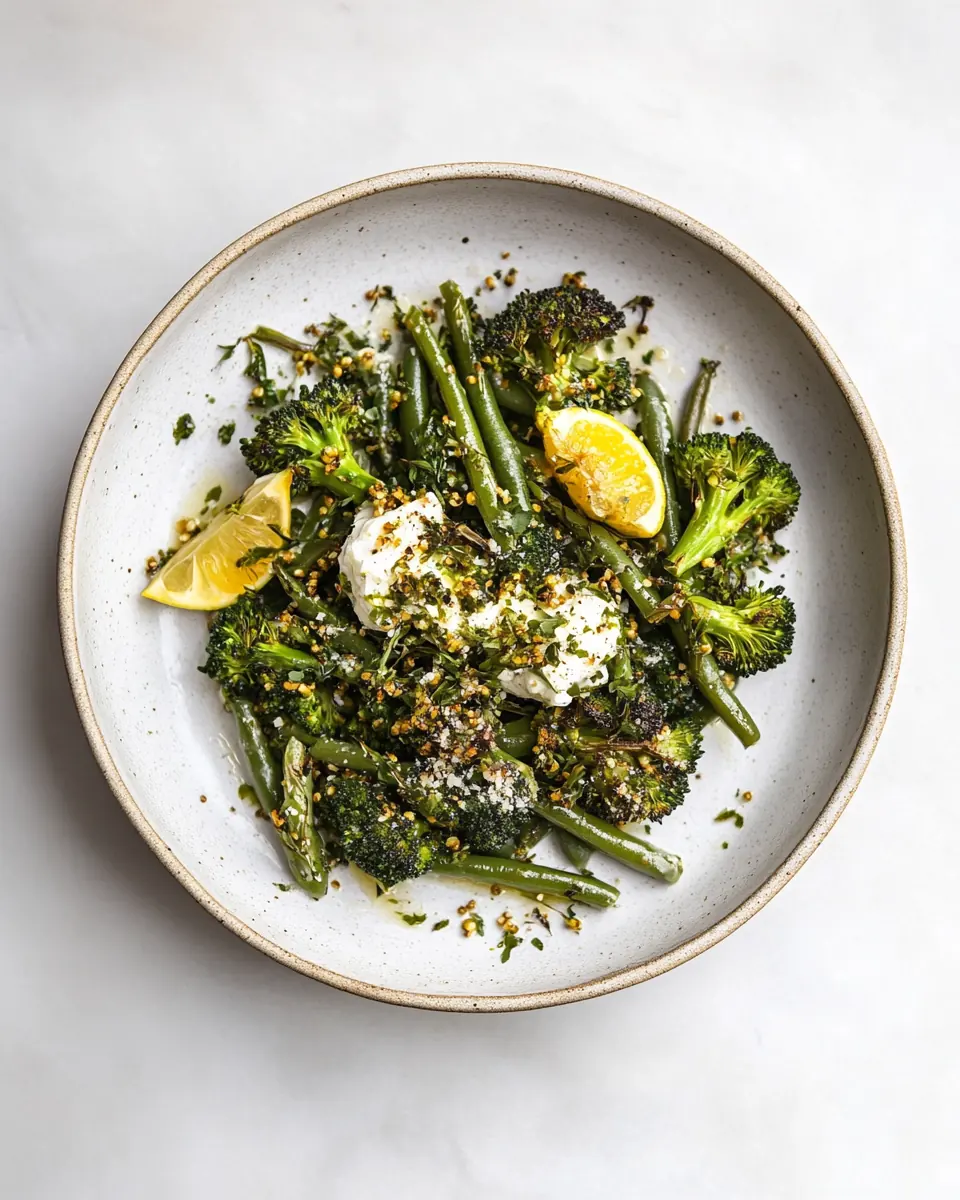
The philosophy behind these ingredients is straightforward: bright, fresh produce, a luxurious creamy center, and crunchy, citrus kissed crumbs. Each element has a job, the broccoli and green beans bring structure and char, the burrata offers richness, and the toasted breadcrumbs supply texture. A few herbs and a squeeze of lemon lift everything, while olive oil ties the flavors together.
- 1 good quality burrata: Provide a creamy, indulgent center that enriches the salad with a soft, milky texture; break open at serving to create a luscious contrast with roasted vegetables and add a subtle milky sweetness that balances bright and savory flavors.
- Very good olive oil: Enhance roasted vegetables and dressing with a fruity, peppery backbone; drizzle sparingly to build richness and help marry herbs, lemon, and breadcrumbs for an integrated mouthfeel.
- 200 g ms tender stem broccoli: Add a tender-crisp, slightly sweet vegetable element that roasts quickly to develop charred notes; halve or leave whole as desired, roast until lightly browned, and combine with beans for contrasting textures.
- 200 g ms green beans: Contribute a firm snap and fresh green flavor that pairs well with roasted broccoli; blanching or quick-roasting preserves color and bite while allowing seasoning and oil to coat evenly.
- Olive oil: Provide additional fat for cooking or finishing, useful for adjusting dressing intensity; use to toss vegetables before roasting or to finish the salad for extra sheen and flavor depth.
- Nutritional yeast: Introduce a savory, nutty, umami lift when sprinkled over vegetables or breadcrumbs; use to replace cheese for a dairy-free boost and to add depth without overpowering fresh herbs.
- Sal & pepper: Season the dish with balanced salinity and a background peppery warmth; apply incrementally to seals and highlight other flavors while tasting as you build the salad.
- Lemon wedges: Brighten the salad with fresh acidic pops for cutting through richness; serve wedges alongside so diners can add a squeeze of juice to taste, enhancing overall freshness.
- A small handful of parsley chopped: Bring a fresh, herbaceous note and light vegetal aroma when chopped and scattered over the salad; use to add color, fragrance, and a mild peppery flavor that complements lemon and burrata.
- A few mint leaves torn or roughly chopped: Add a cool, bright herbal lift and slight sweetness when torn or chopped; sprinkle sparingly to introduce aromatic contrast and to counterbalance richer elements like burrata and breadcrumbs.
- About 1/3 cup breadcrumbs: Contribute crisp texture and toasty flavor when toasted in a pan; use as a crunchy topping to add structure, soak up dressings, and provide a pleasing contrast to soft cheese and vegetables.
- 2 tbsp olive oil: Provide a measured fat component for cooking or dressing that helps toast breadcrumbs and coat vegetables; use for sautéing garlic and warming herbs prior to combining with the salad.
- 1/2 clove of garlic crushed: Offer aromatic pungency and a garlicky bite when crushed and quickly warmed in oil; mellow briefly to release fragrance and infuse breadcrumbs or dressing with savory depth.
- Salt & pepper: Balance flavors with necessary salinity and gentle heat from pepper; season both vegetables and finishing elements, tasting throughout to avoid over-salting and to maintain harmony.
- Zest from half a lemon: Deliver bright citrus aroma and concentrated lemon oils when zested over the finished salad; sprinkle finely to add a fragrant lift that enhances herbs, cheese, and roasted vegetables.
Cooking Instructions for Roasted broccoli green bean salad with burrata
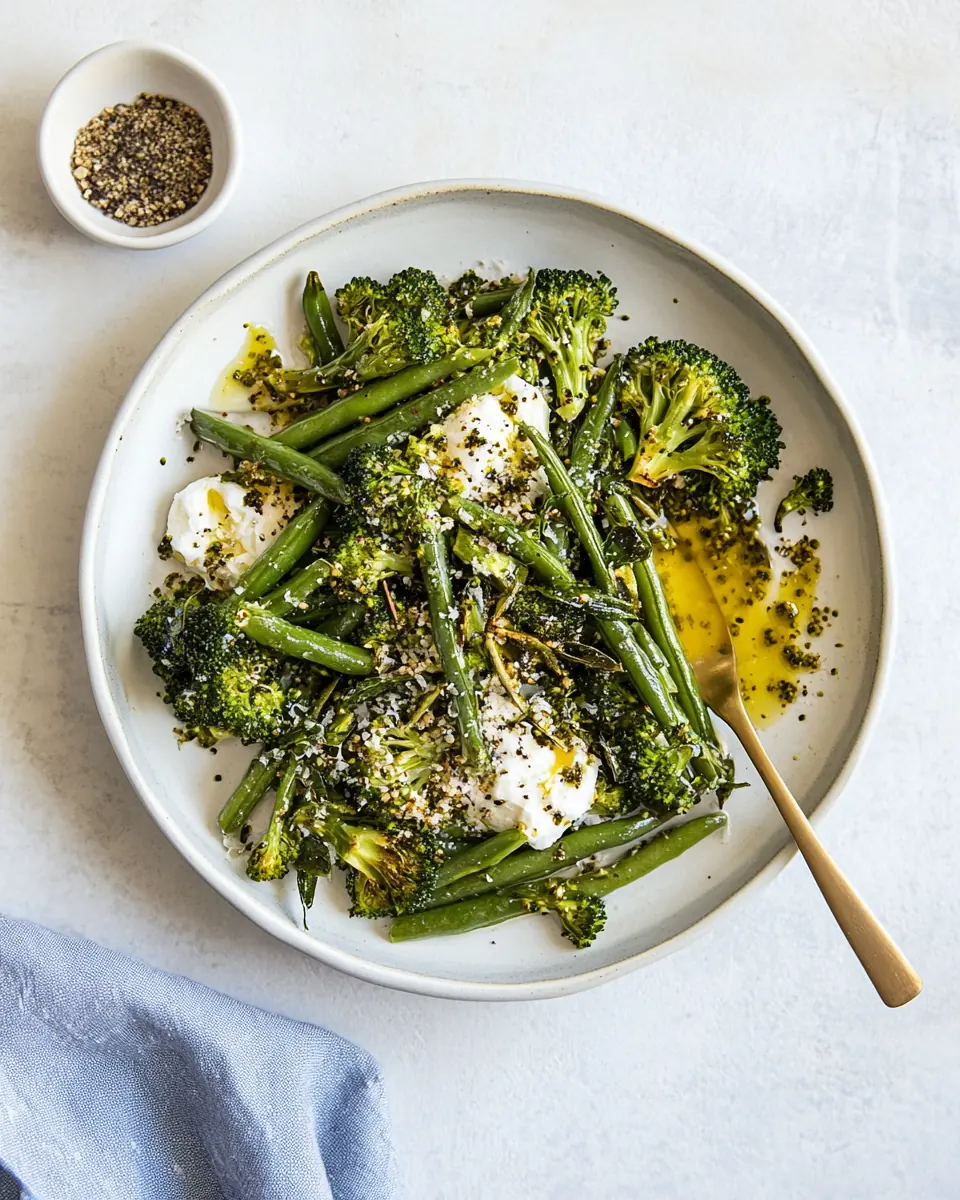
This recipe is straightforward but rewarding, and a little attention at each stage makes a big difference. Follow the roasting order, make the crumbs while the vegetables cook, and assemble near serving for the best texture. Keep your oven hot and trays roomy, and you will be rewarded with crisp edges and a creamy center.
- Preheat the oven to 200 C and toss the vegetables in olive oil to lightly coat. Spread these out on one very large roasting sheet or two smaller ones. You don’t want to overcrowd the pan. If you have a fan oven, bake on this setting and roast the vegetables on two trays at the same time. Keep the 2 vegetables separate on the tray as they roast at slightly different times. Sprinkle generously with nutritional yeast, salt and pepper and toss to combine. Use the floret part of the broccoli to wipe up and oil and nutritional yeast on the tray.: Warm air carrying a faint olive oil scent is the first clue the kitchen is ready, the hot oven will coax sugars from the broccoli and green beans producing browned, slightly charred tips that add complexity to each bite. I look for a steady heat so the exterior crisps while the interior stays tender, and I make sure the vegetables are only lightly coated so they roast rather than steam. A common mistake is over oiling which can make them soggy instead of crisp. Keep space on the tray so the surfaces get direct heat and turn golden rather than stewing.
- Roast the broccoli for 15 minutes and until they take on char and are starting to crisp then remove from the tray. Continue roasting the beans for a further 4 – 5 minutes. They take closer to 20 minutes.: As the vegetables sizzle against the hot metal you will hear a light crackle and see glossy edges beginning to darken, a sign that caramelization is underway. Laying them out in a single layer prevents crowding, which would trap steam and prevent browning. I prefer two trays if needed, because the airflow is better and everything roasts evenly. Avoid piling them up, that will create limp rather than crisp textures, and flipping halfway helps ensure even color.
- While the vegetables are roasting, place the burrata on a serving platter. Butterfly the cheese by cutting halfway down through the middle and then turning your knife to one direction to slice off the top and flap it open. Repeat on the other side. Drizzle the cheese with your very good quality olive oil and spritz it with lemon juice. Season lightly with salt and pepper.: When the pan is crowded, steam builds and the vegetables soften rather than char, losing the desired contrast with the burrata . Give each piece breathing room so edges can caramelize and develop a nutty aroma. If necessary, roast in batches rather than cramming everything together. A trap I see often is trying to save time by crowding the tray, but that risks missing the golden, slightly smoky notes that make the salad sing.
- To make the crumb heat the olive oil in a small pan and fry the crumbs until golden. About halfway through add the garlic and allow stir to ensure it mixes with the crumbs and cooks to take the abrasive edge off. Add the lemon zest, salt and pepper.: The circulating heat in a fan oven encourages even browning, so you’ll notice a more uniform color across the trays and quicker development of crispness. I rotate trays front to back halfway through to avoid hot spots and ensure consistent results. Do not skip rotation when your oven has uneven heat, or some pieces may char too much while others remain pale. The goal is a balance of blistered edges and tender flesh.
- When the vegetables are a cooked arrange them across the platter on top of the burrata. Scatter over the mint and chopped parsley and fried breadcrumbs.: Watching the trays, you will see the broccoli florets darken sooner than the slim green beans , which is why I roast them separately on the tray. The broccoli will develop crisp charred tips first and can be removed earlier to preserve its texture. A frequent misstep is treating both exactly the same, which can leave the beans limp or the broccoli overdone. Separate placement lets you pull each when it reaches its peak.
- Sprinkle generously with nutritional yeast, salt and pepper and toss to combine: When the seasoning hits hot oil on the tray it blooms, releasing savory, toasty aromas that coat the vegetables. Tossing helps distribute those flavors into nooks and crevices, so every bite gets a hit of umami from the nutritional yeast . Watch that you do not over season early on, as flavors concentrate while roasting. If you add too much salt at the start, the vegetables can become overly salty once reduced.
- Use the floret part of the broccoli to wipe up and oil and nutritional yeast on the tray: Using small florets to gather up browned bits is a simple trick that traps concentrated flavor, those sticky, toasty fragments cling and create intensely flavored bites. I often scrape gently with a spatula after roasting to capture these caramelized bits for plating. Avoid scraping too hard which can tear delicate pieces; gentle coaxing retains the texture and the flavor pockets.
- Roast the broccoli for 15 minutes and until they take on char and are starting to crisp then remove from the tray: When the broccoli edges look darkened and the stems are tender when pierced, you know they are ready, the smell will be nutty and slightly sweet. Removing them at this point preserves a slight bite inside while giving flavorful char on the outside. A common error is leaving them too long which leads to dry, bitter florets. Trust visual cues more than the clock, because oven performance varies.
- Continue roasting the beans for a further 4 to 5 minutes: The green beans need a little longer to blister and get those popping browned spots while staying tender crisp, and the added time allows them to caramelize without drying out. You will see their skins wrinkle and darken at the tips, and they will give a satisfying snap when bitten. If overroasted they can become limp and leathery, so check frequently in this short window and remove when they look glossy and blistered.
- They take closer to 20 minutes: Overall roasting finishes when both vegetables show developed color and the aroma is rich and toasty, that roughly twenty minutes in a hot oven yields balanced textures. Keep an eye on the trays after the fifteen minute mark, the residual heat often finishes things quickly. Avoid walking away entirely, because the final few minutes are when surfaces go from golden to deeply charred; intervene if you need to prevent excess browning.
- While the vegetables are roasting, place the burrata on a serving platter: The creamy center of the burrata benefits from sitting at room temperature so it loosens and becomes silkier, and putting it on a platter early helps it warm gently. Softening the cheese allows it to meld with the hot vegetables and creates that luscious pool of cream you want. A mistake is serving it too cold, which reduces the luxurious mouthfeel and inhibits the flavors from melding with the warm veg.
- Butterfly the cheese by cutting halfway down through the middle and then turning your knife to one direction to slice off the top and flap it open: As you open the burrata the soft interior reveals itself, and the visual makes the dish feel generous and inviting, with creamy strands spilling out over the plate. This technique encourages guests to combine cheese and vegetables in each bite. Be gentle cutting so you do not crush the creamy center; a delicate hand preserves both form and texture.
- Drizzle the cheese with your very good quality olive oil and spritz it with lemon juice: The glossy olive oil and bright lemon lift the creamy burrata , adding fruitiness and a citrus spark that balances fat. A little acid brightens every component and helps the cheese feel lighter on the palate. Avoid overdoing the lemon which can overwhelm the subtle dairy sweetness of the burrata .
- Season lightly with salt and pepper: The final seasoning on the burrata should be restrained because the cheese is already rich, just a light dusting enhances its flavor without overpowering the vegetables. Taste as you go to find the right balance, since salt levels can change after you add the roasted veg. A common fault is over salting early, which cannot be undone once integrated.
- To make the crumb heat the olive oil in a small pan and fry the crumbs until golden: As the breadcrumbs hit hot olive oil they will sizzle and emit a toasty, warm aroma, turning a confident golden brown that contributes crunch and nutty flavor. Keep the heat moderate so they color evenly, stirring often to avoid hot spots. Burned crumbs will taste bitter, so remove them the moment they reach a golden hue and transfer to a cool plate to stop cooking.
- About halfway through add the garlic and allow stir to ensure it mixes with the crumbs and cooks to take the abrasive edge off: Adding crushed garlic midway softens its raw sharpness and infuses the crumbs with savory depth, releasing fragrant steam that hints at roasted garlic. Stir so the garlic cooks gently and becomes tender rather than charred. The pitfall is adding garlic too early which will burn and taste acrid, so timing matters for a mellow, aromatic crumb.
- Add the lemon zest, salt and pepper: Zest brings concentrated citrus oils into the crumb, making it lively and aromatic, while salt amplifies taste and pepper adds a subtle warmth. Tossing these in at the end preserves the bright aromatic quality of the zest. Be mindful of salt levels if you have already salted the veg earlier, adjust to taste to avoid over seasoning.
- When the vegetables are a cooked arrange them across the platter on top of the burrata: As you place warm broccoli and green beans over the soft burrata you will see the cheese melt slightly and mingle with roasted oil, creating ribbons of cream that coat the veg. This assembly creates a mosaic of textures and colors, and the warmth brings everything together. Avoid piling too high which can smother the cheese; aim for an even, artful scatter.
- Scatter over the mint and chopped parsley and fried breadcrumbs: The finishing herbs add a green lift while the golden crumbs supply the final crunchy contrast, and the aroma of torn mint is a cool counterpoint to the warm roasted notes. I finish with a few extra lemon wedges for anyone wanting more brightness. A misstep would be adding the crumbs too early, they will lose crunch if they sit on warm veg for too long, so add them at the last moment.
Tips for Success
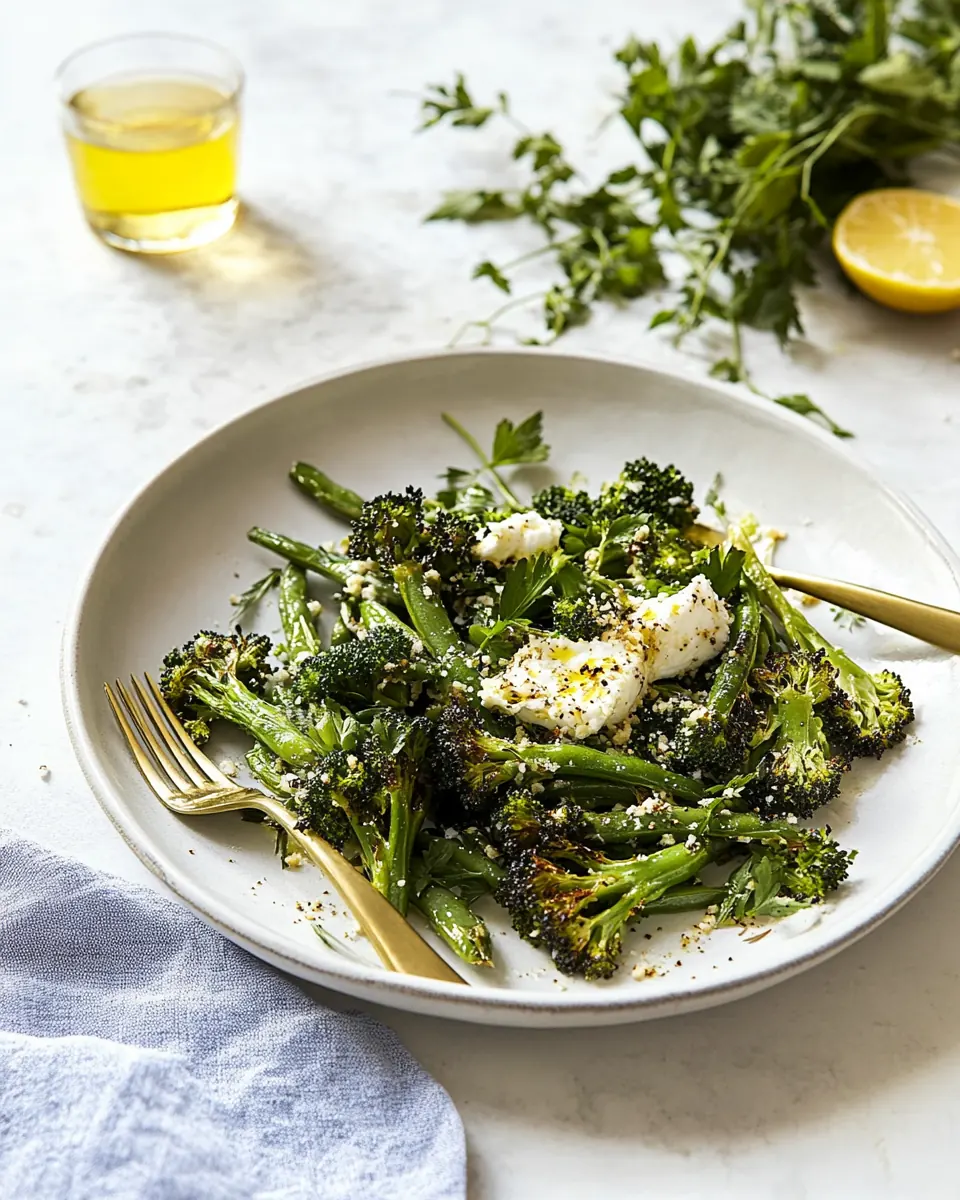
A few focused tips will make the difference between good and unforgettable. Read these before you start to streamline timing and ensure the textures sing together. These are practical notes I use every time I roast, fry crumbs, and assemble the platter.
- Room temperature burrata helps the cheese relax and release its creamy center without being cold and firm.
- Use quality olive oil for drizzling and frying crumbs, it makes a noticeable flavor difference in the finished salad.
- Don’t overcrowd the trays because proper air circulation is essential for crisp, charred edges on the vegetables.
- Watch the crumbs closely they go from golden to burnt very quickly, stir constantly once they begin to color.
- Finish with fresh herbs such as parsley and mint for bright aromatics that lift the whole dish just before serving.
What Goes Well With This Roasted broccoli green bean salad with burrata
This salad pairs beautifully with light mains and can be a centerpiece for a casual lunch or a relaxed dinner. Its creamy and charred profile complements grilled vegetables, simple roasted proteins, and crusty bread. It is versatile for seasonally minded menus and can be served warm or at room temperature depending on the occasion.
- As a side for grilled fish the salad adds rich creaminess and crisp veg texture that complements flaky white fish for a balanced plate.
- Serve at a lunch gathering where guests can scoop the burrata with vegetables and breadcrumbs for informal sharing.
- Pair with crusty bread to mop up the creamy juices and toasted oils, making the salad more substantial for a light meal.
- Perfect for spring menus when tender stem broccoli and young green beans are at their best, offering seasonal brightness.
- Storage tip store roasted vegetables separately from the burrata and crumbs, rewarm the veg slightly before assembling to preserve textures.
- Great for entertaining because you can roast the vegetables in advance and finish the crumbs and assembly just before guests arrive.
FAQ
Conclusion
This salad is special because it balances creamy burrata with charred broccoli, blistered green beans, and crunchy breadcrumbs for a memorable mix of textures and flavors. Give it a try the next time you want something impressive that is actually simple to make. It shines as a shareable starter or a bright side for a casual dinner, and its flexible timing makes it a reliable choice for relaxed entertaining.
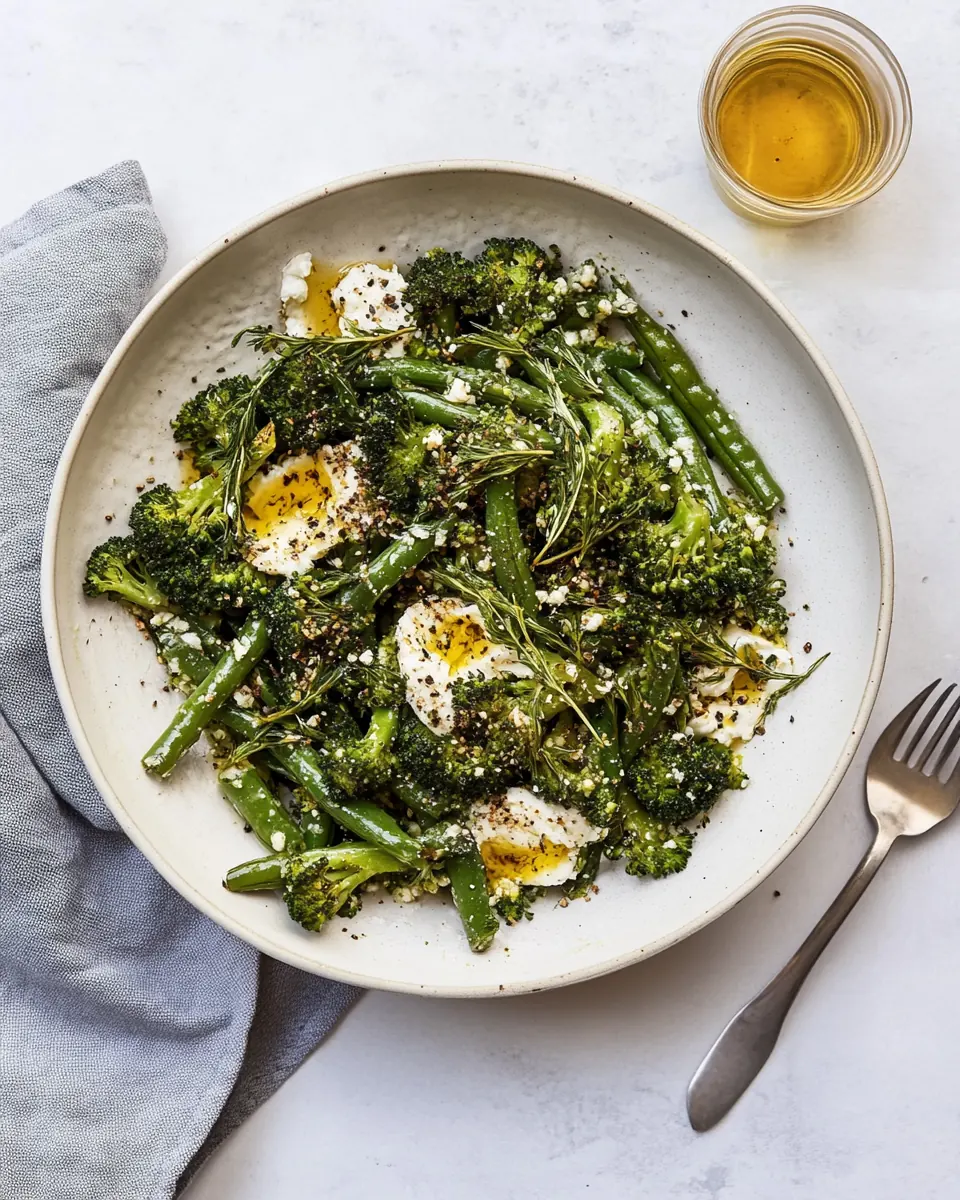
Roasted broccoli green bean salad with burrata
Ingredients
Equipment
Method
- Preheat the oven to 200 C and toss the vegetables in olive oil to lightly coat. Spread these out on one very large roasting sheet or two smaller ones. You don’t want to overcrowd the pan. If you have a fan oven, bake on this setting and roast the vegetables on two trays at the same time. Keep the 2 vegetables separate on the tray as they roast at slightly different times. Sprinkle generously with nutritional yeast, salt and pepper and toss to combine. Use the floret part of the broccoli to wipe up and oil and nutritional yeast on the tray.: Warm air carrying a faint olive oil scent is the first clue the kitchen is ready, the hot oven will coax sugars from the broccoli and green beans producing browned, slightly charred tips that add complexity to each bite. I look for a steady heat so the exterior crisps while the interior stays tender, and I make sure the vegetables are only lightly coated so they roast rather than steam. A common mistake is over oiling which can make them soggy instead of crisp. Keep space on the tray so the surfaces get direct heat and turn golden rather than stewing.
- Roast the broccoli for 15 minutes and until they take on char and are starting to crisp then remove from the tray. Continue roasting the beans for a further 4 – 5 minutes. They take closer to 20 minutes.: As the vegetables sizzle against the hot metal you will hear a light crackle and see glossy edges beginning to darken, a sign that caramelization is underway. Laying them out in a single layer prevents crowding, which would trap steam and prevent browning. I prefer two trays if needed, because the airflow is better and everything roasts evenly. Avoid piling them up, that will create limp rather than crisp textures, and flipping halfway helps ensure even color.
- While the vegetables are roasting, place the burrata on a serving platter. Butterfly the cheese by cutting halfway down through the middle and then turning your knife to one direction to slice off the top and flap it open. Repeat on the other side. Drizzle the cheese with your very good quality olive oil and spritz it with lemon juice. Season lightly with salt and pepper.: When the pan is crowded, steam builds and the vegetables soften rather than char, losing the desired contrast with the burrata . Give each piece breathing room so edges can caramelize and develop a nutty aroma. If necessary, roast in batches rather than cramming everything together. A trap I see often is trying to save time by crowding the tray, but that risks missing the golden, slightly smoky notes that make the salad sing.
- To make the crumb heat the olive oil in a small pan and fry the crumbs until golden. About halfway through add the garlic and allow stir to ensure it mixes with the crumbs and cooks to take the abrasive edge off. Add the lemon zest, salt and pepper.: The circulating heat in a fan oven encourages even browning, so you’ll notice a more uniform color across the trays and quicker development of crispness. I rotate trays front to back halfway through to avoid hot spots and ensure consistent results. Do not skip rotation when your oven has uneven heat, or some pieces may char too much while others remain pale. The goal is a balance of blistered edges and tender flesh.
- When the vegetables are a cooked arrange them across the platter on top of the burrata. Scatter over the mint and chopped parsley and fried breadcrumbs.: Watching the trays, you will see the broccoli florets darken sooner than the slim green beans , which is why I roast them separately on the tray. The broccoli will develop crisp charred tips first and can be removed earlier to preserve its texture. A frequent misstep is treating both exactly the same, which can leave the beans limp or the broccoli overdone. Separate placement lets you pull each when it reaches its peak.
- Sprinkle generously with nutritional yeast, salt and pepper and toss to combine: When the seasoning hits hot oil on the tray it blooms, releasing savory, toasty aromas that coat the vegetables. Tossing helps distribute those flavors into nooks and crevices, so every bite gets a hit of umami from the nutritional yeast . Watch that you do not over season early on, as flavors concentrate while roasting. If you add too much salt at the start, the vegetables can become overly salty once reduced.
- Use the floret part of the broccoli to wipe up and oil and nutritional yeast on the tray: Using small florets to gather up browned bits is a simple trick that traps concentrated flavor, those sticky, toasty fragments cling and create intensely flavored bites. I often scrape gently with a spatula after roasting to capture these caramelized bits for plating. Avoid scraping too hard which can tear delicate pieces; gentle coaxing retains the texture and the flavor pockets.
- Roast the broccoli for 15 minutes and until they take on char and are starting to crisp then remove from the tray: When the broccoli edges look darkened and the stems are tender when pierced, you know they are ready, the smell will be nutty and slightly sweet. Removing them at this point preserves a slight bite inside while giving flavorful char on the outside. A common error is leaving them too long which leads to dry, bitter florets. Trust visual cues more than the clock, because oven performance varies.
- Continue roasting the beans for a further 4 to 5 minutes: The green beans need a little longer to blister and get those popping browned spots while staying tender crisp, and the added time allows them to caramelize without drying out. You will see their skins wrinkle and darken at the tips, and they will give a satisfying snap when bitten. If overroasted they can become limp and leathery, so check frequently in this short window and remove when they look glossy and blistered.
- They take closer to 20 minutes: Overall roasting finishes when both vegetables show developed color and the aroma is rich and toasty, that roughly twenty minutes in a hot oven yields balanced textures. Keep an eye on the trays after the fifteen minute mark, the residual heat often finishes things quickly. Avoid walking away entirely, because the final few minutes are when surfaces go from golden to deeply charred; intervene if you need to prevent excess browning.
- While the vegetables are roasting, place the burrata on a serving platter: The creamy center of the burrata benefits from sitting at room temperature so it loosens and becomes silkier, and putting it on a platter early helps it warm gently. Softening the cheese allows it to meld with the hot vegetables and creates that luscious pool of cream you want. A mistake is serving it too cold, which reduces the luxurious mouthfeel and inhibits the flavors from melding with the warm veg.
- Butterfly the cheese by cutting halfway down through the middle and then turning your knife to one direction to slice off the top and flap it open: As you open the burrata the soft interior reveals itself, and the visual makes the dish feel generous and inviting, with creamy strands spilling out over the plate. This technique encourages guests to combine cheese and vegetables in each bite. Be gentle cutting so you do not crush the creamy center; a delicate hand preserves both form and texture.
- Drizzle the cheese with your very good quality olive oil and spritz it with lemon juice: The glossy olive oil and bright lemon lift the creamy burrata , adding fruitiness and a citrus spark that balances fat. A little acid brightens every component and helps the cheese feel lighter on the palate. Avoid overdoing the lemon which can overwhelm the subtle dairy sweetness of the burrata .
- Season lightly with salt and pepper: The final seasoning on the burrata should be restrained because the cheese is already rich, just a light dusting enhances its flavor without overpowering the vegetables. Taste as you go to find the right balance, since salt levels can change after you add the roasted veg. A common fault is over salting early, which cannot be undone once integrated.
- To make the crumb heat the olive oil in a small pan and fry the crumbs until golden: As the breadcrumbs hit hot olive oil they will sizzle and emit a toasty, warm aroma, turning a confident golden brown that contributes crunch and nutty flavor. Keep the heat moderate so they color evenly, stirring often to avoid hot spots. Burned crumbs will taste bitter, so remove them the moment they reach a golden hue and transfer to a cool plate to stop cooking.
- About halfway through add the garlic and allow stir to ensure it mixes with the crumbs and cooks to take the abrasive edge off: Adding crushed garlic midway softens its raw sharpness and infuses the crumbs with savory depth, releasing fragrant steam that hints at roasted garlic. Stir so the garlic cooks gently and becomes tender rather than charred. The pitfall is adding garlic too early which will burn and taste acrid, so timing matters for a mellow, aromatic crumb.
- Add the lemon zest, salt and pepper: Zest brings concentrated citrus oils into the crumb, making it lively and aromatic, while salt amplifies taste and pepper adds a subtle warmth. Tossing these in at the end preserves the bright aromatic quality of the zest. Be mindful of salt levels if you have already salted the veg earlier, adjust to taste to avoid over seasoning.
- When the vegetables are a cooked arrange them across the platter on top of the burrata: As you place warm broccoli and green beans over the soft burrata you will see the cheese melt slightly and mingle with roasted oil, creating ribbons of cream that coat the veg. This assembly creates a mosaic of textures and colors, and the warmth brings everything together. Avoid piling too high which can smother the cheese; aim for an even, artful scatter.
- Scatter over the mint and chopped parsley and fried breadcrumbs: The finishing herbs add a green lift while the golden crumbs supply the final crunchy contrast, and the aroma of torn mint is a cool counterpoint to the warm roasted notes. I finish with a few extra lemon wedges for anyone wanting more brightness. A misstep would be adding the crumbs too early, they will lose crunch if they sit on warm veg for too long, so add them at the last moment.
Notes
- Room temperature burrata helps the cheese relax and release its creamy center without being cold and firm.
- Use quality olive oil for drizzling and frying crumbs, it makes a noticeable flavor difference in the finished salad.
- Don’t overcrowd the trays because proper air circulation is essential for crisp, charred edges on the vegetables.
- Watch the crumbs closely they go from golden to burnt very quickly, stir constantly once they begin to color.
- Finish with fresh herbs such as parsley and mint for bright aromatics that lift the whole dish just before serving.