Slow Cooker Stuffed Pepper Soup
Slow Cooker Stuffed Pepper Soup is the kind of bowl I turn to on the coldest evenings, the one that feels like a warm, savory blanket. The first time I made it, I was racing home after a long day and wanted something that could simmer away while I caught up on a book, and this soup delivered comfort without fuss. The mix of ground beef, bright red bell pepper, and hearty rice created a texture that felt intentionally rustic, like a hug from a family recipe I had not yet inherited.
I remember stirring a pot of softened onion and garlic while the aroma filled the kitchen, and thinking how the slow cooker transforms simple pantry staples into something soulful. Later, as I ladled steaming bowls and topped them with separate mounds of fluffy rice, friends kept asking for the recipe. We talked about how the spices land just right, and how the tomatoes and tomato sauce give it a gentle tang that balances the savory ground beef. This became my take anywhere crowd pleaser, easy to double and equally dependable for weeknight dinners or casual gatherings.
Over time I learned a few small tricks that make the end result sing, and those are woven into the instructions below. I also love that this recipe is forgiving, so you can lean into it when life is busy. When I need a low-effort meal that still feels carefully made, I pull the slow cooker insert out and let the soup work its magic while I get on with the rest of the evening.
Recipe Snapshot
4 hr 30 mins
30 mins
240 mins
Hard
350 kcal
American
Gluten-Free, Low FODMAP
Soups
Large nonstick skillet, Slow cooker, Spatula, Ladle
What Sets This Slow Cooker Stuffed Pepper Soup Apart
Hearty and Homey
I adore how Slow Cooker Stuffed Pepper Soup captures the heart of a stuffed pepper but in a spoonable form. The combination of ground beef and tomatoes gives a meaty, satisfying base that hits comforting savory notes, while the softened onion and peppers provide gentle sweetness and texture. For cold nights, this is the kind of bowl that feels like dinner and therapy at once.
Hands Off Cooking
One of the reasons I keep making this is the convenience, you can brown the ground beef quickly, transfer everything to the slow cooker, and then go about your day. I love the patience the slow cooker enforces, it rewards you with layered flavors and tender vegetables without hovering. If you want dinner that practically makes itself, this is it.
Balanced Flavor Profile
The herbs like dried marjoram, basil, and oregano are subtle but essential, they lift the tomato and beef base so the soup never tastes flat. I find that the gentle heat and acidity from the diced tomatoes and tomato sauce create a bright counterpoint to the savory elements, and the parsley added at the end brings a fresh pop that wakes up every spoonful.
Flexible and Family Friendly
I appreciate how adaptable the recipe is. You can prepare the components on a busy morning, then finish in the evening. Serving the rice separately keeps leftovers intact, and it’s great for family meals where everyone can customize their bowl size. In my house, kids and adults alike respond to the familiar flavors, which makes it a rare winner across generations.
Meal Prep Friendly
Finally, this soup stores and reheats beautifully when kept separate from the rice. I often make a double batch to freeze for later, and having that extra container ready for a rushed evening is a small domestic triumph. For me, recipes that taste almost as good day two are worth their weight in gold.
Shopping List for Slow Cooker Stuffed Pepper Soup
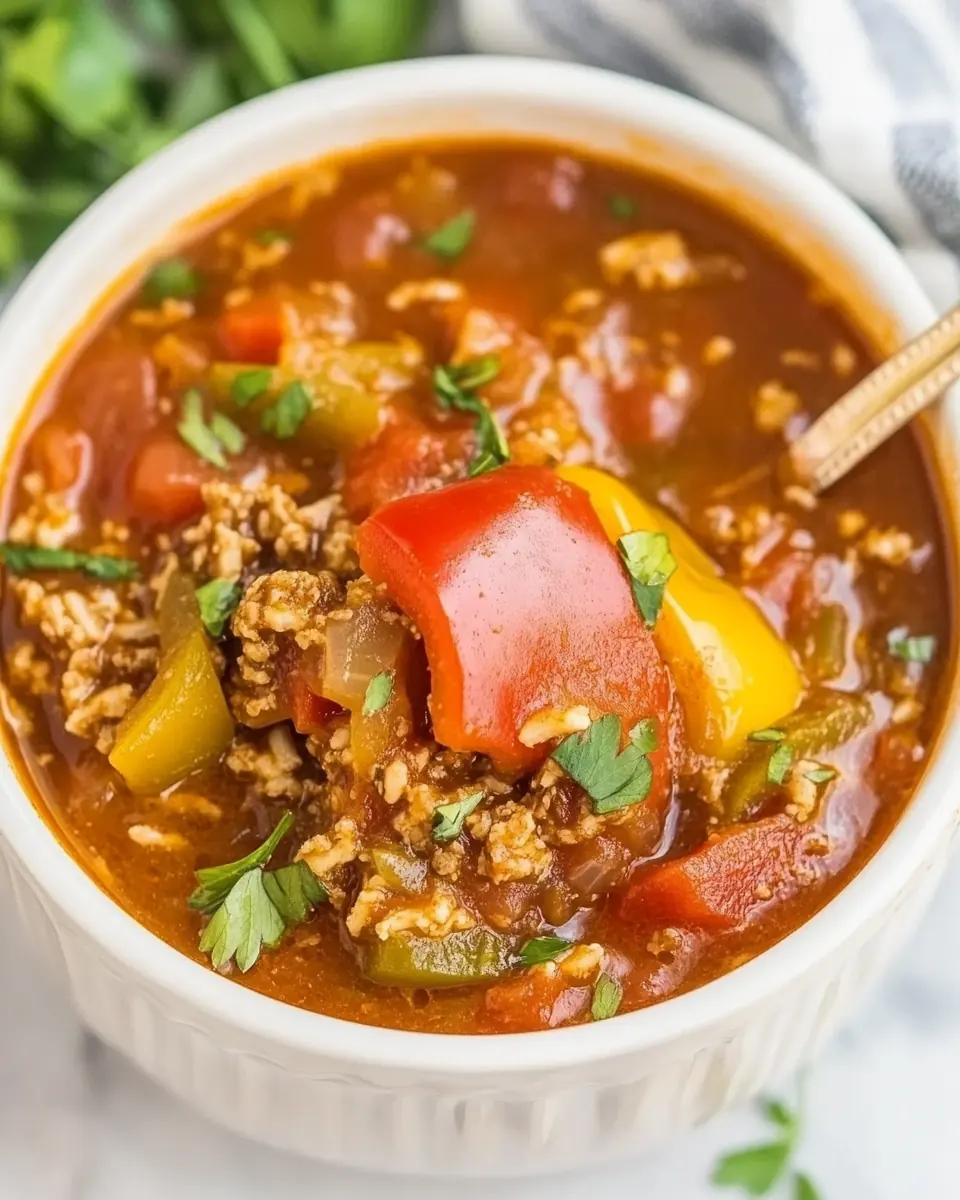
These ingredients are chosen to build depth, texture, and comforting familiarity. The ground beef provides a savory backbone while the trio of onion, red bell pepper, and green bell pepper offers sweetness and structure. Tomatoes and tomato sauce create the rich, tangy broth that carries the dried herbs, and finishing with chopped parsley and separate rice gives you bright contrast and satisfying heft.
- 1 pound 95% lean ground beef: Brown and crumble to render fat and develop savory, meaty flavor that forms the hearty base of the soup; choose 95% lean to keep the dish relatively low in fat while still providing texture and richness. Season while cooking to layer flavor and ensure even distribution throughout the broth and vegetables.
- 3/4 teaspoon kosher salt, or to taste: Season lightly to enhance overall flavor and balance acidity from tomatoes and tang from herbs; kosher salt dissolves well in soups and helps bring out natural tastes of other ingredients. Adjust to taste near the end of cooking to avoid over-salting as the broth concentrates.
- 1 1/2 cups finely diced sweet Vidalia onion, from about 1 medium/large onion: Sauté finely diced Vidalia onion to provide a sweet, mellow aromatic foundation that complements the peppers and tomatoes; its mild sweetness softens during slow cooking, adding depth without sharpness. Finely dicing ensures it breaks down and blends into the soup’s texture for consistent flavor.
- 1 1/2 cups chopped red bell pepper, from about 1 large pepper: Add chopped red bell pepper for a sweet, fruity note and vibrant color that mimics the classic stuffed pepper profile; it softens and releases juices during slow cooking, contributing to the body of the broth. Use roughly chopped pieces to retain some bite yet still meld with the other vegetables.
- 2/3 cup chopped green bell pepper, about half of 1 large pepper: Include chopped green bell pepper for a slightly bitter, vegetal contrast to the red pepper’s sweetness and to recreate stuffed pepper flavor dynamics; it holds up well in slow cooking, providing structure. Use about half a large pepper to maintain a balanced pepper ratio without overpowering the soup.
- 3 cloves garlic, chopped: Mince garlic to infuse pungent, aromatic depth that amplifies savory flavors and pairs well with herbs and tomatoes; garlic blossoms during cooking, offering a warm, slightly sweet background. Add early enough in the sauté to mellow its raw bite and distribute aroma throughout the soup.
- two 14.5-ounce cans petite diced tomatoes, I used no salt added: Stir in petite diced tomatoes with their juices to supply body, acidity, and tomato chunks that echo stuffed pepper filling; using no-salt–added cans helps control sodium in the finished dish. The diced texture adds pleasant tomato pieces amid the rice and meat, enriching mouthfeel.
- 1 3/4 cups tomato sauce, one 15-ounce can: Pour in tomato sauce to create a smooth, concentrated tomato base that thickens the broth and binds flavors together; the sauce complements diced tomatoes and enhances overall tomato intensity. Choose a standard 15-ounce can to achieve the desired consistency without diluting other components.
- 2 cups reduced sodium, fat-free chicken broth: Add reduced sodium, fat-free chicken broth to provide a light, savory liquid foundation that carries flavors while keeping calorie and fat content lower; reduced sodium allows better seasoning control. Use broth as the primary cooking medium so rice and ingredients meld into a cohesive soup.
- 1/2 teaspoon dried marjoram: Sprinkle dried marjoram to contribute a delicate, slightly sweet herbal aroma that complements oregano and basil without overpowering; marjoram offers subtle floral notes reminiscent of classic Mediterranean seasoning. Rehydrate during slow cooking to release its nuanced flavor into the broth.
- 1/2 teaspoon dried basil: Incorporate dried basil to lend warm, sweet, and slightly peppery herbaceousness that harmonizes with tomato and garlic flavors; basil helps recreate the Italian-inspired profile typical of stuffed peppers. Allow time in the slow cooker for the dried herb to soften and infuse evenly.
- 1/2 teaspoon dried oregano: Season with dried oregano to introduce robust, earthy, and slightly bitter herbal tones that reinforce savory tomato-based dishes; oregano pairs well with basil and marjoram for layered herb complexity. Use modest amounts so the herb complements rather than dominates the soup.
- 1/2 teaspoon freshly ground pepper, or to taste: Finish with freshly ground pepper to add bright, sharp heat and aromatic bite that lifts flavors and adds contrast to the sweet vegetables and tomato base; grind to taste for optimal freshness. Add gradually and taste toward the end of cooking to achieve the desired peppery kick.
- 3 to 4 tablespoons fresh Italian flat-leaf parsley, finely minced: Stir in minced Italian flat–leaf parsley to provide fresh, grassy brightness and a clean herbal finish that lightens the rich, meaty, and tomato-forward elements; parsley also adds subtle texture and color. Add most near the end of cooking to preserve its fresh flavor and visual appeal.
- 3 cups cooked white or brown rice: Fold in cooked white or brown rice to supply body, substance, and satisfying chew that turns the soup into a complete meal reminiscent of stuffed peppers; rice soaks up the flavorful broth and helps thicken the soup. Use cooked rice to avoid overcooking and to maintain the preferred texture within the slow cooker.
Cooking Method for Slow Cooker Stuffed Pepper Soup
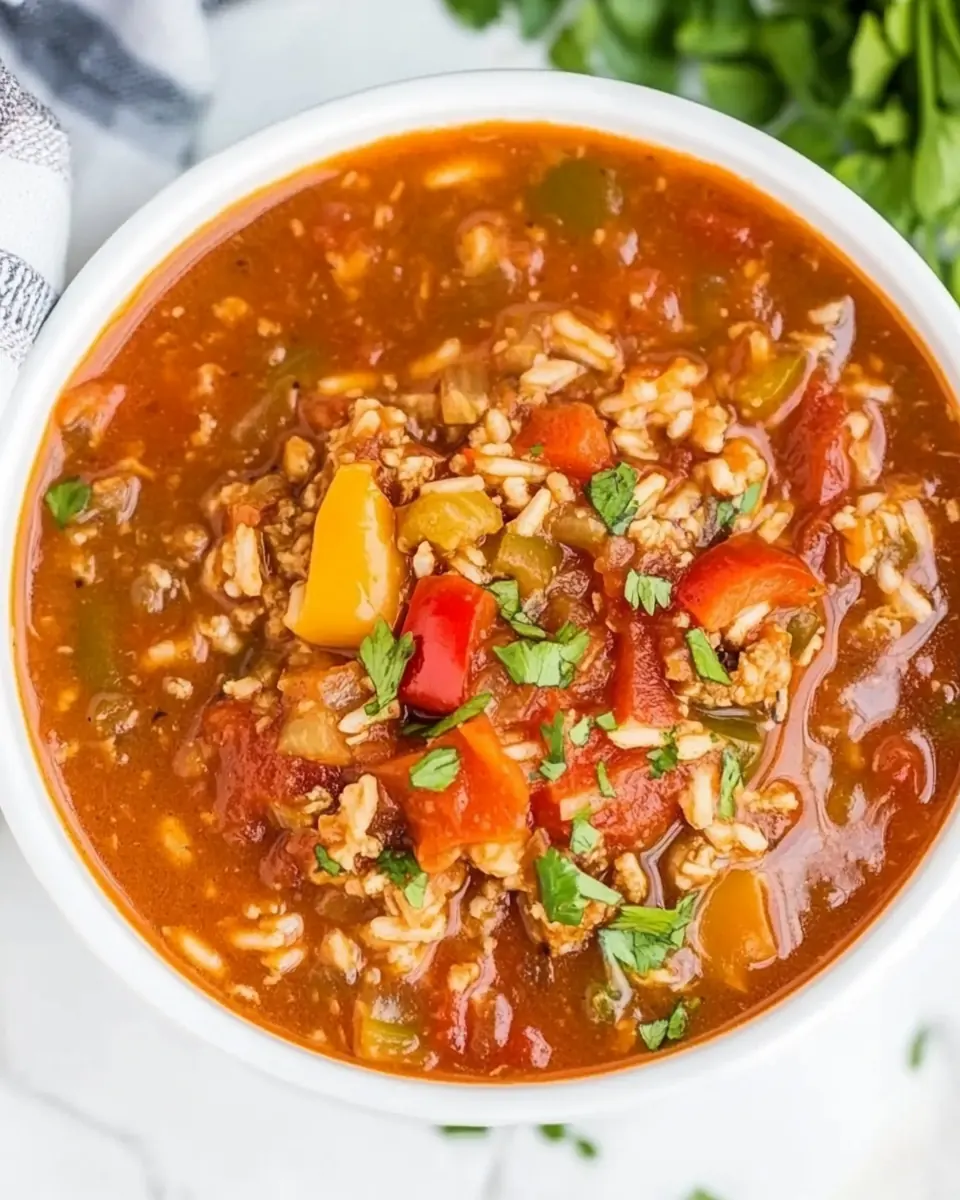
I like to think of the cooking process as a sequence of shape and transform, where initial high heat builds savory depth, and the slow cooker finishes with gentle uniformity. The directions below expand each step, offering sensory cues and troubleshooting so your pot ends up confident and balanced.
- To a large nonstick skillet or large Dutch oven, add the ground beef, kosher salt, and cook over medium-high heat to brown, crumbling it with a spatula as it cooks and tossing it to ensure even cooking. Cook through, about 5 minutes or as necessary. Drain fat if necessary.: The moment the ground beef hits the hot skillet you should hear an immediate and lively sizzle, that sound signals browning and flavor development through the Maillard reaction. As the meat browns it will release savory aromas that smell meaty and toasty; watch for edges turning golden brown and for small browned bits stuck to the pan which are full of flavor. Crumbling with a spatula helps expose more surface area to the heat so you get even color rather than large gray clumps, it also speeds the process so the meat cooks through in roughly five minutes. As juices collect, you'll see a darker brown foam or droplets; drain excess fat if you notice a greasy sheen, this keeps the broth clear and prevents the soup from tasting oily. A common mistake here is overcrowding the pan, which steams the meat instead of browning it, so if your skillet looks too full, work in batches or use a larger pan to maintain that crisp sear.
- Add the onion, peppers, garlic, and cook for about 6 to 8 minutes, or until vegetables have softened, stir intermittently.: When you add the chopped onion , red bell pepper , green bell pepper , and garlic the heat will lull slightly and you should hear gentle sputtering as the moisture in the vegetables escapes. Within a few minutes the onion will become translucent and the peppers will start to soften and lose their raw edge; their fragrance will shift from sharp and vegetal to sweet and aromatic. Stirring intermittently prevents sticking and promotes uniform softening, and you can tell the vegetables are ready when a fork slides through easily and a faint sweetness rises from the pan. The garlic will perfume the mixture, but keep the heat moderate to avoid burning it, since burnt garlic turns acrid. One frequent slip is letting the garlic brown too fast; if you see dark flecks, lower the heat and scrape them into the mixture so they blend rather than dominate.
- Line a 6-quart slow cooker with a slow cooker liner if desired and transfer the beef mixture into it.: Moving the browned, fragrant mixture into the slow cooker is where the dish transitions from active stovetop work to long, patient cooking. You should notice the pan echo of rich aromas as you scrape the base, those brown bits carry concentrated flavor and should be tipped into the cooker. Lining the slow cooker makes cleanup easier and prevents sticking, especially with tomato forward dishes, but it is optional. Once transferred, the mixture will settle and release juices that mingle with any residual fond from the skillet, setting the stage for the broth to take on layered taste. A mistake here is forgetting to deglaze the pan, leaving flavorful bits behind, so use a splash of broth or water to loosen those morsels and add them to the cooker.
- Add the broth, diced tomatoes, tomato sauce, marjoram, basil, oregano, pepper, stir to combine, cover, and cook on high for about 4 hours or low for about 8 hours. All slow cookers vary in their heat intensity. Cook until done.: Pouring in the chicken broth , canned tomatoes , and tomato sauce transforms the skillet mixture into soup, the liquid will glisten and steam as it settles. Add the dried herbs marjoram , basil , and oregano now so their flavors have time to infuse; during slow cooking these herbs release oils that gently perfume the broth. Stirring ensures even distribution so each spoonful tastes consistent. Covering traps steam and fosters a steady low boil or gentle simmer depending on your cooker. On high the flavors meld in about four hours, on low they develop more slowly and deeper in roughly eight hours, but heat output varies between models so check for tender vegetables and cohesive flavor. If the soup tastes thin near the end, simmer uncovered briefly to concentrate; if it is too thick, add a splash more chicken broth . A common oversight is lifting the lid too often, which lengthens cooking time and can prevent full flavor development.
- Stir in the fresh parsley.: When you stir in the minced parsley at the end you will notice an immediate brightening of aroma and color, the leafy green adds a fresh, slightly peppery lift that contrasts with the slow cooked depth. The texture remains vibrant compared with the mellowed vegetables in the pot, so the parsley gives a welcome contrast in each spoonful. Add it right before serving so the flavor stays lively, and finely mincing ensures it distributes evenly without large fibrous bits. One mistake is adding it too early where prolonged heat will dull its brightness.
- Taste soup and make any necessary seasoning adjustments, i. e. more salt, pepper, pinch of sugar, etc.: Taste is your final control point, and this step is about balancing acidity, salt, and overall harmony. Take a small spoonful and notice whether the tomatoes feel bright or sharp, whether the ground beef comes through, and whether the herb notes are present. If the soup leans acidic, a tiny pinch of sugar can round it out; if it needs lift, a touch more kosher salt will open flavors. Add pepper gradually to avoid overwhelming the palate. A common misstep is over seasoning, so add small increments and taste between adjustments until it feels balanced.
- Ladle about 1 1/2 cups soup into each bowl and top with about 1/2 cup rice.: Serve by spooning warm soup into bowls and topping each with about 1 1/2 cups of the liquid base and roughly 1/2 cup of separately cooked rice . The contrast between the steaming savory soup and the tender rice creates a pleasing textural interplay. Because the rice is served separately you avoid it swelling and becoming mushy in leftovers, keeping future servings fresh. If you accidentally add rice to the cooker, expect softer texture in stored portions. A serving pitfall is making too little rice , so cook a bit extra if you prefer a fuller bowl.
Tips for Success
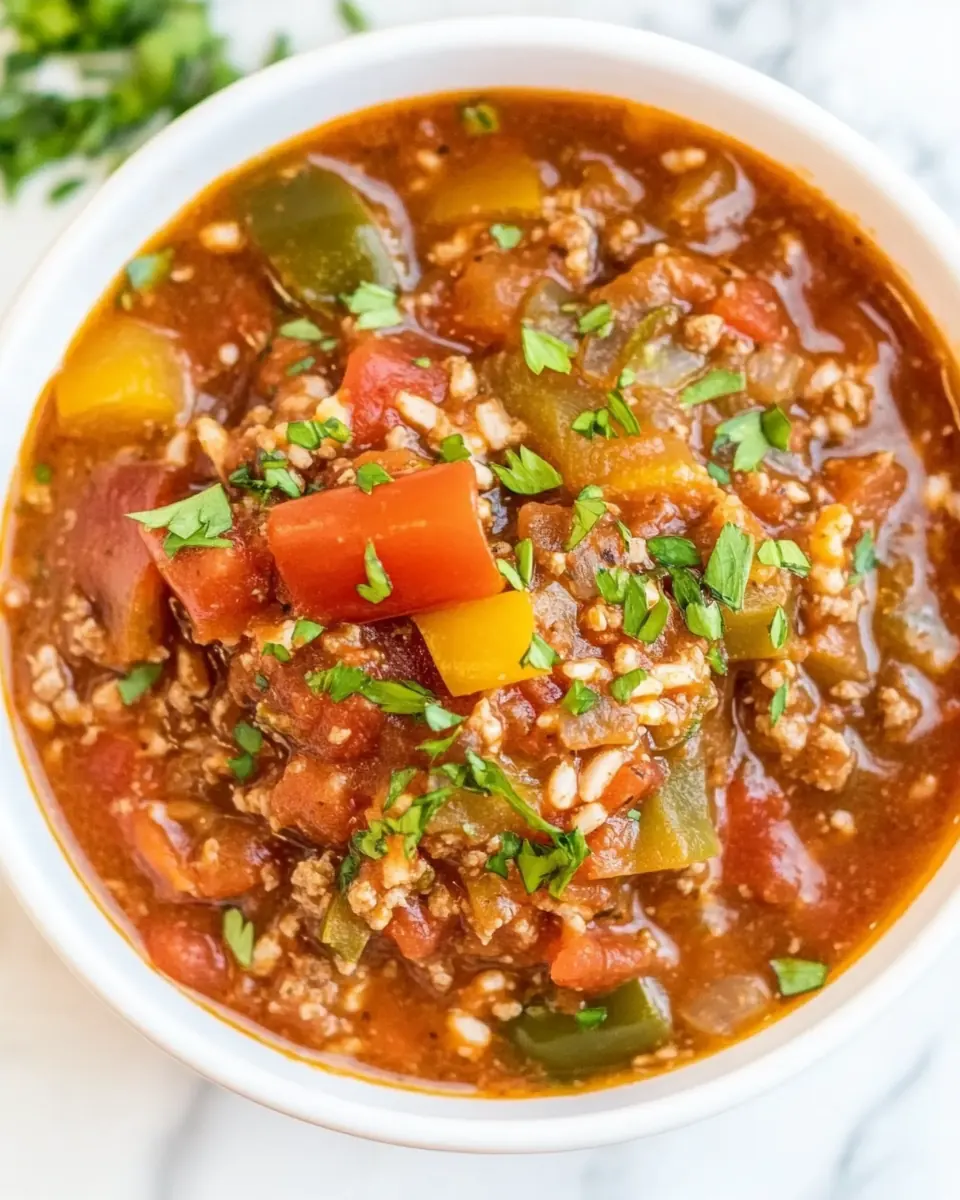
Small adjustments make a big difference with this recipe. Below are expanded tips that explain why each tweak matters and how to avoid common mistakes. I rely on these pointers every time I make the soup to keep the flavors balanced and the texture right.
- Browning yields flavor When you take time to properly brown the ground beef, you build a depth of savory flavor that the slow cooker will amplify. Aim for a steady medium high heat so the meat caramelizes rather than stews. Watch for even color and little crispy bits, those are concentrated flavor. If the pan steams instead of browns, the soup will be less rich, so avoid overcrowding and drain excess fat to prevent greasiness.
- Control salt early and adjust late Season the ground beef lightly while browning, then hold back most of the kosher salt until after the long cook, because flavors concentrate during slow cooking. Tasting near the end lets you account for sodium in the canned tomatoes or broth. Over salting is hard to fix, so add incrementally and taste between additions.
- Serve rice separately Cooking and storing the rice apart from the soup prevents softening and maintains texture in leftovers. Keep rice in an airtight container and reheat briefly before serving. If rice is mixed into the pot, expect thicker liquid and softer grains in storage, which can be undesirable for meal prep.
- Use reduced sodium broth A reduced sodium chicken broth gives you seasoning flexibility and minimizes the risk of an overly salty final product. If you only have regular broth, dilute slightly with water or add less salt at the end. High sodium can mask the herbal nuances from the marjoram and basil.
- Mince parsley finely Finely minced parsley disperses evenly and provides a fresh finish without large leafy bits. Add it just before serving so its color and flavor stay vivid. If added too early, the parsley will fade and its benefit diminishes.
Accompaniments for Slow Cooker Stuffed Pepper Soup
This soup is naturally comforting and pairs well with simple sides that enhance its homestyle character. Below I outline serving ideas, storage guidance, and occasions where this dish shines, all in list form so you can pick what suits your meal.
- Crusty bread for dipping A warm, crusty loaf is a classic companion to soak up the rich tomato broth and make the meal more filling; consider a rustic baguette or country loaf.
- Light green salad A crisp salad dressed with a lemony vinaigrette adds a fresh contrast to the warm, savory soup, balancing the meal with bright acidity and crunch.
- Family dinners and weeknights This recipe is ideal for busy weeknights and relaxed family dinners, because it can cook unattended and please multiple palates without fuss.
- Meal prep and leftovers Store the soup and rice separately in airtight containers; the soup keeps in the fridge for up to five days and freezes well for longer storage.
- Seasonal pairing In winter, serve this soup with roasted root vegetables on the side, while in transitional months a simple slaw can lighten the plate.
- Make ahead for gatherings Prepare the base a day ahead and rewarm gently before serving, then offer bowls of freshly cooked rice so guests can top their servings to taste.
FAQ
Conclusion
This Slow Cooker Stuffed Pepper Soup stands out because it captures the comforting flavors of stuffed peppers in a saucy, spoonable form that’s both hearty and convenient. It’s a forgiving recipe, ideal for busy evenings when you want homemade depth without constant attention, and it rewards a little upfront browning with rich, developed flavor. Give it a try on a chilly night, serve the rice separately for the best leftovers, and enjoy the ease of a slow cooked meal that feels like classic home cooking.
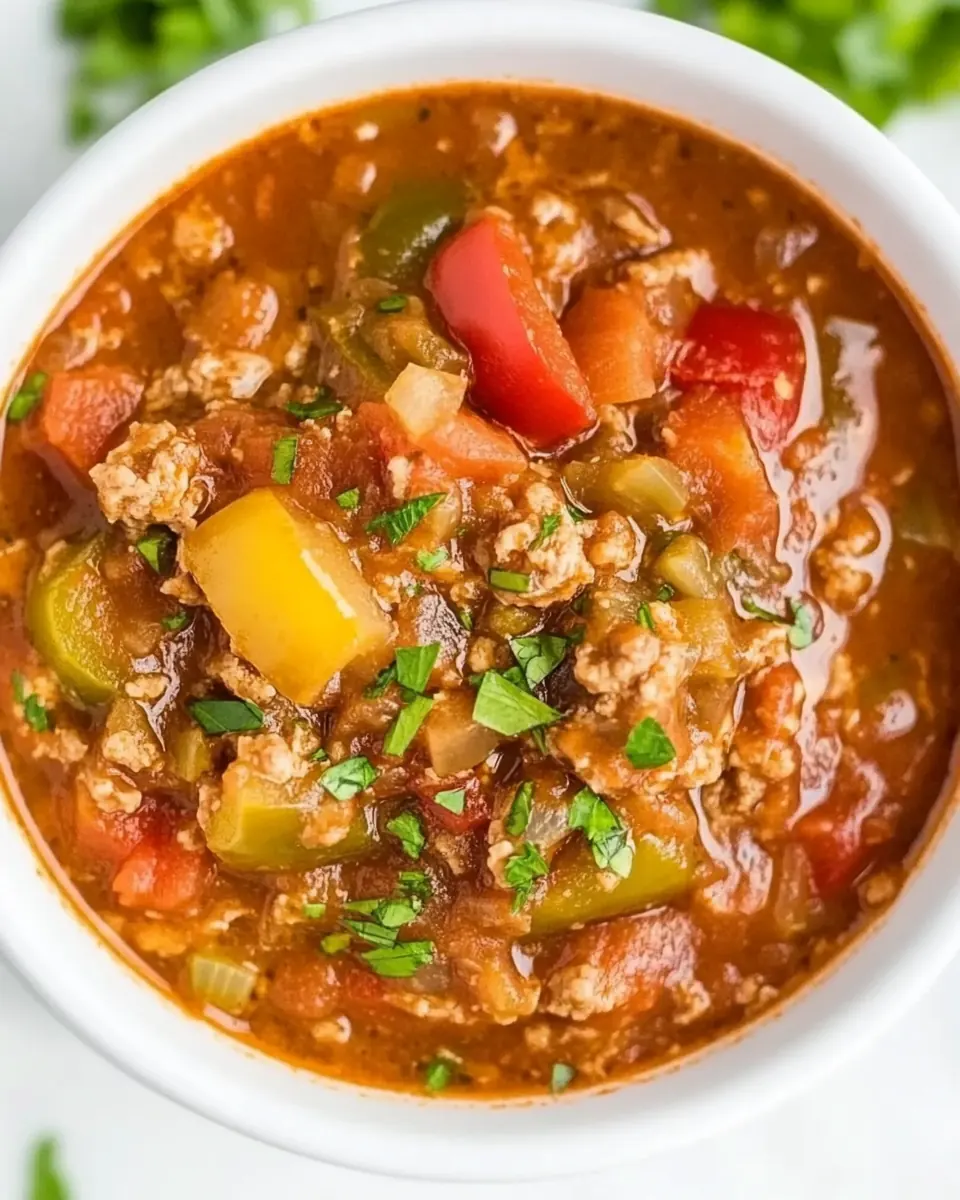
Slow Cooker Stuffed Pepper Soup
Ingredients
Equipment
Method
- To a large nonstick skillet or large Dutch oven, add the ground beef, kosher salt, and cook over medium-high heat to brown, crumbling it with a spatula as it cooks and tossing it to ensure even cooking. Cook through, about 5 minutes or as necessary. Drain fat if necessary.: The moment the ground beef hits the hot skillet you should hear an immediate and lively sizzle, that sound signals browning and flavor development through the Maillard reaction. As the meat browns it will release savory aromas that smell meaty and toasty; watch for edges turning golden brown and for small browned bits stuck to the pan which are full of flavor. Crumbling with a spatula helps expose more surface area to the heat so you get even color rather than large gray clumps, it also speeds the process so the meat cooks through in roughly five minutes. As juices collect, you'll see a darker brown foam or droplets; drain excess fat if you notice a greasy sheen, this keeps the broth clear and prevents the soup from tasting oily. A common mistake here is overcrowding the pan, which steams the meat instead of browning it, so if your skillet looks too full, work in batches or use a larger pan to maintain that crisp sear.
- Add the onion, peppers, garlic, and cook for about 6 to 8 minutes, or until vegetables have softened, stir intermittently.: When you add the chopped onion , red bell pepper , green bell pepper , and garlic the heat will lull slightly and you should hear gentle sputtering as the moisture in the vegetables escapes. Within a few minutes the onion will become translucent and the peppers will start to soften and lose their raw edge; their fragrance will shift from sharp and vegetal to sweet and aromatic. Stirring intermittently prevents sticking and promotes uniform softening, and you can tell the vegetables are ready when a fork slides through easily and a faint sweetness rises from the pan. The garlic will perfume the mixture, but keep the heat moderate to avoid burning it, since burnt garlic turns acrid. One frequent slip is letting the garlic brown too fast; if you see dark flecks, lower the heat and scrape them into the mixture so they blend rather than dominate.
- Line a 6-quart slow cooker with a slow cooker liner if desired and transfer the beef mixture into it.: Moving the browned, fragrant mixture into the slow cooker is where the dish transitions from active stovetop work to long, patient cooking. You should notice the pan echo of rich aromas as you scrape the base, those brown bits carry concentrated flavor and should be tipped into the cooker. Lining the slow cooker makes cleanup easier and prevents sticking, especially with tomato forward dishes, but it is optional. Once transferred, the mixture will settle and release juices that mingle with any residual fond from the skillet, setting the stage for the broth to take on layered taste. A mistake here is forgetting to deglaze the pan, leaving flavorful bits behind, so use a splash of broth or water to loosen those morsels and add them to the cooker.
- Add the broth, diced tomatoes, tomato sauce, marjoram, basil, oregano, pepper, stir to combine, cover, and cook on high for about 4 hours or low for about 8 hours. All slow cookers vary in their heat intensity. Cook until done.: Pouring in the chicken broth , canned tomatoes , and tomato sauce transforms the skillet mixture into soup, the liquid will glisten and steam as it settles. Add the dried herbs marjoram , basil , and oregano now so their flavors have time to infuse; during slow cooking these herbs release oils that gently perfume the broth. Stirring ensures even distribution so each spoonful tastes consistent. Covering traps steam and fosters a steady low boil or gentle simmer depending on your cooker. On high the flavors meld in about four hours, on low they develop more slowly and deeper in roughly eight hours, but heat output varies between models so check for tender vegetables and cohesive flavor. If the soup tastes thin near the end, simmer uncovered briefly to concentrate; if it is too thick, add a splash more chicken broth . A common oversight is lifting the lid too often, which lengthens cooking time and can prevent full flavor development.
- Stir in the fresh parsley.: When you stir in the minced parsley at the end you will notice an immediate brightening of aroma and color, the leafy green adds a fresh, slightly peppery lift that contrasts with the slow cooked depth. The texture remains vibrant compared with the mellowed vegetables in the pot, so the parsley gives a welcome contrast in each spoonful. Add it right before serving so the flavor stays lively, and finely mincing ensures it distributes evenly without large fibrous bits. One mistake is adding it too early where prolonged heat will dull its brightness.
- Taste soup and make any necessary seasoning adjustments, i. e. more salt, pepper, pinch of sugar, etc.: Taste is your final control point, and this step is about balancing acidity, salt, and overall harmony. Take a small spoonful and notice whether the tomatoes feel bright or sharp, whether the ground beef comes through, and whether the herb notes are present. If the soup leans acidic, a tiny pinch of sugar can round it out; if it needs lift, a touch more kosher salt will open flavors. Add pepper gradually to avoid overwhelming the palate. A common misstep is over seasoning, so add small increments and taste between adjustments until it feels balanced.
- Ladle about 1 1/2 cups soup into each bowl and top with about 1/2 cup rice.: Serve by spooning warm soup into bowls and topping each with about 1 1/2 cups of the liquid base and roughly 1/2 cup of separately cooked rice . The contrast between the steaming savory soup and the tender rice creates a pleasing textural interplay. Because the rice is served separately you avoid it swelling and becoming mushy in leftovers, keeping future servings fresh. If you accidentally add rice to the cooker, expect softer texture in stored portions. A serving pitfall is making too little rice , so cook a bit extra if you prefer a fuller bowl.
Notes
- Browning yields flavor When you take time to properly brown the ground beef, you build a depth of savory flavor that the slow cooker will amplify. Aim for a steady medium high heat so the meat caramelizes rather than stews. Watch for even color and little crispy bits, those are concentrated flavor. If the pan steams instead of browns, the soup will be less rich, so avoid overcrowding and drain excess fat to prevent greasiness.
- Control salt early and adjust late Season the ground beef lightly while browning, then hold back most of the kosher salt until after the long cook, because flavors concentrate during slow cooking. Tasting near the end lets you account for sodium in the canned tomatoes or broth. Over salting is hard to fix, so add incrementally and taste between additions.
- Serve rice separately Cooking and storing the rice apart from the soup prevents softening and maintains texture in leftovers. Keep rice in an airtight container and reheat briefly before serving. If rice is mixed into the pot, expect thicker liquid and softer grains in storage, which can be undesirable for meal prep.
- Use reduced sodium broth A reduced sodium chicken broth gives you seasoning flexibility and minimizes the risk of an overly salty final product. If you only have regular broth, dilute slightly with water or add less salt at the end. High sodium can mask the herbal nuances from the marjoram and basil.
- Mince parsley finely Finely minced parsley disperses evenly and provides a fresh finish without large leafy bits. Add it just before serving so its color and flavor stay vivid. If added too early, the parsley will fade and its benefit diminishes.