Strawberry Panna Cotta
Strawberry Panna Cotta began as a tiny indulgence I learned to make on a rainy spring afternoon when strawberries were at their sweetest.
I remember how the kitchen smelled of warm cream and the faint perfume of scraped vanilla, while I slowly coaxed the ingredients together with a patience that felt almost meditative. I love recipes that ask for gentle attention rather than hurry, and this one rewarded every quiet minute with a silky texture that felt luxurious against the tongue. That day I served it in small glasses to a friend who commented on its velvet mouthfeel, and I have been making it for small celebrations ever since.
Over the years I’ve adapted small details to match the season, especially when strawberry season arrives and the fruit is fragrant and tender. I like to cook half the fruit down into a glossy compote, keeping the rest fresh to fold in at the end, which gives the dessert a contrast of textures. The simplicity of the ingredients notes how attention to technique, more than complexity, yields memorable results.
Recipe Snapshot
20 mins
5 mins
15 mins
Medium
220 kcal
Italian
Gluten-Free, Low FODMAP
Desserts
Small bowl, Small saucepan, Whisk, Mesh strainer, Glasses or ramekins
Why This Strawberry Panna Cotta Is a Winner
Silky texture that feels indulgent
I love how Strawberry Panna Cotta achieves a luxurious, creamy mouthfeel using only a few simple components. The combination of heavy cream and whole milk creates a rich base that sets into a tender custard, so each spoonful is smooth and lush without being heavy. When I taste it, I notice the way the cream carries the strawberry flavors, making the dessert feel refined yet comforting.
Bright, fresh strawberry flavor
One reason I reach for this recipe in spring is the way the fresh strawberries keep things lively. Cooking half of the berries concentrates their sweetness into a glossy compote, while the reserved fresh slices add pop and texture. I find that approach gives the dish depth, so it never tastes flat or one dimensional.
Fast to prepare, great for entertaining
Even though it feels fancy, Strawberry Panna Cotta is surprisingly simple to prepare, which is why I suggest it for small dinner parties. You can finish most of the work ahead of time, letting the panna cotta rest in the fridge until guests arrive. That hands off time means the host can socialize, while the dessert chills to a perfect set.
Flexible presentation
I adore the versatility of this dessert. Serve it in dainty glasses, small ramekins, or inverted on plates, each choice gives a different vibe. The compote spooned on top creates a glossy, inviting finish, while a few extra fresh strawberries make it feel rustic and seasonal.
Technique that teaches confidence
Making Strawberry Panna Cotta builds useful kitchen skills, like blooming gelatin and tempering warm liquids. Those small techniques translate well to other desserts. Once you master the visual cues, such as the sheen of the cream and the wobble of the set, you can replicate the result reliably for future recipes.
What You Need for Strawberry Panna Cotta
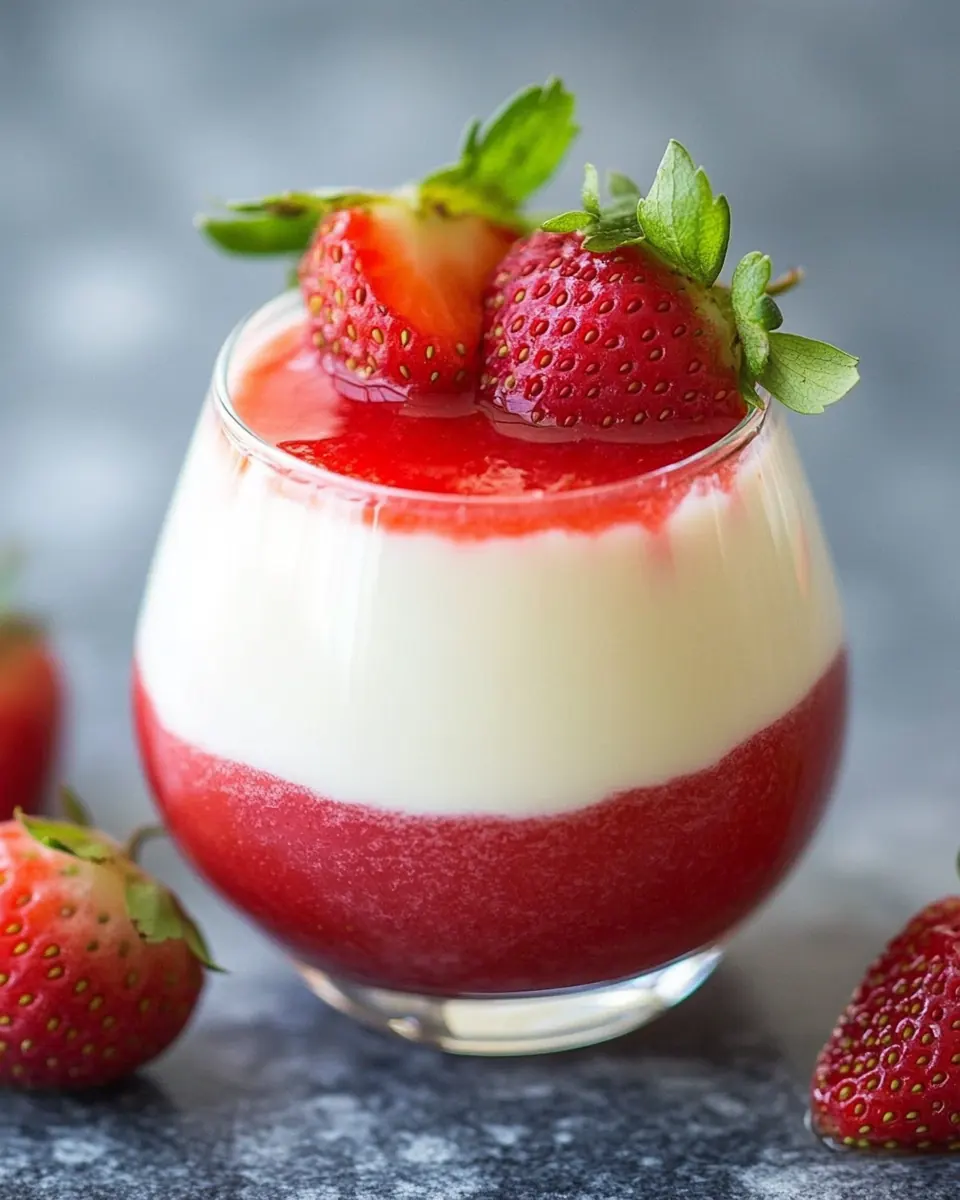
These ingredients are intentionally simple, chosen to create a creamy, balanced panna cotta that highlights fresh strawberries. The key players are the dairy for body, the gelatin for structure, and the strawberries for brightness. Each item has a clear role, and together they deliver a dessert that is elegant without fuss.
- 1/4 cup whole milk: Adds creaminess and thins the dairy mixture so the gelatin can bloom and dissolve evenly; warms gently with the cream to integrate flavors and improve mouthfeel.
- 2 1/2 teaspoons unflavored gelatin: Strengthens the set by blooming and melting into the warm liquid; provides structure to the panna cotta so it firms but remains silky and delicate.
- 2 cups heavy cream: Creates the rich, velvety base and delivers fat that yields a smooth, luxurious texture; carries and mellows flavors when heated with milk and vanilla.
- 1/2 cup granulated white sugar: Sweetens the dessert and balances the dairy richness; dissolves into the warm cream to provide an even, pleasant sweetness throughout the custard.
- 1 pinch salt: Enhances the overall flavor by balancing sweetness and highlighting the cream and vanilla; a tiny amount sharpens flavors without being detectable as salt.
- 1/2 whole vanilla bean (seeds extracted), or 1 teaspoon vanilla extract: Infuses the cream with aromatic vanilla notes when seeds are scraped into the mix; if using extract, provides a straightforward vanilla flavor to complement the cream.
- 1 cup strawberries (sliced and divided): Provides fresh fruity flavor and a delicate texture contrast; half is stirred or pureed into the panna cotta or topping while the other half is used to make a vibrant strawberry sauce or garnish.
- 3 tablespoons granulated white sugar: Sweetens the strawberry topping and helps macerate the fruit; dissolves into the cooked strawberries to create a glossy, balanced sauce.
- 1 tablespoon water: Helps dissolve sugar and extract juice from strawberries when making the topping; creates a thin syrup that carries strawberry flavor and improves texture.
- 1 teaspoon freshly squeezed lemon juice: Brightens the strawberry sauce with acidity and prevents it from tasting flat; balances sweetness and enhances the fruit's natural flavors while stabilizing color.
How to Assemble Strawberry Panna Cotta
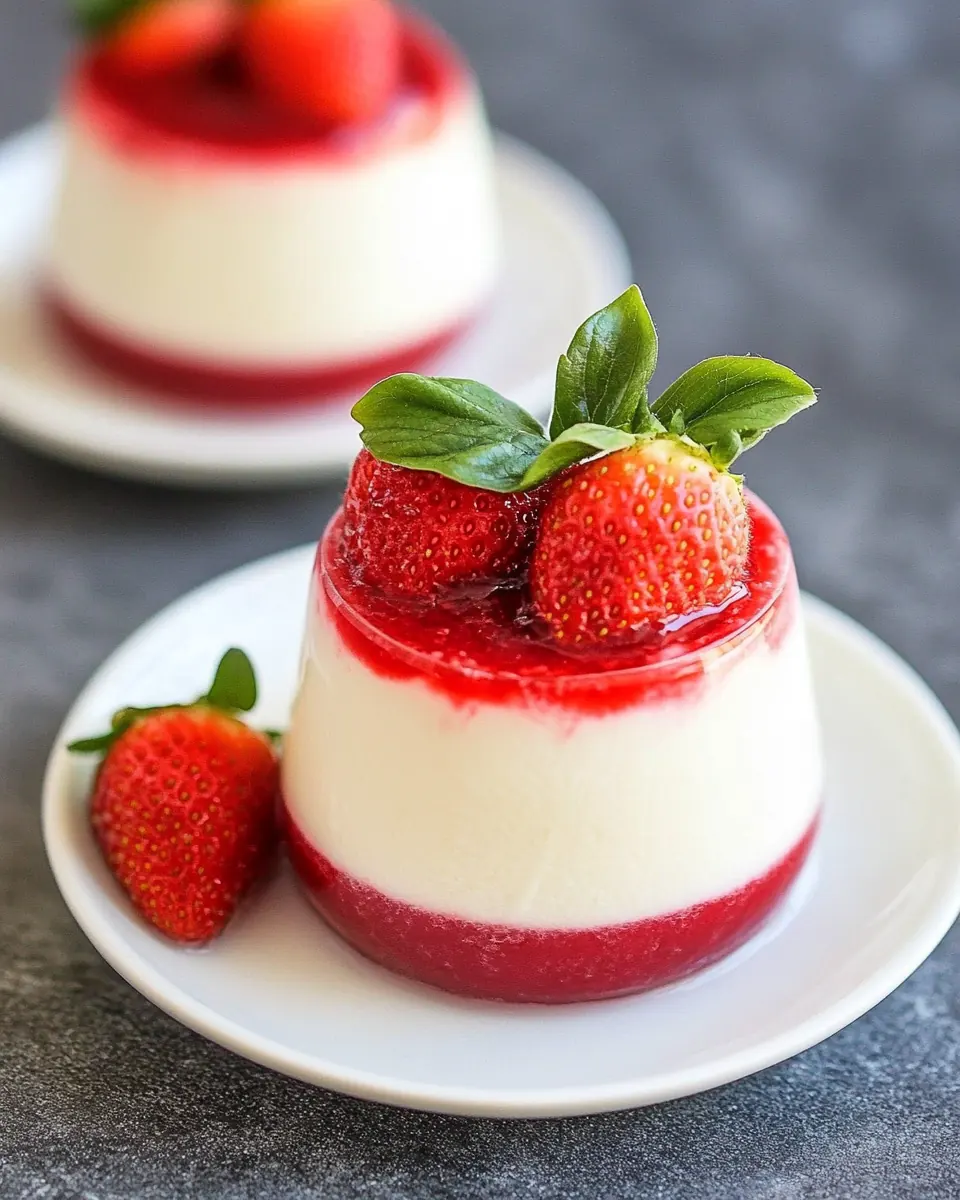
This dessert is about gentle heat, patience, and knowing the visual cues that tell you the panna cotta is ready to set. Follow each step carefully, paying attention to textures and smells. The directions below expand each original instruction into a deeply descriptive guide so you can achieve a silky, stable panna cotta every time.
- Place the milk in a small bowl and sprinkle the gelatin evenly over the milk. Let soak for 5 minutes.: You will notice the gelatin gradually soften as it hydrates, taking on a slightly grainy, spongy appearance, and the milk will look cloudier than before. This bloom stage is crucial because fully hydrated gelatin dissolves smoothly when warmed, preventing lumps. If you skip the soaking or add dry gelatin directly to hot liquid, you risk clumps that will leave gritty bits in the finished custard. A common mistake is rushing this step, so set a short timer and resist the urge to heat yet.
- In a small saucepan, combine the cream, sugar, vanilla seeds, the seeded vanilla bean pod, and bring to a low boil. Let simmer for 5 minutes.: As the heavy cream warms, it will emit a sweet, aromatic steam, and the vanilla seeds will punctuate the steam with a floral, warm perfume. You should aim for a gentle simmer with tiny bubbles along the edge, not a roiling boil, because vigorous boiling can change the texture and create tiny curdles. Stir occasionally so the granulated white sugar dissolves completely and the vanilla infuses evenly. Watch for the cream to develop a glossy sheen and a fuller smell, which signals readiness.
- After the 5 minutes, remove the pan from heat and whisk in the milk/gelatin mixture until smooth.: The warm cream will dissolve the bloomed gelatin quickly, and as you whisk you should see the mixture become silky and uniform. The aroma will deepen, and the liquid’s surface will reflect light more evenly. Whisking ensures no pockets of gelatin remain, and it helps the vanilla distribute. Avoid vigorous whisking that splashes, and do not let the hot mixture sit too long before combining with the gelatin, since cooler temperatures reduce the dissolving efficiency.
- Strain the liquid through a mesh strainer. (You don't need a super fine strainer as you are not trying to strain out the vanilla beans. You're just trying to strain out any undissolved pieces of gelatin.): Pouring the mixture through a strainer catches any small bits that did not fully dissolve and also removes the used vanilla pod pieces, leaving a smooth, glossy liquid. The strained cream should flow silkily and have a faint vanilla flecking from the seeds. If you skip straining, you might find tiny gelatin bits or pod fragments in the set panna cotta, which affects texture. Use a gentle pour to avoid aerating the mixture and creating unwanted bubbles.
- Pour into your individual glasses, cover and refrigerate for at least 4 hours or overnight.: As the filled glasses chill, the mixture will thicken and gradually set into a tender custard. You will notice a gentle wobble at around 4 hours and a firmer, clean-cut set if refrigerated overnight. Cold temperature firms the gelatin network, so ensure your refrigerator is cold enough for a reliable set. A frequent error is placing the glasses in a warm part of the fridge or overcrowding them, which can extend chilling time and affect texture.
- Add 1/2 of the strawberries, sugar, lemon juice, and water to a small saucepan and bring to a slow boil. Let simmer for 5 minutes.: While simmering, the berries will release juice and the sugar will dissolve into a glossy syrup. The aroma will shift toward concentrated strawberry jam notes, and the color deepens into a rich red. Simmering briefly breaks down the fruit while preserving enough structure for texture contrast. Avoid over simmering, since extended heat can make the compote too thin or overly dark in flavor.
- Remove from heat and add in the remaining strawberries.: Adding the reserved fresh strawberries off heat preserves their bright color and fresh bite, creating a contrast with the cooked compote. As the warm syrup mingles with the fresh slices they soften slightly without losing their integrity, making a pleasing combination of soft jammy pieces and firmer fruit. If you stir too vigorously at this point you may mash the fresh slices, so gently fold them in for best texture.
- Let cool completely then spoon over the panna cotta. Refrigerate again until ready to serve.: Cooling the compote prevents it from melting or altering the set surface of the panna cotta when layered on top, and it allows the syrup to thicken slightly. Spoon a modest amount onto each set panna cotta, letting a glossy pool form but not overflow. Return the glasses to the fridge so the flavors can settle together. A common mistake is topping warm panna cotta, which softens the set; always ensure the compote is cooled to at least room temperature before assembling.
Substitutions and Tips
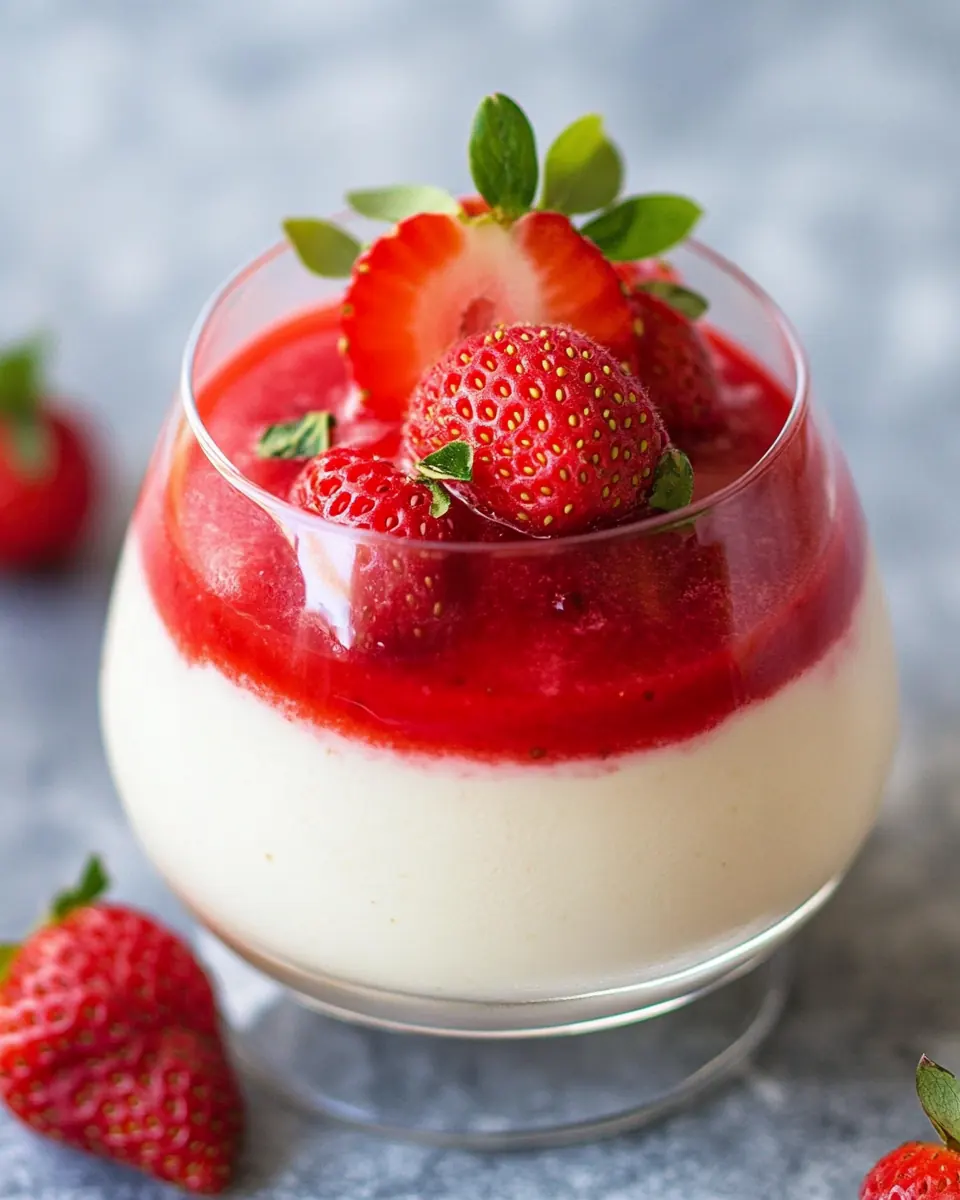
This list expands on small adjustments and practical tips I use to ensure consistent results and to adapt the dessert to what I have on hand. Each tip highlights a first phrase for quick scanning, followed by actionable detail.
- Use room temperature milk for blooming, because gelatin hydrates more evenly when the milk is not ice cold; this reduces the chance of clumps forming when you combine it with warm cream.
- Keep the simmer gentle, aiming for tiny bubbles at the edge of the saucepan so the cream infuses with vanilla without scalding or boiling over, which preserves a clean, fresh dairy aroma.
- Reserve half the strawberries fresh, folding them in after the compote cools to add texture contrast and bursts of fresh berry flavor that balance the cooked sweetness.
- Strain for a glossy finish, using a medium mesh strainer to catch any undissolved gelatin bits and pod pieces so the panna cotta sets with an unblemished surface.
- Chill sufficiently, placing the glasses on a flat surface in the fridge and allowing at least four hours for the safest, most consistent set; overnight yields the best texture.
- Serve chilled in small glasses, which keeps portions elegant and allows guests to enjoy the contrast of smooth custard and bright strawberry topping without the need to unmold.
How to Enjoy Strawberry Panna Cotta
This section gives practical serving ideas, storage guidance, and seasonal pairing suggestions so you can present the dessert beautifully and keep leftovers at their best.
- Serve chilled for best texture, present each portion in a small glass or ramekin so the panna cotta retains its gentle wobble and the compote sits neatly on top, offering an elegant finish for intimate dinners or casual gatherings.
- Pair with light mints or basil leaves, a small herb garnish provides a refreshing contrast without overpowering the strawberry notes, ideal for springtime presentations.
- Great for special occasions, this dessert works well for small celebrations, dinner parties, or Ramadan iftar because it is make ahead friendly and feels decadent despite being light and refined.
- Storage tips, keep covered in the refrigerator for up to three days; store the compote separately if you anticipate any watery juices forming that might soften the set surface.
- Portion control, the recipe serves two, making it perfect for a romantic dinner or a small treat; double or triple the recipe for larger gatherings, keeping the same ratios and chilling time.
- Seasonal pairing, in spring serve with freshly picked strawberries to showcase peak fruit flavor, and consider light tea or coffee alongside to complement the creamy texture.
- Transporting tips, if you need to travel with the dessert, place the glasses in a shallow tray with a towel to keep them stable and top with compote when you arrive to preserve the surface.
FAQ
Conclusion
What makes this recipe special is its ability to feel both elegant and effortlessly simple, marrying silky cream with bright strawberry flavors for a dessert that is refined yet approachable. Try it because it rewards a little patience with a luxurious texture and stunning presentation that feels impressive without being complicated. Whether you serve it for a small dinner party or keep it for a quiet treat, the balance of creamy panna cotta and vibrant compote consistently delights and is worth making again.
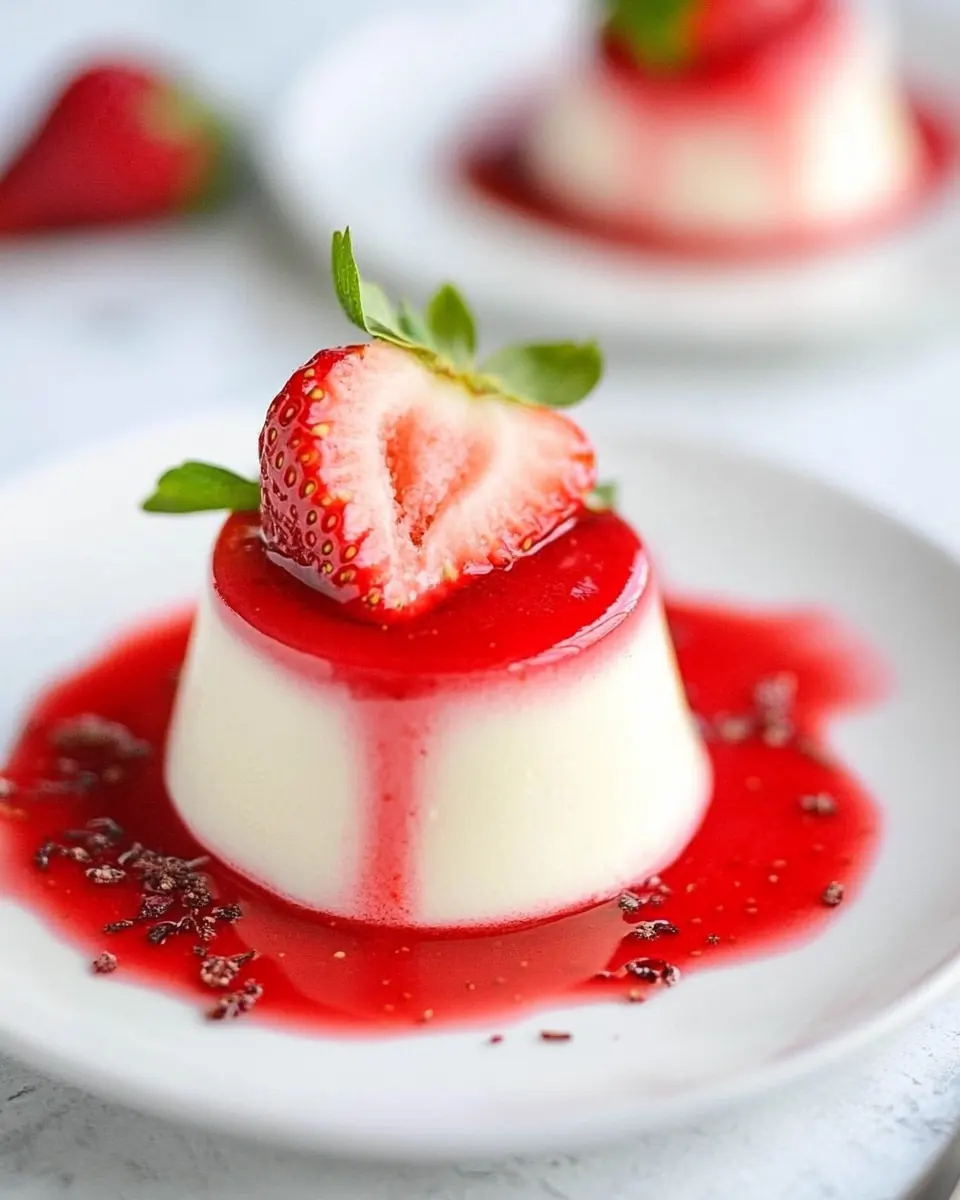
Strawberry Panna Cotta
Ingredients
Equipment
Method
- Place the milk in a small bowl and sprinkle the gelatin evenly over the milk. Let soak for 5 minutes.: You will notice the gelatin gradually soften as it hydrates, taking on a slightly grainy, spongy appearance, and the milk will look cloudier than before. This bloom stage is crucial because fully hydrated gelatin dissolves smoothly when warmed, preventing lumps. If you skip the soaking or add dry gelatin directly to hot liquid, you risk clumps that will leave gritty bits in the finished custard. A common mistake is rushing this step, so set a short timer and resist the urge to heat yet.
- In a small saucepan, combine the cream, sugar, vanilla seeds, the seeded vanilla bean pod, and bring to a low boil. Let simmer for 5 minutes.: As the heavy cream warms, it will emit a sweet, aromatic steam, and the vanilla seeds will punctuate the steam with a floral, warm perfume. You should aim for a gentle simmer with tiny bubbles along the edge, not a roiling boil, because vigorous boiling can change the texture and create tiny curdles. Stir occasionally so the granulated white sugar dissolves completely and the vanilla infuses evenly. Watch for the cream to develop a glossy sheen and a fuller smell, which signals readiness.
- After the 5 minutes, remove the pan from heat and whisk in the milk/gelatin mixture until smooth.: The warm cream will dissolve the bloomed gelatin quickly, and as you whisk you should see the mixture become silky and uniform. The aroma will deepen, and the liquid’s surface will reflect light more evenly. Whisking ensures no pockets of gelatin remain, and it helps the vanilla distribute. Avoid vigorous whisking that splashes, and do not let the hot mixture sit too long before combining with the gelatin, since cooler temperatures reduce the dissolving efficiency.
- Strain the liquid through a mesh strainer. (You don't need a super fine strainer as you are not trying to strain out the vanilla beans. You're just trying to strain out any undissolved pieces of gelatin.): Pouring the mixture through a strainer catches any small bits that did not fully dissolve and also removes the used vanilla pod pieces, leaving a smooth, glossy liquid. The strained cream should flow silkily and have a faint vanilla flecking from the seeds. If you skip straining, you might find tiny gelatin bits or pod fragments in the set panna cotta, which affects texture. Use a gentle pour to avoid aerating the mixture and creating unwanted bubbles.
- Pour into your individual glasses, cover and refrigerate for at least 4 hours or overnight.: As the filled glasses chill, the mixture will thicken and gradually set into a tender custard. You will notice a gentle wobble at around 4 hours and a firmer, clean-cut set if refrigerated overnight. Cold temperature firms the gelatin network, so ensure your refrigerator is cold enough for a reliable set. A frequent error is placing the glasses in a warm part of the fridge or overcrowding them, which can extend chilling time and affect texture.
- Add 1/2 of the strawberries, sugar, lemon juice, and water to a small saucepan and bring to a slow boil. Let simmer for 5 minutes.: While simmering, the berries will release juice and the sugar will dissolve into a glossy syrup. The aroma will shift toward concentrated strawberry jam notes, and the color deepens into a rich red. Simmering briefly breaks down the fruit while preserving enough structure for texture contrast. Avoid over simmering, since extended heat can make the compote too thin or overly dark in flavor.
- Remove from heat and add in the remaining strawberries.: Adding the reserved fresh strawberries off heat preserves their bright color and fresh bite, creating a contrast with the cooked compote. As the warm syrup mingles with the fresh slices they soften slightly without losing their integrity, making a pleasing combination of soft jammy pieces and firmer fruit. If you stir too vigorously at this point you may mash the fresh slices, so gently fold them in for best texture.
- Let cool completely then spoon over the panna cotta. Refrigerate again until ready to serve.: Cooling the compote prevents it from melting or altering the set surface of the panna cotta when layered on top, and it allows the syrup to thicken slightly. Spoon a modest amount onto each set panna cotta, letting a glossy pool form but not overflow. Return the glasses to the fridge so the flavors can settle together. A common mistake is topping warm panna cotta, which softens the set; always ensure the compote is cooled to at least room temperature before assembling.
Notes
- Use room temperature milk for blooming, because gelatin hydrates more evenly when the milk is not ice cold; this reduces the chance of clumps forming when you combine it with warm cream.
- Keep the simmer gentle, aiming for tiny bubbles at the edge of the saucepan so the cream infuses with vanilla without scalding or boiling over, which preserves a clean, fresh dairy aroma.
- Reserve half the strawberries fresh, folding them in after the compote cools to add texture contrast and bursts of fresh berry flavor that balance the cooked sweetness.
- Strain for a glossy finish, using a medium mesh strainer to catch any undissolved gelatin bits and pod pieces so the panna cotta sets with an unblemished surface.
- Chill sufficiently, placing the glasses on a flat surface in the fridge and allowing at least four hours for the safest, most consistent set; overnight yields the best texture.
- Serve chilled in small glasses, which keeps portions elegant and allows guests to enjoy the contrast of smooth custard and bright strawberry topping without the need to unmold.