Spaghetti with Asiago Parsley Pesto
Spaghetti with Asiago Parsley Pesto has been one of those recipes that sneaks into my weeknight rotation whenever I want something fast but memorable.
I first stumbled on this combination late one spring when I had a bunch of parsley from the farmer’s market and a half wheel of asiago that needed using. I remember standing at the counter, bowl of steaming spaghetti in front of me, and thinking how a bright, herb forward sauce could wake up the whole plate. The parsley pesto here is not the heavy, oily green paste you might expect, it is lively, herbaceous, and balanced by the salty, nutty tang of asiago and the toasty bite of slivered almonds.
What I love about Spaghetti with Asiago Parsley Pesto is how approachable it feels. You do not need special skills to make something that tastes like you spent the afternoon on it. The lemon zest and juice add that fresh note that keeps the dish from being flat, while a touch of reserved pasta water brings everything together into a glossy, clingy sauce that wraps each strand of spaghetti. Over time I learned tiny tweaks that make a big difference, like pulsing the almonds first to release their aroma, and tasting as you add the pasta water so the sauce does not get too thin.
Recipe Snapshot
19 mins
10 mins
9 mins
Easy
450 kcal
Italian
Gluten-Free, Vegan
Dinner
Large pot, Colander, Food processor, Measuring cups, Microplane
The Beauty of This Spaghetti with Asiago Parsley Pesto
Bright herbal flavor that stands out
I adore how the parsley in this version sings without being masked by too much oil. When I make Spaghetti with Asiago Parsley Pesto, the first thing I notice is the fresh green fragrance. The aroma is immediate, and it sets expectations for a light but flavor forward plate. That brightness makes the dish versatile for spring meals or anytime you want a fresher pasta.
Texture contrast that feels deliberate
The combination of smooth sauce and the occasional tiny almond bite gives the pasta a pleasant mouthfeel. I like that the almonds contribute not just flavor but little pops of texture. While blending, you can tune how coarse or smooth the pesto becomes, and that control keeps the dish interesting each time I make it.
Speed without compromise
One of the main reasons I return to Spaghetti with Asiago Parsley Pesto is the speed. You can start a pot of water and, in the time it takes to cook the spaghetti, assemble a sauce that tastes like it took longer. For busy evenings when I still want a memorable meal, this is my go to.
Balanced savory notes from asiago
The asiago provides a salty, nutty backbone that lifts the parsley and lemon. I like how the cheese melds into the oil to round the edges, so the pesto is neither sharp nor bland. It is a dependable source of umami that anchors the dish.
Adaptable and forgiving
I often tweak the seasoning and texture depending on what I have on hand. Sometimes I use a touch more lemon for brightness, or add a little extra reserved pasta water to achieve a silky sauce. The recipe is forgiving, so small adjustments are welcome, which makes it great for cooks at every level.
Main Ingredients for Spaghetti with Asiago Parsley Pesto
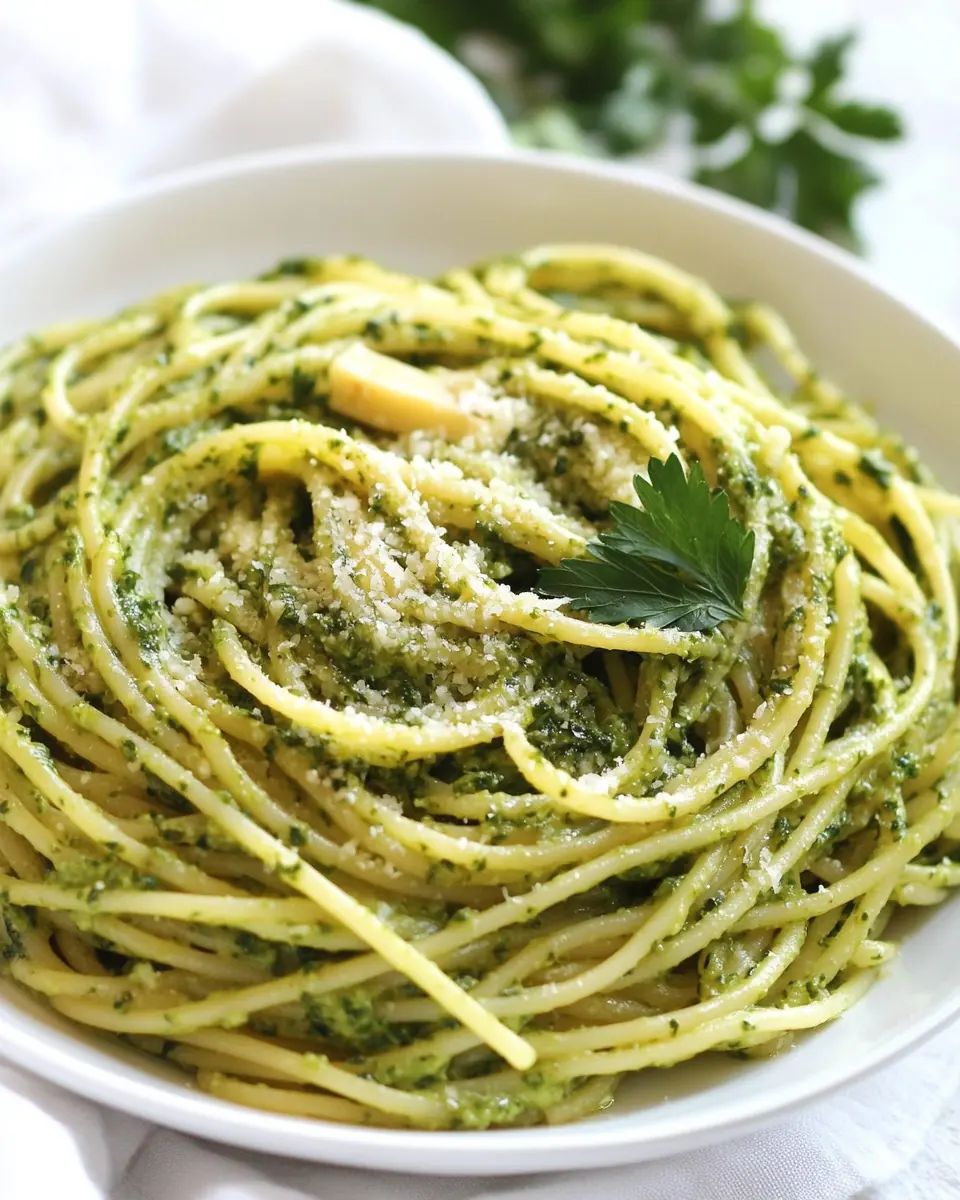
These ingredients form a compact, purposeful lineup. I treat the parsley and asiago as the lead actors, the slivered almonds as the supporting texture, and the lemon and garlic as the bright accents. Together they make a pesto that is herb forward, slightly nutty, and perfectly suited to cling to hot spaghetti.
- 1 pounds spaghetti, cooked al dente: Boil to al dente perfection and serve as the pasta base for the dish; carry the pesto evenly and provide the primary texture and substance to the meal. Toss immediately with the warm pesto so the sauce clings to each strand and releases starch to help bind the sauce. Keep warm and drain well to avoid watery pesto and preserve the ideal mouthfeel.
- 1 tablespoons salt, for the pasta water: Season generously into the pasta cooking water to enhance the spaghetti’s internal flavor and to boost overall seasoning balance; provide salt absorption into the noodles during cooking. Add at the start of boiling so the water reaches proper salinity that influences texture and taste.
- 1/3 cup unsalted slivered almonds: Toast lightly to bring out a deeper nutty aroma and add a slightly crunchy, buttery note to the pesto; supply body and richness as an alternative to pine nuts. Pulse with herbs and oil to distribute evenly and prevent large pieces that could overwhelm the sauce texture.
- 1 large bunch fresh flat-leaf parsley leaves: Chop or pulse finely to form the herbaceous backbone of the pesto, supplying bright, earthy, and slightly peppery flavors that define the sauce’s character. Lightly pack when measuring to keep flavor balanced, and remove coarse stems to avoid bitterness.
- 1/2 cup chopped scallions: Slice thin and blend to add a mild onion-like sharpness and subtle sweetness that enhances aromatic complexity without overpowering the parsley. Use both white and green parts for varying texture and a fresher, greener flavor profile in the pesto.
- Juice and zest of one small lemon: Zest for aromatic oils and juice for acidity to brighten and balance the rich, nutty, and cheesy elements; provide a citrus lift that sharpens overall flavor. Add gradually and taste to achieve the desired brightness without making the sauce too tart.
- 2 cloves garlic, minced: Mince finely to infuse pungent, savory depth and a warm bite that complements the herbs and cheese; act as a flavor amplifier when briefly mellowed by oil. Incorporate carefully to avoid raw garlic harshness, adjusting amount to taste for a balanced pungency.
- 3/4 cup extra-virgin olive oil: Stream slowly while blending to emulsify the pesto and create a silky, cohesive sauce that coats the pasta; contribute fruity, peppery fat that carries flavor. Use high-quality extra–virgin olive oil for optimal aroma and mouthfeel, and adjust quantity for desired thickness.
- 1/2 cup finely grated asiago cheese: Grate finely to add salty, tangy, and savory complexity that defines the pesto’s umami character; help thicken and bind the sauce into a creamy consistency. Fold in off-heat to prevent separation and preserve delicate cheese aromas.
- 1/2 teaspoon freshly ground black pepper: Grind freshly to introduce subtle heat and aromatic lift that rounds out seasoning and enhances other flavors; supply a gentle spiciness and contrast. Add incrementally and taste to achieve a balanced finish without overpowering the delicate pesto.
Instructions for Spaghetti with Asiago Parsley Pesto
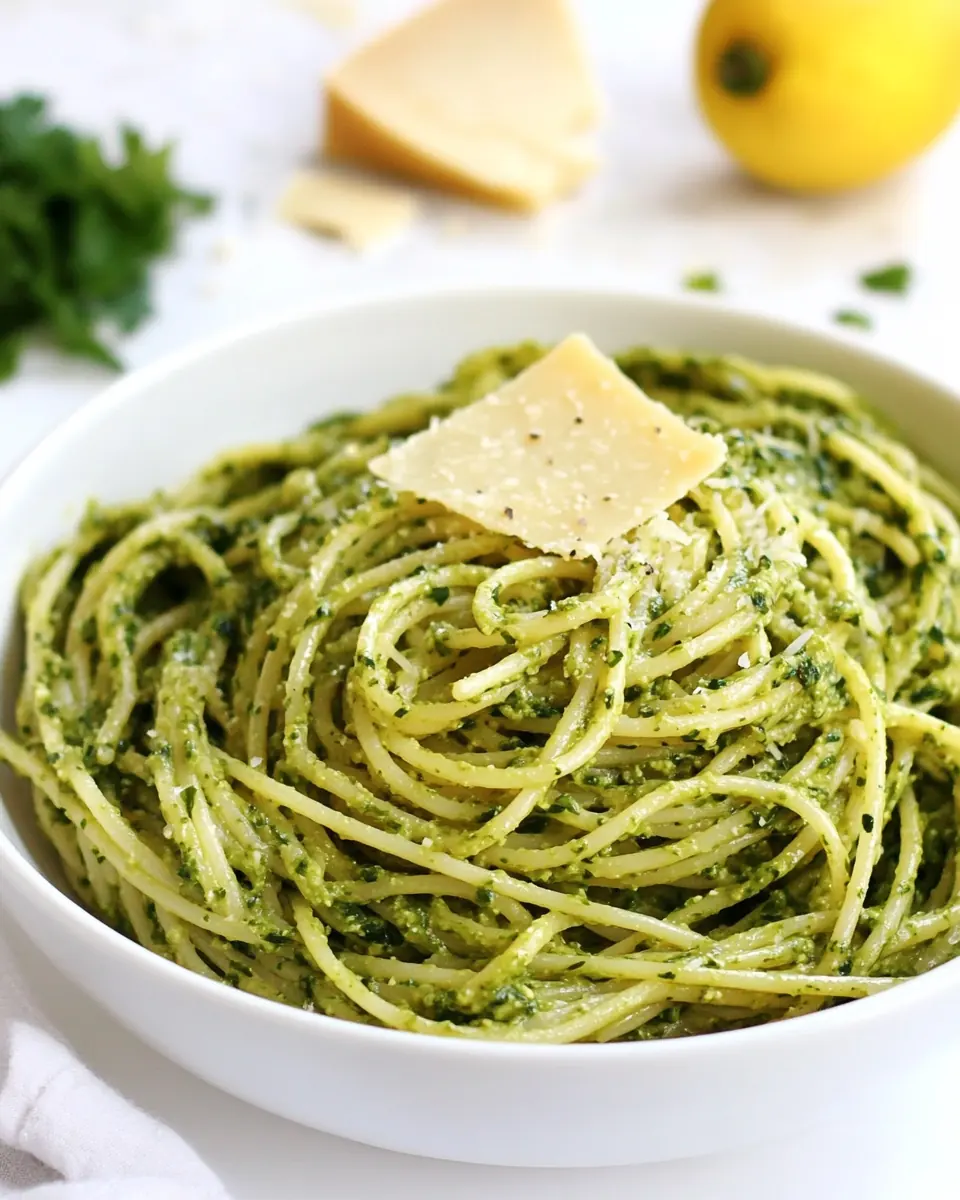
These directions are straightforward and meant to be followed while you tend to the pot and the processor. I like to prep the parsley and scallions while the water heats, and have the asiago ready to grate. Working in stages helps keep things calm and efficient.
- Cook spaghetti in a large pot of boiling salted water, stirring occasionally, until al dente; about 9 minutes. Drain, reserving 1 cup of pasta water.: As the water comes to a rolling boil, the scent of the salted steam will fill the kitchen, an encouraging sign you are on the right track. While the pasta cooks, listen for the gentle rolling of bubbles and the occasional softer sound as the strands shift, signaling that they are tenderizing. When you bite a strand, it should offer slight resistance at the center, that pleasant chewiness that catches the sauce. The reserved pasta water is golden and slightly cloudy, full of starch, and it is the secret glue that will help your pesto become a glossy, clingy sauce. A frequent error is discarding that water; without it your pesto can sit on top of the pasta rather than marry with it.
- In the body of a blender or food processor pulse almonds, parsley, scallions, oil, lemon, garlic, and asiago; blend until smooth. Season with salt and pepper.: When you add the slivered almonds to the processor, they release a toasty aroma that deepens as you pulse. The first few quick pulses will break them down, and then adding the parsley and scallions will unleash a fresh, green fragrance that brightens the room. As you stream in the extra–virgin olive oil , you will notice the mixture transform from a coarse mash to a creamy, glistening pesto. The grated asiago melts into that fat, giving the sauce a silky mouthfeel and savory depth. Keep an eye on texture; overblending can make the mixture too smooth and warm, which dulls the herbal snap. If the pesto seems dry, a tablespoon of reserved pasta water can open it up. A common pitfall is adding all the oil at once, which prevents a proper emulsion; pour slowly for best results.
- Toss spaghetti and pesto in a large serving bowl. Add reserved pasta water by the tablespoon until saucy. Season with salt and pepper. Serve at once.: Right after blending, the aroma will be layered and complex, but seasoning is where the flavors cohere. Add salt sparingly at first, because the asiago carries saltiness. Freshly ground black pepper adds a floral warmth that lifts the parsley and lemon. I always taste before final seasoning, because the salt level can change depending on how much cheese and reserved pasta water you added. Over-salting is hard to fix, so proceed cautiously and adjust incrementally.
- Toss spaghetti and pesto in a large serving bowl: When you add the hot spaghetti to the pesto, you will feel a satisfying warmth as the sauce clings to the strands, releasing savory steam. Tossing by hand gives you control over distribution so every bite gets an even coating. The visual cue is a glossy sheen over the pasta, with flecks of green and tiny almond pieces. If the pesto sits on the surface without adhering, it usually means you need a splash of reserved pasta water to help the emulsion. Avoid tossing too roughly, as that can break the pasta and create a mushy texture.
- Add reserved pasta water by the tablespoon until saucy: The reserved pasta water is the difference between a loose dressing and a sauce that hugs the spaghetti . Add it tablespoon by tablespoon, watching the sauce go from thick and pasty to smooth and silk like a ribbon. Each addition changes the mouthfeel, so pause to taste and look; the right consistency is glossy, not watery. A common misstep is adding too much water at once, which dilutes flavor and requires more cheese or seasoning to rebalance.
- Season with salt and pepper. Serve at once: The final seasoning round should feel like the punctuation at the end of a paragraph, tying everything together. Once plated, the steam will carry the citrus, herb, and cheese aromas to the table. Serving immediately preserves the bright green color of the parsley and the texture of the spaghetti . If you wait too long, the pesto can oxidize and darken, and the pasta can slump as it cools, so aim to serve right after tossing.
Pro Tips and Tweaks
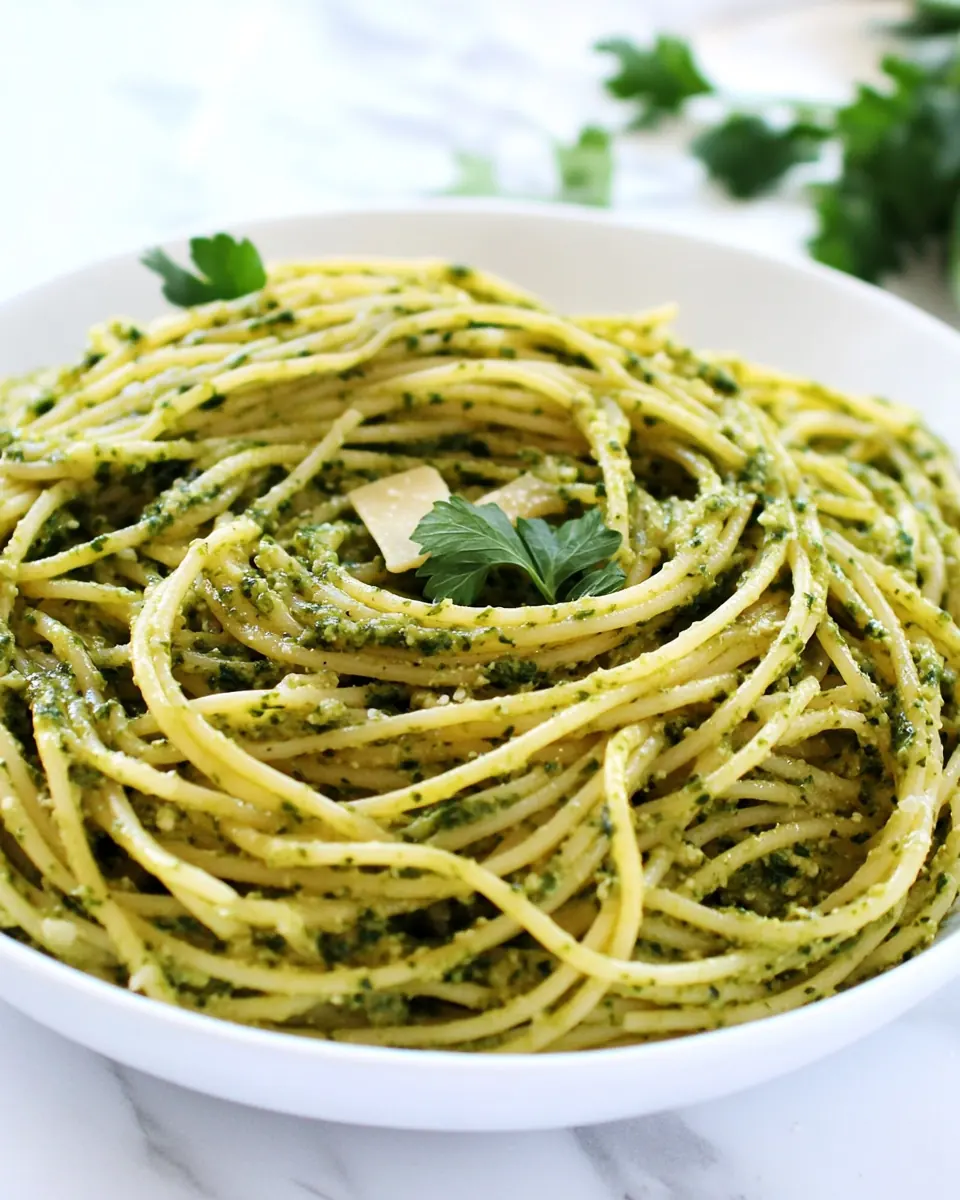
I like to think of these tips as small rituals that elevate the dish. Below are detailed, practical pointers that I use every time I make Spaghetti with Asiago Parsley Pesto.
- Toast the almonds briefly to deepen their flavor, but watch them carefully because they can go from golden to bitter in seconds. A short dry toast in a skillet brings out a richer aroma that translates into the pesto, and pulse them after cooling slightly so you maintain some texture.
- Add oil gradually so the pesto emulsifies into a glossy sauce. Pouring the extra-virgin olive oil slowly while pulsing helps create a stable emulsion, preventing a greasy separation that leaves the sauce heavy.
- Grate the asiago finely to help it melt into the sauce for a smooth, even flavor. Coarser shreds can create uneven pockets of salty intensity; a fine grate distributes the savory notes evenly throughout the pesto.
- Keep lemon zest and juice separate for layered citrus notes; zest adds bright fragrance while juice adds acidity. Add zest early for aroma and adjust juice at the end to balance the final taste without flattening the flavors.
- Work warm not hot to preserve color and freshness; avoid overheating the pesto in the processor. If the motor warms the mix, pause and cool it slightly to keep the parsley vibrant and prevent oxidation.
- Serve immediately for the best texture and color; the pesto will darken if left standing. If you must hold it briefly, cover the surface with plastic wrap to limit exposure to air and stir just before serving.
What to Serve With Spaghetti with Asiago Parsley Pesto
This pasta pairs beautifully with light accompaniments that complement the herbaceous sauce. Below are ideas for sides, occasions, and serving notes to make the meal feel complete and intentional.
- Simple green salad with a lemon vinaigrette provides a crisp contrast to the silky pasta, making the meal feel balanced and fresh for a spring lunch or casual dinner.
- Roasted vegetables like asparagus or zucchini add a caramelized note that complements the herb and cheese flavors, perfect for a weeknight family dinner.
- Crusty bread for mopping up any leftover sauce ensures nothing goes to waste and makes the meal feel cozy and shareable, ideal for a relaxed evening with friends.
- Light soup starter such as a chilled cucumber soup or a vegetable broth works well for a multi course dinner where you want to keep things bright and seasonal.
- Occasion guidance: This recipe is great for spring meals, casual dinner parties, or anytime you want an easy weeknight dinner that still feels special; its quick timing makes it a go to for busy nights.
- Storage tips store leftover pasta in an airtight container in the refrigerator for up to two days, and reheat gently with a splash of reserved pasta water to restore the sauce texture.
- Seasonal pairing serve with a light white bean salad or fresh tomatoes in summer, and with roasted root vegetables in cooler months to complement seasonal produce.
FAQ
Conclusion
This recipe shines because it balances bright herbs, nutty cheese, and silky olive oil into a quick, elegant pasta. I encourage you to give it a try tonight, especially when you want a satisfying meal without a long fuss. It is forgiving, fast, and full of flavor, a combination I reach for when I want a simple dish that still impresses.
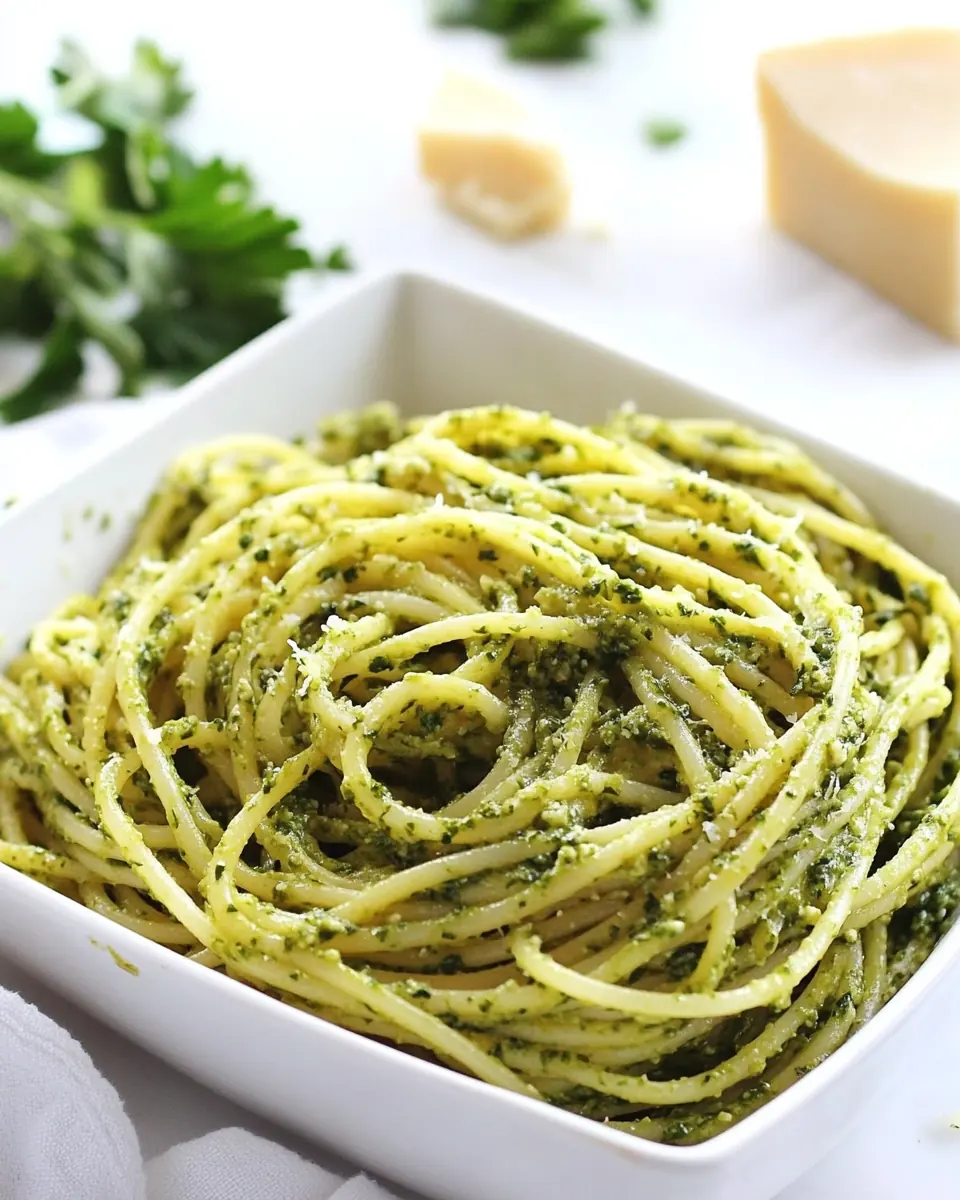
Spaghetti with Asiago Parsley Pesto
Ingredients
Equipment
Method
- Cook spaghetti in a large pot of boiling salted water, stirring occasionally, until al dente; about 9 minutes. Drain, reserving 1 cup of pasta water.: As the water comes to a rolling boil, the scent of the salted steam will fill the kitchen, an encouraging sign you are on the right track. While the pasta cooks, listen for the gentle rolling of bubbles and the occasional softer sound as the strands shift, signaling that they are tenderizing. When you bite a strand, it should offer slight resistance at the center, that pleasant chewiness that catches the sauce. The reserved pasta water is golden and slightly cloudy, full of starch, and it is the secret glue that will help your pesto become a glossy, clingy sauce. A frequent error is discarding that water; without it your pesto can sit on top of the pasta rather than marry with it.
- In the body of a blender or food processor pulse almonds, parsley, scallions, oil, lemon, garlic, and asiago; blend until smooth. Season with salt and pepper.: When you add the slivered almonds to the processor, they release a toasty aroma that deepens as you pulse. The first few quick pulses will break them down, and then adding the parsley and scallions will unleash a fresh, green fragrance that brightens the room. As you stream in the extra-virgin olive oil , you will notice the mixture transform from a coarse mash to a creamy, glistening pesto. The grated asiago melts into that fat, giving the sauce a silky mouthfeel and savory depth. Keep an eye on texture; overblending can make the mixture too smooth and warm, which dulls the herbal snap. If the pesto seems dry, a tablespoon of reserved pasta water can open it up. A common pitfall is adding all the oil at once, which prevents a proper emulsion; pour slowly for best results.
- Toss spaghetti and pesto in a large serving bowl. Add reserved pasta water by the tablespoon until saucy. Season with salt and pepper. Serve at once.: Right after blending, the aroma will be layered and complex, but seasoning is where the flavors cohere. Add salt sparingly at first, because the asiago carries saltiness. Freshly ground black pepper adds a floral warmth that lifts the parsley and lemon. I always taste before final seasoning, because the salt level can change depending on how much cheese and reserved pasta water you added. Over-salting is hard to fix, so proceed cautiously and adjust incrementally.
- Toss spaghetti and pesto in a large serving bowl: When you add the hot spaghetti to the pesto, you will feel a satisfying warmth as the sauce clings to the strands, releasing savory steam. Tossing by hand gives you control over distribution so every bite gets an even coating. The visual cue is a glossy sheen over the pasta, with flecks of green and tiny almond pieces. If the pesto sits on the surface without adhering, it usually means you need a splash of reserved pasta water to help the emulsion. Avoid tossing too roughly, as that can break the pasta and create a mushy texture.
- Add reserved pasta water by the tablespoon until saucy: The reserved pasta water is the difference between a loose dressing and a sauce that hugs the spaghetti . Add it tablespoon by tablespoon, watching the sauce go from thick and pasty to smooth and silk like a ribbon. Each addition changes the mouthfeel, so pause to taste and look; the right consistency is glossy, not watery. A common misstep is adding too much water at once, which dilutes flavor and requires more cheese or seasoning to rebalance.
- Season with salt and pepper. Serve at once: The final seasoning round should feel like the punctuation at the end of a paragraph, tying everything together. Once plated, the steam will carry the citrus, herb, and cheese aromas to the table. Serving immediately preserves the bright green color of the parsley and the texture of the spaghetti . If you wait too long, the pesto can oxidize and darken, and the pasta can slump as it cools, so aim to serve right after tossing.
Notes
- Toast the almonds briefly to deepen their flavor, but watch them carefully because they can go from golden to bitter in seconds. A short dry toast in a skillet brings out a richer aroma that translates into the pesto, and pulse them after cooling slightly so you maintain some texture.
- Add oil gradually so the pesto emulsifies into a glossy sauce. Pouring the extra-virgin olive oil slowly while pulsing helps create a stable emulsion, preventing a greasy separation that leaves the sauce heavy.
- Grate the asiago finely to help it melt into the sauce for a smooth, even flavor. Coarser shreds can create uneven pockets of salty intensity; a fine grate distributes the savory notes evenly throughout the pesto.
- Keep lemon zest and juice separate for layered citrus notes; zest adds bright fragrance while juice adds acidity. Add zest early for aroma and adjust juice at the end to balance the final taste without flattening the flavors.
- Work warm not hot to preserve color and freshness; avoid overheating the pesto in the processor. If the motor warms the mix, pause and cool it slightly to keep the parsley vibrant and prevent oxidation.
- Serve immediately for the best texture and color; the pesto will darken if left standing. If you must hold it briefly, cover the surface with plastic wrap to limit exposure to air and stir just before serving.