Go Back
Spaghetti with Asiago Parsley Pesto

Spaghetti with Asiago Parsley Pesto

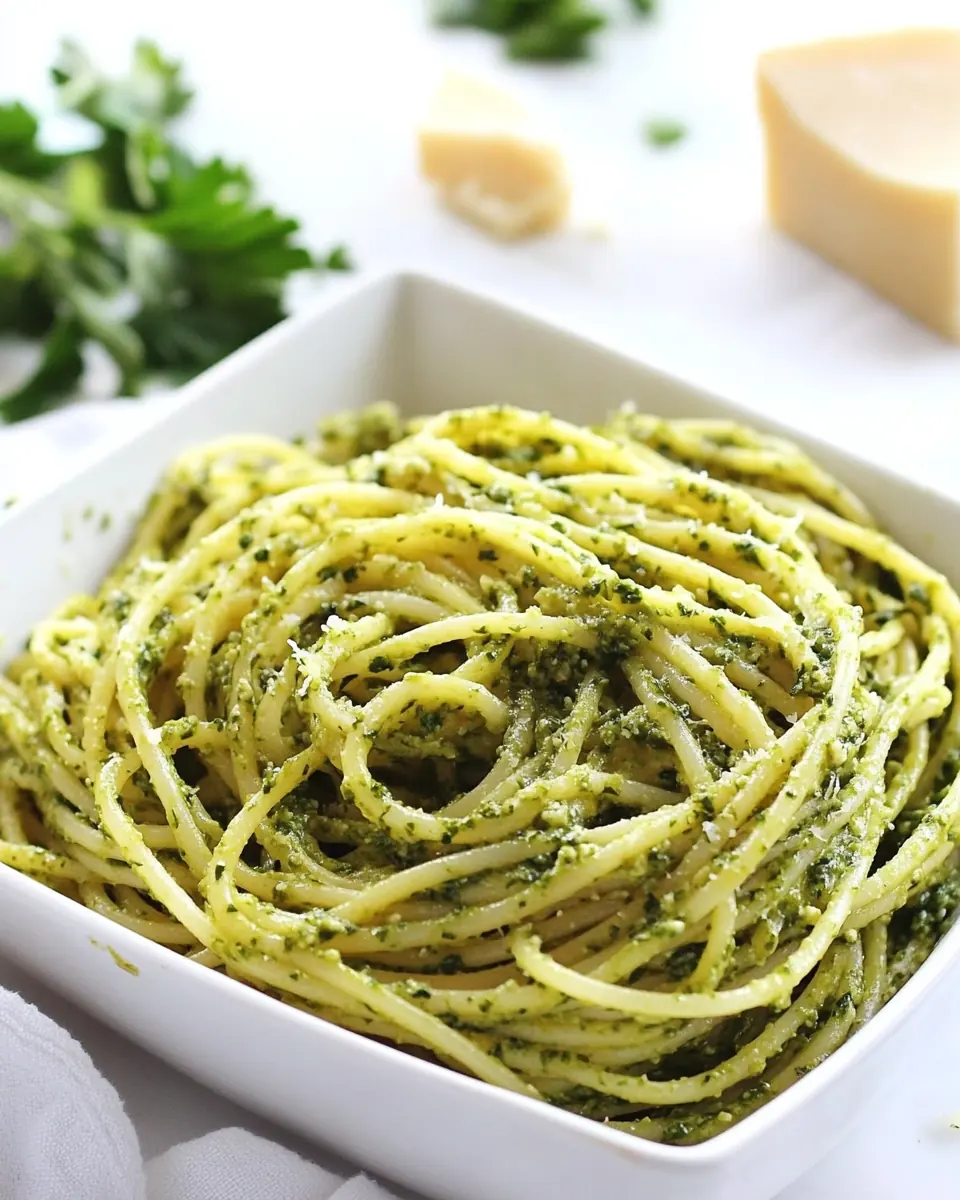
Spaghetti with Asiago Parsley Pesto is a bright, creamy pasta that combines herbaceous parsley, nutty asiago, and toasty slivered almonds for an easy weeknight dinner. The lemon zest and reserved pasta water create a glossy, clingy sauce that feels elevated yet simple to make. It is a fast, flavorful meal you will want to make again and again because it is both fresh and satisfying.
Prep Time 10 minutes
Cook Time 9 minutes
Total Time 19 minutes
Servings: 4 servings
Course: Dinner
Cuisine: Italian
Calories: 450

Ingredients
  

  • 1 pounds spaghetti, cooked al dente Boil to al dente perfection and serve as the pasta base for the dish; carry the pesto evenly and provide the primary texture and substance to the meal. Toss immediately with the warm pesto so the sauce clings to each strand and releases starch to help bind the sauce. Keep warm and drain well to avoid watery pesto and preserve the ideal mouthfeel.
  • 1 tablespoons salt, for the pasta water Season generously into the pasta cooking water to enhance the spaghetti’s internal flavor and to boost overall seasoning balance; provide salt absorption into the noodles during cooking. Add at the start of boiling so the water reaches proper salinity that influences texture and taste.
  • 1/3 cup unsalted slivered almonds Toast lightly to bring out a deeper nutty aroma and add a slightly crunchy, buttery note to the pesto; supply body and richness as an alternative to pine nuts. Pulse with herbs and oil to distribute evenly and prevent large pieces that could overwhelm the sauce texture.
  • 1 large bunch fresh flat-leaf parsley leaves Chop or pulse finely to form the herbaceous backbone of the pesto, supplying bright, earthy, and slightly peppery flavors that define the sauce’s character. Lightly pack when measuring to keep flavor balanced, and remove coarse stems to avoid bitterness.
  • 1/2 cup chopped scallions Slice thin and blend to add a mild onion-like sharpness and subtle sweetness that enhances aromatic complexity without overpowering the parsley. Use both white and green parts for varying texture and a fresher, greener flavor profile in the pesto.
  • Juice and zest of one small lemon Zest for aromatic oils and juice for acidity to brighten and balance the rich, nutty, and cheesy elements; provide a citrus lift that sharpens overall flavor. Add gradually and taste to achieve the desired brightness without making the sauce too tart.
  • 2 cloves garlic, minced Mince finely to infuse pungent, savory depth and a warm bite that complements the herbs and cheese; act as a flavor amplifier when briefly mellowed by oil. Incorporate carefully to avoid raw garlic harshness, adjusting amount to taste for a balanced pungency.
  • 3/4 cup extra-virgin olive oil Stream slowly while blending to emulsify the pesto and create a silky, cohesive sauce that coats the pasta; contribute fruity, peppery fat that carries flavor. Use high-quality extra-virgin olive oil for optimal aroma and mouthfeel, and adjust quantity for desired thickness.
  • 1/2 cup finely grated asiago cheese Grate finely to add salty, tangy, and savory complexity that defines the pesto’s umami character; help thicken and bind the sauce into a creamy consistency. Fold in off-heat to prevent separation and preserve delicate cheese aromas.
  • 1/2 teaspoon freshly ground black pepper Grind freshly to introduce subtle heat and aromatic lift that rounds out seasoning and enhances other flavors; supply a gentle spiciness and contrast. Add incrementally and taste to achieve a balanced finish without overpowering the delicate pesto.

Equipment

  • Large Pot
  • Colander
  • Food Processor
  • Measuring Cups
  • Microplane

Method
 

  1. Cook spaghetti in a large pot of boiling salted water, stirring occasionally, until al dente; about 9 minutes. Drain, reserving 1 cup of pasta water.: As the water comes to a rolling boil, the scent of the salted steam will fill the kitchen, an encouraging sign you are on the right track. While the pasta cooks, listen for the gentle rolling of bubbles and the occasional softer sound as the strands shift, signaling that they are tenderizing. When you bite a strand, it should offer slight resistance at the center, that pleasant chewiness that catches the sauce. The reserved pasta water is golden and slightly cloudy, full of starch, and it is the secret glue that will help your pesto become a glossy, clingy sauce. A frequent error is discarding that water; without it your pesto can sit on top of the pasta rather than marry with it.
  2. In the body of a blender or food processor pulse almonds, parsley, scallions, oil, lemon, garlic, and asiago; blend until smooth. Season with salt and pepper.: When you add the slivered almonds to the processor, they release a toasty aroma that deepens as you pulse. The first few quick pulses will break them down, and then adding the parsley and scallions will unleash a fresh, green fragrance that brightens the room. As you stream in the extra-virgin olive oil , you will notice the mixture transform from a coarse mash to a creamy, glistening pesto. The grated asiago melts into that fat, giving the sauce a silky mouthfeel and savory depth. Keep an eye on texture; overblending can make the mixture too smooth and warm, which dulls the herbal snap. If the pesto seems dry, a tablespoon of reserved pasta water can open it up. A common pitfall is adding all the oil at once, which prevents a proper emulsion; pour slowly for best results.
  3. Toss spaghetti and pesto in a large serving bowl. Add reserved pasta water by the tablespoon until saucy. Season with salt and pepper. Serve at once.: Right after blending, the aroma will be layered and complex, but seasoning is where the flavors cohere. Add salt sparingly at first, because the asiago carries saltiness. Freshly ground black pepper adds a floral warmth that lifts the parsley and lemon. I always taste before final seasoning, because the salt level can change depending on how much cheese and reserved pasta water you added. Over-salting is hard to fix, so proceed cautiously and adjust incrementally.
  4. Toss spaghetti and pesto in a large serving bowl: When you add the hot spaghetti to the pesto, you will feel a satisfying warmth as the sauce clings to the strands, releasing savory steam. Tossing by hand gives you control over distribution so every bite gets an even coating. The visual cue is a glossy sheen over the pasta, with flecks of green and tiny almond pieces. If the pesto sits on the surface without adhering, it usually means you need a splash of reserved pasta water to help the emulsion. Avoid tossing too roughly, as that can break the pasta and create a mushy texture.
  5. Add reserved pasta water by the tablespoon until saucy: The reserved pasta water is the difference between a loose dressing and a sauce that hugs the spaghetti . Add it tablespoon by tablespoon, watching the sauce go from thick and pasty to smooth and silk like a ribbon. Each addition changes the mouthfeel, so pause to taste and look; the right consistency is glossy, not watery. A common misstep is adding too much water at once, which dilutes flavor and requires more cheese or seasoning to rebalance.
  6. Season with salt and pepper. Serve at once: The final seasoning round should feel like the punctuation at the end of a paragraph, tying everything together. Once plated, the steam will carry the citrus, herb, and cheese aromas to the table. Serving immediately preserves the bright green color of the parsley and the texture of the spaghetti . If you wait too long, the pesto can oxidize and darken, and the pasta can slump as it cools, so aim to serve right after tossing.
Notes

  • Toast the almonds briefly to deepen their flavor, but watch them carefully because they can go from golden to bitter in seconds. A short dry toast in a skillet brings out a richer aroma that translates into the pesto, and pulse them after cooling slightly so you maintain some texture.
  • Add oil gradually so the pesto emulsifies into a glossy sauce. Pouring the extra-virgin olive oil slowly while pulsing helps create a stable emulsion, preventing a greasy separation that leaves the sauce heavy.
  • Grate the asiago finely to help it melt into the sauce for a smooth, even flavor. Coarser shreds can create uneven pockets of salty intensity; a fine grate distributes the savory notes evenly throughout the pesto.
  • Keep lemon zest and juice separate for layered citrus notes; zest adds bright fragrance while juice adds acidity. Add zest early for aroma and adjust juice at the end to balance the final taste without flattening the flavors.
  • Work warm not hot to preserve color and freshness; avoid overheating the pesto in the processor. If the motor warms the mix, pause and cool it slightly to keep the parsley vibrant and prevent oxidation.
  • Serve immediately for the best texture and color; the pesto will darken if left standing. If you must hold it briefly, cover the surface with plastic wrap to limit exposure to air and stir just before serving.