Spring Roll Bowl with Peanut Sauce
Spring Roll Bowl with Peanut Sauce has been my go to when I want a meal that feels light, bright, and completely satisfying at the same time.
I first fell for this bowl on a sun soaked Saturday when I wanted something colorful after a week of heavy meals. I remember pulling a mismatched collection of vegetables from the crisper, boiling a simple nest of rice noodles, and whisking together a peanut sauce that smelled warm and nutty. The contrast between crunchy carrot and cool cucumber, and the sweet tang of citrus in the sauce hooked me instantly. That afternoon, friends dropped by, and everyone built their own bowl, piling on herbs and extra crunch. We talked about what to add next, and the bowl became a favorite quick dinner and picnic staple.
Over time I tuned the components to what I now call my signature version. I learned how important the noodle texture is, and why shaving the red cabbage paper thin matters. I also discovered the joy of optional toppings, especially the toasted peanuts that add a toasty crunch. Simple swaps keep the recipe fresh, while the core combination of rice noodles, crisp vegetables, and creamy peanut butter sauce stays constant. When I need a no fuss, vibrant meal that still feels intentional, I reach for this bowl. It travels well to potlucks, and it makes weeknight dinners feel a little more celebratory.
Recipe Snapshot
30 mins
20 mins
10 mins
Easy
400 kcal
Asian
Vegan, Gluten-Free
Dinner
Medium bowl, Saucepan, Whisk, Cutting board, Sharp knife
What Sets This Spring Roll Bowl with Peanut Sauce Apart
Bright, balanced textures
I love how the Spring Roll Bowl with Peanut Sauce layers crisp, cool vegetables with tender noodles. The contrast between crunchy carrot and silky rice noodles creates a bite that keeps you interested through the whole bowl. I find that varying the cuts, from matchsticks to thin ribbons, makes every forkful interesting, and it helps the sauce coat things evenly.
Flavor that hits all the notes
This recipe balances savory, sweet, tart, and salty. The creamy peanut butter anchors the bowl, while the citrus juice brightens the whole thing. I usually adjust the sweetness and salt to my mood, and that small tweak transforms the dish for lunch or a relaxed dinner. The tamari adds depth without overwhelming the fresh veg flavors.
Quick to pull together
I appreciate a recipe that comes together in under an hour, and this bowl does just that. The prep is mostly slicing and whisking, so the active time feels short. I often prep the vegetables ahead of time to speed assembly. For busy nights, you can cook the noodles while you prep the veg, and the bowl is assembled in minutes.
Customizable for different diets
I often recommend this bowl because it adapts to many needs. You can add extra protein if you want something heartier, or keep it light and vegan as I often do. Swapping noodles or using gluten free tamari makes it accessible for gluten free eaters. I enjoy experimenting with herbs like cilantro and basil to change the aroma profile.
Fun to share and assemble
One of my favorite things about this recipe is how social it is. I like setting out toppings so everyone customizes their bowl. Simple garnishes like chopped peanuts and sesame seeds make the dish feel finished and special. It’s an easy, interactive meal for a casual gathering, and it always sparks conversation about favorite add ins.
Ingredients to Make Spring Roll Bowl with Peanut Sauce
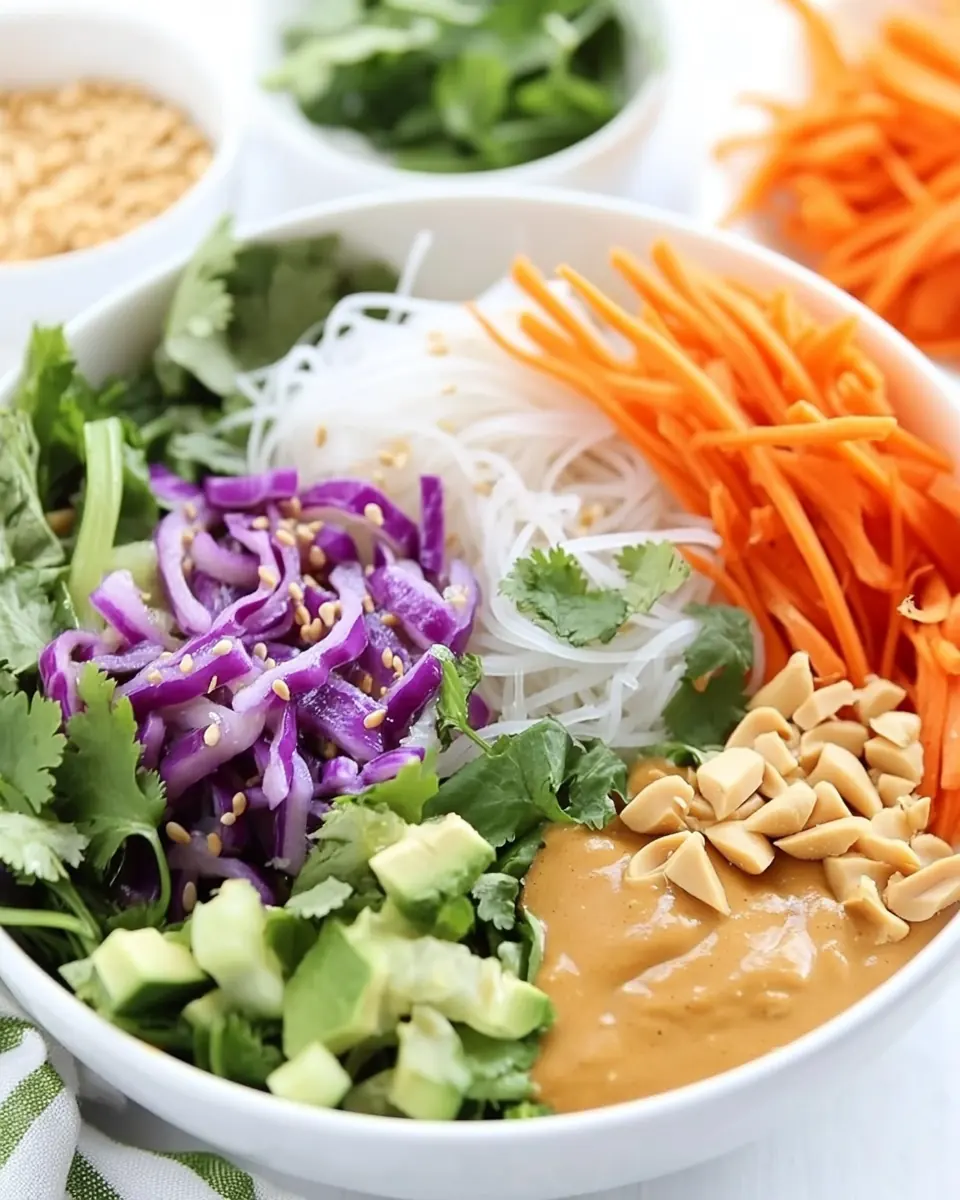
These ingredients work together to create a balanced bowl that is vibrant, textural, and flavorful. The key players are the tender rice noodles, the crisp vegetables, and the creamy peanut butter sauce. Each ingredient has a clear role: the noodles provide a neutral base, the vegetables add freshness and crunch, and the sauce brings body and umami. Herbs and optional toppings lift the bowl with aromatic and textural contrast.
- 8 oz . thin rice noodles: Cooked to tender texture and used as the primary carbohydrate base that soaks up sauce and binds the bowl components together; rinse briefly after cooking to prevent sticking and keep strands separate for easy tossing.
- 1 large carrot: Julienned or ribboned for crunchy sweetness and color contrast; adds natural sweetness and crisp bite while providing vitamins and moisture to balance savory flavors.
- 1 small cucumber: Sliced into matchsticks to deliver cool, refreshing crunch and mild vegetal flavor; helps lighten the bowl and offers hydration and texture contrast to softer elements.
- 2 cups red cabbage, thinly sliced: Thinly sliced to contribute vibrant color, crunchy texture, and a slightly peppery bite; offers fiber and visual appeal while holding up well against dressing without wilting quickly.
- 3 green onions: Sliced thinly and sprinkled over the bowl to add mild oniony flavor and sharp brightness; provides aromatic top-note and crisp texture when used raw.
- 1/3 cup fresh cilantro (and/or fresh basil): Chopped (or torn) and scattered through the bowl to bring herbaceous fragrance and fresh citrusy notes; can be basil or cilantro for slightly different flavor profiles and aromatic lift.
- toppings: Chopped peanuts, sesame seeds, mung bean sprouts, fresh mint, sriracha, etc. (optional): Provided as optional garnishes to customize texture, flavor, and heat; chopped peanuts add crunch, sesame seeds add nuttiness, sprouts add freshness, and sauces/herbs adjust spiciness and aroma.
- 1/2 cup peanut butter (I use creamy, natural): Blended into a creamy, nutty dressing base that delivers richness and cohesive peanut flavor; choose creamy natural varieties for smoother texture and cleaner, less-sweet profile.
- 2 tbsp . maple syrup or brown sugar: Stirred into the peanut dressing to introduce gentle sweetness and balance savory-salty elements; use maple syrup or brown sugar depending on desired flavor nuance.
- 1 1/2 tbsp . tamari (or soy sauce): Added to the sauce to contribute savory, umami depth and saltiness; tamari offers a gluten-free option while soy sauce provides familiar salty seasoning.
- 2 tbsp . fresh lemon or lime juice: Squeezed into the dressing to add bright acidity and uplift the peanut sauce; fresh lemon or lime juice cuts richness and enhances overall freshness of the bowl.
- 1 2 cloves garlic, minced: Minced and incorporated into the sauce to provide pungent, aromatic savory notes; raw garlic delivers sharpness that mellows slightly when combined with other dressing ingredients.
- 1 tsp . fresh grated ginger: Grated and mixed into the peanut dressing to contribute warm, spicy, and slightly peppery aroma; fresh ginger complements garlic and citrus for balanced complexity.
- Hot water to thin to desired consistency: Added gradually to the peanut sauce to adjust consistency and create a smooth, pourable dressing; hot water helps thin the mixture while maintaining emulsion and warming flavors.
How to Assemble Spring Roll Bowl with Peanut Sauce
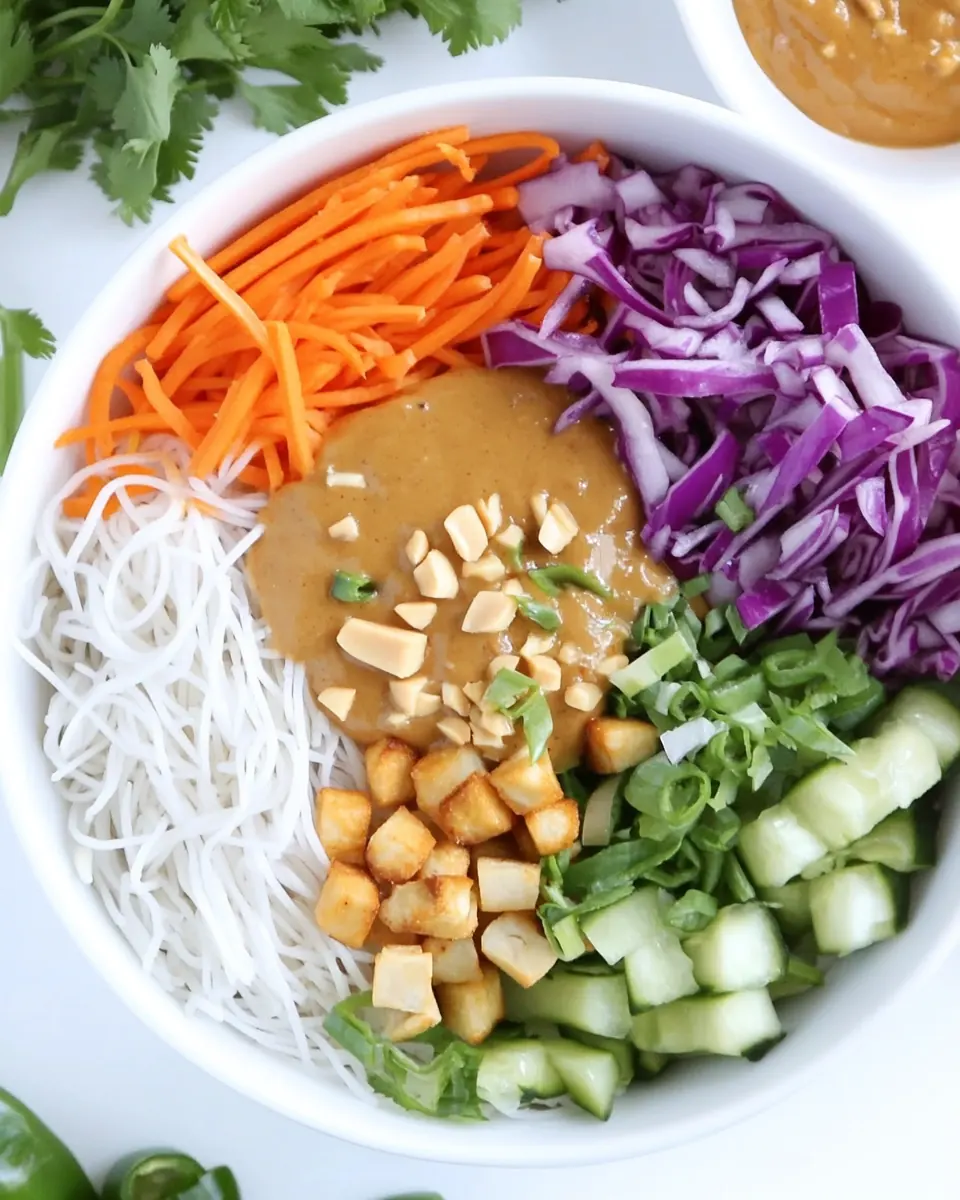
This bowl comes together in a few focused stages, and pacing matters. Prepare your vegetables first, then cook the noodles, make the sauce while the noodles are finishing, and finally assemble so everything is fresh. Below I walk through each step with sensory cues and troubleshooting pointers to help you get a reliably great bowl every time.
- Prepare the vegetables: Very thinly slice carrot, cucumber, cabbage, and green onions. Roughly chop cilantro, large stems removed. Set aside.: Very thinly slice carrot, cucumber, cabbage, and green onions. Roughly chop cilantro, large stems removed. Set aside. : Start with the crisp sound of a sharp knife on a wooden cutting board, the carrots releasing a faint sweet aroma as you slice. Thin slices ensure each mouthful mixes textures instead of creating a dominant crunchy piece, and the visual palette of orange, green, and purple should look lively in a bowl. Use a steady motion to keep slices even, and if your cuts are uneven, the thinner pieces will wilt faster while thicker pieces stay firm leading to an inconsistent bite, so take an extra minute to even things out. Keep the herbs separate until plating to preserve their bright fragrance, and if your vegetables look wet after washing, pat them dry to prevent watering down the sauce.
- Cook noodles: Cook your rice noodles according to package directions, leaving al dente (slightly firm, not mushy). Drain when finished.: Cook your rice noodles according to package directions, leaving al dente (slightly firm, not mushy). Drain when finished. : As the noodles simmer, watch for the moment they go from rigid to pliable, a soft rustle and cloud of steam rising as you lift a strand. Al dente rice noodles have a slight chew and hold their shape, which helps them carry the sauce without becoming clumpy. Overcooked noodles turn limp and gummy, so test a strand early and often in the final minute. After draining, run cold water over them briefly to stop cooking and separate the strands, and toss them lightly with a drizzle of neutral oil if they seem sticky to keep them loose in the bowl.
- Make the peanut sauce: While noodles are cooking, make the sauce. In a medium bowl, add all sauce ingredients (except water). Then heat 3/4 cup water to just under boiling. Add water to bowl a couple tablespoons at a time, slowly whisking and working the mixture together. Continue adding water until sauce reaches desired consistency. (I usually add about 1/2 cup water.): While noodles are cooking, make the sauce. In a medium bowl, add all sauce ingredients (except water). Then heat 3/4 cup water to just under boiling. Add water to bowl a couple tablespoons at a time, slowly whisking and working the mixture together. Continue adding water until sauce reaches desired consistency. (I usually add about 1/2 cup water.) : The sauce should smell nutty and citrusy, with a warm undertone from the ginger and garlic. Start by combining the peanut butter , maple syrup or brown sugar , tamari , lemon or lime juice , garlic , and ginger , then whisk in warm water until silky and pourable. The ideal texture clings but still drips slowly, coating noodles and veg. If the sauce separates, keep whisking while adding a few drops of warm water to re-emulsify. A common misstep is adding too much water at once which can make it thin and flavorless, so go slowly and taste as you go, adjusting salt or acidity to balance.
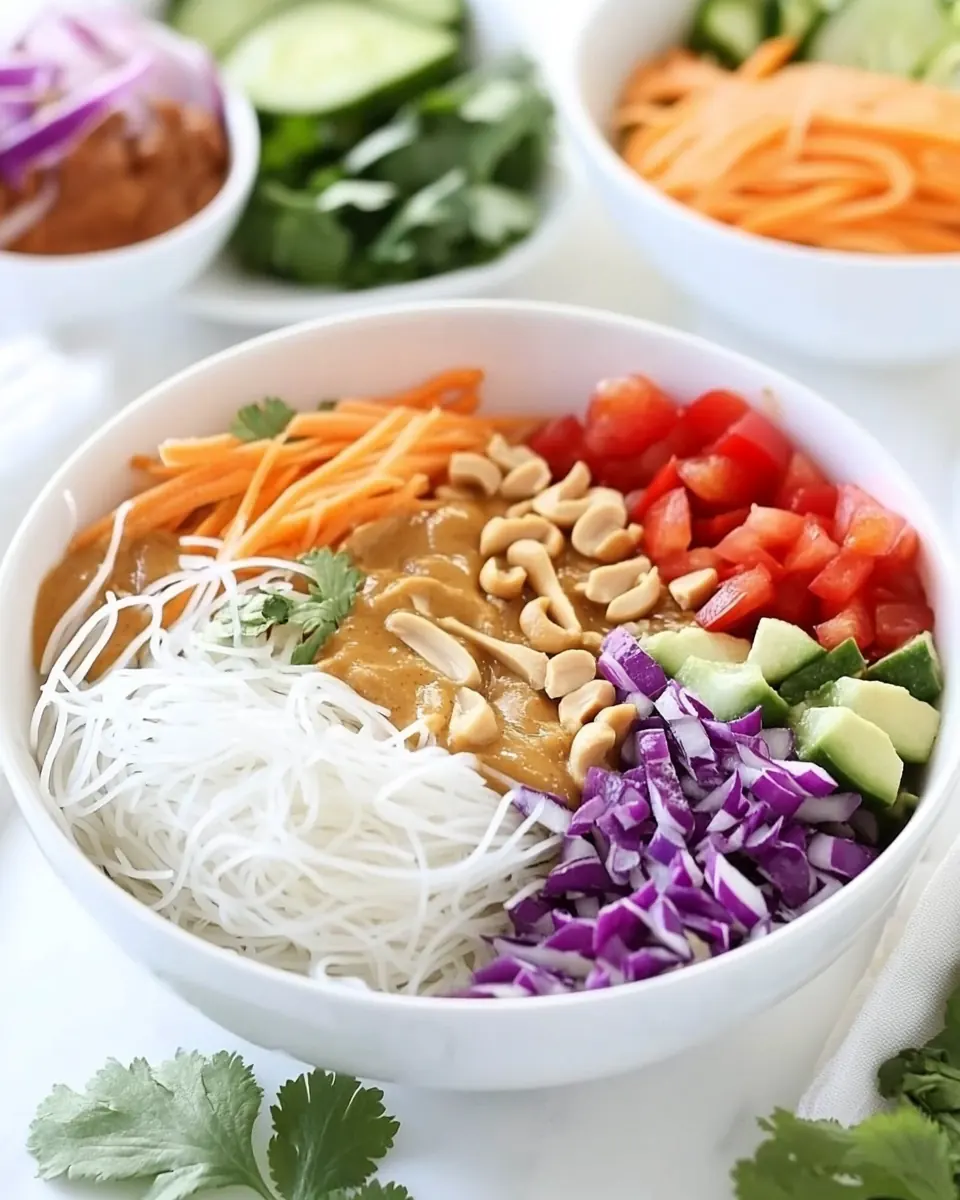
- Assemble your bowl: Add cooked noodles, sliced veggies, and then drizzle with peanut sauce. Garnish with any optional toppings. (I like peanuts and sesame seeds.): Add cooked noodles, sliced veggies, and then drizzle with peanut sauce. Garnish with any optional toppings. (I like peanuts and sesame seeds.) : Layer the base of warm, slightly springy rice noodles, then artistically arrange the shredded red cabbage , ribbons of carrot , cool slices of cucumber , and the thinly sliced green onions . Drizzle the peanut sauce in a steady, gliding motion so it pools in some spots and coats strands in others, releasing an inviting nutty aroma. Finish with a scattering of chopped peanuts, sesame seeds, and herbs; their crackle and aroma complete the experience. Watch for overdressing, which can overwhelm the fresh veg, so start with less sauce and add more as needed. If the bowl seems dry after sitting, a light squeeze of citrus brightens and wakes everything up.
Helpful Hints
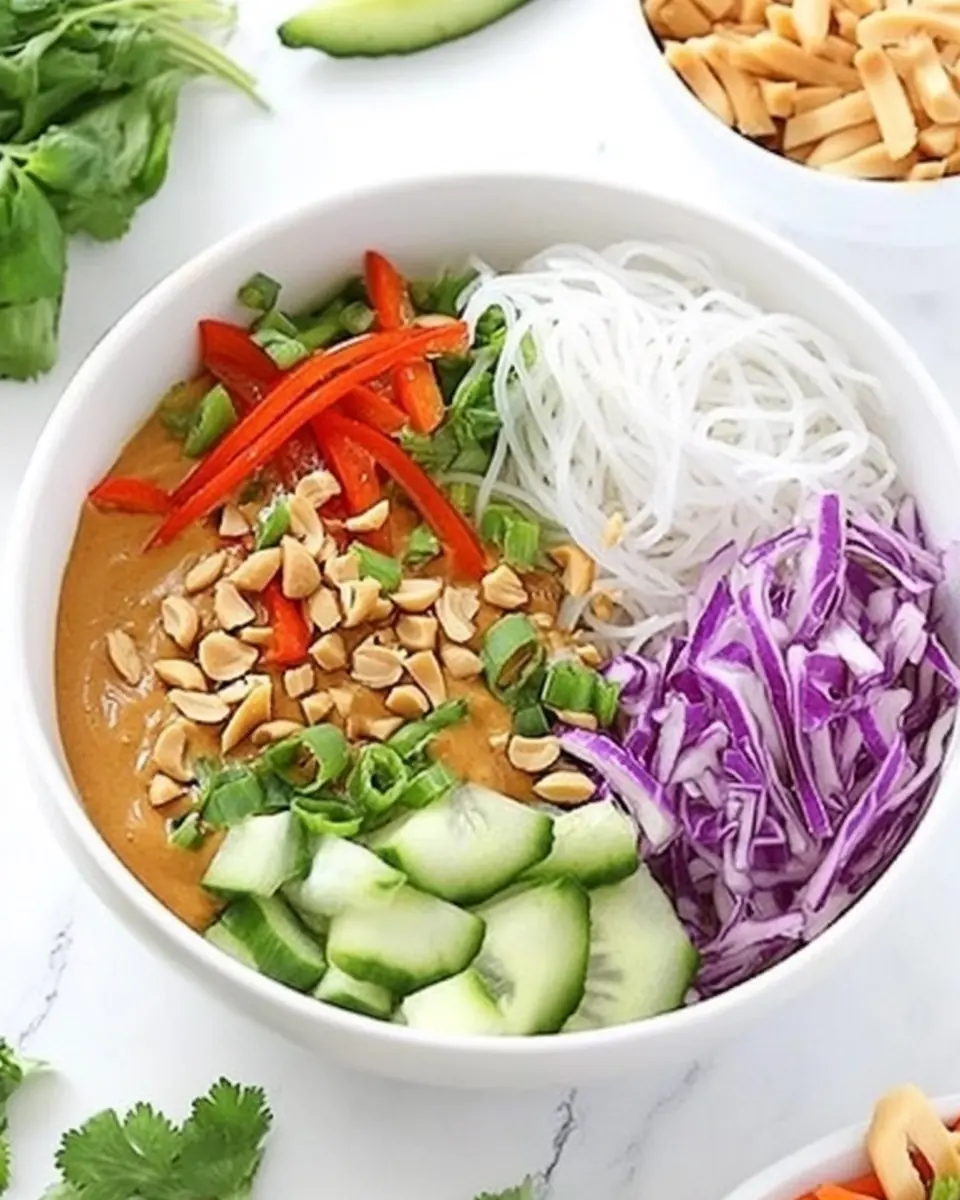
I like to collect practical shortcuts and flavor tweaks that make this bowl easier and more reliable. Below are focused tips that I use regularly to speed prep, keep textures right, and adapt the recipe to different eating styles.
- Cook noodles correctly. Follow package directions and test a strand in the final minute; rice noodles should be tender yet springy. Rinse with cold water to stop cooking, then toss lightly with a teaspoon of neutral oil if you need to store them briefly to prevent sticking.
- Thin the sauce slowly. Add hot water a few tablespoons at a time while whisking to reach a pourable consistency. If you add too much water you can quickly dilute flavor, so go slowly and taste as you go, adjusting tamari for salt and citrus for brightness.
- Prep veg uniformly. Slice carrots, cucumbers, and cabbage into similar thin shapes so every bite combines textures. Uneven cuts lead to some pieces overpowering others, and thin, consistent slices make the bowl feel cohesive and professional.
- Keep toppings separate until serving. Store crunchy toppings like chopped peanuts and sesame seeds separately so they stay crisp. If you combine everything too early the peanuts will soften and you lose that satisfying contrast in texture.
- Herbs at the end. Add cilantro or basil right before serving to preserve their aroma and color. Herbs wilt quickly when mixed with warm noodles, so scatter them on top to keep that fresh, fragrant lift.
- Make it ahead smartly. If you need to prepare elements in advance, keep the noodles, sauce, and vegetables in separate airtight containers in the fridge. Reheat noodles briefly and rewhisk the sauce before assembling for freshest results.
What Goes Well With This Spring Roll Bowl with Peanut Sauce
This bowl suits many occasions, from casual lunches to light dinners. It adapts well to seasons and gatherings because it is easy to scale and assemble. Below I outline serving ideas, side dishes, and storage tips to help you present it beautifully and keep leftovers enjoyable.
- Serve for lunch or light dinner. This bowl is ideal for a mid week lunch that feels elevated without being heavy. Pair it with a simple green salad if you want more volume, or serve as the main at a relaxed dinner when you want something fresh but filling.
- Great for potlucks and build your own meals. Lay out the components buffet style with separate bowls of noodles, vegetables, sauce, and toppings. Guests can customize their bowls with herbs, chopped peanuts, or sriracha, which makes the meal interactive and fun for gatherings.
- Storage strategy. Store the peanut sauce, noodles, and vegetables in separate airtight containers in the refrigerator. Reheat noodles briefly in the microwave or by dunking them in hot water to warm, then assemble with cold vegetables and sauce. This keeps textures intact and prevents the bowl from turning soggy.
- Seasonal pairing. In spring and summer, add more fresh herbs like mint or basil and use crisp cucumbers. In cooler months, consider heartier vegetables in small amounts, while keeping the bowl mostly fresh to preserve its bright profile.
- Occasions. This recipe suits everyday weekday meals, casual weekend lunches, and communal gatherings. It scales well so you can make a few extra bowls for guests or meal prep for lunches during the week.
- Presentation tips. Layer ingredients rather than tossing everything together to keep colors distinct. Finish each bowl with a drizzle of sauce and a sprinkle of chopped peanuts or sesame seeds for visual appeal and texture contrast.
FAQ
Conclusion
This Spring Roll Bowl with Peanut Sauce stands out because it brings together crisp vegetables, tender rice noodles, and a creamy, well balanced peanut sauce for a meal that is both refreshing and deeply satisfying. Give it a try on a busy weeknight or for a relaxed weekend lunch, you will likely find it becomes a go to for its speed, vibrant flavors, and adaptability. I hope you enjoy building your bowl and discovering your favorite topping combinations as much as I do.
Spring Roll Bowl with Peanut Sauce
Ingredients
Equipment
Method
- Prepare the vegetables: Very thinly slice carrot, cucumber, cabbage, and green onions. Roughly chop cilantro, large stems removed. Set aside.: Very thinly slice carrot, cucumber, cabbage, and green onions. Roughly chop cilantro, large stems removed. Set aside. : Start with the crisp sound of a sharp knife on a wooden cutting board, the carrots releasing a faint sweet aroma as you slice. Thin slices ensure each mouthful mixes textures instead of creating a dominant crunchy piece, and the visual palette of orange, green, and purple should look lively in a bowl. Use a steady motion to keep slices even, and if your cuts are uneven, the thinner pieces will wilt faster while thicker pieces stay firm leading to an inconsistent bite, so take an extra minute to even things out. Keep the herbs separate until plating to preserve their bright fragrance, and if your vegetables look wet after washing, pat them dry to prevent watering down the sauce.
- Cook noodles: Cook your rice noodles according to package directions, leaving al dente (slightly firm, not mushy). Drain when finished.: Cook your rice noodles according to package directions, leaving al dente (slightly firm, not mushy). Drain when finished. : As the noodles simmer, watch for the moment they go from rigid to pliable, a soft rustle and cloud of steam rising as you lift a strand. Al dente rice noodles have a slight chew and hold their shape, which helps them carry the sauce without becoming clumpy. Overcooked noodles turn limp and gummy, so test a strand early and often in the final minute. After draining, run cold water over them briefly to stop cooking and separate the strands, and toss them lightly with a drizzle of neutral oil if they seem sticky to keep them loose in the bowl.
- Make the peanut sauce: While noodles are cooking, make the sauce. In a medium bowl, add all sauce ingredients (except water). Then heat 3/4 cup water to just under boiling. Add water to bowl a couple tablespoons at a time, slowly whisking and working the mixture together. Continue adding water until sauce reaches desired consistency. (I usually add about 1/2 cup water.): While noodles are cooking, make the sauce. In a medium bowl, add all sauce ingredients (except water). Then heat 3/4 cup water to just under boiling. Add water to bowl a couple tablespoons at a time, slowly whisking and working the mixture together. Continue adding water until sauce reaches desired consistency. (I usually add about 1/2 cup water.) : The sauce should smell nutty and citrusy, with a warm undertone from the ginger and garlic. Start by combining the peanut butter , maple syrup or brown sugar , tamari , lemon or lime juice , garlic , and ginger , then whisk in warm water until silky and pourable. The ideal texture clings but still drips slowly, coating noodles and veg. If the sauce separates, keep whisking while adding a few drops of warm water to re-emulsify. A common misstep is adding too much water at once which can make it thin and flavorless, so go slowly and taste as you go, adjusting salt or acidity to balance.
- Assemble your bowl: Add cooked noodles, sliced veggies, and then drizzle with peanut sauce. Garnish with any optional toppings. (I like peanuts and sesame seeds.): Add cooked noodles, sliced veggies, and then drizzle with peanut sauce. Garnish with any optional toppings. (I like peanuts and sesame seeds.) : Layer the base of warm, slightly springy rice noodles, then artistically arrange the shredded red cabbage , ribbons of carrot , cool slices of cucumber , and the thinly sliced green onions . Drizzle the peanut sauce in a steady, gliding motion so it pools in some spots and coats strands in others, releasing an inviting nutty aroma. Finish with a scattering of chopped peanuts, sesame seeds, and herbs; their crackle and aroma complete the experience. Watch for overdressing, which can overwhelm the fresh veg, so start with less sauce and add more as needed. If the bowl seems dry after sitting, a light squeeze of citrus brightens and wakes everything up.
Notes
- Cook noodles correctly. Follow package directions and test a strand in the final minute; rice noodles should be tender yet springy. Rinse with cold water to stop cooking, then toss lightly with a teaspoon of neutral oil if you need to store them briefly to prevent sticking.
- Thin the sauce slowly. Add hot water a few tablespoons at a time while whisking to reach a pourable consistency. If you add too much water you can quickly dilute flavor, so go slowly and taste as you go, adjusting tamari for salt and citrus for brightness.
- Prep veg uniformly. Slice carrots, cucumbers, and cabbage into similar thin shapes so every bite combines textures. Uneven cuts lead to some pieces overpowering others, and thin, consistent slices make the bowl feel cohesive and professional.
- Keep toppings separate until serving. Store crunchy toppings like chopped peanuts and sesame seeds separately so they stay crisp. If you combine everything too early the peanuts will soften and you lose that satisfying contrast in texture.
- Herbs at the end. Add cilantro or basil right before serving to preserve their aroma and color. Herbs wilt quickly when mixed with warm noodles, so scatter them on top to keep that fresh, fragrant lift.
- Make it ahead smartly. If you need to prepare elements in advance, keep the noodles, sauce, and vegetables in separate airtight containers in the fridge. Reheat noodles briefly and rewhisk the sauce before assembling for freshest results.