Prepare the vegetables: Very thinly slice carrot, cucumber, cabbage, and green onions. Roughly chop cilantro, large stems removed. Set aside.: Very thinly slice carrot, cucumber, cabbage, and green onions. Roughly chop cilantro, large stems removed. Set aside. : Start with the crisp sound of a sharp knife on a wooden cutting board, the carrots releasing a faint sweet aroma as you slice. Thin slices ensure each mouthful mixes textures instead of creating a dominant crunchy piece, and the visual palette of orange, green, and purple should look lively in a bowl. Use a steady motion to keep slices even, and if your cuts are uneven, the thinner pieces will wilt faster while thicker pieces stay firm leading to an inconsistent bite, so take an extra minute to even things out. Keep the herbs separate until plating to preserve their bright fragrance, and if your vegetables look wet after washing, pat them dry to prevent watering down the sauce.
Cook noodles: Cook your rice noodles according to package directions, leaving al dente (slightly firm, not mushy). Drain when finished.: Cook your rice noodles according to package directions, leaving al dente (slightly firm, not mushy). Drain when finished. : As the noodles simmer, watch for the moment they go from rigid to pliable, a soft rustle and cloud of steam rising as you lift a strand. Al dente rice noodles have a slight chew and hold their shape, which helps them carry the sauce without becoming clumpy. Overcooked noodles turn limp and gummy, so test a strand early and often in the final minute. After draining, run cold water over them briefly to stop cooking and separate the strands, and toss them lightly with a drizzle of neutral oil if they seem sticky to keep them loose in the bowl.
Make the peanut sauce: While noodles are cooking, make the sauce. In a medium bowl, add all sauce ingredients (except water). Then heat 3/4 cup water to just under boiling. Add water to bowl a couple tablespoons at a time, slowly whisking and working the mixture together. Continue adding water until sauce reaches desired consistency. (I usually add about 1/2 cup water.): While noodles are cooking, make the sauce. In a medium bowl, add all sauce ingredients (except water). Then heat 3/4 cup water to just under boiling. Add water to bowl a couple tablespoons at a time, slowly whisking and working the mixture together. Continue adding water until sauce reaches desired consistency. (I usually add about 1/2 cup water.) : The sauce should smell nutty and citrusy, with a warm undertone from the ginger and garlic. Start by combining the peanut butter , maple syrup or brown sugar , tamari , lemon or lime juice , garlic , and ginger , then whisk in warm water until silky and pourable. The ideal texture clings but still drips slowly, coating noodles and veg. If the sauce separates, keep whisking while adding a few drops of warm water to re-emulsify. A common misstep is adding too much water at once which can make it thin and flavorless, so go slowly and taste as you go, adjusting salt or acidity to balance.
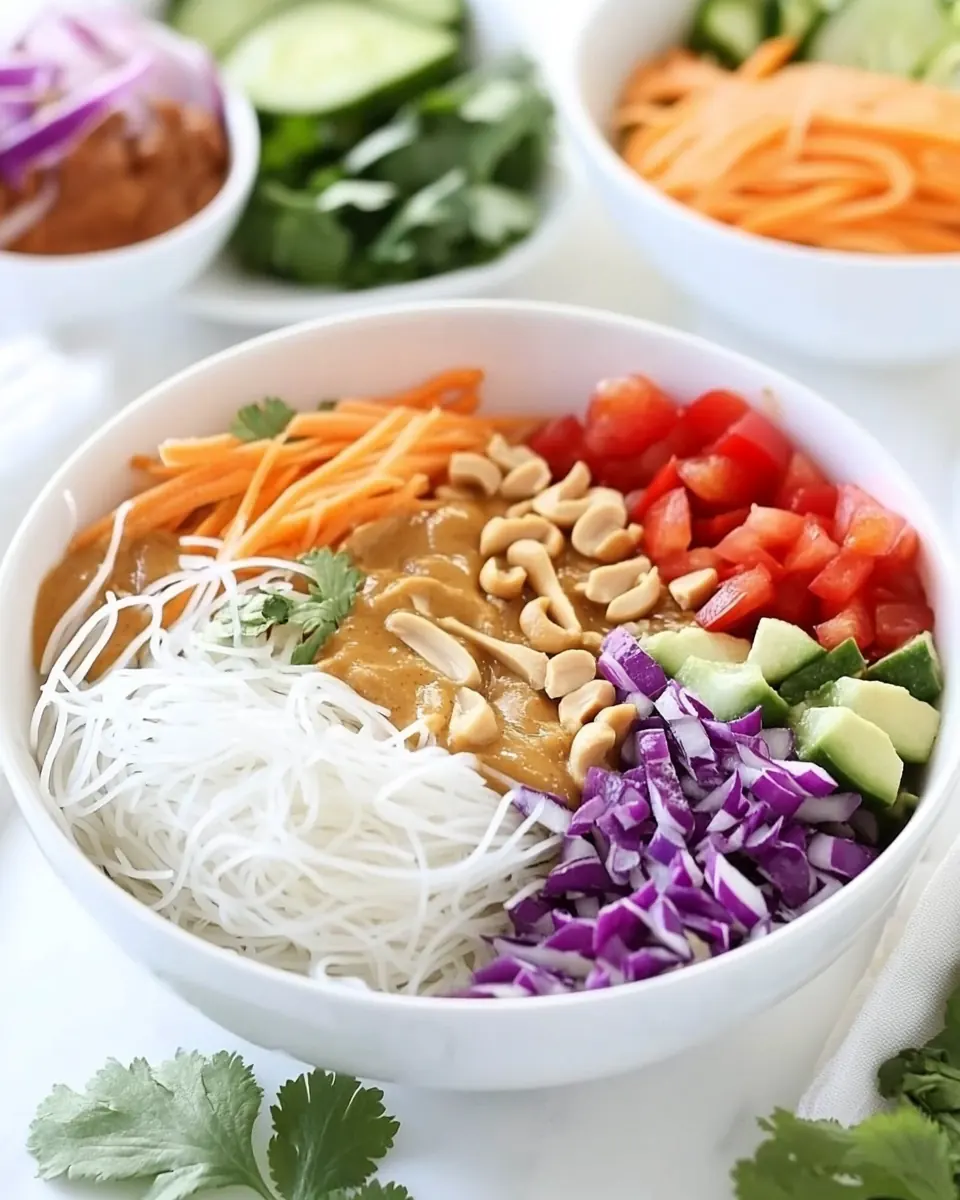
Assemble your bowl: Add cooked noodles, sliced veggies, and then drizzle with peanut sauce. Garnish with any optional toppings. (I like peanuts and sesame seeds.): Add cooked noodles, sliced veggies, and then drizzle with peanut sauce. Garnish with any optional toppings. (I like peanuts and sesame seeds.) : Layer the base of warm, slightly springy rice noodles, then artistically arrange the shredded red cabbage , ribbons of carrot , cool slices of cucumber , and the thinly sliced green onions . Drizzle the peanut sauce in a steady, gliding motion so it pools in some spots and coats strands in others, releasing an inviting nutty aroma. Finish with a scattering of chopped peanuts, sesame seeds, and herbs; their crackle and aroma complete the experience. Watch for overdressing, which can overwhelm the fresh veg, so start with less sauce and add more as needed. If the bowl seems dry after sitting, a light squeeze of citrus brightens and wakes everything up.