Starbucks Cheese Danish
Starbucks Cheese Danish is the kind of pastry that brings instant comfort, and I’ll never forget the first time I tried to recreate it at home. I was chasing that perfect balance of a flaky, buttery crust and a lusciously smooth, slightly tangy filling, and after a few experiments I landed on a version that felt faithful to the memory yet friendly enough for a busy morning.
The ritual of making these feels warm and small scale, like inviting a little bakery moment into my kitchen. I love how the process lets you slow down just long enough to appreciate the textures: the way the puff pastry sings as it puffs, and how the cream cheese filling melts into soft ribbons as you bite through the golden layers. Over time I’ve learned small habits that make a big difference, like chilling the puff pastry briefly if my kitchen is very warm, and using a pastry bag made from a freezer bag to pipe neat, even lines of filling.
Recipe Snapshot
30 mins
15 mins
15 mins
Medium
200 kcal
American
Gluten-Free, Low FODMAP
Desserts
Baking sheet, Parchment paper, Mixing bowls, Whisk, Pizza cutter, Fork, Freezer Ziploc bag
The Magic of This Starbucks Cheese Danish
Reliable Crowd Pleaser
I make Starbucks Cheese Danish whenever friends drop by because it scales so well, and yet each piece feels special. The combination of flaky puff pastry and a creamy cream cheese center delivers contrast in every bite, which is what keeps guests reaching for another one.
Fast and Approachable
I appreciate that this recipe gets bakery quality without complicated laminating. Using store bought puff pastry lets me focus on texture and flavor, not technique, so I’ll serve these when time is tight but expectations are high.
Flexible for Occasions
I bring these danishes to brunches, potlucks, and lazy weekend breakfasts. They look elegant on a platter and pair beautifully with coffee. Because they store well for a few days, I can make them ahead and still impress people.
Balanced Sweetness
I love the restrained sweetness here, because it allows the cream cheese tang and the buttery layers of puff pastry to shine. That balance keeps the pastry from feeling cloying and makes it easy to enjoy multiple bites.
Beginner Friendly, Yet Rewarding
I’ve taught this to friends who rarely bake, and they always come away proud. The steps are clear, and the sensory cues are obvious, so you learn while you bake and wind up with a beautiful, tasty result.
What to Gather for Starbucks Cheese Danish

The ingredients for Starbucks Cheese Danish work together to create crisp, layered pastry and a velvet smooth filling. The star players are the store bought puff pastry for effortless flakiness, and the cream cheese for creamy tang. A touch of granulated sugar and vanilla extract sweeten and round the filling, while lemon zest adds brightness. The egg and water form a glossy wash that helps the pastry brown evenly.
- 2 sheets frozen puff pastry thawed (1 box): Thawed and pliable to provide the flaky, layered base for the Danish; keep cold until shaping to preserve lift and ensure even baking. Handle gently to avoid compressing layers and bake on a parchment-lined sheet until golden and puffed for best texture.
- 8 ounces cream cheese softened: Softened to a spreadable consistency so it blends smoothly into a creamy filling; beat briefly to remove lumps and create a light texture. Incorporate at room temperature to prevent chilling the pastry and ensure an even, rich center.
- 1/4 cup granulated sugar + 1 tb for tops: Granulated sugar measured for sweetness within the filling and a small portion reserved for sprinkling on tops to add a subtle crunch; dissolve sugar into the cheese for a smooth finish. Adjust amount slightly to taste but maintain balance so it doesn't overpower the pastry.
- 1 teaspoon vanilla extract: Added for aromatic warmth and depth to complement the cream cheese; stir into the filling to distribute fragrance evenly. Use pure extract and add at the end of mixing to preserve delicate flavor notes.
- 1 teaspoon lemon zest: Zested to contribute bright citrus brightness and lift the richness of the cheese; add finely grated peel so it distributes without fibrous bits. Incorporate sparingly to enhance flavor without adding acidity or moisture.
- 1/4 teaspoons salt: A pinch measured to balance sweetness and enhance overall flavor; dissolve into the filling to sharpen and round out tastes. Use the small amount indicated to avoid overt salinity which could overwhelm the pastry.
- 1 large egg + 1 tb water: Beaten together to create an egg wash (egg plus water) that gives the pastry a glossy, golden finish when brushed on before baking; mix thoroughly and apply evenly. Reserve and brush just before baking to ensure optimal sheen and color.
Instructions for Starbucks Cheese Danish
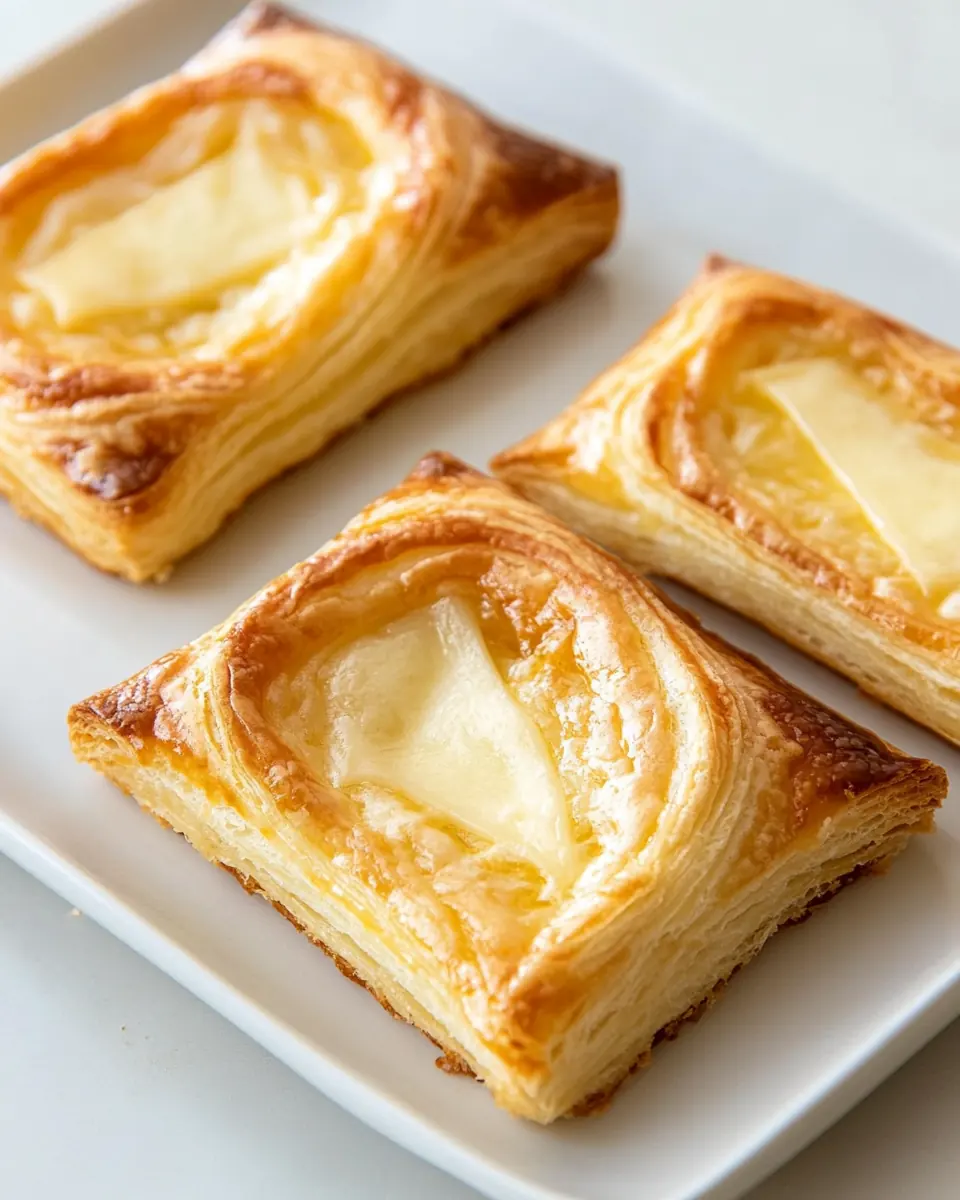
These instructions walk you through each tactile cue so you can bake with confidence. I like to keep my mise en place tidy, with bowls prepped and the baking sheet ready, because the process moves quickly once the pastry is cut.
- Preheat the oven to 400°F. Set out a large baking sheet and line it with parchment paper.: The oven will develop an immediate hot environment that encourages rapid steam formation in the layers, producing dramatic puff and separation. As the air heats, you will notice a faint warm, dry scent from the oven, and the parchment will lie smooth and ready. A common error is placing the tray too low in the oven, which can brown the bottoms too quickly; aim for the center rack. If your oven temperature runs hot, use an oven thermometer to confirm 400°F . Also, preheating fully ensures the first moments in the oven are consistent so the pastry puffs evenly rather than collapsing.
- Set out a small bowl for the cream cheese filling, and an even smaller bowl for the egg wash. Crack the egg into the smallest bowl and add 1 tablespoon of water. Whisk well to create egg wash.: The egg wash should look smooth, slightly frothy, and uniformly golden when whisked. The sound is quiet, just a light whisking, and the aroma is faintly savory. This wash gives the pastry a shiny, attractive top and helps brown evenly. Avoid overbeating to the point of foam, because too many bubbles can cause uneven browning. If the egg is too cold it will not emulsify well, so bring it closer to room temperature briefly before whisking.
- In the second bowl, combine the cream cheese, sugar, vanilla extract, lemon zest, and salt. Mix until very smooth.: As you stir, the mixture should become glossy and uniform, with no lumps of cream cheese visible. You will smell the bright lemon oils and creamy vanilla as they meld. The texture should be spreadable but not runny, holding shape when piped. A common issue is under mixing, leaving small bits of cream cheese; scrape the bowl thoroughly and mix until silky. Overmixing at high speed can warm the filling and make it loose, so use a gentle hand.
- Lay one sheet of thawed puff pastry on a clean work surface. Brush egg wash over the top of the puff pastry. Then lay the second sheet of puff pastry evenly over the top. Gently press. Brush the top of the second sheet with egg wash. Then use a pizza cutter to cut the puff pastry sheet into 12 small rectangles. That's 2 long cuts in one direction and 3 long cuts perpendicular to the first cuts.: You should feel the pastry as cool and slightly tacky under your fingertips, and the egg wash will glisten when applied. When you press the sheets together, they should adhere without squeezing out the wash. The clean lines from the pizza cutter should reveal distinct rectangles with neat edges. Work briskly so the butter layers stay cool; if the pastry becomes soft, pop it back into the fridge for a few minutes. Cutting with a dull blade will compress layers, so use a sharp cutter to preserve lift.
- Move the puff pastry rectangles to the baking sheet, 1-2 inches apart. Use a fork to poke holes down the center of each puff pastry rectangle, leaving a half inch rim around the edge.: As you transfer rectangles, their edges should remain defined and the dough should feel firm. The tines of the fork create a center bed that allows the filling to anchor while the outer rim puffs high and crisp. You will notice a subtle contrast between the perforated center and the smooth rim. A typical mistake is piercing too close to the edge, which can prevent proper puffing, so keep that half inch margin clear. Press lightly with the fork so the center holds without tearing the layers.
- Scoop the cream cheese filling into a freezer Ziploc bag. Cut off one corner of the bag to create a disposable piping bag. Pipe the cream cheese filling down the center of each puff pastry sheet, over the top of the punctured holes.: When you begin piping, the filling should glide smoothly from the cut corner, leaving a neat, pale ribbon down each center. The scent will be invitingly tangy and sweet. Fill each center leaving the outer rim bare so it can puff unhindered. Avoid overfilling, which can cause spillover and wet spots that stop the rim from browning correctly. If the filling is too stiff to pipe, warm the bag briefly in your hands to loosen it slightly, then continue.
- Bake the cheese danishes for 15-20, until the edges are golden brown and evenly puffed on all sides.: During baking you will hear a soft crackling as the layers separate and the butter renders, giving a delicate toasty aroma. The pastry should rise visibly, with a deep golden edge and a lightly set filling that may have a faint blush where sugar caramelizes. If the tops brown too quickly, tent with foil to prevent burning while the centers finish. Ovens vary, so start checking at 15 minutes and aim for even color rather than an exact time. Avoid opening the oven repeatedly, since heat loss can reduce the rise.
- Allow the cheese danishes to cool for at least 5 minutes on the baking sheet. Then serve warm.: Cooling lets the filling set slightly so it does not run when you pick a danish up, yet the pastry remains warm and flaky. The texture contrast is best when still slightly warm, with crisped layers and creamy centers. A mistake is serving immediately while the filling is molten, which can be messy; wait the brief cooldown and your danishes will hold together beautifully. If storing, cool completely before covering to avoid trapped steam softening the pastry.
Ways to Customize
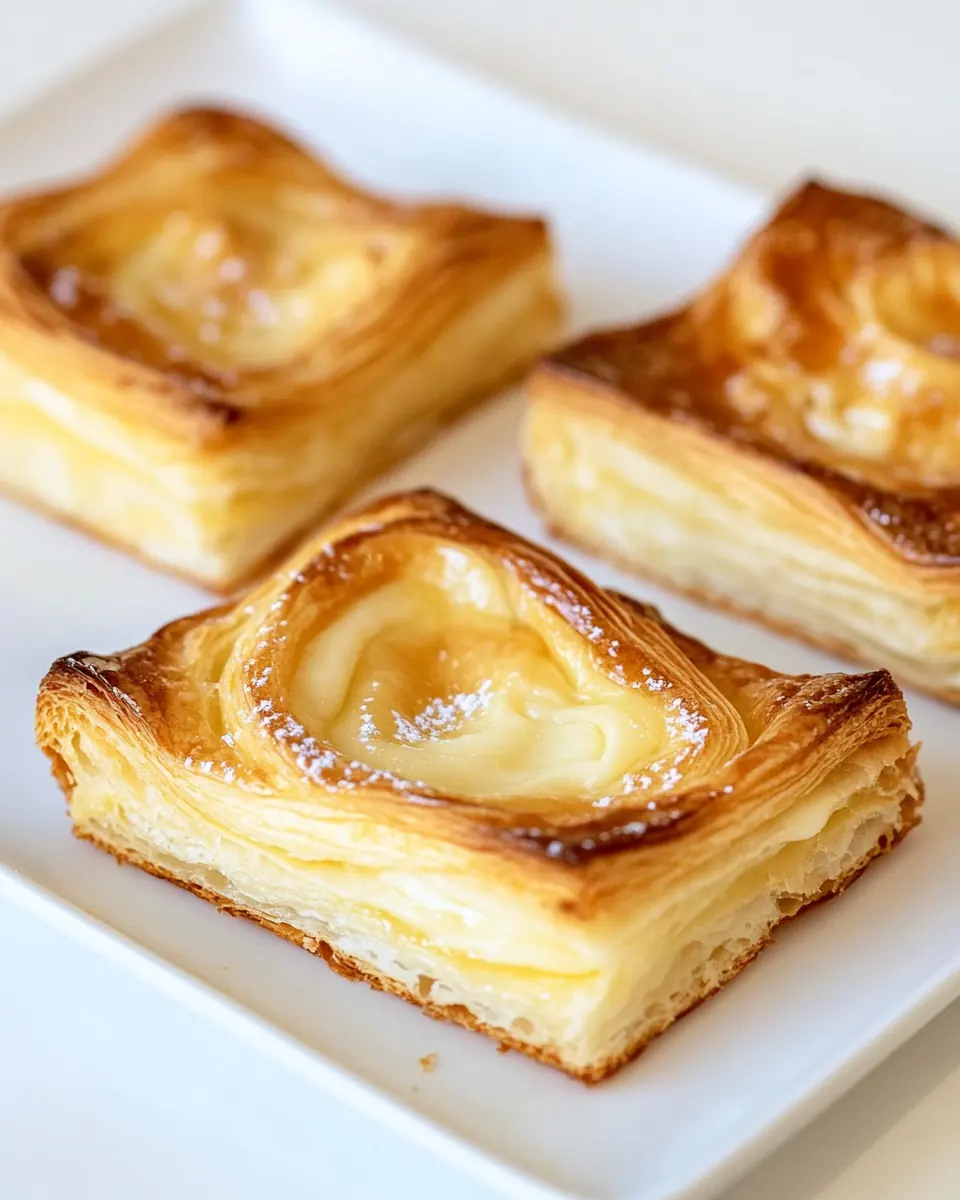
I like to keep a few variations in mind so the Starbucks Cheese Danish can adapt to different mornings. These tweaks change the flavor profile without complicating the recipe.
- Swap citrus for depth Use orange zest instead of lemon zest for a sweeter, more floral brightness that pairs wonderfully with the creamy center.
- Sugar topping variation Sprinkle an extra 1 tablespoon of granulated sugar on top before baking for a slight crunch and added sparkle.
- Vanilla note boost Increase the vanilla slightly or use a vanilla bean paste for a more pronounced, bakery style aroma in the filling.
- Puff pastry handling Chill cut pastries briefly on the tray before baking if your kitchen is warm, this helps the layers stay distinct and puff reliably.
- Make ahead strategy Assemble danishes and freeze on the sheet tray, then transfer to a bag; bake from frozen adding a few minutes to the time for fresh taste on demand.
What Goes Well With This Starbucks Cheese Danish
These danishes pair well with morning beverages and light accompaniments, making them perfect for brunch or a weekday treat. I often present them with a selection of drinks and small sides so guests can mix and match. They suit casual gatherings and special mornings alike.
- Coffee pairing Serve with freshly brewed coffee or a latte to match the pastry‘s richness and amplify its cozy appeal.
- Tea selection A bright black tea or a fragrant Earl Grey complements the citrus in the filling while balancing the buttery layers.
- Simple fruit Offer sliced fruit or a small fruit salad to provide a fresh contrast that cuts through the pastry richness.
- Occasion fit Great for brunches, holiday mornings, or casual weekend gatherings where a warm tray of pastries brings people together.
- Storage tips Store cooled danishes in an airtight container at room temperature for up to three days, or refrigerate for up to five days as noted in the recipe instructions.
FAQ
Conclusion
What makes this recipe special is its ability to deliver a bakery style Starbucks Cheese Danish with very approachable steps and familiar ingredients. The interplay of flaky, buttery puff pastry and a creamy, tangy cream cheese filling yields a satisfying contrast in texture and flavor. I encourage you to try it because the process is forgiving, the sensory rewards are immediate, and it transforms simple components into a memorable treat. Share a tray with friends or savor one slowly with your morning coffee, and you may find this becomes a go to pastry in your rotation.

Starbucks Cheese Danish
Ingredients
Equipment
Method
- Preheat the oven to 400°F. Set out a large baking sheet and line it with parchment paper.: The oven will develop an immediate hot environment that encourages rapid steam formation in the layers, producing dramatic puff and separation. As the air heats, you will notice a faint warm, dry scent from the oven, and the parchment will lie smooth and ready. A common error is placing the tray too low in the oven, which can brown the bottoms too quickly; aim for the center rack. If your oven temperature runs hot, use an oven thermometer to confirm 400°F . Also, preheating fully ensures the first moments in the oven are consistent so the pastry puffs evenly rather than collapsing.
- Set out a small bowl for the cream cheese filling, and an even smaller bowl for the egg wash. Crack the egg into the smallest bowl and add 1 tablespoon of water. Whisk well to create egg wash.: The egg wash should look smooth, slightly frothy, and uniformly golden when whisked. The sound is quiet, just a light whisking, and the aroma is faintly savory. This wash gives the pastry a shiny, attractive top and helps brown evenly. Avoid overbeating to the point of foam, because too many bubbles can cause uneven browning. If the egg is too cold it will not emulsify well, so bring it closer to room temperature briefly before whisking.
- In the second bowl, combine the cream cheese, sugar, vanilla extract, lemon zest, and salt. Mix until very smooth.: As you stir, the mixture should become glossy and uniform, with no lumps of cream cheese visible. You will smell the bright lemon oils and creamy vanilla as they meld. The texture should be spreadable but not runny, holding shape when piped. A common issue is under mixing, leaving small bits of cream cheese; scrape the bowl thoroughly and mix until silky. Overmixing at high speed can warm the filling and make it loose, so use a gentle hand.
- Lay one sheet of thawed puff pastry on a clean work surface. Brush egg wash over the top of the puff pastry. Then lay the second sheet of puff pastry evenly over the top. Gently press. Brush the top of the second sheet with egg wash. Then use a pizza cutter to cut the puff pastry sheet into 12 small rectangles. That's 2 long cuts in one direction and 3 long cuts perpendicular to the first cuts.: You should feel the pastry as cool and slightly tacky under your fingertips, and the egg wash will glisten when applied. When you press the sheets together, they should adhere without squeezing out the wash. The clean lines from the pizza cutter should reveal distinct rectangles with neat edges. Work briskly so the butter layers stay cool; if the pastry becomes soft, pop it back into the fridge for a few minutes. Cutting with a dull blade will compress layers, so use a sharp cutter to preserve lift.
- Move the puff pastry rectangles to the baking sheet, 1-2 inches apart. Use a fork to poke holes down the center of each puff pastry rectangle, leaving a half inch rim around the edge.: As you transfer rectangles, their edges should remain defined and the dough should feel firm. The tines of the fork create a center bed that allows the filling to anchor while the outer rim puffs high and crisp. You will notice a subtle contrast between the perforated center and the smooth rim. A typical mistake is piercing too close to the edge, which can prevent proper puffing, so keep that half inch margin clear. Press lightly with the fork so the center holds without tearing the layers.
- Scoop the cream cheese filling into a freezer Ziploc bag. Cut off one corner of the bag to create a disposable piping bag. Pipe the cream cheese filling down the center of each puff pastry sheet, over the top of the punctured holes.: When you begin piping, the filling should glide smoothly from the cut corner, leaving a neat, pale ribbon down each center. The scent will be invitingly tangy and sweet. Fill each center leaving the outer rim bare so it can puff unhindered. Avoid overfilling, which can cause spillover and wet spots that stop the rim from browning correctly. If the filling is too stiff to pipe, warm the bag briefly in your hands to loosen it slightly, then continue.
- Bake the cheese danishes for 15-20, until the edges are golden brown and evenly puffed on all sides.: During baking you will hear a soft crackling as the layers separate and the butter renders, giving a delicate toasty aroma. The pastry should rise visibly, with a deep golden edge and a lightly set filling that may have a faint blush where sugar caramelizes. If the tops brown too quickly, tent with foil to prevent burning while the centers finish. Ovens vary, so start checking at 15 minutes and aim for even color rather than an exact time. Avoid opening the oven repeatedly, since heat loss can reduce the rise.
- Allow the cheese danishes to cool for at least 5 minutes on the baking sheet. Then serve warm.: Cooling lets the filling set slightly so it does not run when you pick a danish up, yet the pastry remains warm and flaky. The texture contrast is best when still slightly warm, with crisped layers and creamy centers. A mistake is serving immediately while the filling is molten, which can be messy; wait the brief cooldown and your danishes will hold together beautifully. If storing, cool completely before covering to avoid trapped steam softening the pastry.
Notes
- Swap citrus for depth Use orange zest instead of lemon zest for a sweeter, more floral brightness that pairs wonderfully with the creamy center.
- Sugar topping variation Sprinkle an extra 1 tablespoon of granulated sugar on top before baking for a slight crunch and added sparkle.
- Vanilla note boost Increase the vanilla slightly or use a vanilla bean paste for a more pronounced, bakery style aroma in the filling.
- Puff pastry handling Chill cut pastries briefly on the tray before baking if your kitchen is warm, this helps the layers stay distinct and puff reliably.
- Make ahead strategy Assemble danishes and freeze on the sheet tray, then transfer to a bag; bake from frozen adding a few minutes to the time for fresh taste on demand.