Preheat the oven to 400°F. Set out a large baking sheet and line it with parchment paper.: The oven will develop an immediate hot environment that encourages rapid steam formation in the layers, producing dramatic puff and separation. As the air heats, you will notice a faint warm, dry scent from the oven, and the parchment will lie smooth and ready. A common error is placing the tray too low in the oven, which can brown the bottoms too quickly; aim for the center rack. If your oven temperature runs hot, use an oven thermometer to confirm 400°F . Also, preheating fully ensures the first moments in the oven are consistent so the pastry puffs evenly rather than collapsing.
Set out a small bowl for the cream cheese filling, and an even smaller bowl for the egg wash. Crack the egg into the smallest bowl and add 1 tablespoon of water. Whisk well to create egg wash.: The egg wash should look smooth, slightly frothy, and uniformly golden when whisked. The sound is quiet, just a light whisking, and the aroma is faintly savory. This wash gives the pastry a shiny, attractive top and helps brown evenly. Avoid overbeating to the point of foam, because too many bubbles can cause uneven browning. If the egg is too cold it will not emulsify well, so bring it closer to room temperature briefly before whisking.
In the second bowl, combine the cream cheese, sugar, vanilla extract, lemon zest, and salt. Mix until very smooth.: As you stir, the mixture should become glossy and uniform, with no lumps of cream cheese visible. You will smell the bright lemon oils and creamy vanilla as they meld. The texture should be spreadable but not runny, holding shape when piped. A common issue is under mixing, leaving small bits of cream cheese; scrape the bowl thoroughly and mix until silky. Overmixing at high speed can warm the filling and make it loose, so use a gentle hand.
Lay one sheet of thawed puff pastry on a clean work surface. Brush egg wash over the top of the puff pastry. Then lay the second sheet of puff pastry evenly over the top. Gently press. Brush the top of the second sheet with egg wash. Then use a pizza cutter to cut the puff pastry sheet into 12 small rectangles. That's 2 long cuts in one direction and 3 long cuts perpendicular to the first cuts.: You should feel the pastry as cool and slightly tacky under your fingertips, and the egg wash will glisten when applied. When you press the sheets together, they should adhere without squeezing out the wash. The clean lines from the pizza cutter should reveal distinct rectangles with neat edges. Work briskly so the butter layers stay cool; if the pastry becomes soft, pop it back into the fridge for a few minutes. Cutting with a dull blade will compress layers, so use a sharp cutter to preserve lift.
Move the puff pastry rectangles to the baking sheet, 1-2 inches apart. Use a fork to poke holes down the center of each puff pastry rectangle, leaving a half inch rim around the edge.: As you transfer rectangles, their edges should remain defined and the dough should feel firm. The tines of the fork create a center bed that allows the filling to anchor while the outer rim puffs high and crisp. You will notice a subtle contrast between the perforated center and the smooth rim. A typical mistake is piercing too close to the edge, which can prevent proper puffing, so keep that half inch margin clear. Press lightly with the fork so the center holds without tearing the layers.
Scoop the cream cheese filling into a freezer Ziploc bag. Cut off one corner of the bag to create a disposable piping bag. Pipe the cream cheese filling down the center of each puff pastry sheet, over the top of the punctured holes.: When you begin piping, the filling should glide smoothly from the cut corner, leaving a neat, pale ribbon down each center. The scent will be invitingly tangy and sweet. Fill each center leaving the outer rim bare so it can puff unhindered. Avoid overfilling, which can cause spillover and wet spots that stop the rim from browning correctly. If the filling is too stiff to pipe, warm the bag briefly in your hands to loosen it slightly, then continue.
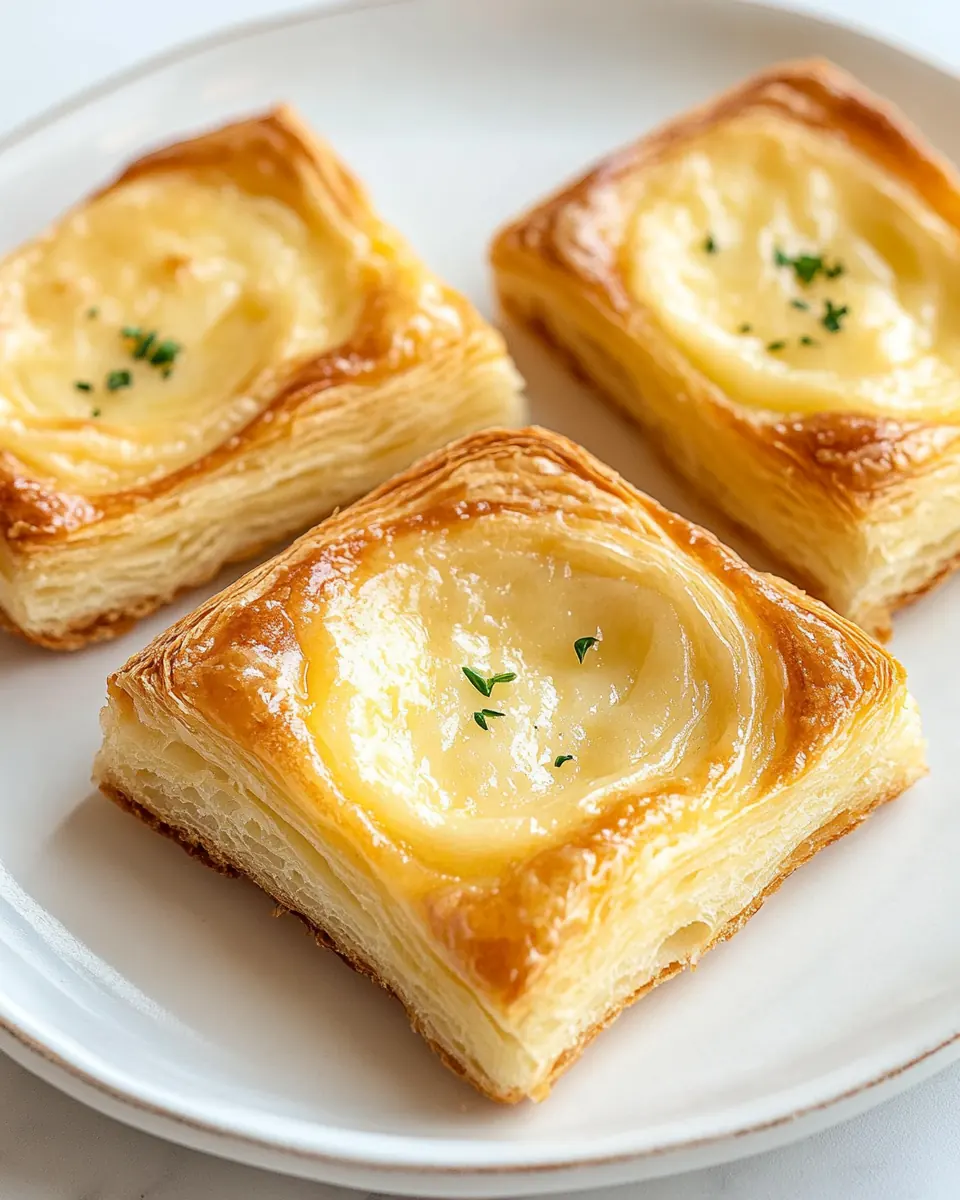
Bake the cheese danishes for 15-20, until the edges are golden brown and evenly puffed on all sides.: During baking you will hear a soft crackling as the layers separate and the butter renders, giving a delicate toasty aroma. The pastry should rise visibly, with a deep golden edge and a lightly set filling that may have a faint blush where sugar caramelizes. If the tops brown too quickly, tent with foil to prevent burning while the centers finish. Ovens vary, so start checking at 15 minutes and aim for even color rather than an exact time. Avoid opening the oven repeatedly, since heat loss can reduce the rise.
Allow the cheese danishes to cool for at least 5 minutes on the baking sheet. Then serve warm.: Cooling lets the filling set slightly so it does not run when you pick a danish up, yet the pastry remains warm and flaky. The texture contrast is best when still slightly warm, with crisped layers and creamy centers. A mistake is serving immediately while the filling is molten, which can be messy; wait the brief cooldown and your danishes will hold together beautifully. If storing, cool completely before covering to avoid trapped steam softening the pastry.