Strawberry Basil Focaccia Bread
Strawberry Basil Focaccia Bread has been one of those surprising recipes that turned a casual afternoon into a small celebration in my kitchen. The first time I made it, neighbors wandered over, drawn by the smell of warm olive oil and caramelized onion, and we ended up sharing slices while the sun slid toward evening. I remember thinking how bold it felt to pair sweet strawberries with savory dough and aromatic basil, and how that contrast made every bite interesting.
I learned to trust the dough during the long rise, leaving it to rest while I prepped the other elements. That quiet time gave me space to caramelize the onion slowly, coaxing out deep savory notes that anchor the bright fruit. When I finally pressed the dough into the oiled pan and dotted the surface with fragrant olive oil, the texture promised a crisp exterior and pillowy interior. Guests loved the unexpected simplicity, and I kept hearing how the combination felt both rustic and refined, a great bridge between picnic food and dinner party fare.
Recipe Snapshot
3 hr
160 mins
20 mins
Hard
250 kcal
Italian
Gluten-Free, Low FODMAP
Appetizers
Stand mixer, Dough hook, 15 1/2 x 10 inch jelly roll sheet pan, Large skillet
Why This Strawberry Basil Focaccia Bread Hits Different
Bold, Balanced Flavors
I adore how Strawberry Basil Focaccia Bread balances sweet and savory. The caramelized onion and a touch of balsamic vinegar bring depth, while the strawberries add a bright pop. I find this contrast keeps each bite lively and prevents the bread from tasting one dimensional.
Textural Delight
There is something so satisfying about the contrast between the crunchy, golden crust and the soft, airy crumb beneath. The liberal use of extra virgin olive oil during shaping helps create those classic focaccia crevices and a tender interior that soaks up flavors.
Simple Techniques, Impressive Results
Even if you do not bake often, the methods here are approachable. I often tell friends that a little patience during the rises yields bakery level bread at home. The steps reward you with a deeply flavored loaf that looks far more complicated than it actually is.
Versatile for Many Occasions
I’ve served this at casual lunches, holiday spreads in spring, and as part of a weekend brunch. It pairs well with simple cheeses or stands alone as a snack. The fresh basil on top adds a finishing green note that makes it look like a celebration on a plate.
Great Make Ahead Option
I often make the dough ahead or caramelize the onion the day before. That saves time and lets the flavors develop, which is perfect when I want to entertain without fuss. The loaf also reheats beautifully, so leftovers are never a disappointment.
Ingredient List for Strawberry Basil Focaccia Bread
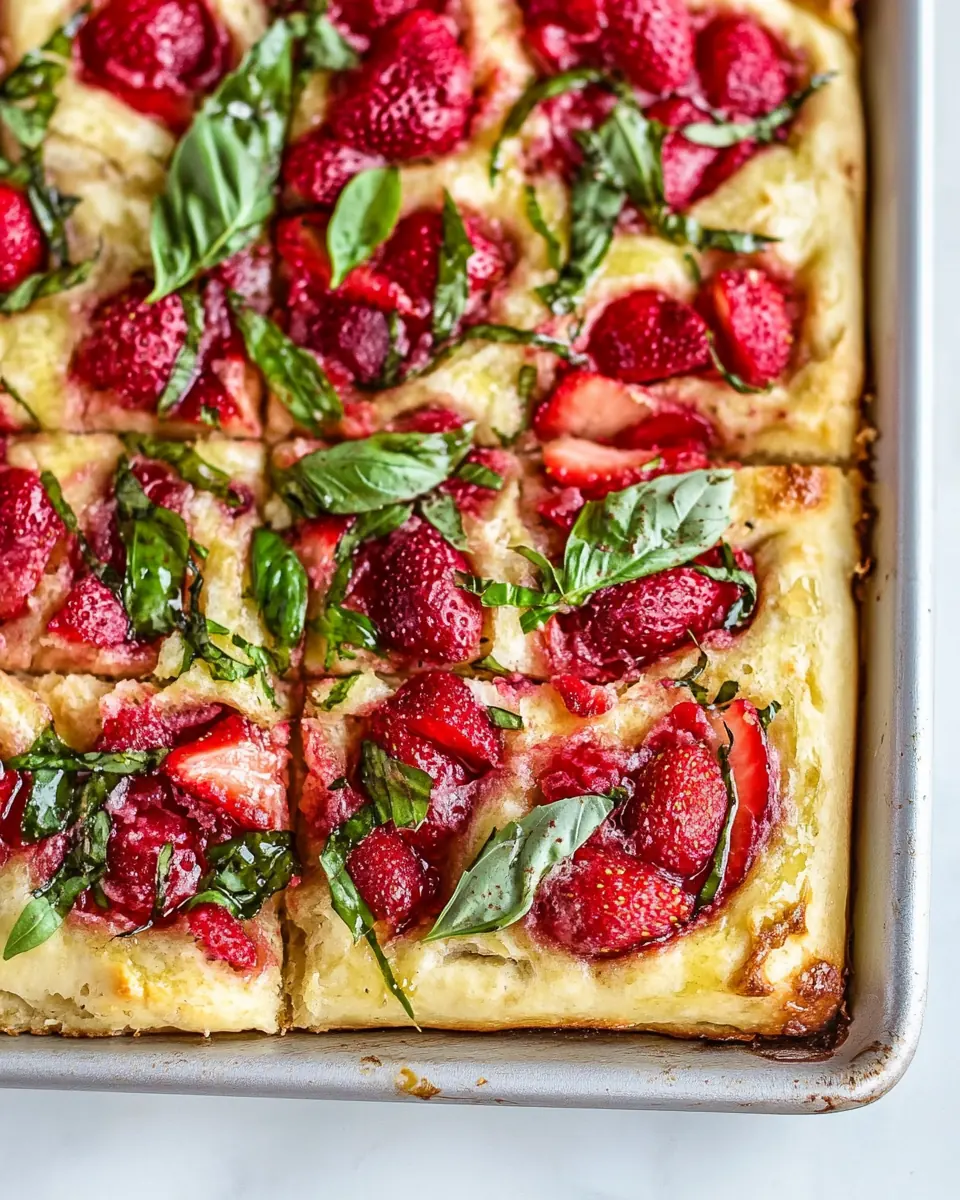
These ingredients are chosen to build a focaccia that is simultaneously rich, aromatic, and slightly sweet. The star players are the dough components that give structure and that beautiful open crumb, the fat that promotes tender texture, and the finishing elements that add brightness and contrast. Together they create layers of flavor that make this focaccia uniquely savory with a fruity twist.
- 1 3/4 cups warm water: Provide warm liquid to activate yeast and hydrate the dough, ensuring it dissolves ingredients and creates steam for a tender crumb. Maintain a temperature around 100–110°F to avoid killing yeast and encourage proper fermentation. Measure accurately to balance dough hydration for an open focaccia texture.
- 2 1/4 teaspoons active dry yeast: Activate fermentation and leaven the focaccia by converting sugars into carbon dioxide, which creates rise and airy pockets. Sprinkle into warm water to bloom and confirm activity before mixing with flour. Use precise measurement to control dough rise timing and oven spring.
- 1 tablespoon honey: Add fermentable sugar that feeds the yeast for consistent rise while contributing subtle sweetness and browning to the crust. Dissolve into the warm water to help jumpstart yeast activity. Balance sweetness so it complements savory elements like olive oil and salt.
- 5 cups all-purpose flour plus more for your workspace: Build the dough structure with gluten-forming proteins that provide elasticity and chew while supporting gas bubbles for lift. Sift or spoon to measure accurately and add gradually to achieve the desired dough consistency. Reserve a bit for dusting the workspace to prevent sticking during shaping.
- 1 tablespoon kosher salt plus more for sprinkling: Season the dough to enhance overall flavor and regulate yeast activity slightly, contributing to fermentation balance. Dissolve into the dough so it distributes evenly, and reserve extra for topping to create flavor contrast. Use coarse kosher salt for reliable measurement and texture.
- 1 cup extra virgin olive oil: Enrich the dough and create a moist, tender crumb while adding characteristic olive flavor that complements toppings. Reserve a portion to oil the pan and drizzle over the dough before baking to promote a crisp, golden crust. Use high-quality extra virgin olive oil for best flavor impact.
- 2 tablespoons unsalted butter: Provide rich, buttery flavor and help sauté onions until caramelized, adding depth to the topping and an enriched finish when brushed on the baked focaccia. Melt gently to avoid browning too quickly and combine with olive oil if using as a finishing glaze. Use unsalted butter to control overall salt level.
- 1 large sweet onion, thinly sliced: Contribute sweet, savory complexity and soft texture when thinly sliced and caramelized; they melt into the surface and pair with strawberries and basil. Sauté slowly in butter and a bit of oil until golden to develop sweetness without burning. Layer evenly over the dough or use as a topping after partial bake for best texture.
- salt and black pepper: Season and balance flavors during cooking and at serving, offering basic taste contrast and the option to adjust seasoning to preference. Use freshly ground black pepper for bright heat and adjust salt levels after tasting to avoid over-salting. Apply sparingly when combined with other salty toppings.
- 2 tablespoons balsamic vinegar: Add a touch of acidity and depth that complements sweet strawberries and caramelized onions, enhancing overall flavor complexity. Drizzle when caramelizing onions or mix into a glaze to tie savory and sweet elements together. Use sparingly to avoid overpowering delicate herb and fruit notes.
- 1 1/2 cups sliced strawberries: Provide fresh, fruity sweetness and a bright contrast to savory and herbal elements, offering bursts of flavor and a tender texture when baked lightly or added after baking. Slice uniformly to ensure even distribution and gentle warming without turning mushy. Combine with basil and a sprinkle of salt to balance sweetness.
- flaked salt, for sprinkling: Deliver concentrated crunch and enhance presentation while providing bursts of saltiness that heighten the other flavors on top of the focaccia. Scatter lightly over the finished loaf to preserve texture and avoid dissolving into the dough. Choose flaky salt for a pleasant, visible garnish.
- 1 big handful of basil leaves, thinly sliced or torn: Offer fresh, aromatic herbaceous notes that brighten the bread and complement strawberries and balsamic, adding a classic pairing with a peppery-sweet profile. Tear or thinly slice to release oils and distribute evenly over the dough or as a finishing garnish. Add at the end or briefly bake to preserve vibrant flavor.
Instructions for Strawberry Basil Focaccia Bread
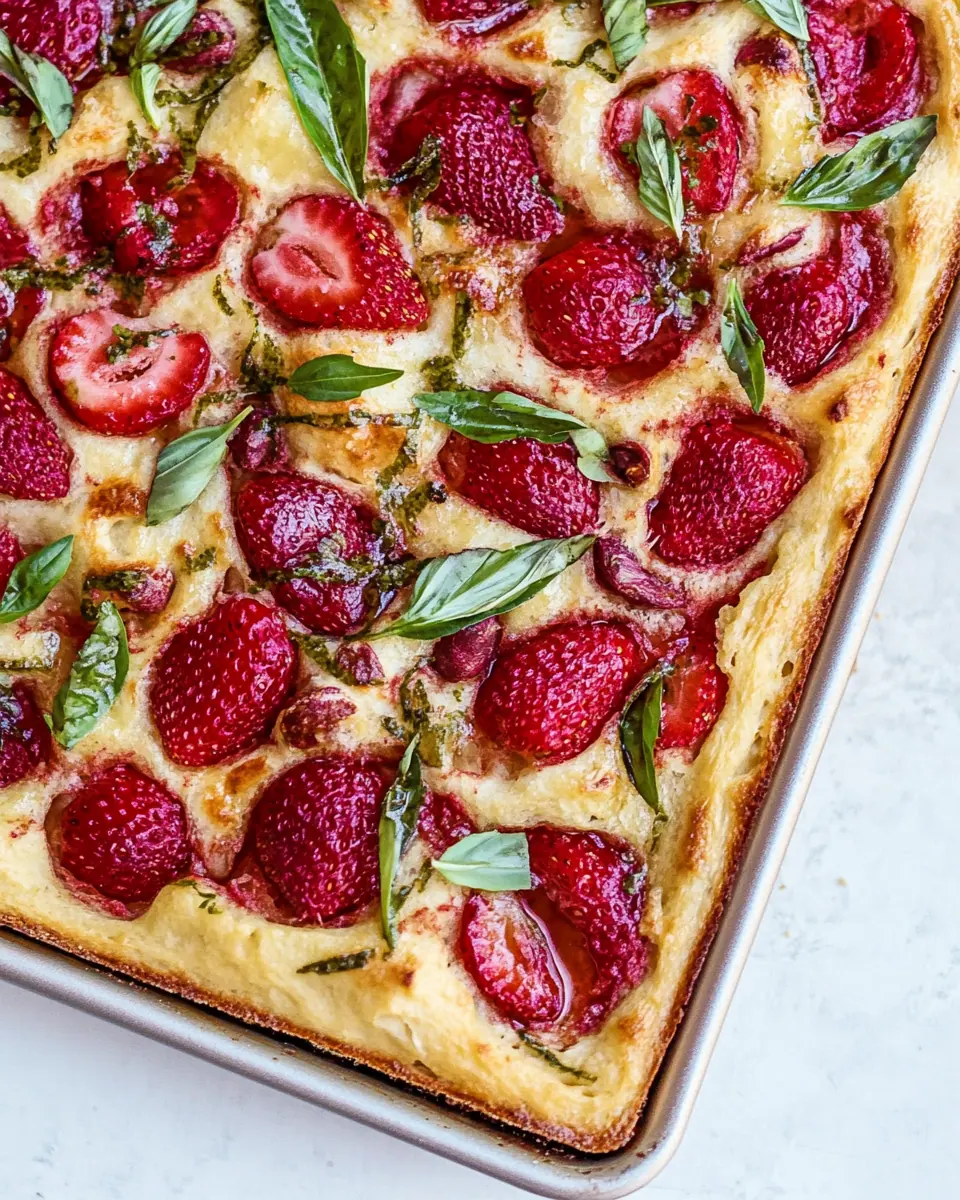
These directions guide you through proofing the yeast, making and shaping the dough, caramelizing the onion, and assembling the finished loaf. I encourage you to go slowly during the rises and savor the sensory cues that tell you everything is progressing correctly.
- In a bowl, stir together the water, yeast and honey. Let it sit for 10 to 15 minutes until foamy.: You will notice a gentle yeasty aroma and a foamy cap forming on the surface, which signals the yeast is active and ready to leaven the dough. The texture of the mixture becomes slightly thicker and bubbly, and the sound as you stir is smooth rather than grainy. This waiting period develops flavor and ensures lift later, so resist the urge to skip it. A common mistake here is using water that is too hot, which kills the yeast and leaves you with no foam.
- In the bowl of your stand mixer, add the flour, 1 tablespoon of salt, 1/2 cup of olive oil and the yeast mixture. Stir, using the dough hook, until the mixture comes together. Knead it on medium-low speed for 5 to 6 minutes. If it's super sticky, sprinkle in a bit of extra flour. You want it to be silky!: As the dough comes together you should notice it forming a smooth, slightly tacky ball that glides around the bowl, rather than clinging in clumps. The sound of the mixer will change from sputtering to a steady whir, and the surface will look satin-like. This kneading builds the gluten network for structure and chew while keeping the crumb tender. Overdoing it can make the dough tight, so avoid excessive kneading beyond the recommended time.
- Put the dough in an oiled bowl and cover it. Place it in a warm spot and let it rise for 1 hour, or until it's doubled in size.: You will see the dough slowly billow and become domed, with a soft glow to its surface and tiny air pockets visible when you press gently. The airiness and fragrance of fermented dough indicate proper fermentation. This rest is essential for flavor complexity, so give it the full time or until doubled. A frequent error is putting it in a drafty or cold place, which slows rising and results in denser bread.
- After it's doubled, place the remaining oil in a 15 1/2 x 10 inch jelly roll sheet pan. Place the dough in the sheet pan and turn it over to cover it in the oil once, then press and spread it until it fits in the pan (or almost fits in the pan. it's going to rise again!). While doing this, press to make finger marks in the dough so it looks like traditional focaccia. Cover the sheet pan and place the dough back in a warm place to rise for another hour.: The dough will absorb some of the olive oil , creating a glossy sheen. When you press in the characteristic dimples, you will hear a subtle stretching sound and feel small resistance, which is a good sign of elasticity. These dimples trap pools of oil and create the focaccia's signature texture. Be careful not to overwork the dough when spreading, as that can knock out too much air and reduce the tenderness of the final loaf.
- While it’s doing the second rise, heat a large skillet over medium-low heat and add the butter. Stir in the onions with a pinch of salt. Cook for 10 minutes, stirring often, until softened. Stir in the balsamic vinegar. Cook for another 10 to 15 minutes, until caramely.: As the onion softens you will smell sweet, savory aromatics and see the slices turn translucent and then slowly caramel brown at the edges. Adding the balsamic vinegar helps deglaze the pan and intensify the sweet notes, producing a silky jammy texture. Keep the heat controlled so the onion browns rather than burns, and stir frequently to prevent hot spots. A common mistake is cranking the heat, which leads to bitter char instead of deep caramelization.
- Preheat the oven to 425 degrees F. Uncover the pan and cover the bread with the caramelized onions and thinly sliced strawberries. Sprinkle with a pinch of flaked salt. Drizzle with olive oil. Bake the bread for 15 to 20 minutes, until it's golden and toasty. Remove from the oven and let it cool. Top with fresh sliced basil and cut into pieces. Serve!: You will watch the surface shimmer as the olive oil heats and the edges transition to a deep golden brown, giving a toasty fragrance. The strawberries will soften and release a little juice that melds with the caramelized onion , creating a glossy topping. The finished loaf should sound hollow if you tap the bottom and resist overly dark browning. Letting it cool briefly helps the crumb set so slices hold together. Avoid leaving it in the oven too long, which can dry the interior and flatten the texture.
- You can make this ahead of time and slice right before serving. You can reheat in a low temp oven (like 250) for a few minutes before eating.: Reheating at low temperature revives the crust and warms the toppings without shrinking the loaf or overcooking the fruit. The aroma comes back gradually as it warms, and the texture becomes pleasing again. For make ahead storage, keep it wrapped at room temperature for a day or refrigerate briefly, then reheat. A typical error is using high heat to reheat, which can make the bread tough and dry out the topping.
Change It Up
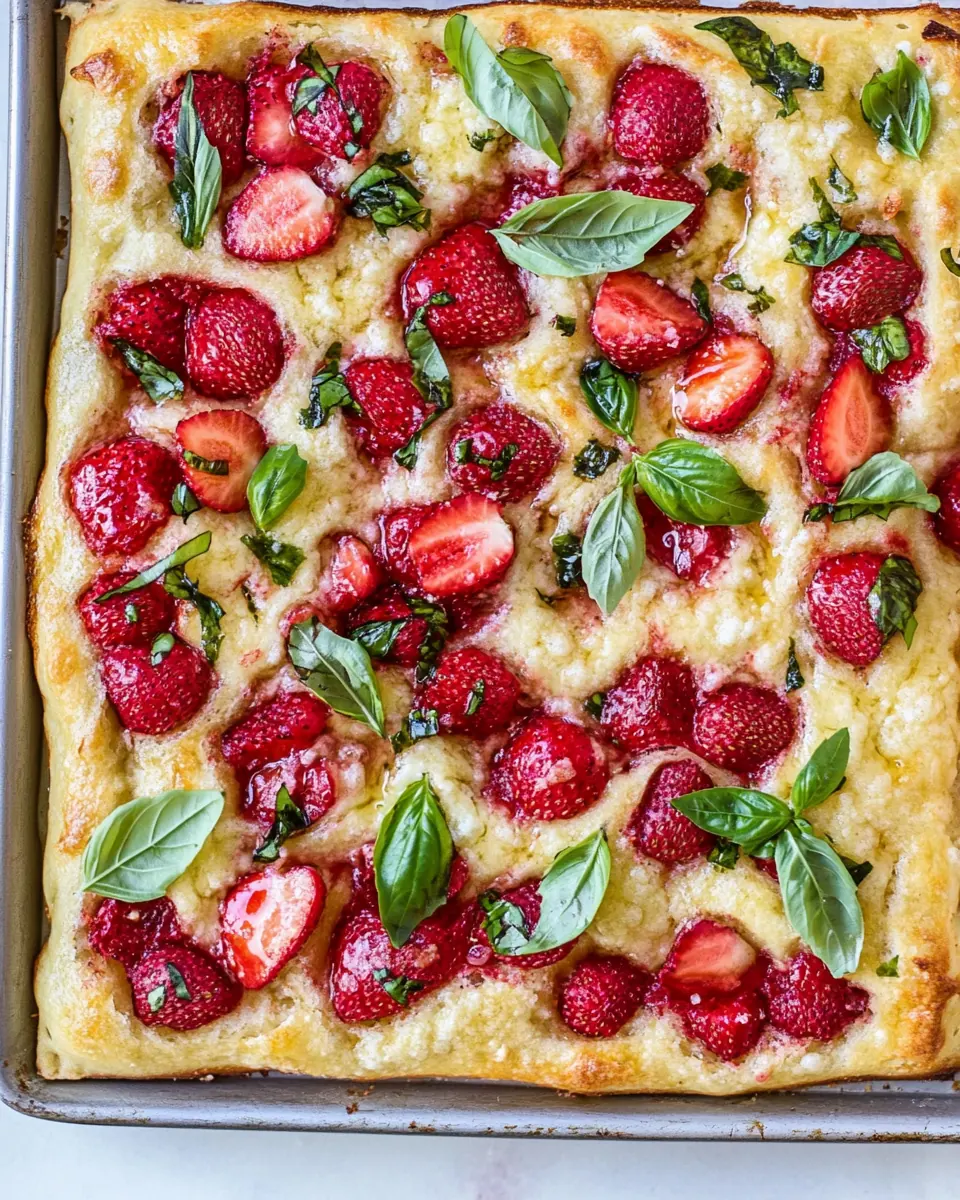
You can adapt Strawberry Basil Focaccia Bread in a few smart ways to match your mood or what is in your pantry. Below are practical, tested ideas that keep the essence of the recipe intact while offering variety.
- Turn it into a savory brunch star, by pairing warm slices with soft cheeses and a drizzle of extra olive oil for a simple spread perfect for late morning gatherings.
- Make the dough a day ahead, refrigerating it after the first rise to develop deeper flavor and allow for flexible timing when you are hosting.
- Use different herbs, swapping or combining the fresh basil with other tender herbs you enjoy for varied aromatic notes.
- Toast leftover slices, placing them briefly under a broiler or in a hot oven to revive crunch and warm the toppings for a second day serving.
- Control sweetness, by adjusting the strawberries amount slightly if you prefer a subtler fruity note, keeping the overall balance focused on savory flavors.
Serving Ideas for Strawberry Basil Focaccia Bread
This bread is versatile and can be dressed up or kept casual depending on the occasion. Here are thoughtful ways to serve it across seasons and events, focusing on simple complements that amplify its flavor profile.
- As a starter for dinner parties, slice the warm focaccia and offer it with a selection of soft cheeses for guests to build simple bites.
- For picnic or outdoor meals, pack slices in waxed paper and pair with olives and fresh fruit for an effortless portable feast.
- During spring gatherings, place it alongside light salads and chilled soups to take advantage of seasonal produce.
- At brunch, serve slices with a small bowl of extra olive oil and flaky salt for dipping, alongside citrusy salads or fresh greens.
- Storage tip, keep leftover slices wrapped at room temperature for a day or refrigerate and reheat briefly in a low oven to restore texture.
- Holiday pairing, include this on a festive bread board with mild cheeses and herbaceous accents for a bright addition to a celebratory spread.
- Seasonal serving, emphasize fresh local strawberries in spring, and add heartier sides when serving in colder months for a balanced meal.
FAQ
Conclusion
What makes this recipe special is the unexpected harmony between sweet strawberries and savory, caramelized onion on a tender, oil rich focaccia. The contrast of bright fruit, fragrant basil, and golden, pillowy bread creates a loaf that feels celebratory yet approachable. Give it a try the next time you want something both rustic and refined, and enjoy how the simple techniques turn pantry staples into something memorable. I hope this loaf brings warm, convivial moments to your table and inspires playful pairings with wines or salads, depending on your gathering.
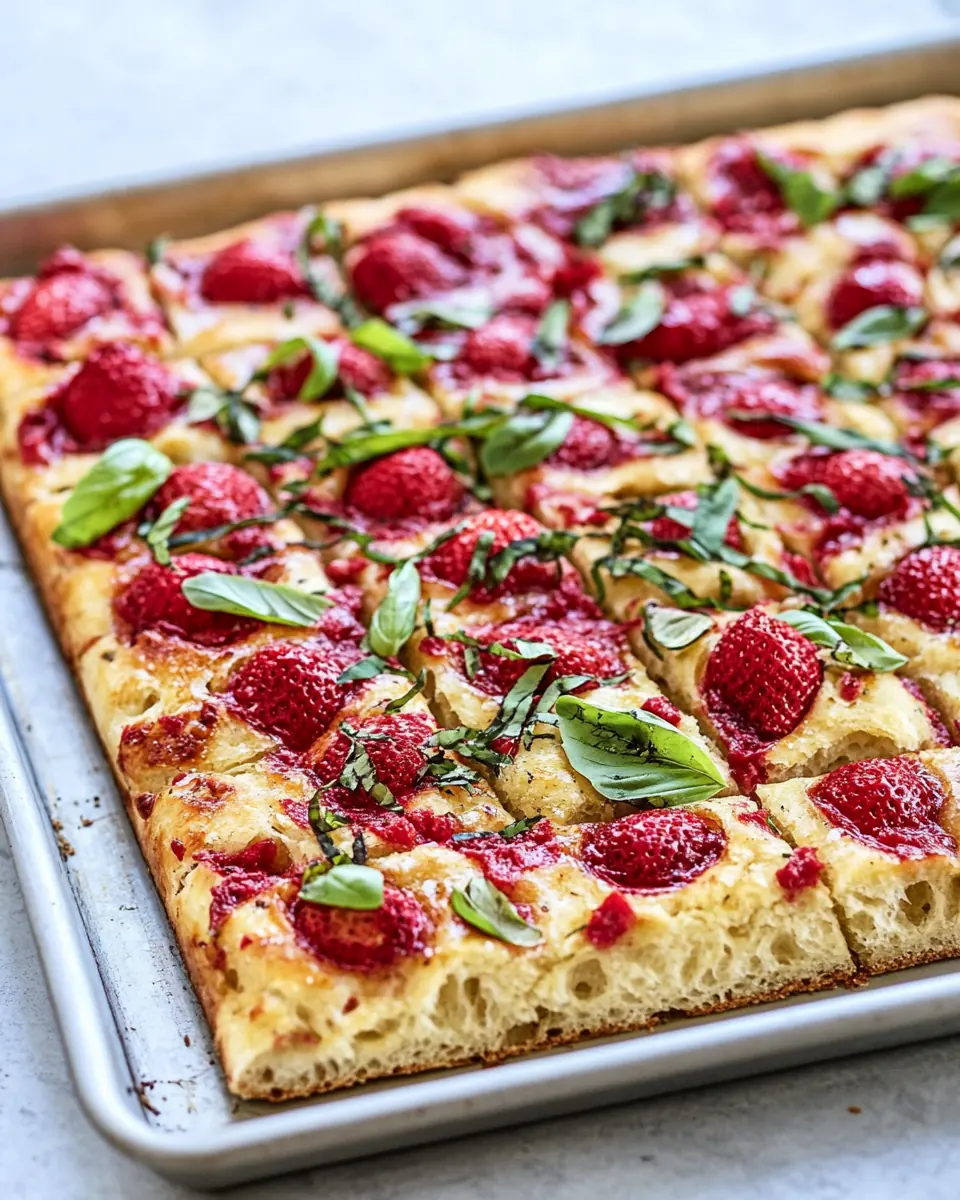
Strawberry Basil Focaccia Bread
Ingredients
Equipment
Method
- In a bowl, stir together the water, yeast and honey. Let it sit for 10 to 15 minutes until foamy.: You will notice a gentle yeasty aroma and a foamy cap forming on the surface, which signals the yeast is active and ready to leaven the dough. The texture of the mixture becomes slightly thicker and bubbly, and the sound as you stir is smooth rather than grainy. This waiting period develops flavor and ensures lift later, so resist the urge to skip it. A common mistake here is using water that is too hot, which kills the yeast and leaves you with no foam.
- In the bowl of your stand mixer, add the flour, 1 tablespoon of salt, 1/2 cup of olive oil and the yeast mixture. Stir, using the dough hook, until the mixture comes together. Knead it on medium-low speed for 5 to 6 minutes. If it's super sticky, sprinkle in a bit of extra flour. You want it to be silky!: As the dough comes together you should notice it forming a smooth, slightly tacky ball that glides around the bowl, rather than clinging in clumps. The sound of the mixer will change from sputtering to a steady whir, and the surface will look satin-like. This kneading builds the gluten network for structure and chew while keeping the crumb tender. Overdoing it can make the dough tight, so avoid excessive kneading beyond the recommended time.
- Put the dough in an oiled bowl and cover it. Place it in a warm spot and let it rise for 1 hour, or until it's doubled in size.: You will see the dough slowly billow and become domed, with a soft glow to its surface and tiny air pockets visible when you press gently. The airiness and fragrance of fermented dough indicate proper fermentation. This rest is essential for flavor complexity, so give it the full time or until doubled. A frequent error is putting it in a drafty or cold place, which slows rising and results in denser bread.
- After it's doubled, place the remaining oil in a 15 1/2 x 10 inch jelly roll sheet pan. Place the dough in the sheet pan and turn it over to cover it in the oil once, then press and spread it until it fits in the pan (or almost fits in the pan. it's going to rise again!). While doing this, press to make finger marks in the dough so it looks like traditional focaccia. Cover the sheet pan and place the dough back in a warm place to rise for another hour.: The dough will absorb some of the olive oil , creating a glossy sheen. When you press in the characteristic dimples, you will hear a subtle stretching sound and feel small resistance, which is a good sign of elasticity. These dimples trap pools of oil and create the focaccia's signature texture. Be careful not to overwork the dough when spreading, as that can knock out too much air and reduce the tenderness of the final loaf.
- While it’s doing the second rise, heat a large skillet over medium-low heat and add the butter. Stir in the onions with a pinch of salt. Cook for 10 minutes, stirring often, until softened. Stir in the balsamic vinegar. Cook for another 10 to 15 minutes, until caramely.: As the onion softens you will smell sweet, savory aromatics and see the slices turn translucent and then slowly caramel brown at the edges. Adding the balsamic vinegar helps deglaze the pan and intensify the sweet notes, producing a silky jammy texture. Keep the heat controlled so the onion browns rather than burns, and stir frequently to prevent hot spots. A common mistake is cranking the heat, which leads to bitter char instead of deep caramelization.
- Preheat the oven to 425 degrees F. Uncover the pan and cover the bread with the caramelized onions and thinly sliced strawberries. Sprinkle with a pinch of flaked salt. Drizzle with olive oil. Bake the bread for 15 to 20 minutes, until it's golden and toasty. Remove from the oven and let it cool. Top with fresh sliced basil and cut into pieces. Serve!: You will watch the surface shimmer as the olive oil heats and the edges transition to a deep golden brown, giving a toasty fragrance. The strawberries will soften and release a little juice that melds with the caramelized onion , creating a glossy topping. The finished loaf should sound hollow if you tap the bottom and resist overly dark browning. Letting it cool briefly helps the crumb set so slices hold together. Avoid leaving it in the oven too long, which can dry the interior and flatten the texture.
- You can make this ahead of time and slice right before serving. You can reheat in a low temp oven (like 250) for a few minutes before eating.: Reheating at low temperature revives the crust and warms the toppings without shrinking the loaf or overcooking the fruit. The aroma comes back gradually as it warms, and the texture becomes pleasing again. For make ahead storage, keep it wrapped at room temperature for a day or refrigerate briefly, then reheat. A typical error is using high heat to reheat, which can make the bread tough and dry out the topping.
Notes
- Turn it into a savory brunch star, by pairing warm slices with soft cheeses and a drizzle of extra olive oil for a simple spread perfect for late morning gatherings.
- Make the dough a day ahead, refrigerating it after the first rise to develop deeper flavor and allow for flexible timing when you are hosting.
- Use different herbs, swapping or combining the fresh basil with other tender herbs you enjoy for varied aromatic notes.
- Toast leftover slices, placing them briefly under a broiler or in a hot oven to revive crunch and warm the toppings for a second day serving.
- Control sweetness, by adjusting the strawberries amount slightly if you prefer a subtler fruity note, keeping the overall balance focused on savory flavors.