In a bowl, stir together the water, yeast and honey. Let it sit for 10 to 15 minutes until foamy.: You will notice a gentle yeasty aroma and a foamy cap forming on the surface, which signals the yeast is active and ready to leaven the dough. The texture of the mixture becomes slightly thicker and bubbly, and the sound as you stir is smooth rather than grainy. This waiting period develops flavor and ensures lift later, so resist the urge to skip it. A common mistake here is using water that is too hot, which kills the yeast and leaves you with no foam.
In the bowl of your stand mixer, add the flour, 1 tablespoon of salt, 1/2 cup of olive oil and the yeast mixture. Stir, using the dough hook, until the mixture comes together. Knead it on medium-low speed for 5 to 6 minutes. If it's super sticky, sprinkle in a bit of extra flour. You want it to be silky!: As the dough comes together you should notice it forming a smooth, slightly tacky ball that glides around the bowl, rather than clinging in clumps. The sound of the mixer will change from sputtering to a steady whir, and the surface will look satin-like. This kneading builds the gluten network for structure and chew while keeping the crumb tender. Overdoing it can make the dough tight, so avoid excessive kneading beyond the recommended time.
Put the dough in an oiled bowl and cover it. Place it in a warm spot and let it rise for 1 hour, or until it's doubled in size.: You will see the dough slowly billow and become domed, with a soft glow to its surface and tiny air pockets visible when you press gently. The airiness and fragrance of fermented dough indicate proper fermentation. This rest is essential for flavor complexity, so give it the full time or until doubled. A frequent error is putting it in a drafty or cold place, which slows rising and results in denser bread.
After it's doubled, place the remaining oil in a 15 1/2 x 10 inch jelly roll sheet pan. Place the dough in the sheet pan and turn it over to cover it in the oil once, then press and spread it until it fits in the pan (or almost fits in the pan. it's going to rise again!). While doing this, press to make finger marks in the dough so it looks like traditional focaccia. Cover the sheet pan and place the dough back in a warm place to rise for another hour.: The dough will absorb some of the olive oil , creating a glossy sheen. When you press in the characteristic dimples, you will hear a subtle stretching sound and feel small resistance, which is a good sign of elasticity. These dimples trap pools of oil and create the focaccia's signature texture. Be careful not to overwork the dough when spreading, as that can knock out too much air and reduce the tenderness of the final loaf.
While it’s doing the second rise, heat a large skillet over medium-low heat and add the butter. Stir in the onions with a pinch of salt. Cook for 10 minutes, stirring often, until softened. Stir in the balsamic vinegar. Cook for another 10 to 15 minutes, until caramely.: As the onion softens you will smell sweet, savory aromatics and see the slices turn translucent and then slowly caramel brown at the edges. Adding the balsamic vinegar helps deglaze the pan and intensify the sweet notes, producing a silky jammy texture. Keep the heat controlled so the onion browns rather than burns, and stir frequently to prevent hot spots. A common mistake is cranking the heat, which leads to bitter char instead of deep caramelization.
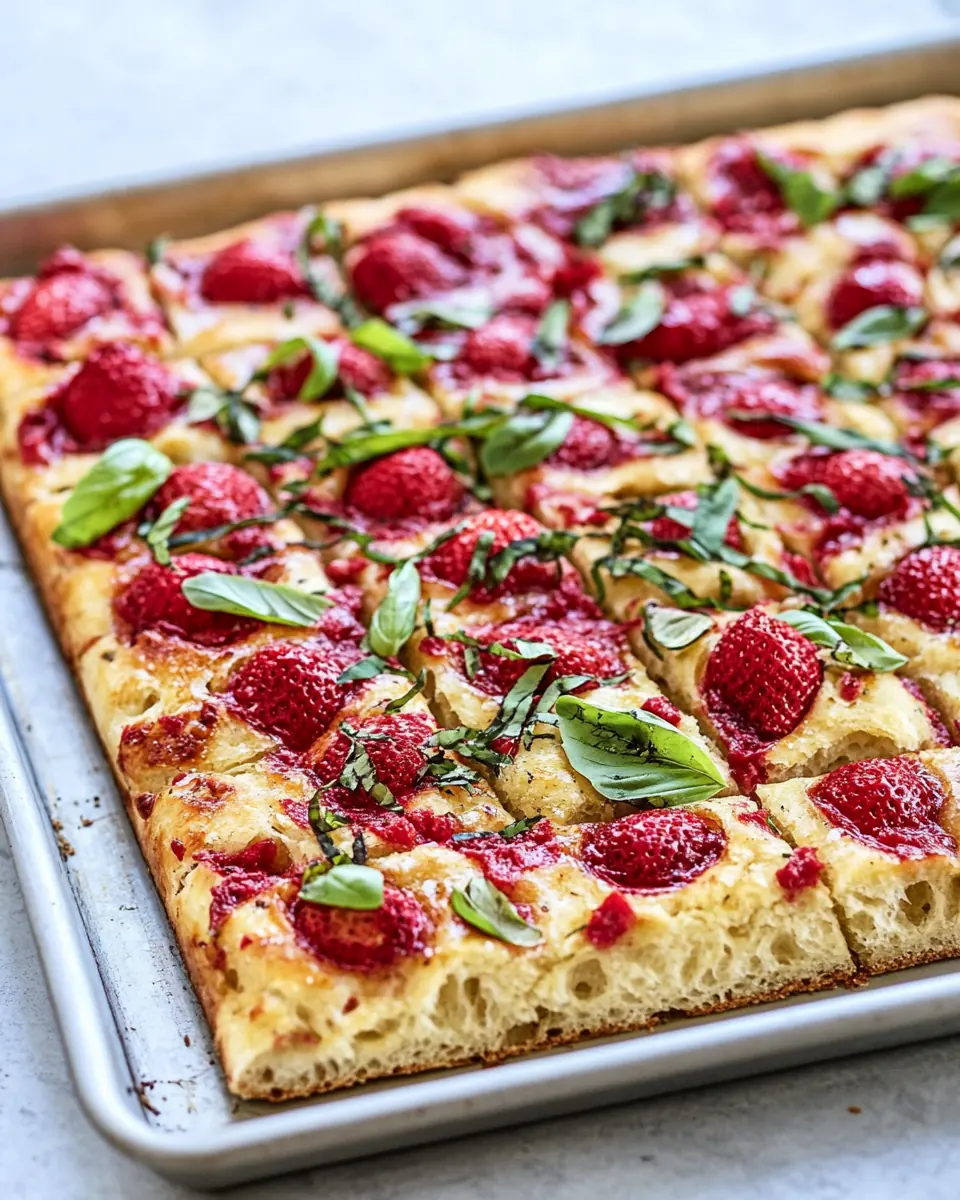
Preheat the oven to 425 degrees F. Uncover the pan and cover the bread with the caramelized onions and thinly sliced strawberries. Sprinkle with a pinch of flaked salt. Drizzle with olive oil. Bake the bread for 15 to 20 minutes, until it's golden and toasty. Remove from the oven and let it cool. Top with fresh sliced basil and cut into pieces. Serve!: You will watch the surface shimmer as the olive oil heats and the edges transition to a deep golden brown, giving a toasty fragrance. The strawberries will soften and release a little juice that melds with the caramelized onion , creating a glossy topping. The finished loaf should sound hollow if you tap the bottom and resist overly dark browning. Letting it cool briefly helps the crumb set so slices hold together. Avoid leaving it in the oven too long, which can dry the interior and flatten the texture.
You can make this ahead of time and slice right before serving. You can reheat in a low temp oven (like 250) for a few minutes before eating.: Reheating at low temperature revives the crust and warms the toppings without shrinking the loaf or overcooking the fruit. The aroma comes back gradually as it warms, and the texture becomes pleasing again. For make ahead storage, keep it wrapped at room temperature for a day or refrigerate briefly, then reheat. A typical error is using high heat to reheat, which can make the bread tough and dry out the topping.