Grease & flour two 9 inch round pans, set aside. Preheat oven to 350 degrees Fahrenheit.: You will notice a faint waxy scent from the greased pans and the warmth of the oven beginning to circulate, which signals readiness. Greasing and flouring creates a thin barrier between the cake and pan, preventing sticking and ensuring smooth release when you invert the pans. Use a pastry brush or paper towel to press a thin even layer of oil or shortening in the pan, then dust with flour and tap out the excess. If you skip this step or do it unevenly, the cake can cling and tear when unmolding. A common mistake is using too much grease, which can create an oily ring on the cake edges; use just enough for coverage. Aim for an even coating and place the pans on a middle rack so heat circulates evenly. You should hear a quiet hum as the oven stabilizes and see the oven thermometer reach a steady 350 F if you use one. This preparation also helps the bottoms brown uniformly.
In a large bowl combine cake mix and strawberry Jell-O mix until completely mixed. Then add egg whites, & oil. Beat until well blended.: The dry powders will first give off a sweet, slightly floral strawberry scent when combined. Mixing the white cake mix and the strawberry Jell O thoroughly ensures the fruit flavor distributes evenly. When you add the egg whites and canola oil , the batter will turn glossy and smoother in texture. Beat on medium speed until you see no streaks of dry mix, scraping the bowl once or twice to incorporate everything. Overbeating at this stage can introduce too much air and create tunnels in the crumb, so stop once the batter is uniform. A frequent error is adding ingredients out of order, which can lead to lumps; follow the sequence so the batter forms correctly. The batter should be smooth and slightly thick, not runny or clumpy.
In a small bowl or food processor, mash strawberries. Set aside 3 Tablespoons for icing. Add water and remaining berries to batter and mix. Pour into prepared pans.: Once mashed, the strawberries will release a bright, tangy aroma and a rosy color. Reserving 3 tablespoons keeps the frosting vibrant while folding the rest into the batter gives the cake an authentic fruit presence. Adding the water after mashing loosens the berry bits so they distribute without sinking to the bottom of the pans. When you stir them into the batter, you should see flecks of pink swirl through, and the mixture will smell slightly jammy. Pour the batter carefully into the prepared pans, filling each about three quarters full to allow room for rise. A common issue is overcrowding the pan, which creates uneven baking, so stick to two 9 inch pans. After pouring, tap the pans lightly on the counter to release any trapped air bubbles, which helps avoid large holes in the finished crumb.
Bake in preheated oven at 350 degrees Fahrenheit for 20-25 minutes or until toothpick comes out clean when inserted into the middle of the cake. Cool for 10 minutes. Remove from pans to wire rack and cool completely.: The oven will transform the batter into sponge, releasing a warm sweet scent of strawberries and baked sugar. Around 20 minutes you should see the edges pull slightly away from the pan and the top become springy to the touch. The toothpick test is a reliable signal; a few moist crumbs are fine, but batter on the pick means it needs more time. Letting the cake rest for 10 minutes in the pans lets steam release gradually, reducing the chance of cracking when flipping out. When you invert onto a wire rack, the bottom should be pale golden and slightly springy. Cooling completely before frosting is critical; a warm cake will melt the frosting and produce a sloppy finish. A frequent mistake is rushing this step, which leads to sliding layers and a messy exterior. Aim for a completely cool cake for neat assembly and a steady frosting surface.
To make frosting combine softened butter and 3 Tablespoons reserved strawberries in small bowl. Gradually beat in powdered sugar until light and fluffy.: When you begin beating the softened butter with the reserved mashed strawberries , the bowl will release a fragrant, buttery berry scent. The little flecks of fruit give the frosting a pretty pink hue and a natural tang that cuts the sweetness of the powdered sugar. Add the powdered sugar gradually, letting it incorporate so the frosting becomes airy rather than dense. The texture should turn from glossy to cloudlike, and the sound at the mixer lowers as the mixture becomes thicker. If the frosting seems too thin, add a touch more powdered sugar; if it is too stiff, a teaspoon of water can soften it. A common error is adding all the sugar at once, which can create lumps and an overly dry texture. Beat until the icing spreads smoothly but still holds soft peaks.
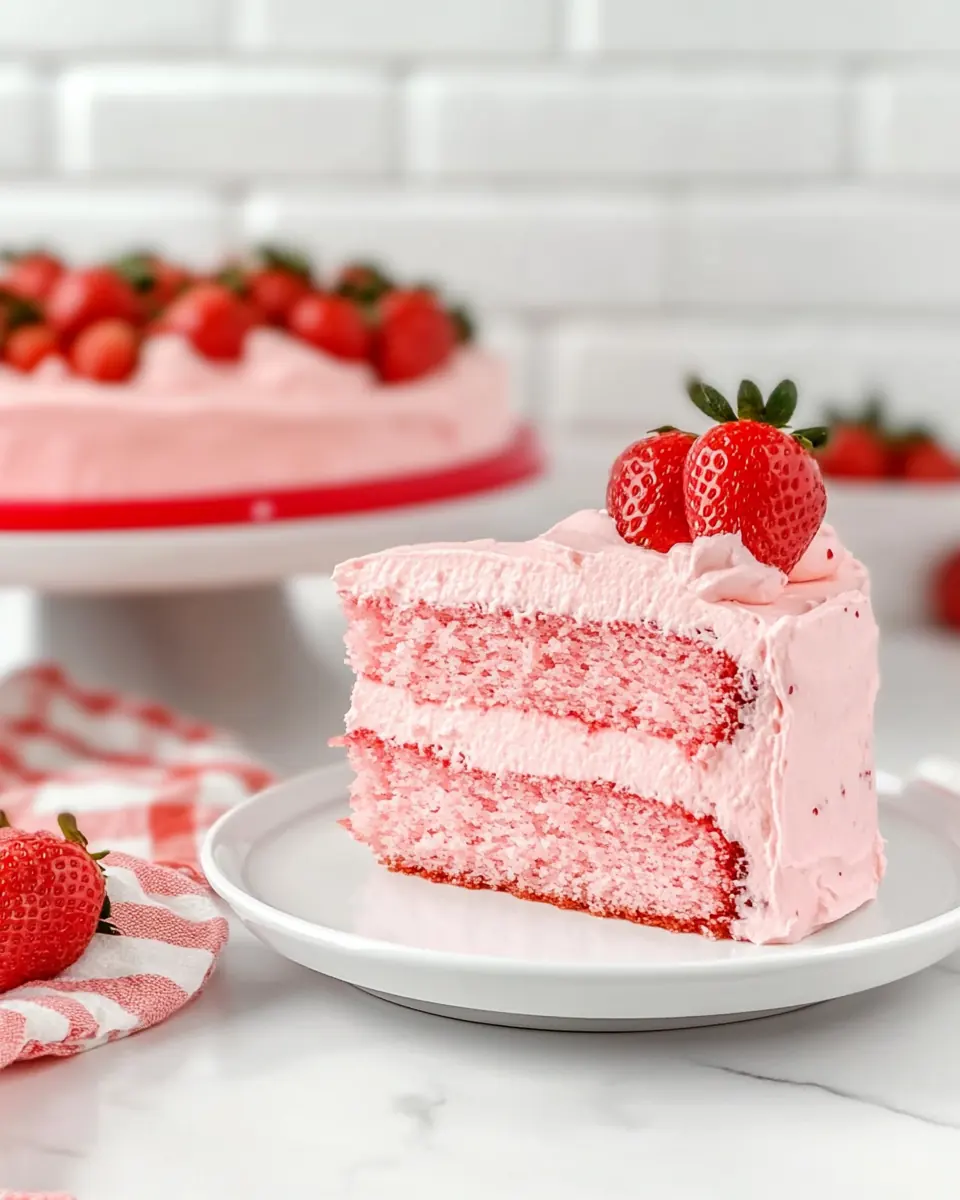
Place one of the cooled round cakes on serving platter. Top the cake with half of the icing. Then place the other round cake on top of the frosting. Finish frosting the outside of the cake.: As you assemble, the scent of strawberries and butter melds into a welcoming aroma. The first layer of frosting should be a thin, even coat that acts as a crumb coat, sealing loose crumbs so the final layer looks clean. Spread the filling gently, feeling for an even thickness with the back of a spoon or an offset spatula. When you add the second layer and finish the sides, move slowly to create smooth planes and soft swirls. If crumbs appear in the frosting, chill the cake briefly and apply a final thin layer to achieve a neat surface. A frequent mistake is overworking the frosting, which can warm it and make it too soft; if that happens, refrigerate for 10 to 15 minutes to firm it up before finishing. The finished cake should look cohesive, with a silky frosting texture and a subtle pink tint from the reserved berries.