Place the milk in a small bowl and sprinkle the gelatin evenly over the milk. Let soak for 5 minutes.: You will notice the gelatin gradually soften as it hydrates, taking on a slightly grainy, spongy appearance, and the milk will look cloudier than before. This bloom stage is crucial because fully hydrated gelatin dissolves smoothly when warmed, preventing lumps. If you skip the soaking or add dry gelatin directly to hot liquid, you risk clumps that will leave gritty bits in the finished custard. A common mistake is rushing this step, so set a short timer and resist the urge to heat yet.
In a small saucepan, combine the cream, sugar, vanilla seeds, the seeded vanilla bean pod, and bring to a low boil. Let simmer for 5 minutes.: As the heavy cream warms, it will emit a sweet, aromatic steam, and the vanilla seeds will punctuate the steam with a floral, warm perfume. You should aim for a gentle simmer with tiny bubbles along the edge, not a roiling boil, because vigorous boiling can change the texture and create tiny curdles. Stir occasionally so the granulated white sugar dissolves completely and the vanilla infuses evenly. Watch for the cream to develop a glossy sheen and a fuller smell, which signals readiness.
After the 5 minutes, remove the pan from heat and whisk in the milk/gelatin mixture until smooth.: The warm cream will dissolve the bloomed gelatin quickly, and as you whisk you should see the mixture become silky and uniform. The aroma will deepen, and the liquid’s surface will reflect light more evenly. Whisking ensures no pockets of gelatin remain, and it helps the vanilla distribute. Avoid vigorous whisking that splashes, and do not let the hot mixture sit too long before combining with the gelatin, since cooler temperatures reduce the dissolving efficiency.
Strain the liquid through a mesh strainer. (You don't need a super fine strainer as you are not trying to strain out the vanilla beans. You're just trying to strain out any undissolved pieces of gelatin.): Pouring the mixture through a strainer catches any small bits that did not fully dissolve and also removes the used vanilla pod pieces, leaving a smooth, glossy liquid. The strained cream should flow silkily and have a faint vanilla flecking from the seeds. If you skip straining, you might find tiny gelatin bits or pod fragments in the set panna cotta, which affects texture. Use a gentle pour to avoid aerating the mixture and creating unwanted bubbles.
Pour into your individual glasses, cover and refrigerate for at least 4 hours or overnight.: As the filled glasses chill, the mixture will thicken and gradually set into a tender custard. You will notice a gentle wobble at around 4 hours and a firmer, clean-cut set if refrigerated overnight. Cold temperature firms the gelatin network, so ensure your refrigerator is cold enough for a reliable set. A frequent error is placing the glasses in a warm part of the fridge or overcrowding them, which can extend chilling time and affect texture.
Add 1/2 of the strawberries, sugar, lemon juice, and water to a small saucepan and bring to a slow boil. Let simmer for 5 minutes.: While simmering, the berries will release juice and the sugar will dissolve into a glossy syrup. The aroma will shift toward concentrated strawberry jam notes, and the color deepens into a rich red. Simmering briefly breaks down the fruit while preserving enough structure for texture contrast. Avoid over simmering, since extended heat can make the compote too thin or overly dark in flavor.
Remove from heat and add in the remaining strawberries.: Adding the reserved fresh strawberries off heat preserves their bright color and fresh bite, creating a contrast with the cooked compote. As the warm syrup mingles with the fresh slices they soften slightly without losing their integrity, making a pleasing combination of soft jammy pieces and firmer fruit. If you stir too vigorously at this point you may mash the fresh slices, so gently fold them in for best texture.
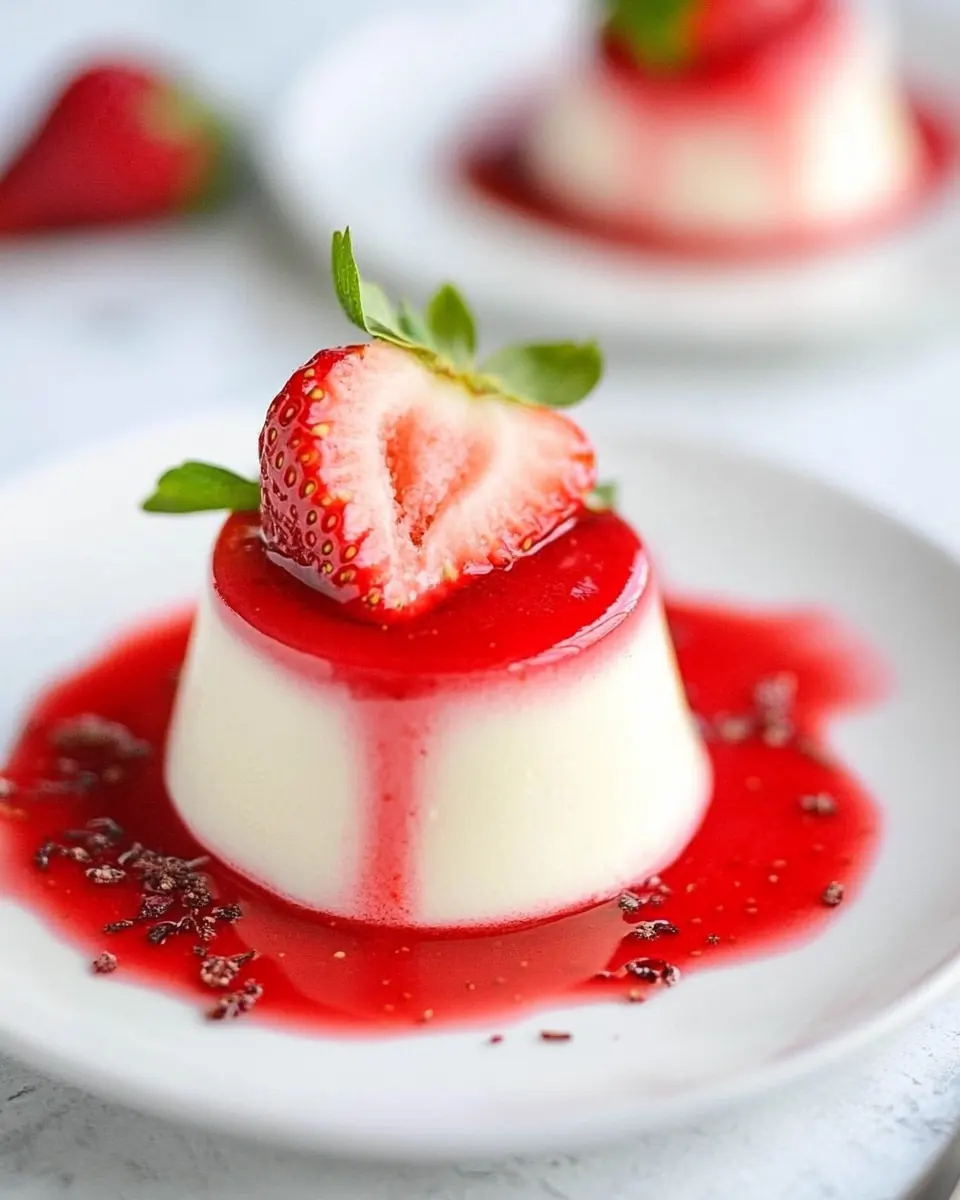
Let cool completely then spoon over the panna cotta. Refrigerate again until ready to serve.: Cooling the compote prevents it from melting or altering the set surface of the panna cotta when layered on top, and it allows the syrup to thicken slightly. Spoon a modest amount onto each set panna cotta, letting a glossy pool form but not overflow. Return the glasses to the fridge so the flavors can settle together. A common mistake is topping warm panna cotta, which softens the set; always ensure the compote is cooled to at least room temperature before assembling.