Veggie Pot Pie Pasta
Veggie Pot Pie Pasta is one of those recipes I turn to when I want the cozy warmth of a pot pie without fussing with pastry, and the first time I made it I remember how the kitchen filled with a savory, buttery aroma that felt like a hug.
I was coming home from an overlong day of errands and wanted something nourishing that could wait on the stove while I sorted mail and changed out of my shoes. I grabbed a handful of pantry staples and a bag of frozen peas, and as the scent of butter and onion softened into something golden, I knew this would be a new weeknight favorite. The texture is comforting, the pieces of vegetable offer little surprises in every bite, and the creamy broth clings to pasta in a way that made everyone at the table ask for seconds.
Over the years I have tweaked the balance between creamy and bright, sometimes adding a hit more salt, sometimes stirring in a generous handful of herbs. I love that this dish scales easily, and that you can keep it vegetarian or fold in pre-cooked chicken for extra protein without changing the essence of the recipe. Every time I serve it, someone asks for the recipe, and I tell them it is my go to when I want comfort food that is fast but feels like care.
Recipe Snapshot
40 mins
20 mins
20 mins
Medium
400 kcal
American
Gluten-Free, Vegan
Dinner
Large pot, Large saute pan, Colander
The Charm of This Veggie Pot Pie Pasta
Comfort without the fuss
I adore how Veggie Pot Pie Pasta delivers the warmth of a pot pie but skips the labor intensive pastry. The creamy sauce, built from a simple roux and broth, gives you that comforting mouthfeel while the pasta soaks up flavor. It is perfect for evenings when you want something substantial, but not precious.
Vegetables that shine
This recipe lets each vegetable play a part. The carrots and butternut squash add sweetness and body, the celery gives a faint savory backbone, and the peas bring freshness and a pop of color. Together they recreate the classic pot pie profile without masking individual textures.
Flexible and family friendly
I often keep rotisserie on hand so adding diced, cooked chicken takes minutes. That option makes it easy to feed varying appetites around my table. If you prefer to keep it vegetarian, the dish is just as satisfying, and it reheats beautifully for lunches the next day.
Speed with depth
From start to finish this one comes together quickly, yet the technique of sweating vegetables, making a quick roux, and simmering with broth adds real depth. The small investment of stirring pays off with a sauce that is velvety and rich, not gluey. I love how fast it becomes a full meal.
Approachable ingredients
Everything here is pantry and market friendly. You do not need any specialty items to make a satisfying bowl. That makes it perfect for weeknights, potlucks, and times when you want something reliable and nourishing.
Recipe Ingredients for Veggie Pot Pie Pasta
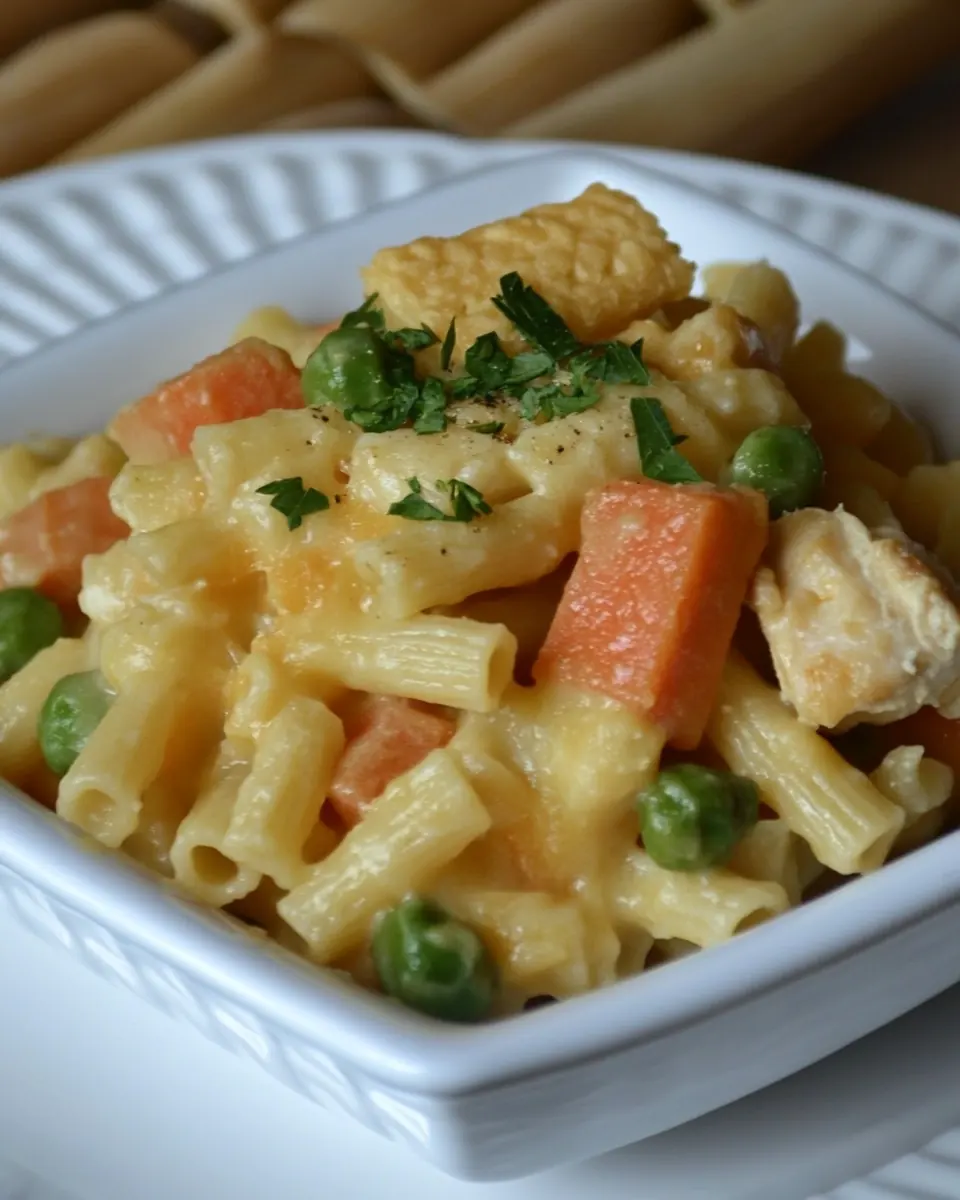
These ingredients are chosen to recreate the essence of a pot pie in a one bowl pasta. The philosophy is simple: a few starchy and fatty elements build body, aromatic vegetables add flavor layers, and a modest amount of flour and broth create a creamy, clingy sauce. The key players are the butter and flour that make the base, the root vegetables for heartiness, and the pasta as the comforting carrier.
- Salt and pepper: Season gently to enhance and balance flavors throughout the dish, providing basic seasoning and finishing adjustments to taste; sprinkle during cooking and again before serving to achieve desired saltiness and peppery bite.
- 3/4 pound fiori pasta (can also use penne or another short tubular pasta): Provide a sturdy base of tender pasta that captures sauce and vegetables; cook to al dente so it holds shape and texture when combined with the creamy filling.
- 3 tablespoons unsalted butter: Add rich, silky fat for sautéing aromatics and forming the roux; melt gently to brown vegetables slightly and develop a glossy, flavorful sauce.
- 1 small yellow onion (minced (about 1 cup)): Build savory depth and sweetness when minced finely, contributing aromatic complexity and blending into the sauce; cook until translucent to release natural sugars.
- 1/2 stalk celery (diced small (about 1/4 cup)): Contribute mild, vegetal crunch and moisture when diced small, helping to create classic mirepoix texture and depth in the filling; sauté until softened.
- 2 carrots (diced medium (about 1 cup)): Supply earthy sweetness and body when diced medium, adding color and hearty texture to the pot pie pasta; cook until tender so it integrates with the sauce.
- 1/4 small butternut squash (diced medium (about 1 cup)): Introduce nutty, sweet squash flavor and creamy texture when diced medium, thickening the sauce slightly as it breaks down; roast or sauté until soft for best results.
- 1 large clove garlic (minced (about 2 teaspoons)): Add pungent aromatic lift and savory sharpness when minced finely, enhancing overall flavor complexity; cook briefly to mellow raw bite while preserving aroma.
- 1/2 teaspoon dried thyme: Impart warm, herbaceous notes that echo traditional pot pie flavors; sprinkle dried thyme into the sauté to infuse the sauce with subtle earthiness.
- 1/2 teaspoon kosher salt: Provide measured seasoning during sauce-making to ensure internal components are seasoned properly; add while cooking to build layered flavor.
- 1/4 cup all-purpose flour: Serve as a thickening agent for the sauce and to create a velvety roux when combined with butter; whisk in gradually to avoid lumps and achieve a smooth texture.
- 2 cups vegetable broth: Offer liquid body and savory base for the sauce while contributing vegetable flavor; pour in gradually to control thickness and simmer until slightly reduced.
- 1 cup frozen peas: Bring sweet pop and color contrast while contributing fresh vegetal flavor; stir in frozen peas near the end to heat through without losing brightness.
- Additional kosher salt plus freshly ground black pepper to taste: Adjust seasoning precisely at the end to achieve balanced flavor; taste and add kosher salt and freshly ground black pepper to personal preference before serving.
- If including chicken (also add …): Provide an optional protein instruction note indicating how to include chicken for added heartiness; follow the guidance if adding meat to keep proportions consistent.
- 1/2 cup diced (cooked chicken per serving (we use store-bought rotisserie chicken or rub boneless, skinless chicken breasts with olive oil, salt and pepper and grill them until cooked through)): Contribute diced cooked chicken for extra protein and texture when included, offering convenience and savory flavor; use pre-cooked rotisserie or properly grilled breasts and add per serving as directed.
How to Cook Veggie Pot Pie Pasta
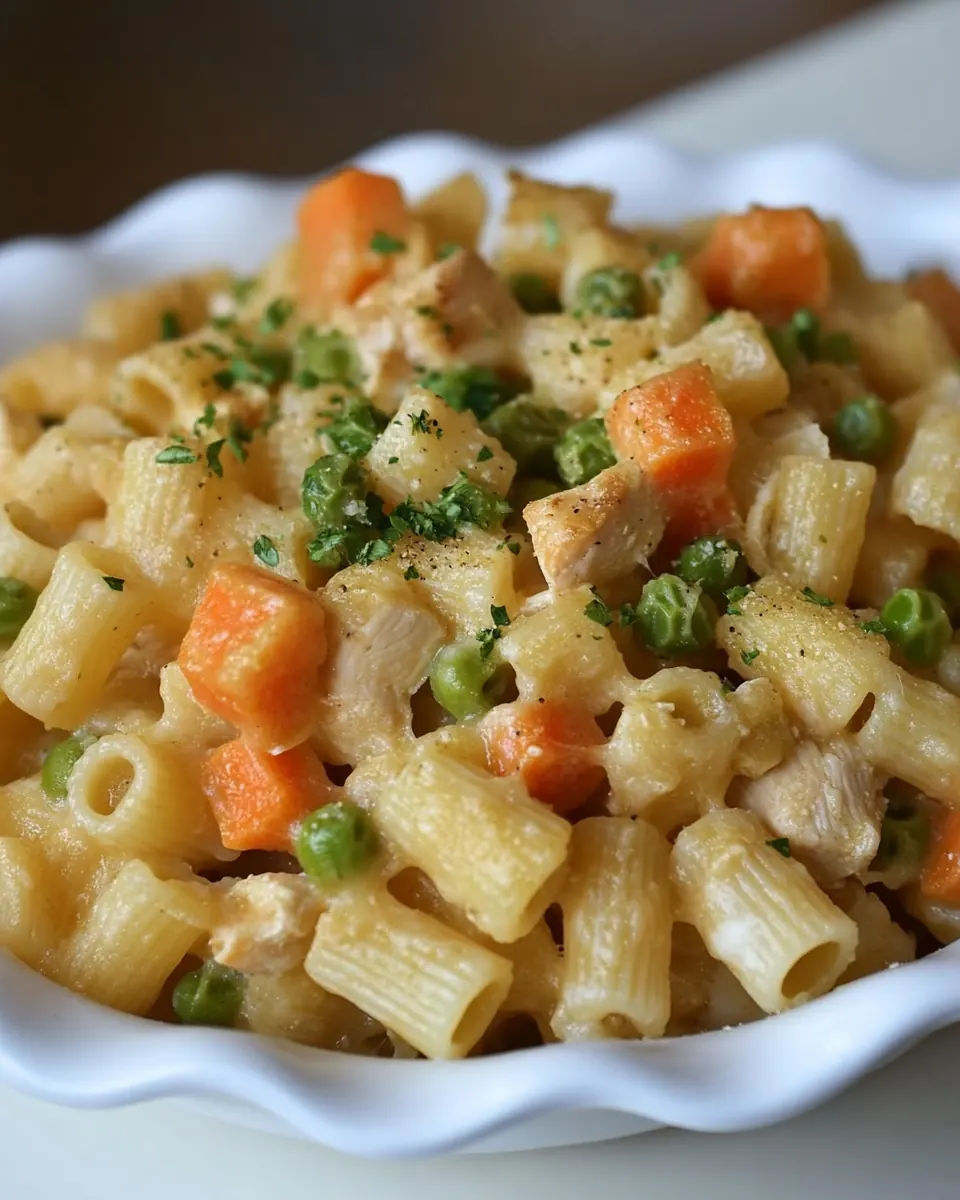
This recipe moves through a few straightforward stages: boiling pasta, sautéing vegetables, making a quick roux, finishing the sauce, and optionally warming in chicken. Follow the sequence and keep an eye on textures, because the difference between tender and mushy is only a minute or two.
- Place a large pot of salted water over high heat and bring to a boil. Cook pasta to al dente, per package instructions. Drain and set aside.: The first sensory cue is the rolling, bubbling surface and the slightly ringing sound as water moves. Adding salt to the water seasons the pasta internally, so it is important not to skip this step. A common mistake is under salting the water, which leaves the finished dish bland, so be generous enough that the water tastes like the sea, but do not overdo it if you are using a salty broth later. Watch for a steady, strong boil before adding the pasta so it cooks evenly and does not clump together.
- Meanwhile, in a large saute pan, melt butter over medium heat. Add onion, celery, carrots, and butternut squash and cook until onion is translucent and the rest of the vegetables are tender, about 7 minutes.: You will know the pasta is al dente when it offers slight resistance when bitten, with a tender exterior and a firmer center. Drain promptly to avoid carryover cooking, which would make it too soft. A common pitfall is overcooking, which leads to limp texture and prevents the sauce from clinging properly. Reserve a small cup of pasta water if you like, it can help loosen or bind the sauce later, but do not let the pasta sit in standing water after draining because it will continue to soften.
- Add garlic, thyme, and 1/2 teaspoon salt and saute for another minute, stirring frequently.: The butter should foam and give off a rich, nutty aroma as it melts, coating the pan. When it starts to shimmer, add the onion , celery , carrots , and butternut squash . These vegetables should sizzle gently but not brown aggressively. The goal is to soften and build sweetness, so cook until the onion is translucent and the others are tender. A common error is overheating, which can brown or burn the vegetables and introduce bitter notes. Stir frequently to ensure even cooking and watch for a glossy, softened texture before proceeding.
- Sprinkle in flour and cook, stirring constantly, for one minute. Continuing over medium heat, slowly add broth, stirring constantly, and bring to a boil. Reduce heat to medium-low and simmer until the mixture thickens, stirring frequently, about 5 minutes.: Right after adding the minced garlic you should notice an immediate fragrant lift, a heady, savory perfume that signals it is time to move quickly. The thyme should tease out earthiness and blend with the softened vegetables. Sauteing only about a minute prevents the garlic from turning bitter. A common mistake is leaving it too long and getting a burnt, acrid flavor, so keep stirring and remove from direct heat if things start to darken too fast.
- Stir in pasta and peas.: As you add the flour , it will coat the vegetables and begin to smell toasty as you stir. This brief cooking takes away the raw, chalky taste and sets the stage for a silky sauce. The texture will shift to a loose paste that clings to the vegetables, and you should maintain constant stirring so it does not form lumps or stick to the pan. Under cooking the flour results in a pasty edge to the sauce, while overdoing it can darken the roux and change the flavor, so one minute is the sweet spot for this quantity.
- Taste and add additional salt along with freshly ground black pepper, to taste.: As you stream in the vegetable broth , you should see the roux loosen and transform into a smooth sauce. The surface will shimmer and steam, and small bubbles will begin to rise as it heats. Stirring constantly prevents lumps and ensures an even emulsion. Bring it to a boil so the sauce activates and then lower the heat to simmer. A typical error here is pouring the broth in too quickly, which can create clumps; patience yields a smoother, silkier finish.
- To add meat, scoop about 1 1/2 cups pasta mixture to a separate pan over low heat. Gently mix in 1/2 cup diced, cooked chicken per serving and cook until the entire mixture is heated through.: During the simmer the sauce will thicken and coat the back of a spoon. You will see it become more translucent and glossy, and the aroma will deepen into a savory, rounded smell. Stir often to avoid sticking and to monitor viscosity. If it thickens too much, a splash of reserved pasta water or extra broth will loosen it. A mistake to avoid is letting it reduce until it dries out, which will concentrate salt and make the texture gluey rather than creamy.
- Serve immediately.: When you fold in the drained pasta and frozen peas , the peas will quickly thaw and offer bright, popping green against the creamy sauce. The pasta will pick up the sauce and become glossy. Toss gently so the ingredients combine without mashing the peas or overworking the pasta. Over stirring can break the pasta and release starches that make the sauce too thick, so be delicate for the best mouthfeel.
- Taste and add additional salt along with freshly ground black pepper, to taste: Now is the moment to fine tune seasoning. Take a small taste warm, and adjust with more salt if the sauce needs lift, and freshly ground black pepper for a bit of bite. The sensory cue is balance, where sweetness from the vegetables is offset by savory salt and a faint peppery finish. The common oversight here is to salt too early and forget to account for salty broth or chicken if you will add it, so adjust gently and taste again after any additions.
- To add meat, scoop about 1 1/2 cups pasta mixture to a separate pan over low heat: When you transfer a portion to warm with diced chicken , you will hear a quiet warming hiss and smell the melding of flavors as the sauce and meat come together. Warm the mixture slowly so the chicken heats through without drying out. The reason to do this separately is to prevent overcooking the rest of the batch and to allow precise warming. A common mistake is overheating until the chicken becomes tough, so keep the pan low and stir gently until everything is uniformly warm.
- Gently mix in 1/2 cup diced, cooked chicken per serving and cook until the entire mixture is heated through: As the chicken warms, you should notice steam rising and the sauce coating the pieces, locking in juiciness. Stir carefully to avoid shredding the meat, and stop as soon as the mixture is reheated to prevent dryness. Overcooking will make the chicken stringy and reduce tenderness, so aim for warm, not hot, center. The benefit is a hearty, protein boosted bowl that retains creamy texture and balanced flavor.
- Serve immediately: Serve when piping hot so the sauce is at its silkiest and the textures are at their best. The final sensory experience should include warm steam, glossy sauce, and a combination of tender vegetables with the satisfying bite of pasta . A common mistake is letting it sit too long, which cools and thickens the sauce; if you must hold it, reheat gently with a splash of broth to restore creaminess.
Making Adjustments
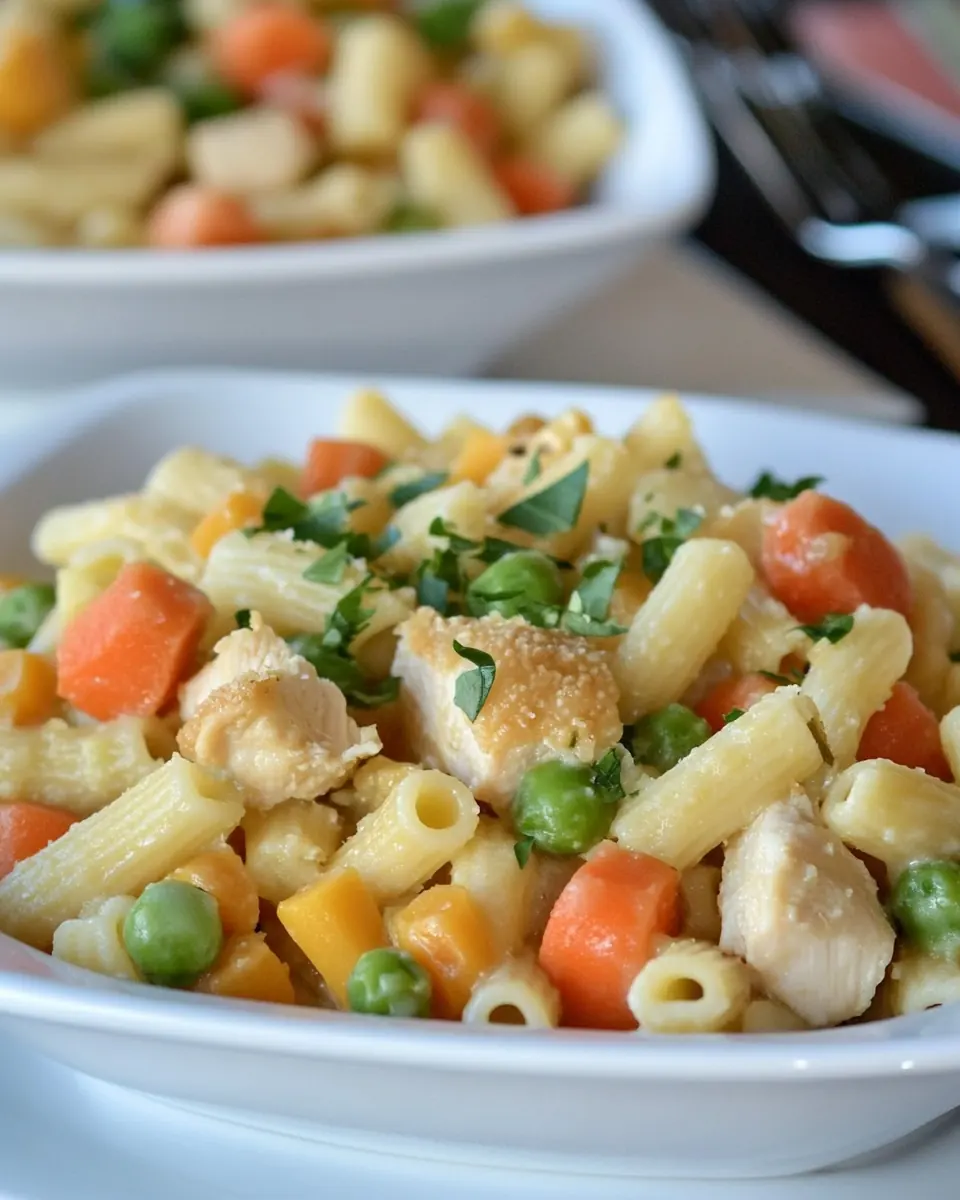
This section offers targeted ways to adapt the recipe for texture, flavor, and dietary needs. Each tip starts with a clear action phrase, followed by practical detail so you can adjust without second guessing.
- Reduce sodium, use low sodium vegetable broth and taste before adding any extra kosher salt. If you plan to add pre cooked chicken, remember it may already contain salt, so finalize seasoning after folding the meat in.
- Thicken the sauce, if the sauce is too thin, simmer gently to reduce, stirring frequently. Alternatively mix a small slurry of flour and cold water, whisk it in, and simmer until glossy to avoid lumps.
- Loosen the sauce, if it becomes overly thick after sitting, stir in reserved pasta water or a splash of hot vegetable broth one tablespoon at a time until desired consistency returns.
- Vegetable swaps, you can substitute equal volumes of similar textures like sweet potato for butternut squash, cooking until tender. Keep dice sizes consistent so they cook evenly.
- Make it heartier, fold in diced, pre cooked chicken per serving to boost protein, warming it gently so it stays juicy and integrates with the creaminess of the sauce.
- Advance prep, chop vegetables a day ahead and store them refrigerated in airtight containers for faster weeknight assembly and cooking.
What Complements This Veggie Pot Pie Pasta
This dish pairs well with simple, textural sides and works across occasions from casual weeknights to comforting family dinners. Below are serving ideas, storage guidance, and seasonal suggestions to help you present and preserve the meal at its best.
- Light green salad, serve alongside a crisp salad dressed with a bright vinaigrette to cut the richness and add fresh contrast, perfect for a weekday dinner when you want balance.
- Crusty bread, offer sliced, warm bread or rolls to mop up any leftover sauce, which is especially welcome on colder evenings and pairs well with the creamy texture.
- Family dinner, present this dish for casual family meals where you want a one pot style comfort course that will please a range of eaters and reheat well for seconds.
- Make ahead storage, cool leftovers quickly, store in airtight containers in the refrigerator for up to three days, and reheat gently with a splash of broth to restore creaminess.
- Potluck friendly, keep the sauce slightly thinner for transport and reheat on site, or bring pasta and sauce separately and combine before serving to retain ideal texture.
- Seasonal pairing, this is especially nice in fall when squash and root vegetables are at their peak, offering comforting warmth that fits cooler weather meals.
- Occasion flexibility, serve it for weeknight dinners, casual gatherings, or a cozy weekend lunch; it scales well and remains approachable for feeding groups.
FAQ
Conclusion
Veggie Pot Pie Pasta stands out because it delivers the cozy, layered flavors of a pot pie with the ease and speed of a pasta dinner. It is comforting, adaptable, and simple enough for weeknights while special enough for a casual family gathering. Give it a try the next time you want something warm and satisfying without fuss; you might find it becomes a regular in your rotation. I hope you enjoy the combination of tender vegetables, silky sauce, and the option to add juicy cooked chicken for extra heartiness. Let it be one of those meals you make when you want both comfort and convenience.
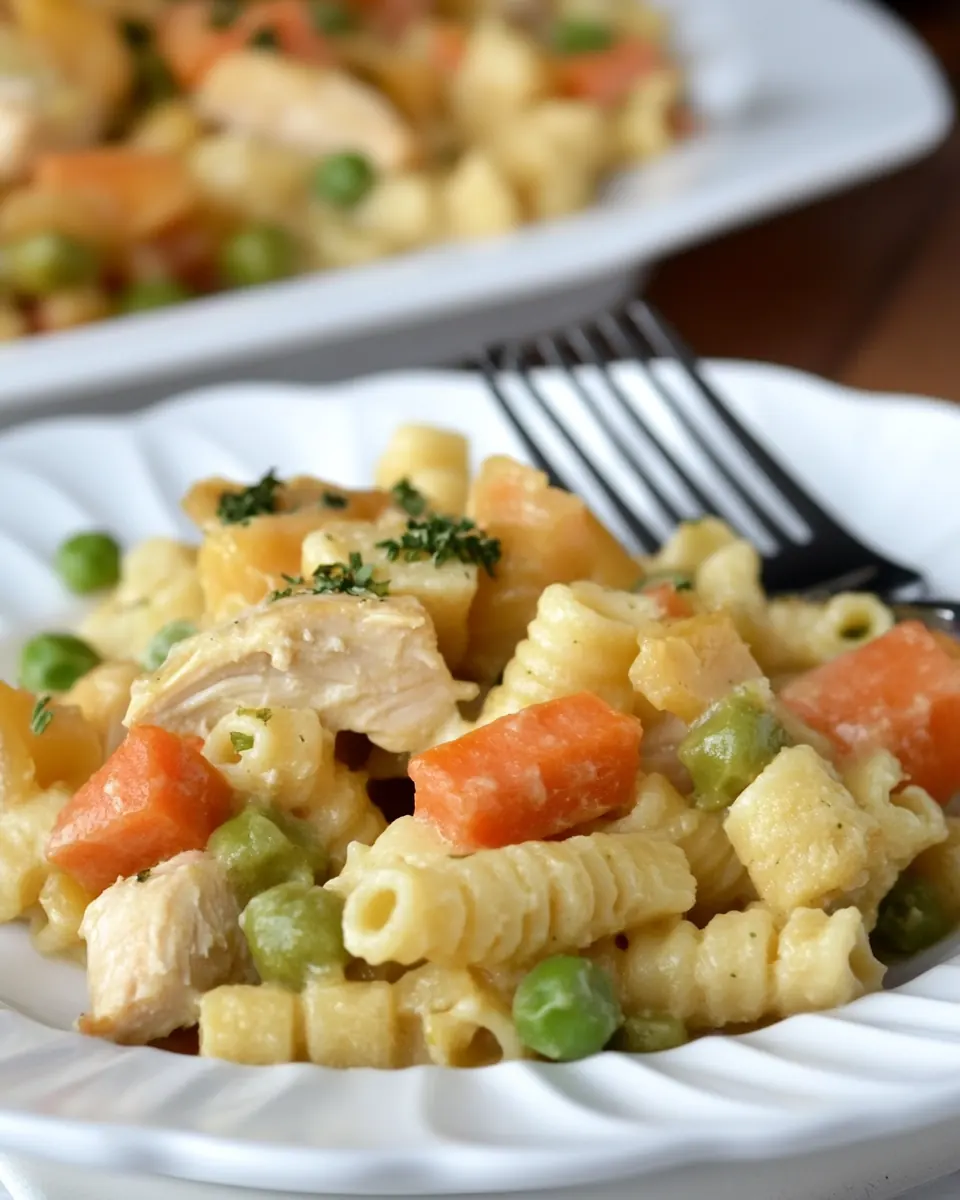
Veggie Pot Pie Pasta
Ingredients
Equipment
Method
- Place a large pot of salted water over high heat and bring to a boil. Cook pasta to al dente, per package instructions. Drain and set aside.: The first sensory cue is the rolling, bubbling surface and the slightly ringing sound as water moves. Adding salt to the water seasons the pasta internally, so it is important not to skip this step. A common mistake is under salting the water, which leaves the finished dish bland, so be generous enough that the water tastes like the sea, but do not overdo it if you are using a salty broth later. Watch for a steady, strong boil before adding the pasta so it cooks evenly and does not clump together.
- Meanwhile, in a large saute pan, melt butter over medium heat. Add onion, celery, carrots, and butternut squash and cook until onion is translucent and the rest of the vegetables are tender, about 7 minutes.: You will know the pasta is al dente when it offers slight resistance when bitten, with a tender exterior and a firmer center. Drain promptly to avoid carryover cooking, which would make it too soft. A common pitfall is overcooking, which leads to limp texture and prevents the sauce from clinging properly. Reserve a small cup of pasta water if you like, it can help loosen or bind the sauce later, but do not let the pasta sit in standing water after draining because it will continue to soften.
- Add garlic, thyme, and 1/2 teaspoon salt and saute for another minute, stirring frequently.: The butter should foam and give off a rich, nutty aroma as it melts, coating the pan. When it starts to shimmer, add the onion , celery , carrots , and butternut squash . These vegetables should sizzle gently but not brown aggressively. The goal is to soften and build sweetness, so cook until the onion is translucent and the others are tender. A common error is overheating, which can brown or burn the vegetables and introduce bitter notes. Stir frequently to ensure even cooking and watch for a glossy, softened texture before proceeding.
- Sprinkle in flour and cook, stirring constantly, for one minute. Continuing over medium heat, slowly add broth, stirring constantly, and bring to a boil. Reduce heat to medium-low and simmer until the mixture thickens, stirring frequently, about 5 minutes.: Right after adding the minced garlic you should notice an immediate fragrant lift, a heady, savory perfume that signals it is time to move quickly. The thyme should tease out earthiness and blend with the softened vegetables. Sauteing only about a minute prevents the garlic from turning bitter. A common mistake is leaving it too long and getting a burnt, acrid flavor, so keep stirring and remove from direct heat if things start to darken too fast.
- Stir in pasta and peas.: As you add the flour , it will coat the vegetables and begin to smell toasty as you stir. This brief cooking takes away the raw, chalky taste and sets the stage for a silky sauce. The texture will shift to a loose paste that clings to the vegetables, and you should maintain constant stirring so it does not form lumps or stick to the pan. Under cooking the flour results in a pasty edge to the sauce, while overdoing it can darken the roux and change the flavor, so one minute is the sweet spot for this quantity.
- Taste and add additional salt along with freshly ground black pepper, to taste.: As you stream in the vegetable broth , you should see the roux loosen and transform into a smooth sauce. The surface will shimmer and steam, and small bubbles will begin to rise as it heats. Stirring constantly prevents lumps and ensures an even emulsion. Bring it to a boil so the sauce activates and then lower the heat to simmer. A typical error here is pouring the broth in too quickly, which can create clumps; patience yields a smoother, silkier finish.
- To add meat, scoop about 1 1/2 cups pasta mixture to a separate pan over low heat. Gently mix in 1/2 cup diced, cooked chicken per serving and cook until the entire mixture is heated through.: During the simmer the sauce will thicken and coat the back of a spoon. You will see it become more translucent and glossy, and the aroma will deepen into a savory, rounded smell. Stir often to avoid sticking and to monitor viscosity. If it thickens too much, a splash of reserved pasta water or extra broth will loosen it. A mistake to avoid is letting it reduce until it dries out, which will concentrate salt and make the texture gluey rather than creamy.
- Serve immediately.: When you fold in the drained pasta and frozen peas , the peas will quickly thaw and offer bright, popping green against the creamy sauce. The pasta will pick up the sauce and become glossy. Toss gently so the ingredients combine without mashing the peas or overworking the pasta. Over stirring can break the pasta and release starches that make the sauce too thick, so be delicate for the best mouthfeel.
- Taste and add additional salt along with freshly ground black pepper, to taste: Now is the moment to fine tune seasoning. Take a small taste warm, and adjust with more salt if the sauce needs lift, and freshly ground black pepper for a bit of bite. The sensory cue is balance, where sweetness from the vegetables is offset by savory salt and a faint peppery finish. The common oversight here is to salt too early and forget to account for salty broth or chicken if you will add it, so adjust gently and taste again after any additions.
- To add meat, scoop about 1 1/2 cups pasta mixture to a separate pan over low heat: When you transfer a portion to warm with diced chicken , you will hear a quiet warming hiss and smell the melding of flavors as the sauce and meat come together. Warm the mixture slowly so the chicken heats through without drying out. The reason to do this separately is to prevent overcooking the rest of the batch and to allow precise warming. A common mistake is overheating until the chicken becomes tough, so keep the pan low and stir gently until everything is uniformly warm.
- Gently mix in 1/2 cup diced, cooked chicken per serving and cook until the entire mixture is heated through: As the chicken warms, you should notice steam rising and the sauce coating the pieces, locking in juiciness. Stir carefully to avoid shredding the meat, and stop as soon as the mixture is reheated to prevent dryness. Overcooking will make the chicken stringy and reduce tenderness, so aim for warm, not hot, center. The benefit is a hearty, protein boosted bowl that retains creamy texture and balanced flavor.
- Serve immediately: Serve when piping hot so the sauce is at its silkiest and the textures are at their best. The final sensory experience should include warm steam, glossy sauce, and a combination of tender vegetables with the satisfying bite of pasta . A common mistake is letting it sit too long, which cools and thickens the sauce; if you must hold it, reheat gently with a splash of broth to restore creaminess.
Notes
- Reduce sodium, use low sodium vegetable broth and taste before adding any extra kosher salt. If you plan to add pre cooked chicken, remember it may already contain salt, so finalize seasoning after folding the meat in.
- Thicken the sauce, if the sauce is too thin, simmer gently to reduce, stirring frequently. Alternatively mix a small slurry of flour and cold water, whisk it in, and simmer until glossy to avoid lumps.
- Loosen the sauce, if it becomes overly thick after sitting, stir in reserved pasta water or a splash of hot vegetable broth one tablespoon at a time until desired consistency returns.
- Vegetable swaps, you can substitute equal volumes of similar textures like sweet potato for butternut squash, cooking until tender. Keep dice sizes consistent so they cook evenly.
- Make it heartier, fold in diced, pre cooked chicken per serving to boost protein, warming it gently so it stays juicy and integrates with the creaminess of the sauce.
- Advance prep, chop vegetables a day ahead and store them refrigerated in airtight containers for faster weeknight assembly and cooking.