Heat a pot of water and bring it to a boil. Cook the soba noodles until al dente, about 5 minutes. Drain and set aside in a bowl.: The moment you sense the water moving from quiet to lively, you will hear a steady bubbling that signals the right stage to add the soba noodles . The air will fill with a faint minerality from the water, and the surface will shimmer with motion. This vigorous boil is important because it prevents the noodles from clumping as they hit the water, and it helps the cooking temperature recover quickly after adding them. A common mistake is adding noodles to water that is only simmering, which can make them gummy and unevenly cooked. If your pot is too small, the water may foam over, so use a pot with enough headroom and stir gently after adding the noodles to separate them.
In the meantime, heat 1 1/2 cups of water and bring it to a boil. Add the Mizkan (Bonito Flavored) Soup Base, along with the mushrooms and baby bok choy. Boil for about 1 minute, or until they are cooked.: As the soba noodles cook, you will notice their color deepen slightly and their strands loosen in the pot. Gently lift a strand with tongs to test for a slight resistance in the center, that tactile cue tells you the texture is right. The cooking water may foam a bit because of the starch, which is normal; skim if it threatens to boil over. Overcooking will yield a limp texture and diminished bite, while undercooking results in a chalky center. Drain promptly once al dente to stop carryover cooking.
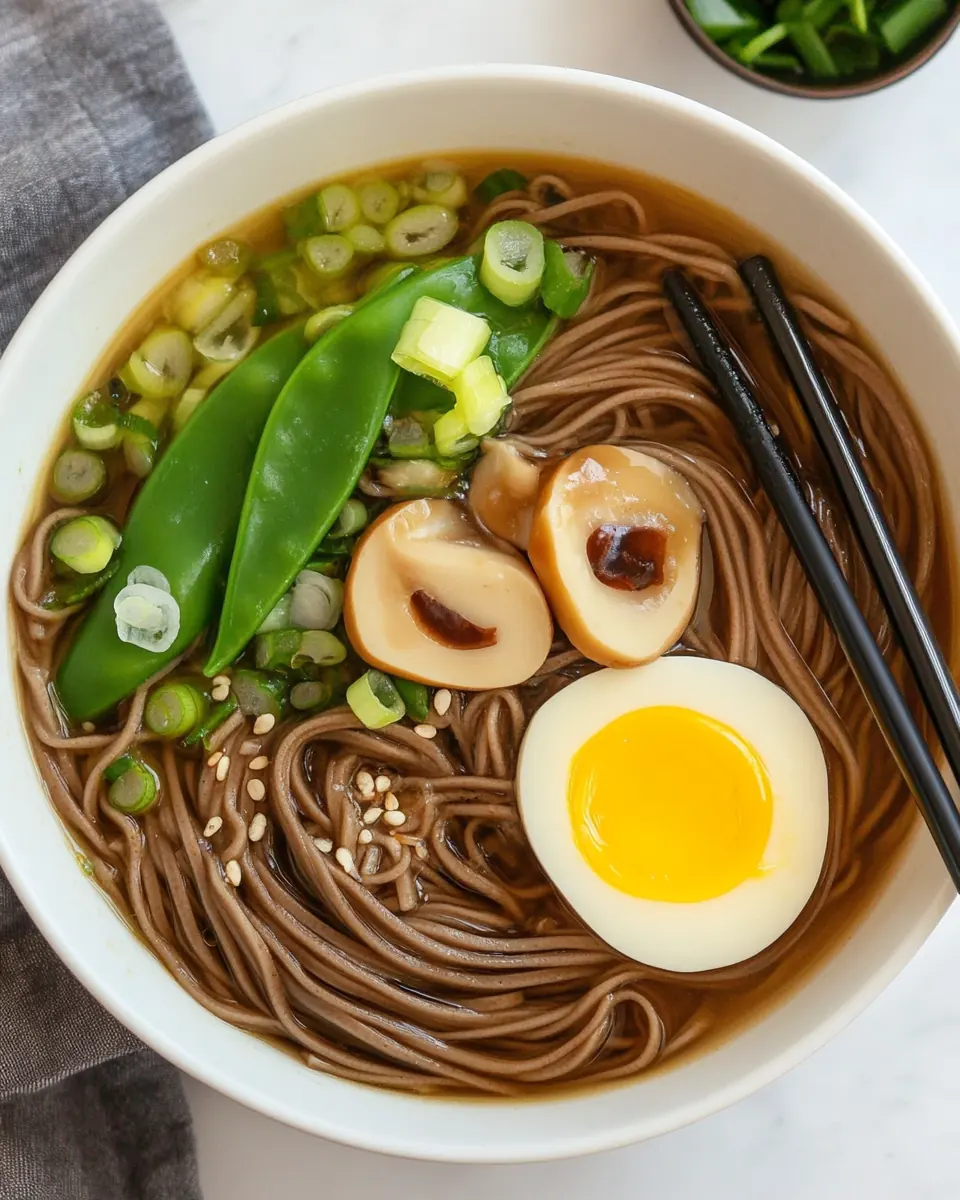
Add the egg on top of the soba noodles, then pour the soup over them. Top with sesame seeds and scallions.: After draining, the soba noodles should be separated and cooling slightly, releasing a whisper of fragrance. Transferring them to a warm serving bowl keeps them from clumping and allows you to arrange the final composition. If you notice any sticky clumps, a quick rinse under cool water will help, but be mindful this can cool the noodles too much; only rinse if needed. A mistake at this stage is leaving noodles in a colander with steam trapped, which softens them further; spread them gently in the bowl instead.
In the meantime, heat 1 1/2 cups of water and bring it to a boil: As you heat the measured water , take in the subtle difference between plain boiling water and the moment you add the soup base. A small rolling boil is ideal to dissolve the broth concentrate uniformly. Precise control of the boil ensures the seasoning integrates evenly without concentrating in one hot pocket. A frequent error is overheating and vigorously boiling after adding delicate ingredients, which can break down texture.
Add the Mizkan (Bonito Flavored) Soup Base, along with the mushrooms and baby bok choy: When the bonito flavored soup base dissolves, it will instantly perfume the kitchen with smoky, savory top notes, and your broth will take on a deeper tone. Add the buna shimeji mushroom and baby bok choy so the vegetables blanch gently and absorb flavor. Cook them just until tender, watching for the bok choy stems to become translucent and the mushroom caps to soften. Overcooking the greens will make them limp and dull, while undercooking leaves them too firm; timing here preserves crisp tender contrast.
Boil for about 1 minute, or until they are cooked: That brief boil will set the texture, and you should notice steam carrying the savory aroma of the broth. The baby bok choy leaves will wilt and the stems will shift from opaque to a lighter tone, while the buna shimeji mushroom will become tender and release a subtle earthiness. This quick cook preserves brightness and prevents grainy stems or mushy caps. A common slip is leaving them extra long because the heat is too aggressive; once they reach tender, remove from high heat promptly.
Add the egg on top of the soba noodles, then pour the soup over them: Placing the halved hard boiled egg on the noodles creates an attractive center, and pouring the hot broth over it warms the yolk and white without overcooking. You'll hear a gentle hiss as the steaming broth meets the cooler bowl, and the aroma will intensify. This approach ensures even temperature distribution and keeps the yolk texture pleasant. Avoid pouring from too high above the bowl, which can splash and disrupt the presentation.
Top with sesame seeds and scallions: Finishing with a scattering of white sesame and chopped scallion adds crunch and aromatic lift. The sesame will offer tiny pops of toasted nuttiness, while the scallion contributes a fresh, sharp counterpoint. Add these last to preserve their texture and fragrance. A mistake I see is adding garnishes too early, which softens them and mutes their impact in the finished bowl.