Heat the oil in a large lidded heavy bottomed saucepan or Dutch oven. Add the garlic and cook over low heat until golden brown on all sides, about 5 minutes. Remove and discard.: The warm oil should feel slightly viscous and shimmer when ready, giving off a faint fruity aroma. I use medium low heat to avoid rapid smoking, which preserves the oil flavors. The heavy bottom pan promotes even heat, preventing hot spots that scorch. If the pan is too hot the next ingredient will brown too fast instead of mellowing; reduce heat and let it settle before continuing. When the oil is ready, you should see gentle movement across the surface, not rolling bubbles.
Carefully add the peppers, salt, and pepper flakes, if using. Sauté over medium heat until the vegetables are very soft but not browning, about 10 minutes. Stir in the tomatoes and potatoes. Cover with the stock or water and bring to a boil. Turn the heat down to medium-low and simmer, stirring occasionally, until the potatoes are tender and the broth has thickened, about 15 minutes. Season the cod with salt, nestle it into the tomato mixture, and cover with a lid. Simmer until the fish is tender but not falling apart, about 7 minutes.: As the garlic warms, it releases a warm, nutty scent that perfumes the kitchen. The surface will take on a pale golden hue and the aroma will shift from sharp to mellow. Cooking slowly ensures you extract savory sweetness without bitterness. A common mistake is rushing with higher heat, which can create bitter, burnt garlic ; if you smell acrid notes, discard those cloves and start again to avoid off flavors.
Garnish with the parsley and serve immediately.: After the garlic has colored, take it out so it does not continue to darken and sour the oil. Removing it leaves behind the infused oil which holds the savory base. I pat the cloves on a paper towel to make sure no small burned bits stay in the pan. Leaving them in risks an increasingly bitter broth as the dish simmers.
Carefully add the peppers, salt, and pepper flakes, if using: When the peppers hit the warm oil, you should hear a gentle sizzle and smell a bright, vegetal scent. The salt will draw moisture and encourage the peppers to soften. I add the red pepper flakes sparingly and taste as I go, because their heat concentrates as the liquid reduces. A typical mistake is using too much salt at this stage, which can make the stew overly saline once the potatoes absorb liquid; hold some salt back for final adjustment.
Sauté over medium heat until the vegetables are very soft but not browning, about 10 minutes: The peppers should collapse and become silky, releasing a sweet, roasted perfume. Keeping the heat at medium prevents caramelization which changes the flavor balance. Stir occasionally so the peppers cook evenly. If you see browning at the edges, lower the heat and deglaze gently with a splash of water to prevent bitter notes.
Stir in the tomatoes and potatoes: The diced tomatoes will add a bright tang that mingles with the softened peppers, while the cubed potatoes begin to bulk up the stew. As you stir, scrape any flavorful fond from the pan to incorporate those browned bits into the sauce. If the tomatoes seem watery at first, they will concentrate as the stew simmers, so resist the urge to over reduce early on. Cutting the potatoes uniformly ensures they become tender in step with the tomatoes.
Cover with the stock or water and bring to a boil: Once the liquid hits the pot, it will steam and the aroma will lift, carrying both sweet and savory notes. Bringing the stew to a boil activates the starch in the potatoes , which will thicken the broth slightly. Use a lid to speed heating, but watch closely so it does not boil over. If the boil is too vigorous, reduce to a gentle bubble to keep the texture even.
Turn the heat down to medium low and simmer, stirring occasionally, until the potatoes are tender and the broth has thickened, about 15 minutes: During this simmer you will notice the broth become fuller, the color deepening to a rich, tomato red. The occasional stir helps prevent sticking and ensures even cooking. Test a potato cube for tenderness with a fork; it should slide easily without disintegrating. A common error is simmering too long which leaves the potatoes mushy and the broth overly reduced, so check often towards the end of the cook time.
Season the cod with salt, nestle it into the tomato mixture, and cover with a lid: Seasoned chunks of cod should be added gently into pockets in the stew so they cook in the liquid. The moment you cover, the enclosed steam will cook the cod evenly and gently, preserving its flaky texture. Avoid piling pieces on top of each other which causes uneven cooking. If the pieces differ greatly in size, start larger pieces slightly earlier to synchronize doneness.
Simmer until the fish is tender but not falling apart, about 7 minutes: As the cod cooks, it will change from translucent to opaque and begin to flake at the edges. The stew should give off a clean, oceanic scent mixed with tomato sweetness. Overcooking is the most common trap here; watch for the flakes to separate with a gentle nudge rather than collapsing into the broth. If the fish looks dry, a splash of hot stock can revive moistness without watering down flavor.
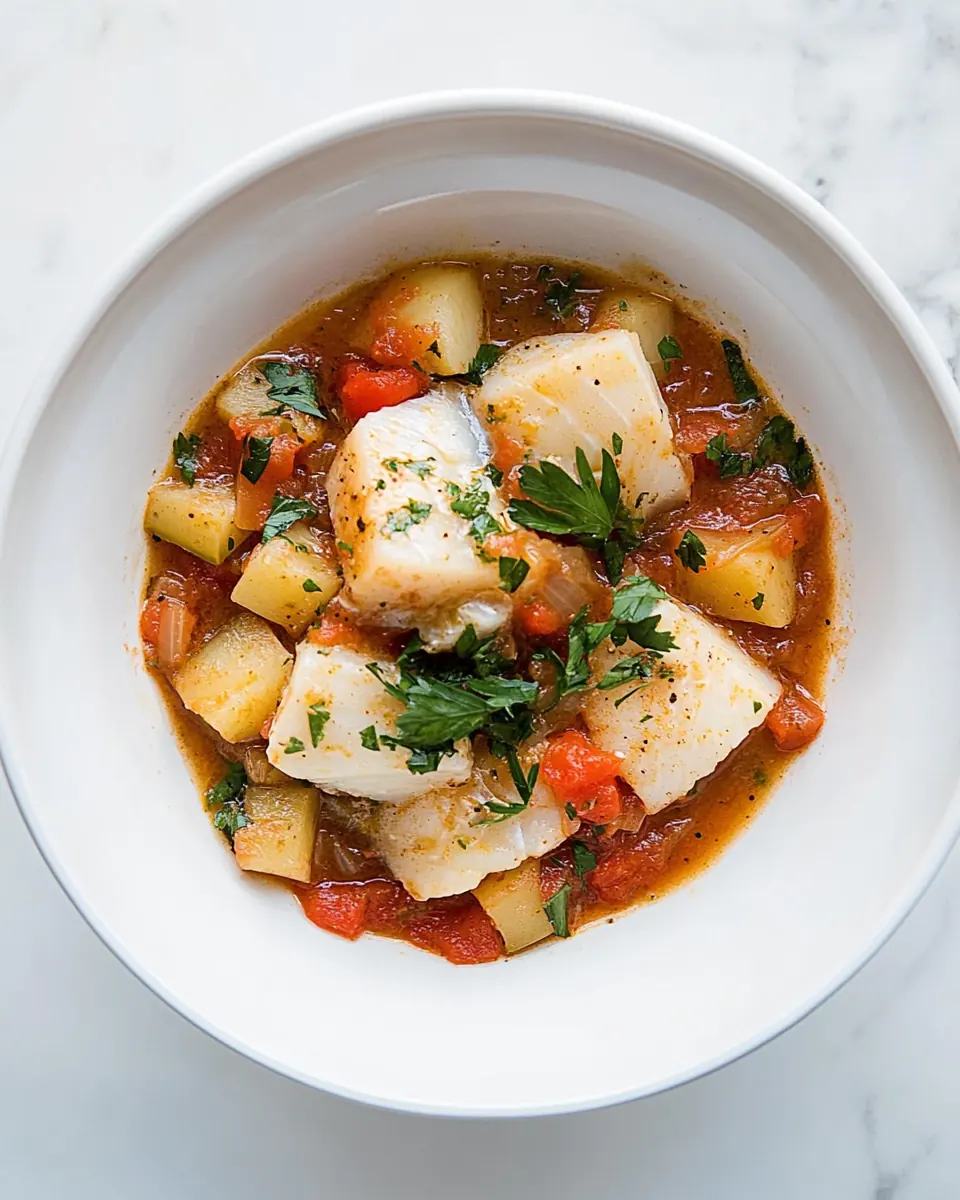
Garnish with the parsley and serve immediately: Right before serving, sprinkle the finely chopped parsley for a fresh, herbaceous lift and a bright green contrast. The final bowl should be steaming, with glossy broth and intact flakes of cod . Serve promptly because the fish continues to cook in residual heat, which can soften texture over time. Leaving the stew to sit long on the stove will dull the fresh herb note and risk overcooking the cod .