30 Minute Spanish Cod Fish Stew
30 Minute Spanish Cod Fish Stew arrived in my kitchen on a weeknight when I needed something honest, bright, and comforting all at once. I remember the steam fogging the windows while I chopped vegetables on a tired countertop, the radio murmuring in the background, and the aroma of garlic sizzling gently in extra virgin olive oil. That first spoonful felt like a small celebration, a warm, briny hug that made the evening feel a little less ordinary.
Weeks later, this stew has become my go to when friends drop by unannounced or when I want to treat myself without fuss. I love how the tomatoes and potatoes create a broth that tastes both simple and layered, while chunks of flaky cod keep every bite tender and light. I often find myself telling little stories as I cook, thinking about the markets where I first tasted similar dishes, and how a handful of parsley at the end makes everything feel finished and festive.
There is a particular rhythm to making this stew that I enjoy, from the slow warming of the olive oil to coax flavor out of the garlic, to the patient simmer that turns humble ingredients into something soulful. Even when life is hectic, this recipe rewards a little attention with big flavor. I hope it becomes one of those dishes you turn to when you want comfort without heaviness, something to share or to savor on your own.
Recipe Snapshot
30 mins
10 mins
20 mins
Easy
350 kcal
Spanish
Paleo, Gluten-Free
Dinner
Large lidded heavy bottomed saucepan or Dutch oven
Why Try This 30 Minute Spanish Cod Fish Stew
Hearty Yet Light
I love that 30 Minute Spanish Cod Fish Stew manages to feel filling without being heavy. The combination of starchy potatoes and a tomato forward broth creates a stew body that satisfies the appetite, while the delicate flakes of cod keep the texture airy. For me, it hits the balance between comfort food and something you can enjoy any night of the week.
Fast Enough for Weeknights
One of the reasons I keep coming back to this recipe is how quickly it comes together. From the first drizzle of warm olive oil to the moment you sprinkle on fresh parsley, it’s a short, focused experience. I appreciate recipes that respect the clock without sacrificing flavor, and this stew is exactly that kind of recipe, getting dinner on the table in about the time it takes to talk through your day.
Simple Ingredients, Big Flavor
There is real joy in transforming pantry friendly items into something soulful. The trio of peppers, tomatoes, and aromatic garlic creates a base that tastes bright and full, while a modest amount of stock or water deepens the broth without overpowering the fish. I often tell guests that the real magic is patience while the potatoes soften and the flavors knit together.
Flexible and Approachable
I adore recipes that allow for slight variations depending on what’s on hand. While I use cod, other semi firm white fish will work if you need a swap. The optional red pepper flakes give a subtle kick if I want warmth on colder nights. This adaptability makes the stew a reliable favorite in my repertoire.
Photogenic and Inviting
Finally, this dish looks as good as it tastes. The ruby of the tomatoes, the soft golden cubes of potato, and the white flakes of cod topped with green parsley create a bowl that invites conversation. I find it rewarding to serve to friends because it feels thoughtful without being fussy.
Ingredients to Make 30 Minute Spanish Cod Fish Stew
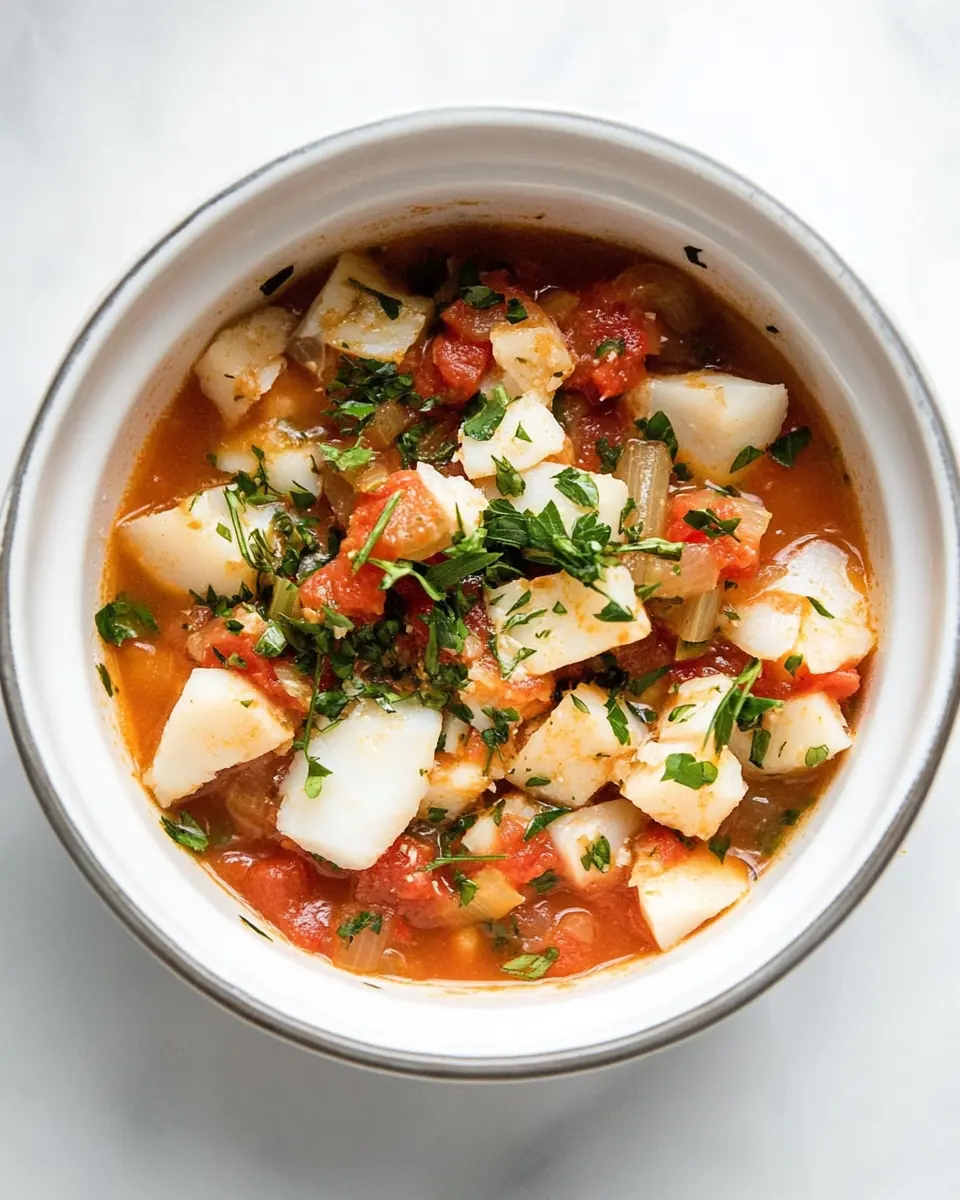
These ingredients are chosen for balance, clarity, and harmony. The foundation is an oil and aromatics combination that draws flavor from the peppers and garlic. The tomatoes and potatoes build body and mouthfeel, while the cod brings delicate protein that soaks up the tomato scented broth. Simple seasonings and a final scatter of parsley round things out.
- 1/4 cup extra-virgin olive oil: Provide a fruity, peppery base fat that helps sauté aromatics and meld flavors; extra–virgin olive oil adds richness and a silky mouthfeel to the stew. Use at moderate heat to avoid burning and to release flavors from garlic and peppers. Its healthy monounsaturated fats also help carry fat-soluble aromas throughout the dish.
- 2 garlic cloves, crushed: Crush and release pungent, savory aromatics that infuse the oil and broth with depth; garlic provides a warm, garlicky backbone. Add early in cooking to mellow sharpness and integrate with the vegetables. Crushing helps break cell walls for stronger flavor extraction into the stew.
- 1 red bell pepper, finely diced: Add bright, sweet, and slightly acidic texture when finely diced, contributing color and bite to the stew. Red bell pepper cooks tender while retaining sweetness, balancing heat from other peppers and spices. Use small dice to ensure even cooking and distribution in each spoonful.
- 1 poblano pepper, ribs and seeds removed, finely diced: Bring mild heat and a smoky, earthy flavor when finely diced after removing ribs and seeds; poblano offers subtle warmth without overwhelming the broth. Cook until softened to release flavor and harmonize with tomatoes and potatoes. Fleshiness of poblano adds body to the stew.
- 1 teaspoon salt: Season and enhance overall flavor profile while helping other ingredients' tastes shine when incorporated at the proper time. Salt also draws moisture from vegetables to create a more cohesive broth. Adjust quantity carefully to avoid over-salting given stock or added seasonings.
- 1/4 teaspoon red pepper flakes (optional): Provide optional concentrated heat and a touch of smoky spice when added sparingly; red pepper flakes allow control over spiciness. Stir in early to gently infuse the broth, or finish near the end for more pronounced heat. Use according to heat tolerance and desired flavor balance.
- 1 pound vine or roma tomatoes, finely diced: Contribute acidity, sweetness, and body when finely diced, forming the primary tomato base for the stew; vine or roma tomatoes break down to create a saucy broth. Cook until they release juices and meld with oil and aromatics for depth. Fresh tomatoes lend bright, natural acidity that balances richness.
- 1 pound russet potatoes, about 2 medium, peeled and cut into 1-inch cubes: Add satisfying starch and a creamy texture when peeled and cut into 1-inch cubes; russet potatoes thicken the stew as they cook and absorb flavors. Simmer until tender to contribute substantial mouthfeel and heartiness. Uniform cubes ensure even cooking throughout the pot.
- 2 cups low FODMAP chicken stock or water: Provide a savory cooking liquid and seasoning base; low FODMAP chicken stock or water supplies moisture and depth to the stew while keeping it digestible. Use low-sodium stock if monitoring salt levels and adjust seasoning afterward. Liquid amount controls stew consistency and cooking time for potatoes and fish.
- 1 1/2 pounds cod or other semi-firm white fish, cut into 2-inch pieces: Supply tender, flaky protein when cut into 2-inch pieces and gently poached in the broth; cod or other semi–firm white fish offers delicate flavor that complements the vegetables. Add near the end of cooking to avoid overcooking and to keep chunks intact. Fish also contributes subtle sweetness and additional texture.
- 2 tablespoons finely chopped fresh flat-leaf parsley leaves: Finish with fresh, herbaceous brightness and a hint of verdant flavor when finely chopped and sprinkled over the stew. Parsley adds color contrast and lightness that lifts the dish. Add at the end to preserve fresh aroma and flavor.
Cooking Method for 30 Minute Spanish Cod Fish Stew
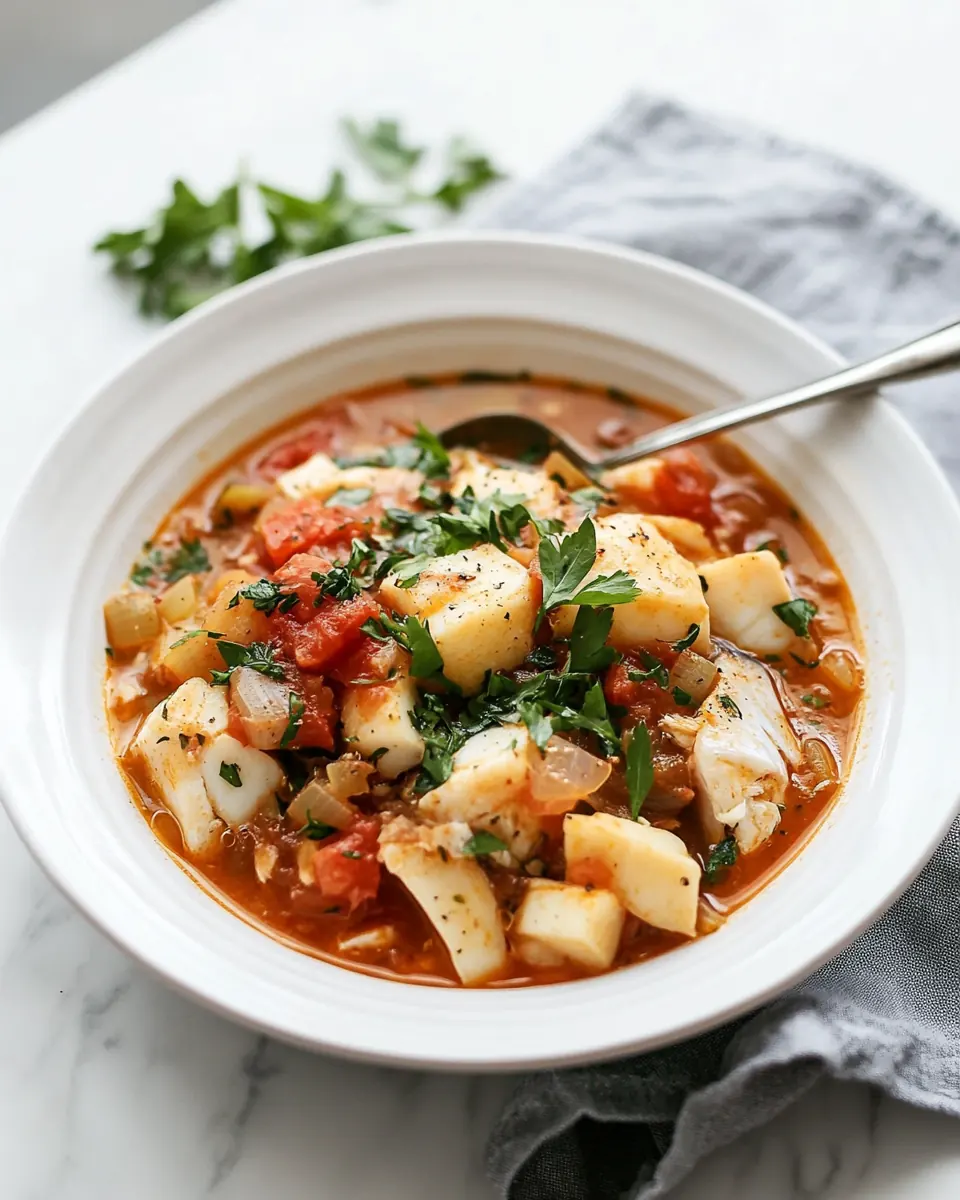
I like to think of this method as a guided tempo for coaxing flavor gently from humble ingredients. The process moves from slow aromatic work to a patient simmer that lets the potatoes and tomatoes transform into a cohesive broth, finishing with delicate cod that needs only a brief, careful simmer.
- Heat the oil in a large lidded heavy bottomed saucepan or Dutch oven. Add the garlic and cook over low heat until golden brown on all sides, about 5 minutes. Remove and discard.: The warm oil should feel slightly viscous and shimmer when ready, giving off a faint fruity aroma. I use medium low heat to avoid rapid smoking, which preserves the oil flavors. The heavy bottom pan promotes even heat, preventing hot spots that scorch. If the pan is too hot the next ingredient will brown too fast instead of mellowing; reduce heat and let it settle before continuing. When the oil is ready, you should see gentle movement across the surface, not rolling bubbles.
- Carefully add the peppers, salt, and pepper flakes, if using. Sauté over medium heat until the vegetables are very soft but not browning, about 10 minutes. Stir in the tomatoes and potatoes. Cover with the stock or water and bring to a boil. Turn the heat down to medium-low and simmer, stirring occasionally, until the potatoes are tender and the broth has thickened, about 15 minutes. Season the cod with salt, nestle it into the tomato mixture, and cover with a lid. Simmer until the fish is tender but not falling apart, about 7 minutes.: As the garlic warms, it releases a warm, nutty scent that perfumes the kitchen. The surface will take on a pale golden hue and the aroma will shift from sharp to mellow. Cooking slowly ensures you extract savory sweetness without bitterness. A common mistake is rushing with higher heat, which can create bitter, burnt garlic ; if you smell acrid notes, discard those cloves and start again to avoid off flavors.
- Garnish with the parsley and serve immediately.: After the garlic has colored, take it out so it does not continue to darken and sour the oil. Removing it leaves behind the infused oil which holds the savory base. I pat the cloves on a paper towel to make sure no small burned bits stay in the pan. Leaving them in risks an increasingly bitter broth as the dish simmers.
- Carefully add the peppers, salt, and pepper flakes, if using: When the peppers hit the warm oil, you should hear a gentle sizzle and smell a bright, vegetal scent. The salt will draw moisture and encourage the peppers to soften. I add the red pepper flakes sparingly and taste as I go, because their heat concentrates as the liquid reduces. A typical mistake is using too much salt at this stage, which can make the stew overly saline once the potatoes absorb liquid; hold some salt back for final adjustment.
- Sauté over medium heat until the vegetables are very soft but not browning, about 10 minutes: The peppers should collapse and become silky, releasing a sweet, roasted perfume. Keeping the heat at medium prevents caramelization which changes the flavor balance. Stir occasionally so the peppers cook evenly. If you see browning at the edges, lower the heat and deglaze gently with a splash of water to prevent bitter notes.
- Stir in the tomatoes and potatoes: The diced tomatoes will add a bright tang that mingles with the softened peppers, while the cubed potatoes begin to bulk up the stew. As you stir, scrape any flavorful fond from the pan to incorporate those browned bits into the sauce. If the tomatoes seem watery at first, they will concentrate as the stew simmers, so resist the urge to over reduce early on. Cutting the potatoes uniformly ensures they become tender in step with the tomatoes.
- Cover with the stock or water and bring to a boil: Once the liquid hits the pot, it will steam and the aroma will lift, carrying both sweet and savory notes. Bringing the stew to a boil activates the starch in the potatoes , which will thicken the broth slightly. Use a lid to speed heating, but watch closely so it does not boil over. If the boil is too vigorous, reduce to a gentle bubble to keep the texture even.
- Turn the heat down to medium low and simmer, stirring occasionally, until the potatoes are tender and the broth has thickened, about 15 minutes: During this simmer you will notice the broth become fuller, the color deepening to a rich, tomato red. The occasional stir helps prevent sticking and ensures even cooking. Test a potato cube for tenderness with a fork; it should slide easily without disintegrating. A common error is simmering too long which leaves the potatoes mushy and the broth overly reduced, so check often towards the end of the cook time.
- Season the cod with salt, nestle it into the tomato mixture, and cover with a lid: Seasoned chunks of cod should be added gently into pockets in the stew so they cook in the liquid. The moment you cover, the enclosed steam will cook the cod evenly and gently, preserving its flaky texture. Avoid piling pieces on top of each other which causes uneven cooking. If the pieces differ greatly in size, start larger pieces slightly earlier to synchronize doneness.
- Simmer until the fish is tender but not falling apart, about 7 minutes: As the cod cooks, it will change from translucent to opaque and begin to flake at the edges. The stew should give off a clean, oceanic scent mixed with tomato sweetness. Overcooking is the most common trap here; watch for the flakes to separate with a gentle nudge rather than collapsing into the broth. If the fish looks dry, a splash of hot stock can revive moistness without watering down flavor.
- Garnish with the parsley and serve immediately: Right before serving, sprinkle the finely chopped parsley for a fresh, herbaceous lift and a bright green contrast. The final bowl should be steaming, with glossy broth and intact flakes of cod . Serve promptly because the fish continues to cook in residual heat, which can soften texture over time. Leaving the stew to sit long on the stove will dull the fresh herb note and risk overcooking the cod .
Expert Tips about 30 Minute Spanish Cod Fish Stew
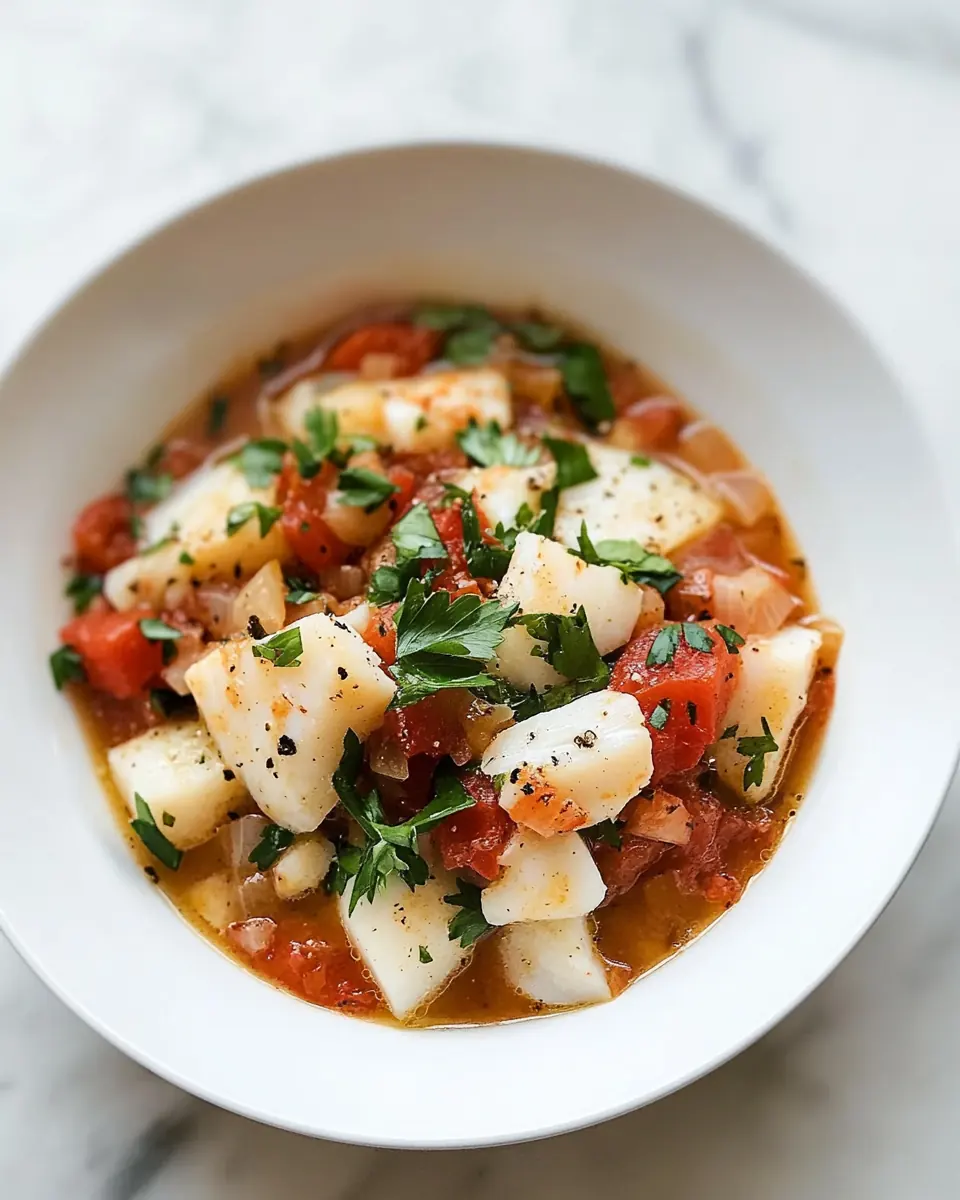
I like to keep a few reliable tricks up my sleeve for this stew. These tips help ensure consistent texture, balanced seasoning, and a vibrant finish every time I make 30 Minute Spanish Cod Fish Stew. Treat them as small habits that make a big difference.
- Choose fresh cod: Fresh, firm cod will hold together during the brief simmer and offer a clean flavor. If you can smell strong fishiness, it is not fresh, so choose cleaner smelling fillets.
- Infuse the oil gently: Low heat for the garlic step yields a nutty depth. High heat burns the garlic, introducing bitterness that can’t be masked later.
- Uniform cuts matter: Even 1 inch potato cubes and consistent cod pieces ensure simultaneous doneness and a pleasing texture in every spoonful.
- Control salt carefully: Taste after the potatoes soften; stock can add hidden sodium, so adjust at the end for perfect balance.
- Add herbs last: Fresh parsley should be scattered off the heat to retain color and aromatic brightness, especially when serving immediately.
How to Enjoy 30 Minute Spanish Cod Fish Stew
This stew is ideal for relaxed weeknight dinners and casual gatherings. Its warm tomato broth and tender cod make it adaptable to different occasions. Here are practical serving ideas, pairing suggestions, and storage notes to help you enjoy it fully.
- Serve hot in shallow bowls to showcase the broth, potatoes, and flakes of cod, making it easy to spoon up everything in each bite.
- Pair with crusty bread to soak up the tomato broth, or offer simple steamed rice for a heartier meal, depending on what you have on hand.
- Garnish with extra parsley at the table so guests can add more if they want a brighter herb note, perfect for balancing the tomato richness.
- Occasion ideas: lovely for a cosy winter supper, a low key dinner party, or a comforting Ramadan iftar because it feels nourishing yet light.
- Storage tips Refrigerate leftover stew in an airtight container for up to 2 days; rewarm gently on the stove to avoid overcooking the cod. If you plan to store longer, remove the fish and keep the broth and potatoes separately for better texture after reheating.
- Seasonal pairing Serve with a simple green salad or roasted vegetables when you want contrast, or a bright citrus wedge to squeeze over the bowl for extra lift.
FAQ
Conclusion
This recipe’s charm lies in its simplicity, vibrant tomato broth, and tender flakes of cod that come together quickly. Give it a try on a busy weeknight or when you want a nourishing bowl without fuss. I hope it becomes one of your reliable go to dishes, the kind you return to when you need comfort that still feels light and satisfying.
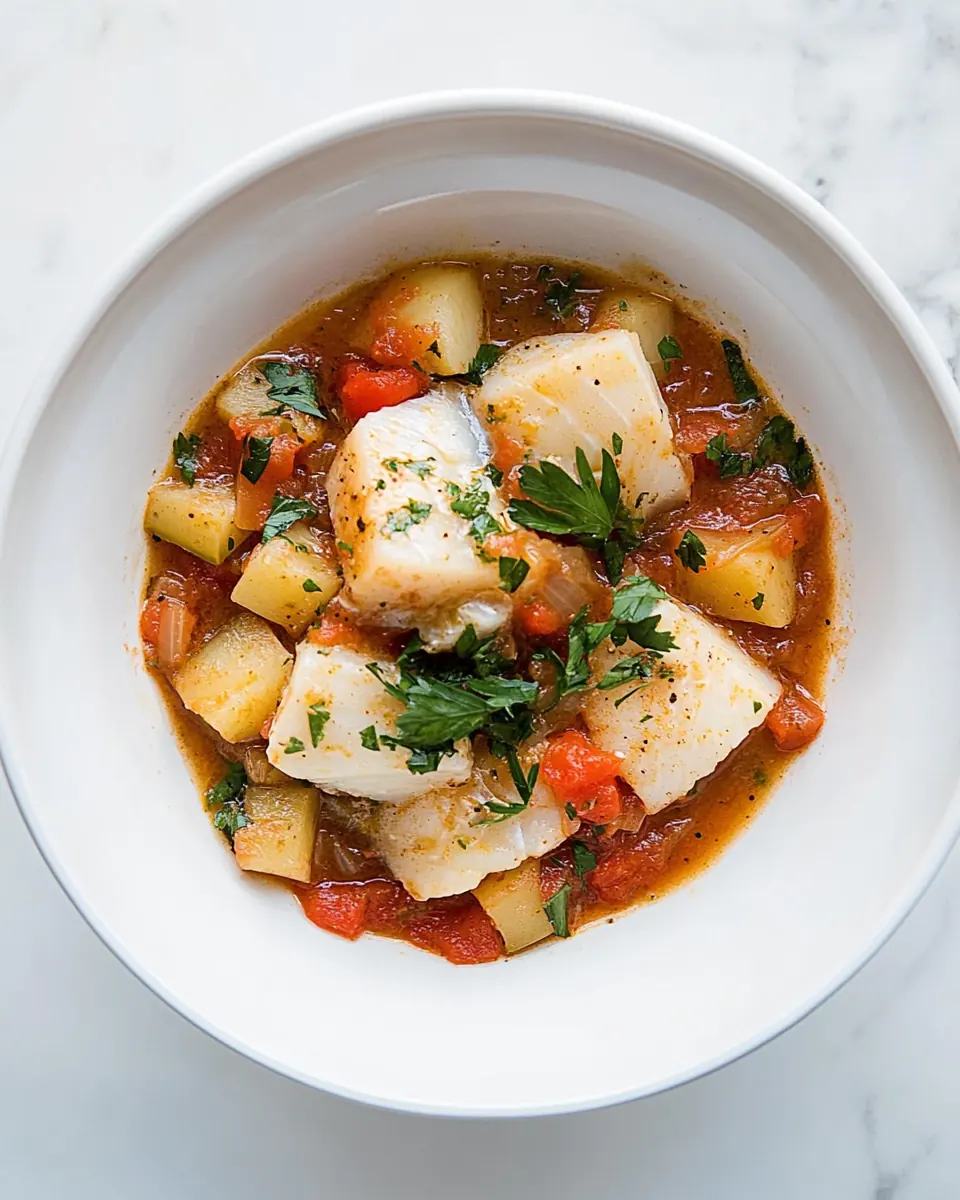
30 Minute Spanish Cod Fish Stew
Ingredients
Equipment
Method
- Heat the oil in a large lidded heavy bottomed saucepan or Dutch oven. Add the garlic and cook over low heat until golden brown on all sides, about 5 minutes. Remove and discard.: The warm oil should feel slightly viscous and shimmer when ready, giving off a faint fruity aroma. I use medium low heat to avoid rapid smoking, which preserves the oil flavors. The heavy bottom pan promotes even heat, preventing hot spots that scorch. If the pan is too hot the next ingredient will brown too fast instead of mellowing; reduce heat and let it settle before continuing. When the oil is ready, you should see gentle movement across the surface, not rolling bubbles.
- Carefully add the peppers, salt, and pepper flakes, if using. Sauté over medium heat until the vegetables are very soft but not browning, about 10 minutes. Stir in the tomatoes and potatoes. Cover with the stock or water and bring to a boil. Turn the heat down to medium-low and simmer, stirring occasionally, until the potatoes are tender and the broth has thickened, about 15 minutes. Season the cod with salt, nestle it into the tomato mixture, and cover with a lid. Simmer until the fish is tender but not falling apart, about 7 minutes.: As the garlic warms, it releases a warm, nutty scent that perfumes the kitchen. The surface will take on a pale golden hue and the aroma will shift from sharp to mellow. Cooking slowly ensures you extract savory sweetness without bitterness. A common mistake is rushing with higher heat, which can create bitter, burnt garlic ; if you smell acrid notes, discard those cloves and start again to avoid off flavors.
- Garnish with the parsley and serve immediately.: After the garlic has colored, take it out so it does not continue to darken and sour the oil. Removing it leaves behind the infused oil which holds the savory base. I pat the cloves on a paper towel to make sure no small burned bits stay in the pan. Leaving them in risks an increasingly bitter broth as the dish simmers.
- Carefully add the peppers, salt, and pepper flakes, if using: When the peppers hit the warm oil, you should hear a gentle sizzle and smell a bright, vegetal scent. The salt will draw moisture and encourage the peppers to soften. I add the red pepper flakes sparingly and taste as I go, because their heat concentrates as the liquid reduces. A typical mistake is using too much salt at this stage, which can make the stew overly saline once the potatoes absorb liquid; hold some salt back for final adjustment.
- Sauté over medium heat until the vegetables are very soft but not browning, about 10 minutes: The peppers should collapse and become silky, releasing a sweet, roasted perfume. Keeping the heat at medium prevents caramelization which changes the flavor balance. Stir occasionally so the peppers cook evenly. If you see browning at the edges, lower the heat and deglaze gently with a splash of water to prevent bitter notes.
- Stir in the tomatoes and potatoes: The diced tomatoes will add a bright tang that mingles with the softened peppers, while the cubed potatoes begin to bulk up the stew. As you stir, scrape any flavorful fond from the pan to incorporate those browned bits into the sauce. If the tomatoes seem watery at first, they will concentrate as the stew simmers, so resist the urge to over reduce early on. Cutting the potatoes uniformly ensures they become tender in step with the tomatoes.
- Cover with the stock or water and bring to a boil: Once the liquid hits the pot, it will steam and the aroma will lift, carrying both sweet and savory notes. Bringing the stew to a boil activates the starch in the potatoes , which will thicken the broth slightly. Use a lid to speed heating, but watch closely so it does not boil over. If the boil is too vigorous, reduce to a gentle bubble to keep the texture even.
- Turn the heat down to medium low and simmer, stirring occasionally, until the potatoes are tender and the broth has thickened, about 15 minutes: During this simmer you will notice the broth become fuller, the color deepening to a rich, tomato red. The occasional stir helps prevent sticking and ensures even cooking. Test a potato cube for tenderness with a fork; it should slide easily without disintegrating. A common error is simmering too long which leaves the potatoes mushy and the broth overly reduced, so check often towards the end of the cook time.
- Season the cod with salt, nestle it into the tomato mixture, and cover with a lid: Seasoned chunks of cod should be added gently into pockets in the stew so they cook in the liquid. The moment you cover, the enclosed steam will cook the cod evenly and gently, preserving its flaky texture. Avoid piling pieces on top of each other which causes uneven cooking. If the pieces differ greatly in size, start larger pieces slightly earlier to synchronize doneness.
- Simmer until the fish is tender but not falling apart, about 7 minutes: As the cod cooks, it will change from translucent to opaque and begin to flake at the edges. The stew should give off a clean, oceanic scent mixed with tomato sweetness. Overcooking is the most common trap here; watch for the flakes to separate with a gentle nudge rather than collapsing into the broth. If the fish looks dry, a splash of hot stock can revive moistness without watering down flavor.
- Garnish with the parsley and serve immediately: Right before serving, sprinkle the finely chopped parsley for a fresh, herbaceous lift and a bright green contrast. The final bowl should be steaming, with glossy broth and intact flakes of cod . Serve promptly because the fish continues to cook in residual heat, which can soften texture over time. Leaving the stew to sit long on the stove will dull the fresh herb note and risk overcooking the cod .
Notes
- Choose fresh cod: Fresh, firm cod will hold together during the brief simmer and offer a clean flavor. If you can smell strong fishiness, it is not fresh, so choose cleaner smelling fillets.
- Infuse the oil gently: Low heat for the garlic step yields a nutty depth. High heat burns the garlic, introducing bitterness that can’t be masked later.
- Uniform cuts matter: Even 1 inch potato cubes and consistent cod pieces ensure simultaneous doneness and a pleasing texture in every spoonful.
- Control salt carefully: Taste after the potatoes soften; stock can add hidden sodium, so adjust at the end for perfect balance.
- Add herbs last: Fresh parsley should be scattered off the heat to retain color and aromatic brightness, especially when serving immediately.