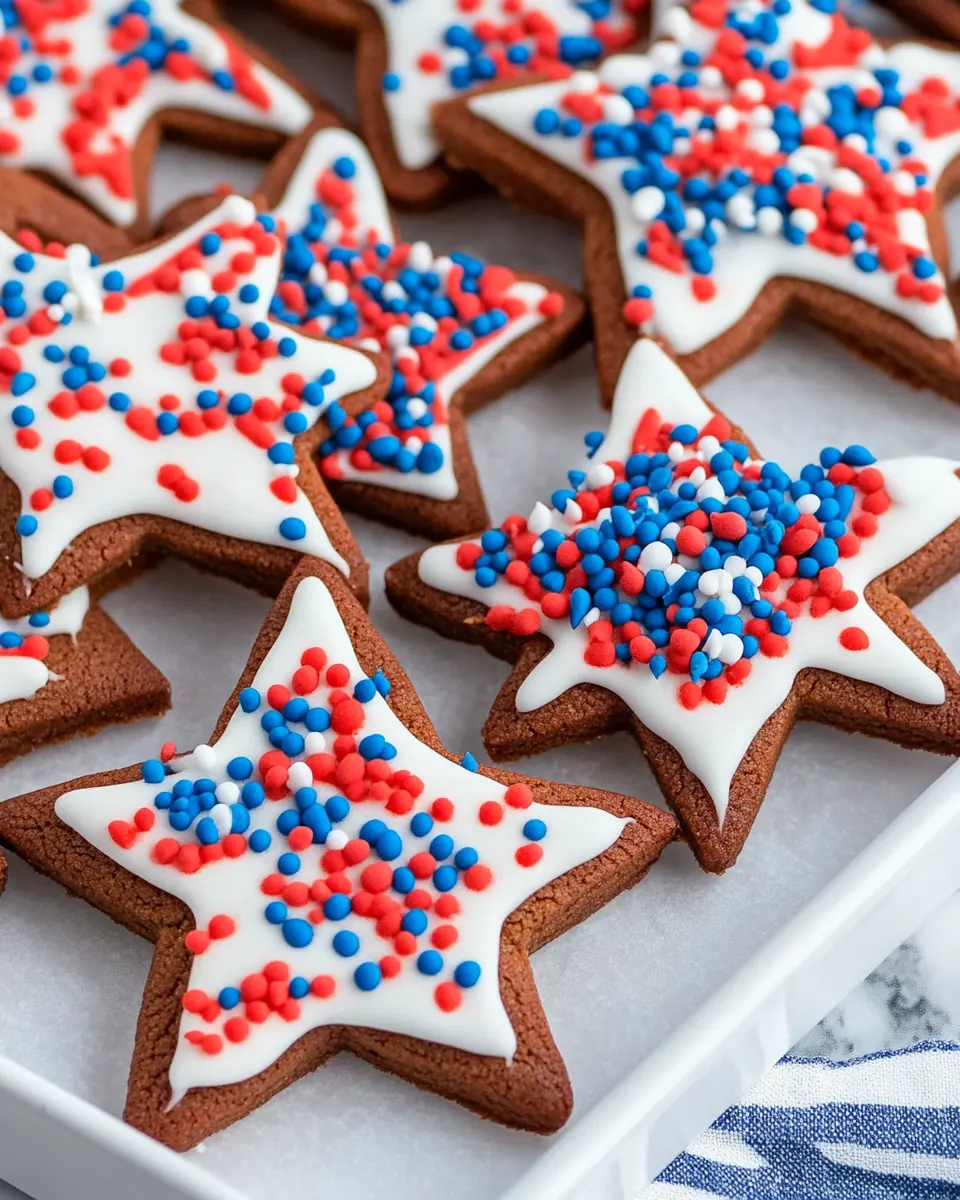
Bake cookies in star shapes as directed in recipe. Cool.: The kitchen will fill with a buttery, slightly sweet aroma as edges turn golden, signaling a properly baked cookie. Look for firm edges and a slightly soft center, which will firm up as the cookie cools. If you wait for a deep golden brown you risk overbaking and dry cookies. A common error at this stage is opening the oven door frequently, which causes temperature swings and uneven baking. Use an oven light to check progress and rotate pans halfway if your oven heats unevenly. Placing cookies on a light colored sheet helps you better judge the delicate color shift that indicates doneness.
Divide frosting into thirds and color one red and the other blue. Place in pastry bags fit with small star tips.: As they leave the oven, the cookies will emit a warm, toasty smell and feel slightly springy to the touch. Transfer them gently to a wire rack so air circulates underneath and cooling happens evenly. If you stack cookies while warm, they will stick and the frosting will melt into the surface, so give each cookie adequate space to cool completely. A pitfall here is rushing to decorate warm cookies, which leads to smeared frosting and flattened designs. Cooling lends a pleasant firmness that makes decorating predictable and cleaner.
Decorate cookies as desired. Let sit for 1 hour to semi-harden frosting. Frosting won't harden completely so be careful.: When you separate the frosting, it should feel smooth and slightly thick, ready to hold a piped shape. Use small bowls or disposable pastry bags to mix in gel coloring, stirring until the tone is even. Adding color gradually helps you avoid overly intense pigment that can alter texture. Overmixing with added liquid color can make the frosting loose, so stop as soon as the hue is uniform. A frequent mistake is using liquid food dyes, which may thin the frosting; prefer gel dyes for vivid color with minimal volume change.
Store loosely covered for up to 4 days.: Filling bags gives you control over line width and structure. The frosting should feel dense enough to pipe tidy stars and lines, yet pliable so pressure yields consistent flow. Practice a few test dots on parchment to gauge pressure and tip angle, adjusting your grip until the flow is even. One common error is overfilling the bag, which makes it hard to control; fill bags about halfway for the best handling. Keep a damp towel under the bag tip while switching colors to avoid waste and mess.
Decorate cookies as desired: Decorating brings out the joyful part of this recipe, with bright colors and various textures. Start with an outline to frame each star, then fill with swirling patterns or polka dots; sprinkle while the frosting is still tacky to ensure adhesion. Listen for soft tapping sounds when you tap sprinkles on, and watch how the frosting sheen dulls as it starts to set, a visual cue that it is drying correctly. A common problem is applying too much pressure while piping, which floods the edges; steady, gentle pressure creates cleaner lines. If frosting pools, use a small offset spatula to coax it into place quickly.
Let sit for 1 hour to semi harden frosting: During this resting time, a faint sugary scent rises and the frosting surface will lose glossy shine, indicating it is forming a slight crust. This semi hardening helps the cookies be transportable without smudging. Avoid stacking cookies until they reach this stage, as soft frosting will stick and ruin the decorations. A mistake is expecting full hardening; this frosting remains somewhat soft, so handle with care even after an hour.
Frosting won't harden completely so be careful: Accepting that the frosting stays somewhat pliable helps you plan packaging and serving. Use shallow containers and single layers for transport, and allow extra cooling time if your kitchen is warm and humid. Attempting to speed up setting with refrigeration can change texture and cause condensation; instead, keep cookies at room temperature out of direct sunlight. A typical error is stacking cookies in boxes right after decorating, which leads to smudged designs; give them ample space and time to stabilize.
Store loosely covered for up to 4 days: Stored at room temperature in a single layer or with parchment between layers, the cookies will retain taste and texture for several days. You may notice the frosting soften over time, but the cookie base will stay tender and flavorful. Avoid airtight seals that trap moisture if you are in a humid environment, as condensation can make cookies soggy. A common storage pitfall is refrigeration, which can dry the cookie and change the frosting mouthfeel; keep them cool but not chilled.