4th of July Cookies
4th of July Cookies started as a backyard experiment for me the summer I moved into a house with a tiny porch and a big imagination. I remember hauling a box of cookie cutters and a spool of red and blue ribbon, thinking I would make a few festive shapes to share with neighbors. What began as a small project turned into a neighborhood tradition, with kids pressing their tiny palms into star shapes and adults arguing over the perfect swirl of frosting.
That afternoon I learned how joyful simple baking can be. We laughed over lopsided stars, traded decorating tips, and tasted frosting straight from the pastry bag. Every time I make these 4th of July Cookies, I think of that first chaotic, lovely day. The cookies are forgiving, quick to decorate, and endlessly customizable, so they work whether you want a neat cookie platter or a messy, colorful activity for a group.
Over the years I’ve tweaked the approach so the cookies look great even if you are short on time. I keep one batch of plain dough and one chocolate on hand, and I always color frosting in patriotic shades. It’s a simple ritual that brings people together, and honestly, the decorating is half the fun. If you’re hosting a summer get together or looking for an activity that lets everyone help, these cookies are perfect. They invite creativity, conversation, and a lot of smiling faces.
Recipe Snapshot
2 hr 10 mins
120 mins
10 mins
Hard
150 kcal
American
Vegan, Gluten-Free
Desserts
Oven, Pastry bags, Star cookie cutter, Wire rack
The Magic of This 4th of July Cookies
They are crowd friendly
I love how these 4th of July Cookies scale up effortlessly. Whether I am feeding a handful of friends or a whole block, the base dough and frosting multiply without fuss, so you get consistent results each time. That makes them my go to when I know a crowd will stop by.
Decorating is inclusive
I enjoy handing over a tray of cookies and a few piping bags to guests, because everyone can participate. Kids, teens, and adults all find a role, and the activity becomes as memorable as the cookie itself. The simplicity invites experimentation, and that is one reason I always plan plenty of sprinkles.
Visual appeal
These cookies deliver instant festive charm. The star shapes and bold red and blue frosting photograph beautifully, so they are a favorite for party platters and social sharing. I find a mix of plain and chocolate bases gives depth to the display, making the platter look thoughtfully curated with minimal effort.
Flexible and forgiving
I appreciate a recipe that forgives imperfect shaping or uneven frosting. Letting the frosting semi harden gives just enough structure to stack or transport the cookies, and the technique is tolerant of varying piping skills. That relaxed approach lowers stress when I host.
Kid friendly and safe
I love that the steps are simple enough for little hands, yet the result feels celebratory. The process encourages fine motor practice for children, and it becomes a meaningful shared task. For me, food that creates memories is as important as flavor.
Everything You Need for 4th of July Cookies
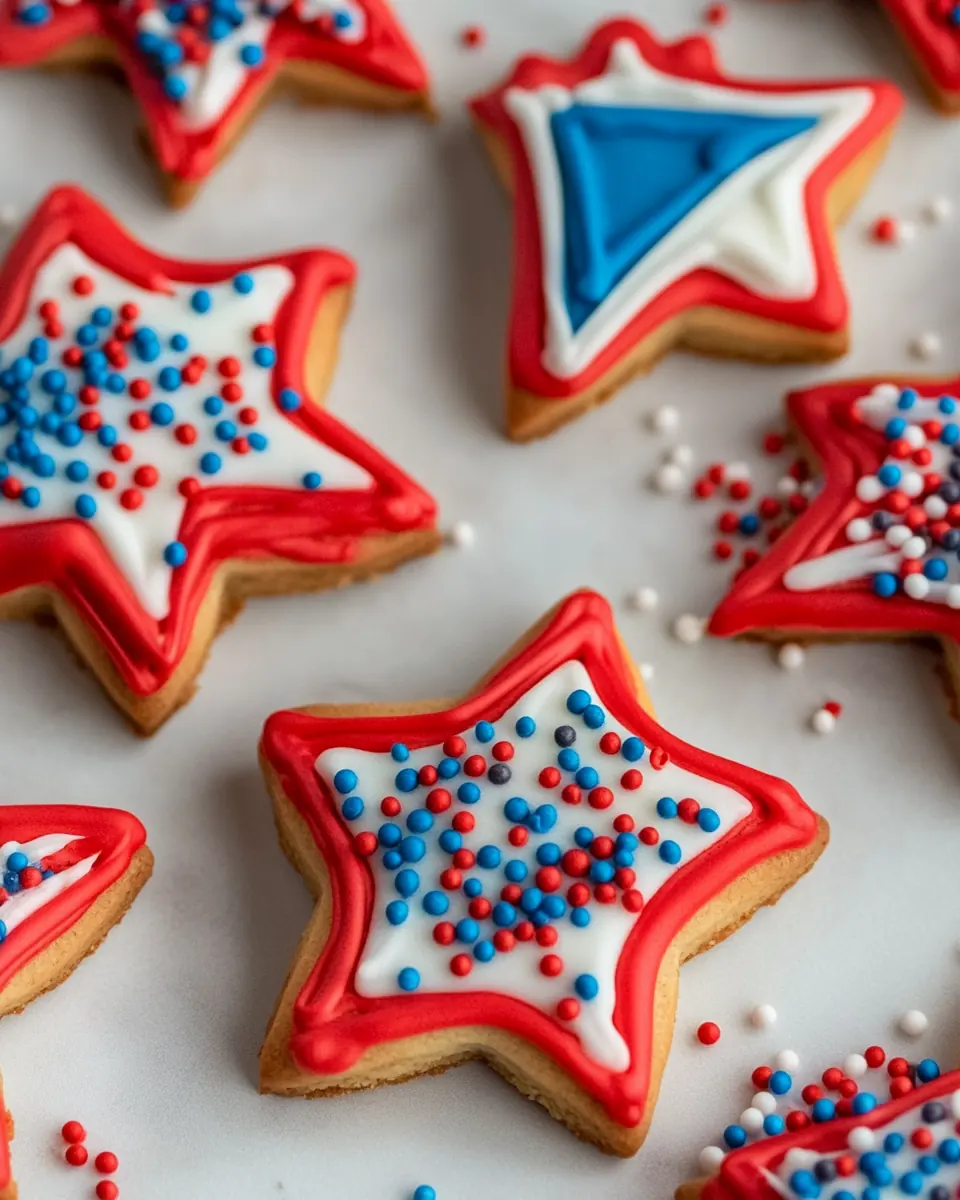
These ingredients are straightforward and reliable, chosen to deliver sturdy cookie shapes and bright, pipeable frosting. The star cookie silhouettes need a dough that holds edges, while the frosting needs enough body to keep color and texture. Each component plays a role in the overall result, from structure to visual pop.
- 1 recipe Cut Out Sugar Cookies or storebought dough: Provides the base cookie dough for classic cut-out shapes, supplying structure and sweetness; use homemade for best flavor or storebought for convenience and time savings. Ensures consistent rolling and clean edges when chilled, making it ideal for stamping or cutter decorations.
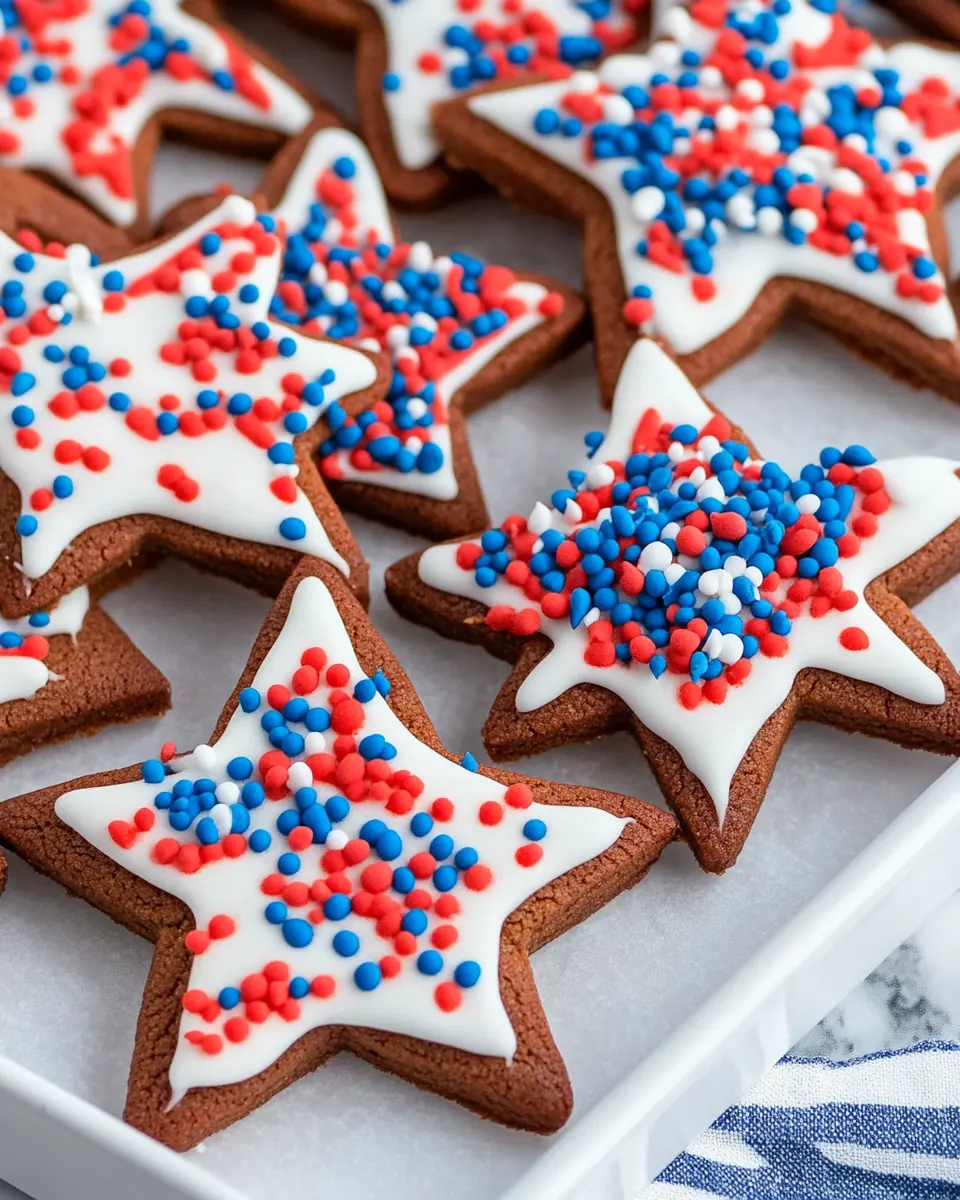
- 1 recipe Chocolate Cut Out Cookies: Creates a rich chocolate variety of cut-out cookies to complement the vanilla sugar cookies, adding visual contrast and flavor depth for the patriotic assortment. Offers sturdy texture for decorating and holds shape well during baking.
- 1 recipe sugar cookie frosting in recipe linked above or 3 cans vanilla frosting: Supplies a smooth, spreadable frosting to adhere decorations and add sweetness; use the linked homemade recipe for tailored flavor or three cans of vanilla frosting for a quick, consistent result. Allows coloring and piping, providing a canvas for red and blue designs.
- Red and blue food coloring: Offers concentrated color for tinting frosting to bright red and blue hues, enabling vibrant patriotic decorations without altering consistency. Allows precise color control by adding drops incrementally until the desired shade is achieved.
- Sprinkles (optional): Adds optional texture, shine, and festive detail to decorated cookies, enhancing appearance with sprinkles in coordinating colors or shapes. Provides an easy way to increase visual interest and celebrate the holiday theme.
Preparation Steps for 4th of July Cookies
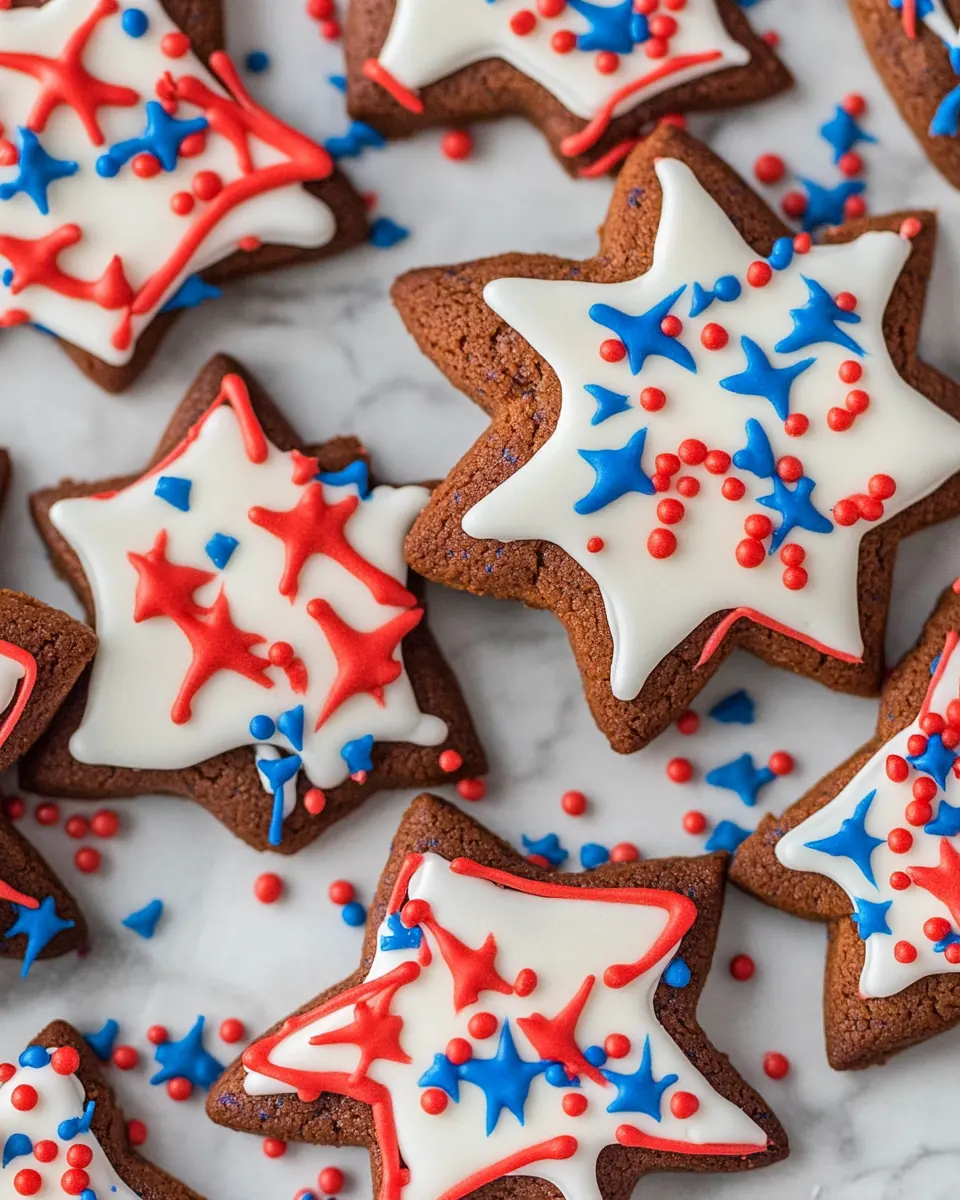
These instructions are relaxed and approachable, written to guide you through baking and decorating with confidence. I break down each action so you can focus on the sensory cues and avoid common pitfalls while creating festive cookies.
- Bake cookies in star shapes as directed in recipe. Cool.: The kitchen will fill with a buttery, slightly sweet aroma as edges turn golden, signaling a properly baked cookie. Look for firm edges and a slightly soft center, which will firm up as the cookie cools. If you wait for a deep golden brown you risk overbaking and dry cookies. A common error at this stage is opening the oven door frequently, which causes temperature swings and uneven baking. Use an oven light to check progress and rotate pans halfway if your oven heats unevenly. Placing cookies on a light colored sheet helps you better judge the delicate color shift that indicates doneness.
- Divide frosting into thirds and color one red and the other blue. Place in pastry bags fit with small star tips.: As they leave the oven, the cookies will emit a warm, toasty smell and feel slightly springy to the touch. Transfer them gently to a wire rack so air circulates underneath and cooling happens evenly. If you stack cookies while warm, they will stick and the frosting will melt into the surface, so give each cookie adequate space to cool completely. A pitfall here is rushing to decorate warm cookies, which leads to smeared frosting and flattened designs. Cooling lends a pleasant firmness that makes decorating predictable and cleaner.
- Decorate cookies as desired. Let sit for 1 hour to semi-harden frosting. Frosting won't harden completely so be careful.: When you separate the frosting, it should feel smooth and slightly thick, ready to hold a piped shape. Use small bowls or disposable pastry bags to mix in gel coloring, stirring until the tone is even. Adding color gradually helps you avoid overly intense pigment that can alter texture. Overmixing with added liquid color can make the frosting loose, so stop as soon as the hue is uniform. A frequent mistake is using liquid food dyes, which may thin the frosting; prefer gel dyes for vivid color with minimal volume change.
- Store loosely covered for up to 4 days.: Filling bags gives you control over line width and structure. The frosting should feel dense enough to pipe tidy stars and lines, yet pliable so pressure yields consistent flow. Practice a few test dots on parchment to gauge pressure and tip angle, adjusting your grip until the flow is even. One common error is overfilling the bag, which makes it hard to control; fill bags about halfway for the best handling. Keep a damp towel under the bag tip while switching colors to avoid waste and mess.
- Decorate cookies as desired: Decorating brings out the joyful part of this recipe, with bright colors and various textures. Start with an outline to frame each star, then fill with swirling patterns or polka dots; sprinkle while the frosting is still tacky to ensure adhesion. Listen for soft tapping sounds when you tap sprinkles on, and watch how the frosting sheen dulls as it starts to set, a visual cue that it is drying correctly. A common problem is applying too much pressure while piping, which floods the edges; steady, gentle pressure creates cleaner lines. If frosting pools, use a small offset spatula to coax it into place quickly.
- Let sit for 1 hour to semi harden frosting: During this resting time, a faint sugary scent rises and the frosting surface will lose glossy shine, indicating it is forming a slight crust. This semi hardening helps the cookies be transportable without smudging. Avoid stacking cookies until they reach this stage, as soft frosting will stick and ruin the decorations. A mistake is expecting full hardening; this frosting remains somewhat soft, so handle with care even after an hour.
- Frosting won't harden completely so be careful: Accepting that the frosting stays somewhat pliable helps you plan packaging and serving. Use shallow containers and single layers for transport, and allow extra cooling time if your kitchen is warm and humid. Attempting to speed up setting with refrigeration can change texture and cause condensation; instead, keep cookies at room temperature out of direct sunlight. A typical error is stacking cookies in boxes right after decorating, which leads to smudged designs; give them ample space and time to stabilize.
- Store loosely covered for up to 4 days: Stored at room temperature in a single layer or with parchment between layers, the cookies will retain taste and texture for several days. You may notice the frosting soften over time, but the cookie base will stay tender and flavorful. Avoid airtight seals that trap moisture if you are in a humid environment, as condensation can make cookies soggy. A common storage pitfall is refrigeration, which can dry the cookie and change the frosting mouthfeel; keep them cool but not chilled.
Making Adjustments
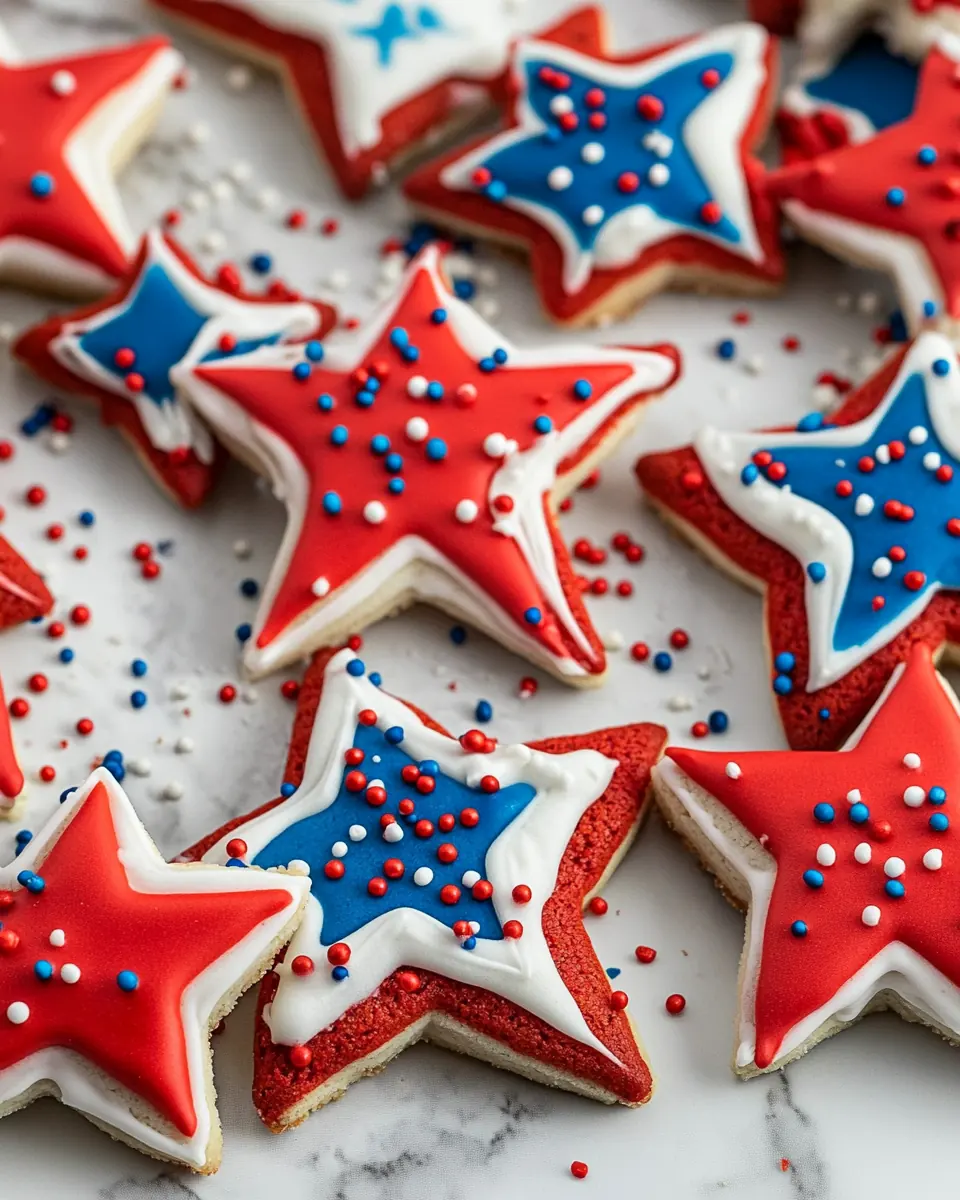
I often tweak small elements depending on the gathering or the helpers I have. These adjustments focus on texture, color intensity, and how portable the cookies need to be. Below are detailed tips to help you adapt the recipe without losing the spirit of the cookies.
- Choose the right dough, if you want crisp edges for clean star shapes, use a chilled sugar or chocolate cut out dough. Refrigeration keeps butter firm so cookies retain definition during baking, which is essential when using intricate cutters.
- Use gel food coloring, gels deliver vibrant red and blue without adding excess liquid that can thin frosting. Add a tiny amount at a time and stir until uniform to avoid overshooting the desired shade.
- Stabilize frosting for piping, if your frosting seems loose, chill it briefly to firm up slightly before filling pastry bags. A cooler frosting holds shape better, making detailed decorating much simpler and neater for less experienced decorators.
- Prep decorating stations, set out piping bags, tips, and sprinkles on a tray so guests can move around easily. Having everything organized reduces spills and keeps the experience fun rather than chaotic.
- Portability planning, when you need to transport cookies, use flat, shallow containers and a single layer arrangement. Place parchment between layers and avoid stacking until frosting has set to the point where it will not smear.
- Mix base varieties, include both sugar and chocolate cut out cookies for visual and flavor contrast on the platter. It elevates the presentation and gives guests a choice, making the selection feel thoughtful and festive.
What to Serve With 4th of July Cookies
These cookies shine as a festive dessert, but pairing them thoughtfully makes a full celebration menu feel cohesive. I usually consider the setting, whether it is a picnic, an evening barbecue, or a neighborhood block party, and select accompaniments that are easy to serve and complement the sweet flavors.
- Picnic friendly, pack cookies alongside chilled lemonade in mason jars for a classic summer pairing. The bright citrus helps balance the sweetness and makes a colorful spread that is easy to carry to a park or porch.
- Barbecue dessert, serve cookies on a platter after grilled mains, allowing guests to nibble as they chat. The festive shapes work especially well when the meal is casual, and the cookies provide a quick, no fuss finish to the menu.
- Kids party, set up a decorating table with extra frosting colors and sprinkles. This turns dessert into an activity, keeps little hands busy, and doubles as entertainment during a lively gathering.
- Seasonal timing, these cookies fit summer events like backyard July celebrations, pool parties, or a laid back evening with string lights. Their colors echo the season and boost the mood of outdoor entertaining.
- Storage guidance, if you need to prepare ahead, bake cookies up to two days before and keep them loosely covered at room temperature; decorate the day of the event for the freshest look. For multi day storage up to four days, use single layer containers with parchment to prevent smudging.
- Occasion versatility, while they are perfect for patriotic holidays, the same method works for any themed celebration simply by swapping colors. This makes the recipe a flexible go to for birthdays, school events, and neighborhood gatherings.
FAQ
Conclusion
What makes these cookies special is their blend of simplicity and festive flair, offering both reliable baking and playful decorating. They bring people together, whether for a casual backyard gathering or a lively neighborhood party, and their colorful presentation lifts the mood. Give them a try at your next summer event, and invite a few friends to help with the piping; the shared activity is half the fun. Enjoy the smiles that come with every imperfectly perfect star.
4th of July Cookies
Ingredients
Equipment
Method
- Bake cookies in star shapes as directed in recipe. Cool.: The kitchen will fill with a buttery, slightly sweet aroma as edges turn golden, signaling a properly baked cookie. Look for firm edges and a slightly soft center, which will firm up as the cookie cools. If you wait for a deep golden brown you risk overbaking and dry cookies. A common error at this stage is opening the oven door frequently, which causes temperature swings and uneven baking. Use an oven light to check progress and rotate pans halfway if your oven heats unevenly. Placing cookies on a light colored sheet helps you better judge the delicate color shift that indicates doneness.
- Divide frosting into thirds and color one red and the other blue. Place in pastry bags fit with small star tips.: As they leave the oven, the cookies will emit a warm, toasty smell and feel slightly springy to the touch. Transfer them gently to a wire rack so air circulates underneath and cooling happens evenly. If you stack cookies while warm, they will stick and the frosting will melt into the surface, so give each cookie adequate space to cool completely. A pitfall here is rushing to decorate warm cookies, which leads to smeared frosting and flattened designs. Cooling lends a pleasant firmness that makes decorating predictable and cleaner.
- Decorate cookies as desired. Let sit for 1 hour to semi-harden frosting. Frosting won't harden completely so be careful.: When you separate the frosting, it should feel smooth and slightly thick, ready to hold a piped shape. Use small bowls or disposable pastry bags to mix in gel coloring, stirring until the tone is even. Adding color gradually helps you avoid overly intense pigment that can alter texture. Overmixing with added liquid color can make the frosting loose, so stop as soon as the hue is uniform. A frequent mistake is using liquid food dyes, which may thin the frosting; prefer gel dyes for vivid color with minimal volume change.
- Store loosely covered for up to 4 days.: Filling bags gives you control over line width and structure. The frosting should feel dense enough to pipe tidy stars and lines, yet pliable so pressure yields consistent flow. Practice a few test dots on parchment to gauge pressure and tip angle, adjusting your grip until the flow is even. One common error is overfilling the bag, which makes it hard to control; fill bags about halfway for the best handling. Keep a damp towel under the bag tip while switching colors to avoid waste and mess.
- Decorate cookies as desired: Decorating brings out the joyful part of this recipe, with bright colors and various textures. Start with an outline to frame each star, then fill with swirling patterns or polka dots; sprinkle while the frosting is still tacky to ensure adhesion. Listen for soft tapping sounds when you tap sprinkles on, and watch how the frosting sheen dulls as it starts to set, a visual cue that it is drying correctly. A common problem is applying too much pressure while piping, which floods the edges; steady, gentle pressure creates cleaner lines. If frosting pools, use a small offset spatula to coax it into place quickly.
- Let sit for 1 hour to semi harden frosting: During this resting time, a faint sugary scent rises and the frosting surface will lose glossy shine, indicating it is forming a slight crust. This semi hardening helps the cookies be transportable without smudging. Avoid stacking cookies until they reach this stage, as soft frosting will stick and ruin the decorations. A mistake is expecting full hardening; this frosting remains somewhat soft, so handle with care even after an hour.
- Frosting won't harden completely so be careful: Accepting that the frosting stays somewhat pliable helps you plan packaging and serving. Use shallow containers and single layers for transport, and allow extra cooling time if your kitchen is warm and humid. Attempting to speed up setting with refrigeration can change texture and cause condensation; instead, keep cookies at room temperature out of direct sunlight. A typical error is stacking cookies in boxes right after decorating, which leads to smudged designs; give them ample space and time to stabilize.
- Store loosely covered for up to 4 days: Stored at room temperature in a single layer or with parchment between layers, the cookies will retain taste and texture for several days. You may notice the frosting soften over time, but the cookie base will stay tender and flavorful. Avoid airtight seals that trap moisture if you are in a humid environment, as condensation can make cookies soggy. A common storage pitfall is refrigeration, which can dry the cookie and change the frosting mouthfeel; keep them cool but not chilled.
Notes
- Choose the right dough, if you want crisp edges for clean star shapes, use a chilled sugar or chocolate cut out dough. Refrigeration keeps butter firm so cookies retain definition during baking, which is essential when using intricate cutters.
- Use gel food coloring, gels deliver vibrant red and blue without adding excess liquid that can thin frosting. Add a tiny amount at a time and stir until uniform to avoid overshooting the desired shade.
- Stabilize frosting for piping, if your frosting seems loose, chill it briefly to firm up slightly before filling pastry bags. A cooler frosting holds shape better, making detailed decorating much simpler and neater for less experienced decorators.
- Prep decorating stations, set out piping bags, tips, and sprinkles on a tray so guests can move around easily. Having everything organized reduces spills and keeps the experience fun rather than chaotic.
- Portability planning, when you need to transport cookies, use flat, shallow containers and a single layer arrangement. Place parchment between layers and avoid stacking until frosting has set to the point where it will not smear.
- Mix base varieties, include both sugar and chocolate cut out cookies for visual and flavor contrast on the platter. It elevates the presentation and gives guests a choice, making the selection feel thoughtful and festive.