Preheat the oven to 350 degrees. Lightly grease a 9-inch round cake pan, set aside.: The oven needs to be uniformly warm so the cake rises evenly and develops a light crust. You should feel a gentle heat when you open the oven, and the preheat signal on modern ovens usually helps, but I often wait five extra minutes after the indicator to ensure stability. Visually, the internal oven light will show no cold spots around the rack. A common mistake is placing the pan too low, which can brown the bottom too quickly; position the rack in the center for even heat.
Whisk eggs and melted butter. Stir in flour, sugar, and almond extract, mixing well. Pour batter into cake pan and sprinkle with sliced almonds.: Greasing the pan prevents sticking and helps release the cake cleanly, leaving a lovely edge. I swirl softened butter or use a baking spray and then lightly dust with flour, tapping out the excess. The surface should look evenly coated, not glistening with pools of oil. If you skip this step, the cake may adhere to the sides, tearing when you try to remove it. Using parchment on the bottom is another safe option for a perfect release.
Bake for 25-35 minutes, until a toothpick comes out clean. Cool and sprinkle with powdered sugar.: At this stage you will notice the butter adds a glossy sheen to the eggs , and the mixture takes on a fragrant, rich aroma. Whisk until the combination is smooth and slightly foamy, which indicates air has been incorporated for lift. The mixture should be homogenous with no visible streaks. If the butter is too hot it will begin to cook the eggs and create small cooked bits, so aim for warm rather than hot butter. A frequent error is rushing and ending up with separated or curdled texture.
Stir in flour, sugar, and almond extract, mixing well: When you add the dry flour and sugar , and the almond extract , the batter will thicken and take on a sweet, nutty perfume. I fold gently until the flour is fully hydrated and there are no dry streaks, using smooth, patient strokes rather than aggressive stirring. Look for a batter that is cohesive and has a ribbon like flow as you lift the spoon. Overmixing after adding the flour is a common issue that can lead to a tougher crumb, so stop as soon as the ingredients are combined.
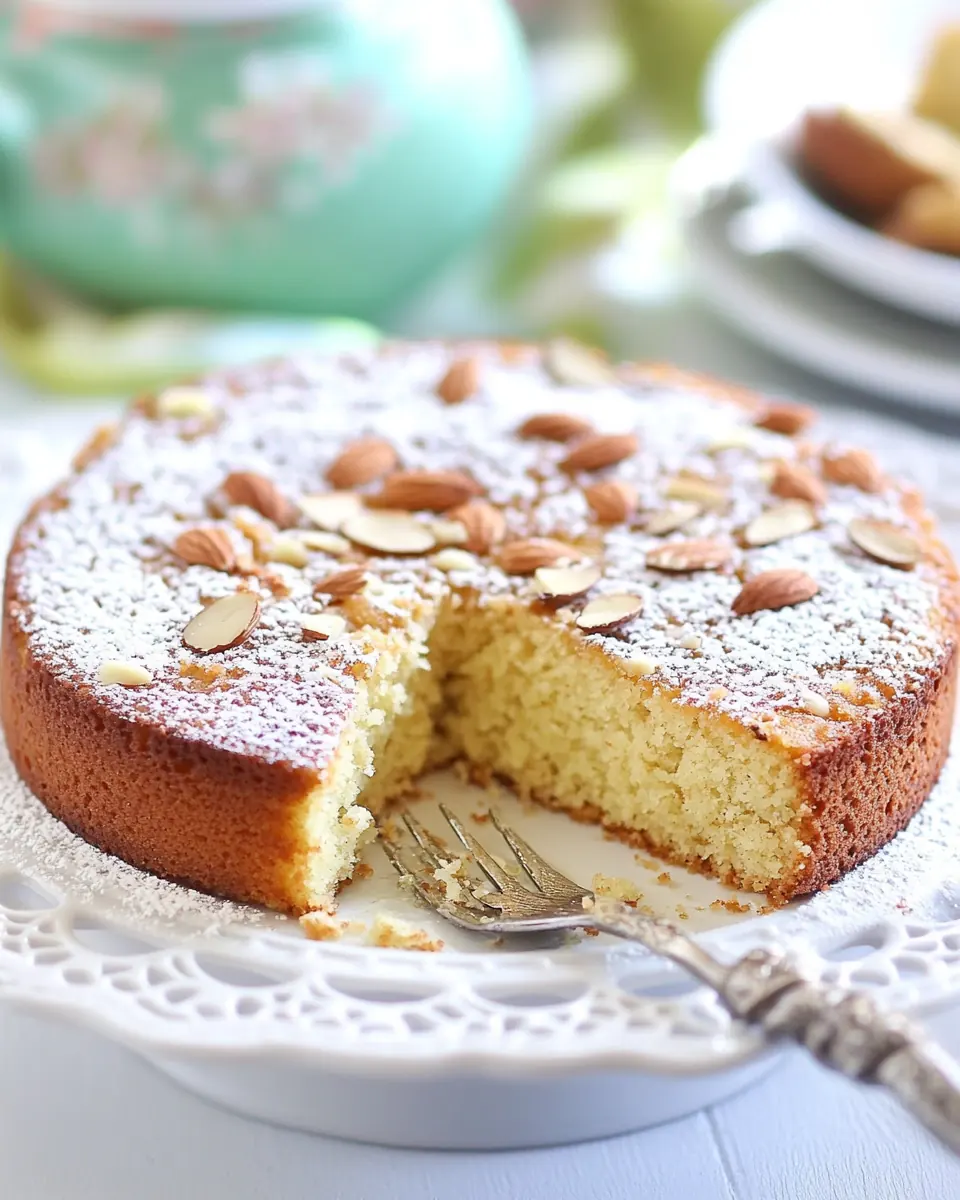
Pour batter into cake pan and sprinkle with sliced almonds: The batter should pour smoothly and settle into the pan without large air pockets. Once poured, sprinkle the sliced almonds evenly across the top so they toast nicely while the cake bakes. The almonds will sizzle softly and take on a golden color, releasing a warm nutty scent. If you heap them in one spot, they can brown unevenly, so spread them out for balance. Pressing them lightly keeps them from falling off the finished slices.
Bake for 25 to 35 minutes, until a toothpick comes out clean: As the cake bakes you will first notice the top set and gain a gentle golden color, and the almond aroma will become more pronounced. The center should spring back slightly when touched and a toothpick inserted in the middle should come out clean or with a few moist crumbs, not wet batter. Oven temperatures vary, so start checking around 25 minutes to avoid overbaking. A common error is leaving the cake too long which dries out the crumb; remove it promptly once it passes the toothpick test.
Cool and sprinkle with powdered sugar: Cooling is essential so the crumb firms and slices cleanly, and powdered sugar stays delicate on the surface. Let the cake rest in the pan for a short time, then transfer to a wire rack to finish cooling. You should feel the cake transition from warm and slightly soft to a stable texture that is easy to slice. If you dust powdered sugar too soon while the cake is still warm, it will melt and lose its decorative look. A typical mistake is slicing too hot, which can create a gummy texture; wait until it is comfortable to touch.