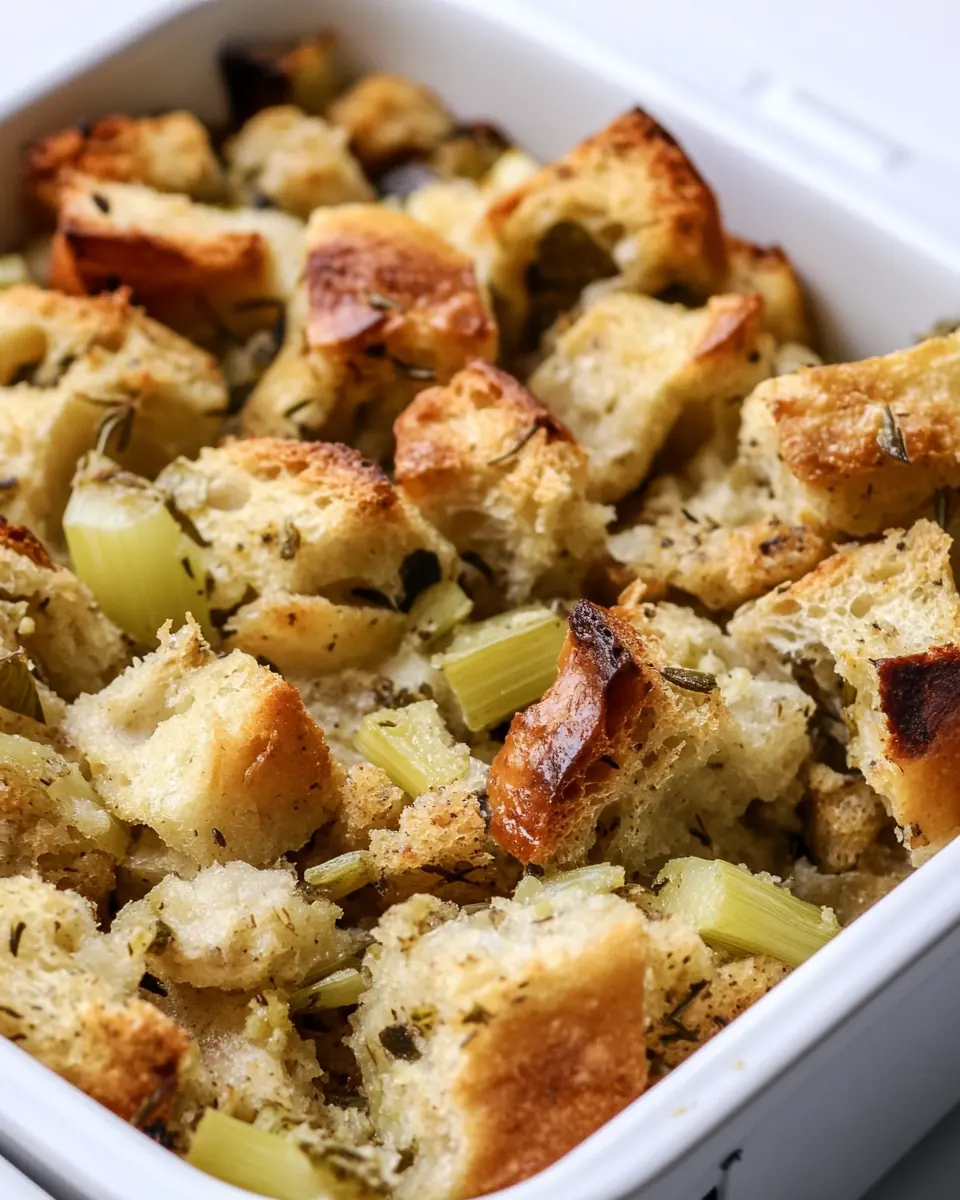
In large skillet over medium-high heat, melt butter until foaming. Add onion and celery and sauté until translucent, about 7 to 8 minutes. Meanwhile, whisk eggs in large bowl. Stir in broth, 1 teaspoon salt, and 1/2 teaspoon pepper.: The moment the butter melts and begins to bubble, you should notice a glossy sheen and a soft, nutty scent rising from the pan, which signals that the fat is hot enough to gently cook aromatics. Keep the heat controlled so the butter does not brown too quickly, because that will change the flavor profile and can lead to a bitter edge, which we do not want. A common mistake here is turning the heat too high; you will hear a sharp sizzling and see dark flecks if the butter is scorching. I usually swirl the pan a few times to distribute the heat evenly and wait until the foam settles before adding the next ingredients.
To skillet, add parsley, sage, thyme, and marjoram until fragrant, about 30 seconds. Transfer to bowl with eggs and mix well. Add bread cubes and toss to combine.: As the onion and celery cook, pay attention to the change in color and texture; the onion should go from opaque to glassy, and the celery softens and releases a faint, sweet aroma. You may hear a steady, gentle sizzle and see small bubbles around the pieces, which indicates even cooking. This step builds the savory base, and if you rush it you lose the depth of flavor that comes from slow softening. Stir occasionally to prevent sticking and aim for an even translucence rather than any browning. If the pan looks dry, add a splash more butter or lower the heat to avoid burning.
Preheat a 3-quart or higher air fryer to 350 degrees. Transfer stuffing to air fryer basket (I use a 5.8-quart and put the mixture in the basket).: While the aromatics are cooking, whisk the eggs briskly until the mixture becomes slightly frothy, which helps them incorporate smoothly into the stuffing. You should notice a uniform pale yellow color and a silky texture, and whisking well prevents streaks of raw egg when you combine the ingredients. Many people under-whisk at this stage and end up with uneven binding; aim for a consistent, lightly aerated mixture so the custardy interior forms evenly during cooking.
Air fry at 350 degrees for 15 minutes. Remove from air fryer, transfer to a serving dish, and keep warm until serving time.: Add the warm chicken broth to the beaten eggs so the liquid blends without shocking and partially cooking the eggs. The combined mixture should smear smoothly across the bowl without graininess. This step ensures the seasoning disperses evenly; taste the broth beforehand if it is store-bought, as sodium levels vary. A common oversight is adding cold broth, which can cool the egg mixture and affect texture, so I usually warm the broth slightly before mixing.
To skillet, add parsley, sage, thyme, and marjoram until fragrant, about 30 seconds: Return the skillet briefly to the heat and stir in the minced herbs just long enough for their oils to bloom, releasing a green, aromatic steam. You will notice the scent intensify rapidly, which is the moment to pull the pan off the heat to prevent the herbs from drying out. Overcooking herbs can make them dull; a quick toss for about 30 seconds is perfect. If you let the herbs sit too long in hot fat, they may take on a cooked, muted quality rather than the bright lift you want.
Transfer to bowl with eggs and mix well: Pour the fragrant skillet contents into the bowl with the egg and broth mixture so the warm aromatics meld into the binder. The temperature differential should be modest; you want the warm ingredients to soften the bread cubes rather than scramble the eggs. Mix until the ingredients appear evenly distributed and the liquid clings to the mixture in glossy streaks. If you find areas of dry bread, fold gently to encourage absorption rather than overmixing, which can break down the cubes.
Add bread cubes and toss to combine: Add the dried French bread cubes and toss them thoroughly so each piece is coated; you should see the liquid lightly soak in and the cubes darken slightly as they absorb moisture. The texture should be cohesive but not soupy, with individual cubes retaining some shape. A frequent mistake is adding too much broth at once, which makes the mixture soggy; pour gradually if you need more moisture. Let the mixture rest for a few minutes to allow the bread to take up the liquid evenly before transferring to the air fryer.
Preheat a 3-quart or higher air fryer to 350 degrees: Preheating an Air Fryer ensures the cooking environment starts at the correct temperature for even browning. You should hear the machine kick on and the control panel indicate the set temperature; most units take a few minutes to stabilize. An underheated basket can lead to long, uneven cook times, while an overheated one may brown the outside too quickly. If your model runs hot, allow a minute or two after preheating before adding the stuffing.
Transfer stuffing to air fryer basket (I use a 5.8-quart and put the mixture in the basket): Move the combined mixture into the preheated basket, spreading it into an even layer so air circulates around the pieces. You should notice the arrangement is not packed tightly, because air flow is necessary for crisping. If you mound the mixture, the center will remain undercooked and dense; instead, arrange it in a single, roomy layer. Use an oven-safe dish sized to fit the basket if your air fryer setup requires it, and be mindful of hot handles when placing it in the unit.
Air fry at 350 degrees for 15 minutes: During this final step, expect the top to develop a golden color and a gentle crispness while the interior becomes custardy and cohesive. Listen for a low crackle as the butter finishes rendering and the bread edges toast; you will also smell an intensified herb and toasted-bread aroma. If the top browns too quickly, reduce the temperature slightly and extend the time. A common error is opening the basket too frequently; try to check only once to preserve consistent heat and avoid drying the stuffing out.
Remove from air fryer, transfer to a serving dish, and keep warm until serving time: When done, the stuffing should slide easily from the basket with a lightly crisped top and a moist center. Transfer it promptly to a warm serving dish to prevent the air fryer residual heat from continuing to crisp and potentially dry the mixture. If you need to hold it for a short while, tent loosely with foil to retain warmth and moisture. Overholding without cover can lead to a dry texture, so keep an eye on timing if you are coordinating multiple dishes.