Air Fryer Stuffing
Air Fryer Stuffing is the kind of dish that sneaks into my kitchen on chilly afternoons and instantly fills the house with a warm, savory aroma that makes everyone pause what they are doing.
I remember the first time I tried this method, I was skeptical that an Air Fryer could deliver the same tender interior and slightly crisp top that a big oven casserole gives you. Over time I learned to treat the appliance like a tiny, attentive oven that rewards short bursts of heat with intense flavor. The result is a stuffing that is golden where it should be crisp, and moist in the center where the herbs and broth have mingled with the cubes of bread.
On weeknights when time is tight, I reach for this recipe because it feels like a small act of hospitality, even when it is just for my immediate family. I like that the technique keeps the kitchen cooler than a full oven, and the texture is reliably charming: edges that sing with toasted butter, interiors that yield with a comforting chew. Friends who try it keep asking for the recipe, and I love that it is simple enough to be approachable yet flexible enough to make your own.
Recipe Snapshot
30 mins
5 mins
25 mins
Easy
250 kcal
American
Gluten-Free, Low FODMAP
Side Dishes
Air Fryer
Why This Air Fryer Stuffing Works
Speed without sacrifice
I love that Air Fryer Stuffing cuts down active time dramatically, and I mean it when I say this method saves both time and attention. With just a few minutes of sautéing and a short air fry cycle, you get the layered textures we crave. I often choose this approach when I want the comfort of classic stuffing but I do not have hours to babysit a casserole.
Bright herb flavor
Fresh parsley and the trio of sage, thyme, and marjoram lift the entire dish. I find the herbs cut through the richness of the butter and eggs, adding an herbaceous lift that keeps each bite balanced and interesting. Even if you use dried herbs, they lend a warm background note that feels authentically homestyle.
Butter driven aroma
That first step of melting butter and sautéing onion and celery creates a fragrant foundation that sets expectations for the whole dish. I cannot help but smile when the kitchen fills with that nutty, savory scent, and guests always respond to it. The butter also helps toast the bread edges, giving you those crisp pockets of flavor without drying out the center.
Adaptable texture
One of the reasons I keep coming back to this Air Fryer Stuffing is that it hits a pleasant middle ground between gooey and crisp. The egg and chicken broth bind the cubes so the interior remains tender, while the air fryer produces lightly crunchy surfaces. That contrast keeps every mouthful engaging, and you can tweak it by adjusting air fry time to suit your preference.
Perfect for small batches
I frequently cook for a few people rather than a crowd, and this method is ideal for making just enough. The air fryer makes it easy to prepare a controlled portion that still tastes like the classic holiday stuffing. It is dependable, forgiving, and it stores well for quick reheating, which I appreciate the morning after a big gathering.
Ingredients You’ll Need for Air Fryer Stuffing
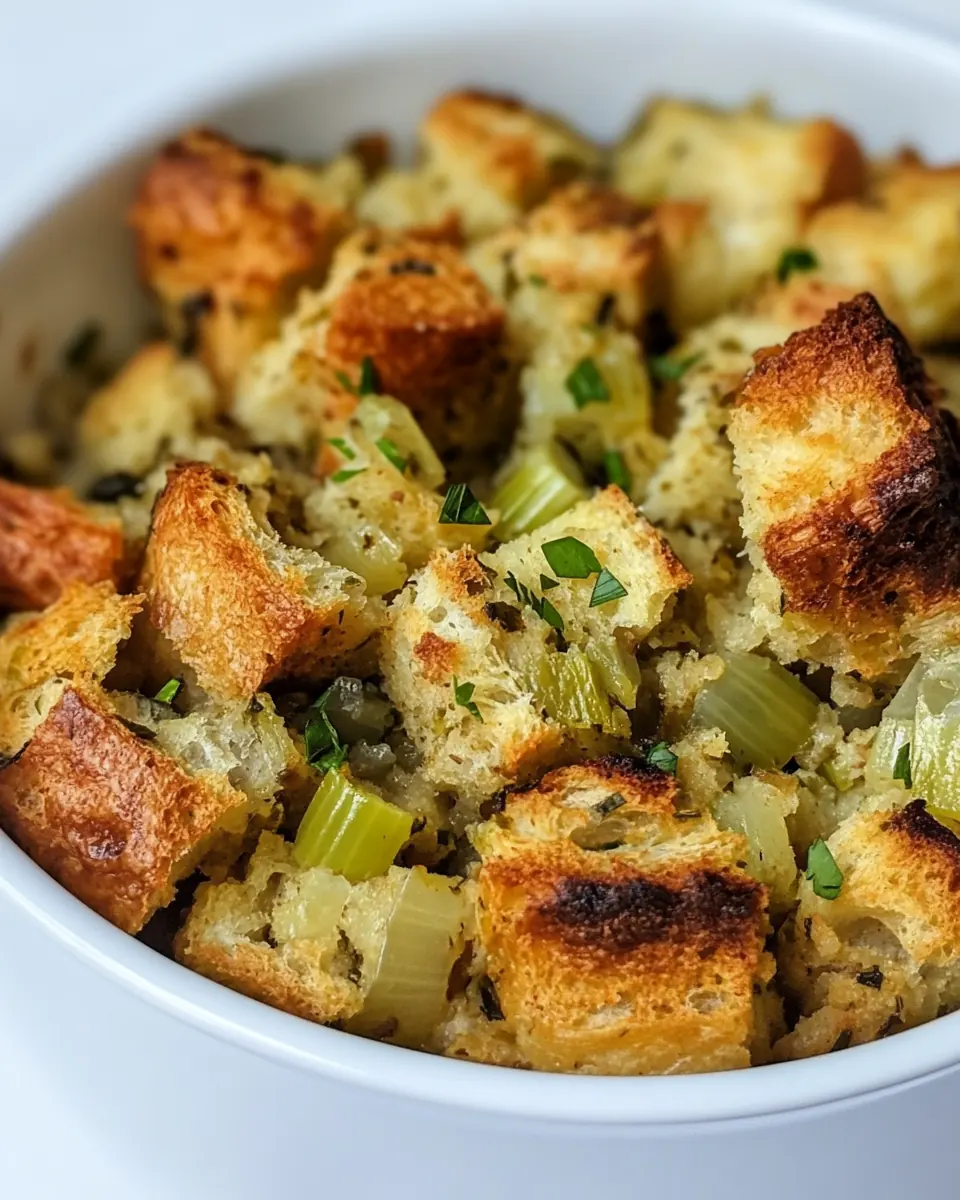
This list is built around a handful of strong players that work in concert to produce classic stuffing texture and flavor. The butter and sautéed onion and celery form a deeply savory base, while the eggs and chicken broth bind the cubes of bread into a tender, cohesive crumb. Fresh herbs finish the dish with bright, aromatic notes that keep the richness lively.
- 1/2 cup butter (1 stick): Melted and rich, provides fat and moisture to bind the stuffing while adding a silky mouthfeel and toasting flavor when sautéing vegetables prior to assembly.
- 1 large onion peeled and chopped: Peeled and chopped, delivers aromatic sweetness and savory depth when softened; helps build the flavor base and adds tender texture to each bite.
- 4 celery ribs halved lengthwise and chopped: Crisp and chopped after halving, contributes vegetal crunch and a subtle bitter note; softens during cooking to complement onion and absorb savory juices.
- 3 eggs: Beaten together, serve as a cohesive binder that helps moisten dry bread cubes and set the mixture into a sliceable or scoopable stuffing texture when cooked.
- 2 cups chicken broth (see note 1): Savory and liquid, used to hydrate the bread cubes and carry seasoning throughout; adjusts overall moisture so the stuffing is neither dry nor soupy.
- salt and freshly ground black pepper: Seasoning with salt and freshly ground black pepper enhances and balances flavors, intensifies aromatics, and provides essential seasoning contrast to richer components.
- 1/2 cup minced fresh parsley (see note 2): Freshly minced, adds a bright, herbal lift and a burst of color; sprinkled through the mixture to freshen and lighten the overall flavor profile.
- 1 teaspoon minced fresh sage or 1/2 teaspoon dried: Finely minced fresh or measured dried, contributes warm, slightly peppery, and pine-like notes that complement poultry flavors and deepen the herbaceous profile.
- 1 teaspoon minced fresh thyme or 1/2 teaspoon dried: Finely minced fresh or measured dried, imparts earthy, lemony, and floral undertones that layer with other herbs to create a nuanced savory base.
- 1 teaspoon minced fresh marjoram or 1/2 teaspoon dried: Finely minced fresh or measured dried, offers delicate floral and sweet herb notes that round out the herb blend and add complexity to the stuffing.
- 1 (1-pound) loaf French bread cut into 1/2-inch cubes and dried overnight on counter (see note 3): Cubed and dried, provides the structural base that soaks up butter, broth, and seasonings; drying overnight helps achieve a crisp exterior and tender interior when air-fried.
Instructions for Air Fryer Stuffing
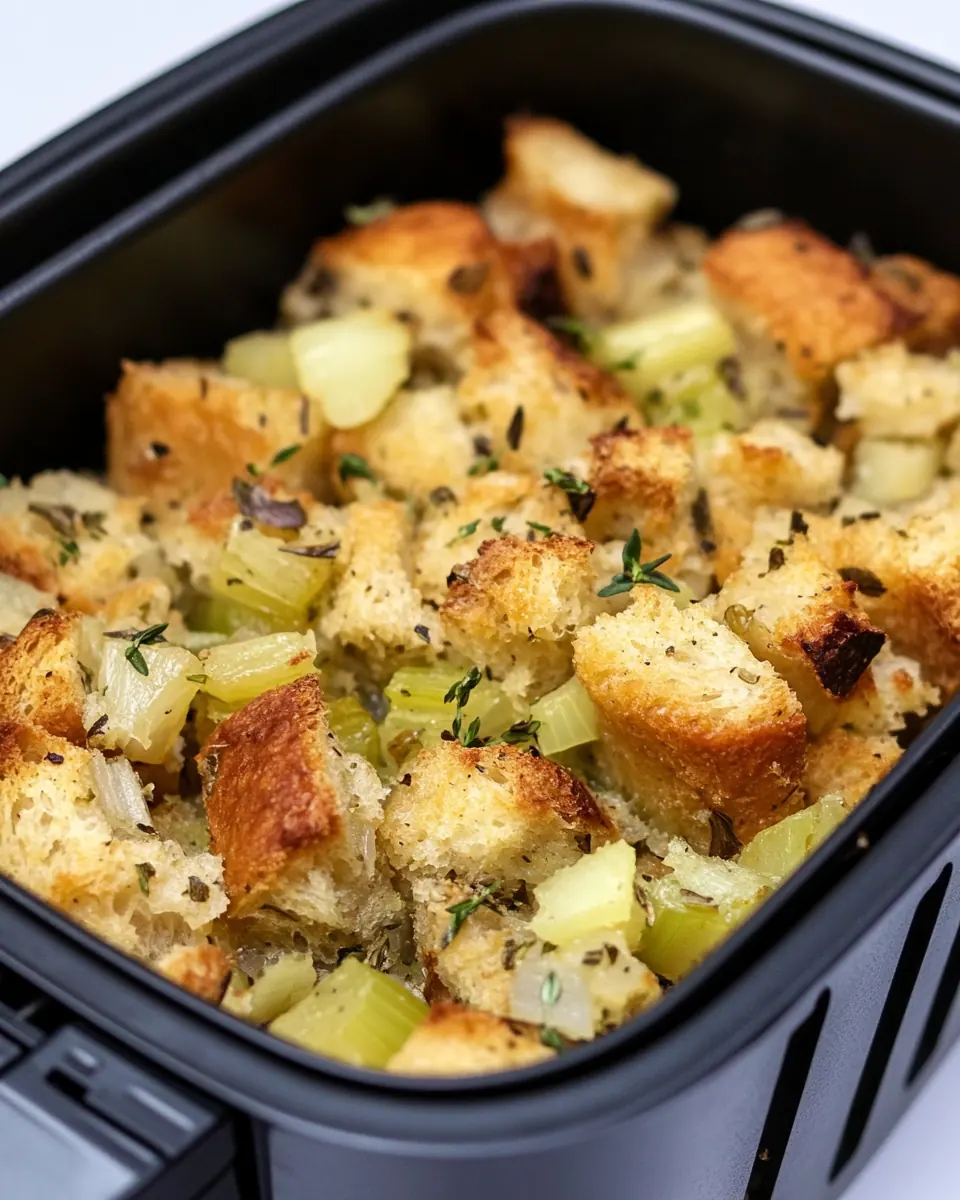
I like to keep the instructional tone friendly and encouraging, as though we are cooking at the same counter. These steps expand on the written directions so you know what sensory cues to watch for and how to avoid common pitfalls.
- In large skillet over medium-high heat, melt butter until foaming. Add onion and celery and sauté until translucent, about 7 to 8 minutes. Meanwhile, whisk eggs in large bowl. Stir in broth, 1 teaspoon salt, and 1/2 teaspoon pepper.: The moment the butter melts and begins to bubble, you should notice a glossy sheen and a soft, nutty scent rising from the pan, which signals that the fat is hot enough to gently cook aromatics. Keep the heat controlled so the butter does not brown too quickly, because that will change the flavor profile and can lead to a bitter edge, which we do not want. A common mistake here is turning the heat too high; you will hear a sharp sizzling and see dark flecks if the butter is scorching. I usually swirl the pan a few times to distribute the heat evenly and wait until the foam settles before adding the next ingredients.
- To skillet, add parsley, sage, thyme, and marjoram until fragrant, about 30 seconds. Transfer to bowl with eggs and mix well. Add bread cubes and toss to combine.: As the onion and celery cook, pay attention to the change in color and texture; the onion should go from opaque to glassy, and the celery softens and releases a faint, sweet aroma. You may hear a steady, gentle sizzle and see small bubbles around the pieces, which indicates even cooking. This step builds the savory base, and if you rush it you lose the depth of flavor that comes from slow softening. Stir occasionally to prevent sticking and aim for an even translucence rather than any browning. If the pan looks dry, add a splash more butter or lower the heat to avoid burning.
- Preheat a 3-quart or higher air fryer to 350 degrees. Transfer stuffing to air fryer basket (I use a 5.8-quart and put the mixture in the basket).: While the aromatics are cooking, whisk the eggs briskly until the mixture becomes slightly frothy, which helps them incorporate smoothly into the stuffing. You should notice a uniform pale yellow color and a silky texture, and whisking well prevents streaks of raw egg when you combine the ingredients. Many people under-whisk at this stage and end up with uneven binding; aim for a consistent, lightly aerated mixture so the custardy interior forms evenly during cooking.
- Air fry at 350 degrees for 15 minutes. Remove from air fryer, transfer to a serving dish, and keep warm until serving time.: Add the warm chicken broth to the beaten eggs so the liquid blends without shocking and partially cooking the eggs. The combined mixture should smear smoothly across the bowl without graininess. This step ensures the seasoning disperses evenly; taste the broth beforehand if it is store-bought, as sodium levels vary. A common oversight is adding cold broth, which can cool the egg mixture and affect texture, so I usually warm the broth slightly before mixing.
- To skillet, add parsley, sage, thyme, and marjoram until fragrant, about 30 seconds: Return the skillet briefly to the heat and stir in the minced herbs just long enough for their oils to bloom, releasing a green, aromatic steam. You will notice the scent intensify rapidly, which is the moment to pull the pan off the heat to prevent the herbs from drying out. Overcooking herbs can make them dull; a quick toss for about 30 seconds is perfect. If you let the herbs sit too long in hot fat, they may take on a cooked, muted quality rather than the bright lift you want.
- Transfer to bowl with eggs and mix well: Pour the fragrant skillet contents into the bowl with the egg and broth mixture so the warm aromatics meld into the binder. The temperature differential should be modest; you want the warm ingredients to soften the bread cubes rather than scramble the eggs. Mix until the ingredients appear evenly distributed and the liquid clings to the mixture in glossy streaks. If you find areas of dry bread, fold gently to encourage absorption rather than overmixing, which can break down the cubes.
- Add bread cubes and toss to combine: Add the dried French bread cubes and toss them thoroughly so each piece is coated; you should see the liquid lightly soak in and the cubes darken slightly as they absorb moisture. The texture should be cohesive but not soupy, with individual cubes retaining some shape. A frequent mistake is adding too much broth at once, which makes the mixture soggy; pour gradually if you need more moisture. Let the mixture rest for a few minutes to allow the bread to take up the liquid evenly before transferring to the air fryer.
- Preheat a 3-quart or higher air fryer to 350 degrees: Preheating an Air Fryer ensures the cooking environment starts at the correct temperature for even browning. You should hear the machine kick on and the control panel indicate the set temperature; most units take a few minutes to stabilize. An underheated basket can lead to long, uneven cook times, while an overheated one may brown the outside too quickly. If your model runs hot, allow a minute or two after preheating before adding the stuffing.
- Transfer stuffing to air fryer basket (I use a 5.8-quart and put the mixture in the basket): Move the combined mixture into the preheated basket, spreading it into an even layer so air circulates around the pieces. You should notice the arrangement is not packed tightly, because air flow is necessary for crisping. If you mound the mixture, the center will remain undercooked and dense; instead, arrange it in a single, roomy layer. Use an oven-safe dish sized to fit the basket if your air fryer setup requires it, and be mindful of hot handles when placing it in the unit.
- Air fry at 350 degrees for 15 minutes: During this final step, expect the top to develop a golden color and a gentle crispness while the interior becomes custardy and cohesive. Listen for a low crackle as the butter finishes rendering and the bread edges toast; you will also smell an intensified herb and toasted-bread aroma. If the top browns too quickly, reduce the temperature slightly and extend the time. A common error is opening the basket too frequently; try to check only once to preserve consistent heat and avoid drying the stuffing out.
- Remove from air fryer, transfer to a serving dish, and keep warm until serving time: When done, the stuffing should slide easily from the basket with a lightly crisped top and a moist center. Transfer it promptly to a warm serving dish to prevent the air fryer residual heat from continuing to crisp and potentially dry the mixture. If you need to hold it for a short while, tent loosely with foil to retain warmth and moisture. Overholding without cover can lead to a dry texture, so keep an eye on timing if you are coordinating multiple dishes.
Change It Up
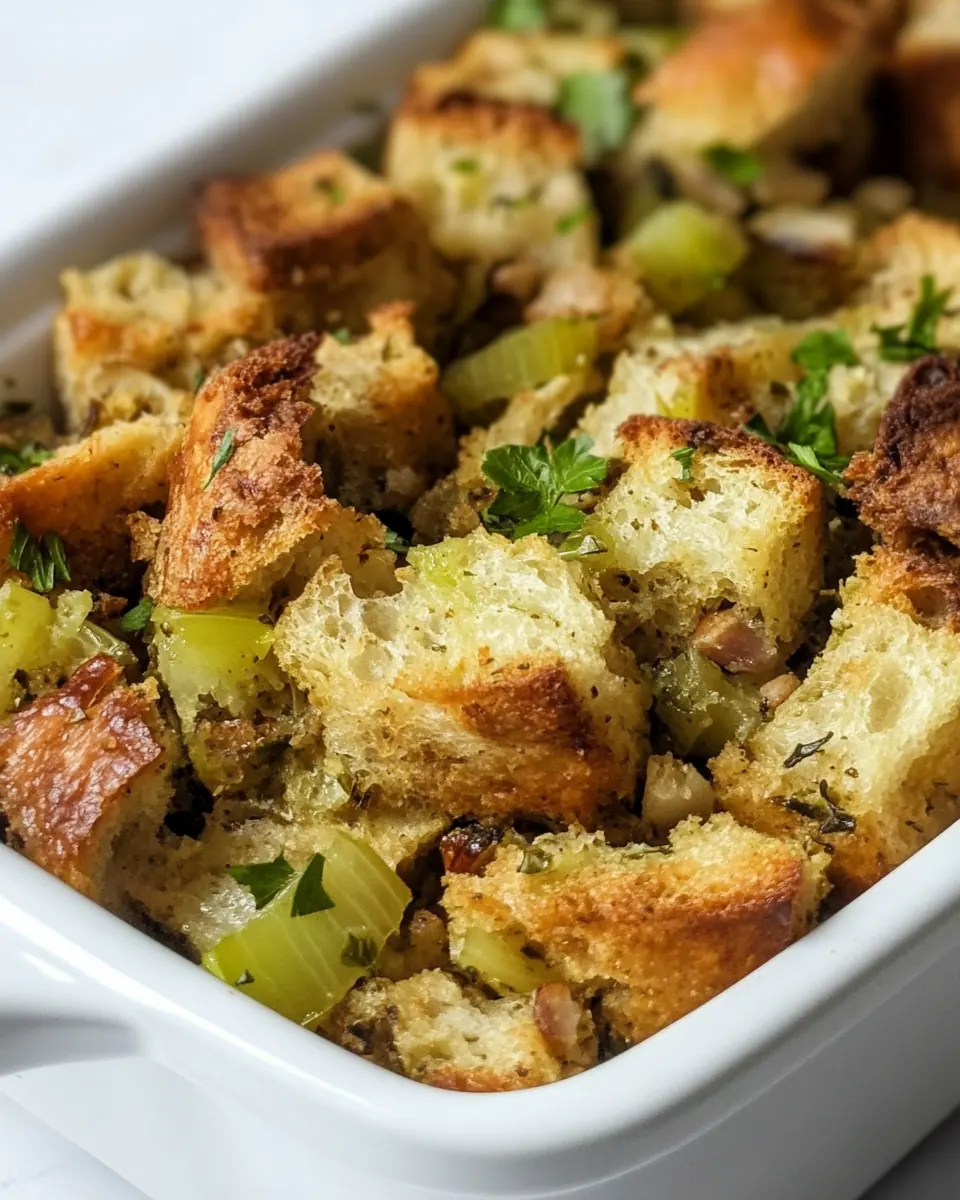
I enjoy offering ideas to tweak texture and flavor while staying true to the spirit of the recipe. Below are practical tips and variations you can try, each expanded into a helpful note so you can pick what suits your needs.
- Use day old bread — Drying the bread for up to three days yields superior texture because the cubes absorb liquid without collapsing, producing a stuffing with a tender interior and pleasantly toasted edges.
- Swap herbs thoughtfully — If you lack fresh marjoram or sage, substitute with secure dried measurements and increase the aromatic herbs slightly to maintain the herbal brightness.
- Control moisture with broth temperature — Warm chicken broth blends better with whisked eggs and prevents partial cooking, so it helps create a uniform custardy interior instead of pockets of cooked egg.
- Adjust crispness by time — For a softer top, cut 3 to 5 minutes from the air fry time, and for extra crunch add 3 to 5 minutes, checking frequently to avoid overbrowning.
- Portion for the air fryer — If your air fryer is smaller, cook in two batches to ensure even heat circulation and consistent crisping across the surface.
- Keep leftovers moist — Store leftover stuffing covered in the refrigerator and reheat gently in a warm oven or in the air fryer at a lower temperature to refresh the texture without drying it out.
How to Enjoy Air Fryer Stuffing
This stuffing is versatile enough for weeknight dinners and holiday spreads alike, and how you serve it will shape the whole meal experience. Below I outline serving ideas, pairings, and storage tips so you can present it with confidence.
- Serve as a classic side — Pair the stuffing with roasted poultry and a simple gravy for a traditional holiday plate that highlights the herb notes and buttery richness.
- Make it part of a cozy dinner — Offer the stuffing alongside roasted vegetables and a light protein for an easy weeknight dinner that feels composed and comforting.
- Adapt for potluck portions — Transfer the stuffing into a shallow baking dish and keep warm in a low oven for transport to gatherings, ensuring it stays moist and inviting.
- Storage and reheating — Refrigerate leftovers in an airtight container for up to four days, and reheat gently in the air fryer or oven to restore some crispness without drying the center.
- Seasonal pairings — This recipe shines in the fall when earthy herbs and root vegetables are abundant; consider serving with roasted squash or braised greens for seasonal balance.
FAQ
Conclusion
This Air Fryer Stuffing stands out for delivering classic stuffing flavor with less time and fuss, offering a tender interior and lightly toasted edges. Give it a try when you want holiday-worthy results without firing up the full oven, or when a cozy weeknight side is needed. I hope it becomes one of those recipes you reach for often, whether you are feeding a crowd or just a few people around your table.
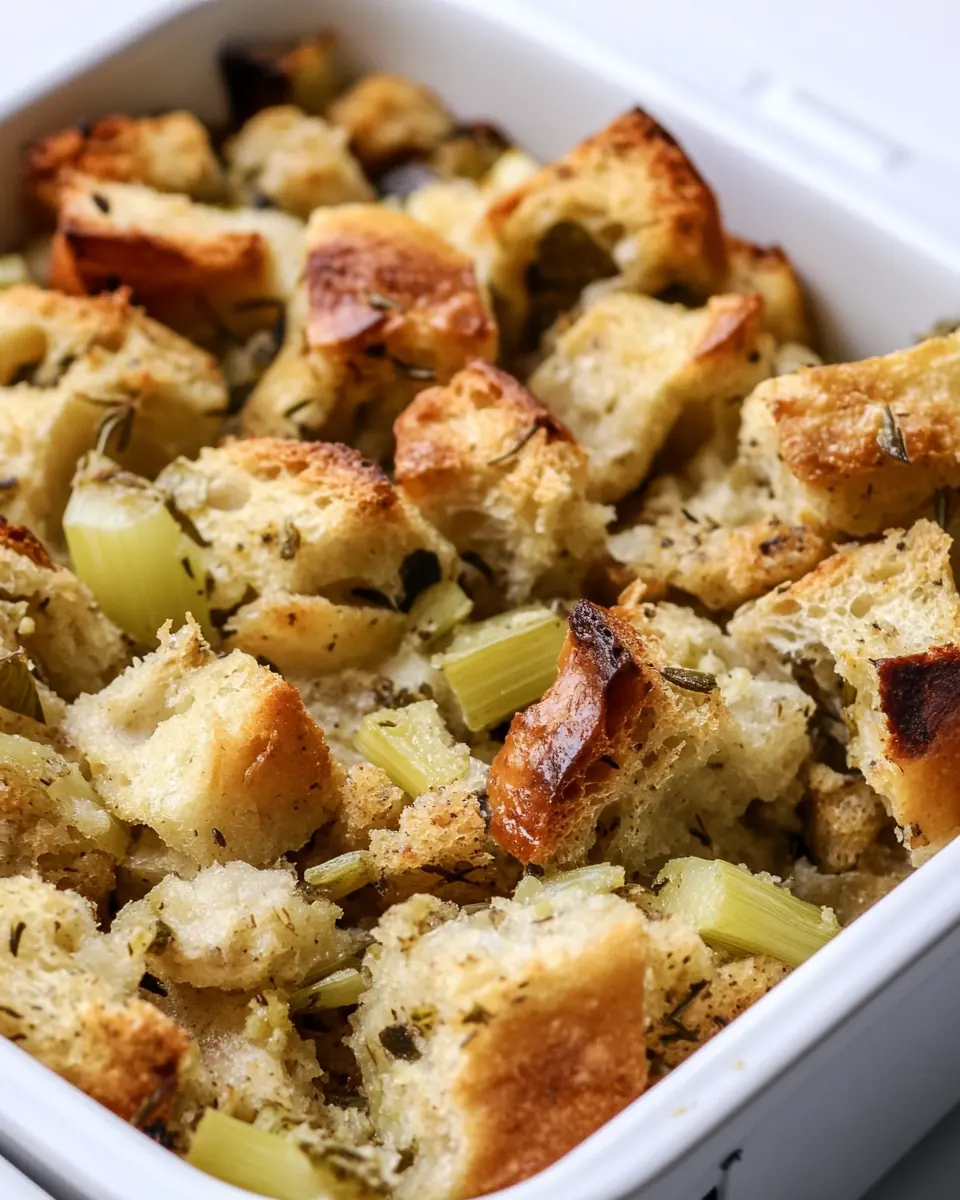
Air Fryer Stuffing
Ingredients
Equipment
Method
- In large skillet over medium-high heat, melt butter until foaming. Add onion and celery and sauté until translucent, about 7 to 8 minutes. Meanwhile, whisk eggs in large bowl. Stir in broth, 1 teaspoon salt, and 1/2 teaspoon pepper.: The moment the butter melts and begins to bubble, you should notice a glossy sheen and a soft, nutty scent rising from the pan, which signals that the fat is hot enough to gently cook aromatics. Keep the heat controlled so the butter does not brown too quickly, because that will change the flavor profile and can lead to a bitter edge, which we do not want. A common mistake here is turning the heat too high; you will hear a sharp sizzling and see dark flecks if the butter is scorching. I usually swirl the pan a few times to distribute the heat evenly and wait until the foam settles before adding the next ingredients.
- To skillet, add parsley, sage, thyme, and marjoram until fragrant, about 30 seconds. Transfer to bowl with eggs and mix well. Add bread cubes and toss to combine.: As the onion and celery cook, pay attention to the change in color and texture; the onion should go from opaque to glassy, and the celery softens and releases a faint, sweet aroma. You may hear a steady, gentle sizzle and see small bubbles around the pieces, which indicates even cooking. This step builds the savory base, and if you rush it you lose the depth of flavor that comes from slow softening. Stir occasionally to prevent sticking and aim for an even translucence rather than any browning. If the pan looks dry, add a splash more butter or lower the heat to avoid burning.
- Preheat a 3-quart or higher air fryer to 350 degrees. Transfer stuffing to air fryer basket (I use a 5.8-quart and put the mixture in the basket).: While the aromatics are cooking, whisk the eggs briskly until the mixture becomes slightly frothy, which helps them incorporate smoothly into the stuffing. You should notice a uniform pale yellow color and a silky texture, and whisking well prevents streaks of raw egg when you combine the ingredients. Many people under-whisk at this stage and end up with uneven binding; aim for a consistent, lightly aerated mixture so the custardy interior forms evenly during cooking.
- Air fry at 350 degrees for 15 minutes. Remove from air fryer, transfer to a serving dish, and keep warm until serving time.: Add the warm chicken broth to the beaten eggs so the liquid blends without shocking and partially cooking the eggs. The combined mixture should smear smoothly across the bowl without graininess. This step ensures the seasoning disperses evenly; taste the broth beforehand if it is store-bought, as sodium levels vary. A common oversight is adding cold broth, which can cool the egg mixture and affect texture, so I usually warm the broth slightly before mixing.
- To skillet, add parsley, sage, thyme, and marjoram until fragrant, about 30 seconds: Return the skillet briefly to the heat and stir in the minced herbs just long enough for their oils to bloom, releasing a green, aromatic steam. You will notice the scent intensify rapidly, which is the moment to pull the pan off the heat to prevent the herbs from drying out. Overcooking herbs can make them dull; a quick toss for about 30 seconds is perfect. If you let the herbs sit too long in hot fat, they may take on a cooked, muted quality rather than the bright lift you want.
- Transfer to bowl with eggs and mix well: Pour the fragrant skillet contents into the bowl with the egg and broth mixture so the warm aromatics meld into the binder. The temperature differential should be modest; you want the warm ingredients to soften the bread cubes rather than scramble the eggs. Mix until the ingredients appear evenly distributed and the liquid clings to the mixture in glossy streaks. If you find areas of dry bread, fold gently to encourage absorption rather than overmixing, which can break down the cubes.
- Add bread cubes and toss to combine: Add the dried French bread cubes and toss them thoroughly so each piece is coated; you should see the liquid lightly soak in and the cubes darken slightly as they absorb moisture. The texture should be cohesive but not soupy, with individual cubes retaining some shape. A frequent mistake is adding too much broth at once, which makes the mixture soggy; pour gradually if you need more moisture. Let the mixture rest for a few minutes to allow the bread to take up the liquid evenly before transferring to the air fryer.
- Preheat a 3-quart or higher air fryer to 350 degrees: Preheating an Air Fryer ensures the cooking environment starts at the correct temperature for even browning. You should hear the machine kick on and the control panel indicate the set temperature; most units take a few minutes to stabilize. An underheated basket can lead to long, uneven cook times, while an overheated one may brown the outside too quickly. If your model runs hot, allow a minute or two after preheating before adding the stuffing.
- Transfer stuffing to air fryer basket (I use a 5.8-quart and put the mixture in the basket): Move the combined mixture into the preheated basket, spreading it into an even layer so air circulates around the pieces. You should notice the arrangement is not packed tightly, because air flow is necessary for crisping. If you mound the mixture, the center will remain undercooked and dense; instead, arrange it in a single, roomy layer. Use an oven-safe dish sized to fit the basket if your air fryer setup requires it, and be mindful of hot handles when placing it in the unit.
- Air fry at 350 degrees for 15 minutes: During this final step, expect the top to develop a golden color and a gentle crispness while the interior becomes custardy and cohesive. Listen for a low crackle as the butter finishes rendering and the bread edges toast; you will also smell an intensified herb and toasted-bread aroma. If the top browns too quickly, reduce the temperature slightly and extend the time. A common error is opening the basket too frequently; try to check only once to preserve consistent heat and avoid drying the stuffing out.
- Remove from air fryer, transfer to a serving dish, and keep warm until serving time: When done, the stuffing should slide easily from the basket with a lightly crisped top and a moist center. Transfer it promptly to a warm serving dish to prevent the air fryer residual heat from continuing to crisp and potentially dry the mixture. If you need to hold it for a short while, tent loosely with foil to retain warmth and moisture. Overholding without cover can lead to a dry texture, so keep an eye on timing if you are coordinating multiple dishes.
Notes
- Use day old bread — Drying the bread for up to three days yields superior texture because the cubes absorb liquid without collapsing, producing a stuffing with a tender interior and pleasantly toasted edges.
- Swap herbs thoughtfully — If you lack fresh marjoram or sage, substitute with secure dried measurements and increase the aromatic herbs slightly to maintain the herbal brightness.
- Control moisture with broth temperature — Warm chicken broth blends better with whisked eggs and prevents partial cooking, so it helps create a uniform custardy interior instead of pockets of cooked egg.
- Adjust crispness by time — For a softer top, cut 3 to 5 minutes from the air fry time, and for extra crunch add 3 to 5 minutes, checking frequently to avoid overbrowning.
- Portion for the air fryer — If your air fryer is smaller, cook in two batches to ensure even heat circulation and consistent crisping across the surface.
- Keep leftovers moist — Store leftover stuffing covered in the refrigerator and reheat gently in a warm oven or in the air fryer at a lower temperature to refresh the texture without drying it out.