Preheat the oven to 350°F. Grease two 5-x-9-inch loaf pans with cooking spray.: You should notice the oven warming and a faint metallic hum as elements engage, which tells you the environment is stabilizing. Warm air circulating evenly is essential because it ensures a consistent rise and an even crust color. If your oven runs hot or cold, an oven thermometer will help you adjust. Avoid opening the door repeatedly, as that cools the oven and can cause uneven baking. A common mistake is not allowing the oven to reach temperature before baking, which results in dense centers.
In a large bowl or the bowl of a stand mixer fitted with the paddle attachment, mix flour, sugar, poppy seeds, baking powder, and salt. Add eggs, milk, oil, sour cream, almond extract, and vanilla extract and mix until smooth.: As you combine the dry ingredients, you should see a uniform pale mixture with specks of poppy seeds distributed throughout. When you add the wet ingredients, the batter transforms, becoming glossy and slightly thick, with a ribbon-like fall when lifted. Mixing just until smooth prevents overdeveloping the flour , which keeps the muffins tender. If you overmix, the batter will develop gluten and the muffins will become tough. A typical error is beating too vigorously, which can trap excess air and create large tunnels in the crumb.
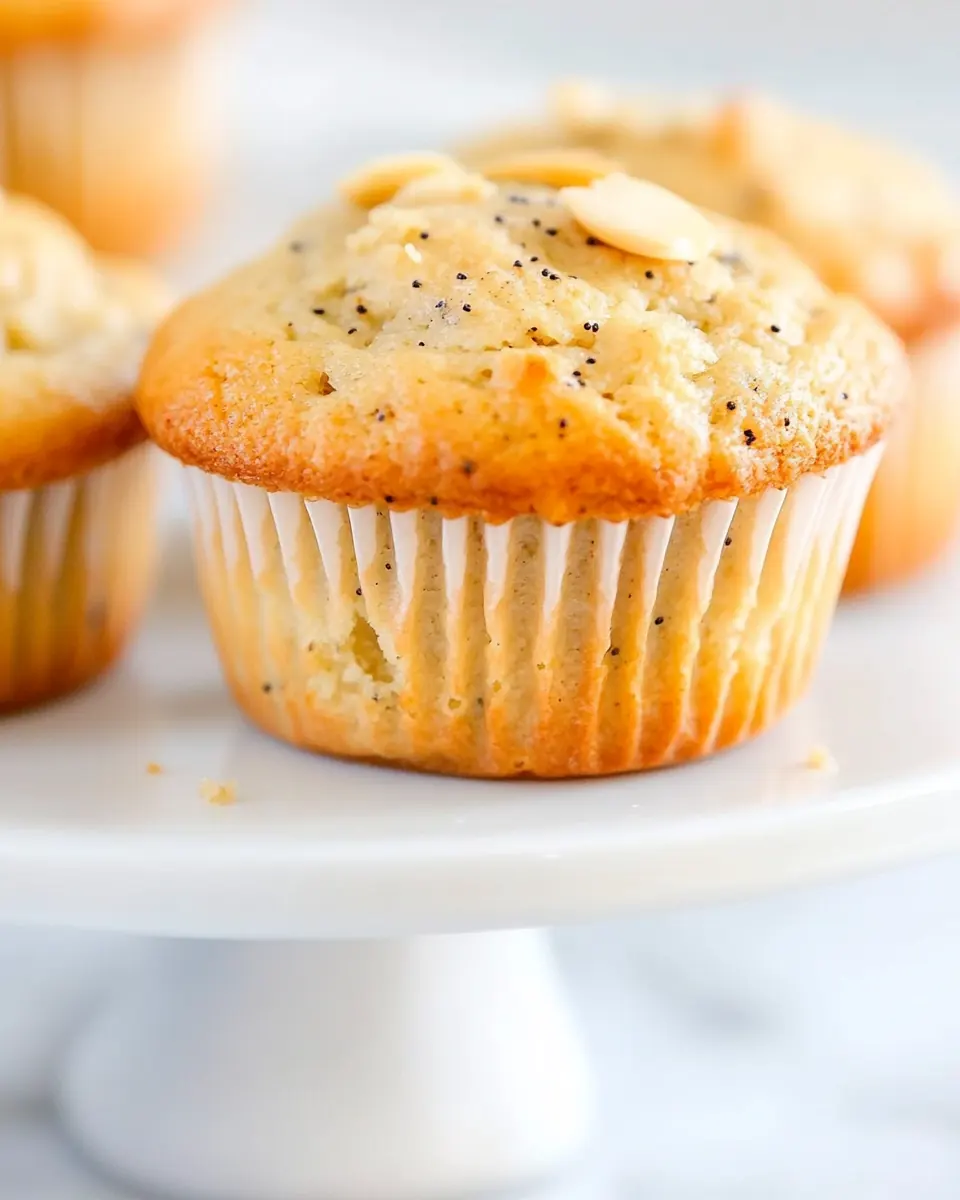
Divide the batter among the wells of two lined 12-cup muffin tins. Fill each well about two-thirds full and bake for 17–19 minutes.: You will see the batter mound slightly in each well and the tops begin to set, turning a pale golden color around the edges. The sound is quiet, but you can sometimes hear a faint crackle as the tops set. Fill the cups consistently so baking time is even; overfilled cups can overflow and underfilled cups bake too quickly. Use a toothpick in the center to check doneness, looking for a few moist crumbs rather than raw batter. A frequent mistake is filling the tins inconsistently, which leads to varied textures across muffins.
Cool muffins in pans for 10 minutes before removing them to a wire rack.: During this resting period, the interior continues to set and the steam escapes, preventing soggy bottoms. You should notice steam rising gently when you tilt the pan, and the tops will feel slightly springy to the touch. Use a thin spatula to ease them out without tearing the edges, and transfer to a wire rack so air circulates all around each muffin. A common misstep is leaving them in the pan too long, which can trap moisture and make bases soft.
While the muffins are baking, mix powdered sugar, milk, lemon juice, and almond extract in a bowl until well combined. Begin with 3 tablespoons of milk and add more as needed to make it the consistency you like.: The glaze should become silky and glossy, just thick enough to coat the back of a spoon but still pourable. You will smell the citrus from the lemon juice brighten the sweet powdered sugar, and the tiny trace of almond extract will lift the aroma. Adjust the milk slowly; adding too much will make the glaze runny and it will soak into the muffins rather than sit prettily on top. A typical error is rushing the adjustment and ending up with a glaze that is either too stiff to spread or too thin to hold shape.
Spoon glaze over muffins while they are still warm. Allow them to cool completely before serving.: The moment the glaze hits the warm tops they will gleam, and a thin veil of steam will carry the almond scent. As the glaze sets, it forms a delicate shell that provides a pleasant contrast to the tender crumb. If you like a thicker coating, apply a second thin layer once the first has crusted. Avoid glazing piping hot or fully cold muffins; hot will melt the glaze too much, and cold muffins can cause the glaze to crack. One mistake to avoid is stacking muffins before the glaze sets, which can mar the finish.