Preheat oven to 425°F. In a blender, pulse together eggs, milk, flour, sugar, vanilla extract, cinnamon, and salt until smooth. Set aside.: As the oven heats, you will notice a dry warmth that helps the exterior set quickly, which encourages the dramatic rise. This high heat is essential for achieving puffy edges and a tender center, so avoid lowering the temperature or opening the door during the first part of baking. A common mistake is not preheating fully, which leads to a flatter Dutch baby, so always wait until the oven reads the temperature.
In a 12-inch oven-safe skillet over medium heat, melt butter. Add sliced apples and cook until softened, about 5 minutes.: Expect a silky, slightly frothy batter that smells faintly of vanilla and cinnamon. Blending removes lumps that would otherwise create uneven texture, and aeration helps the batter rise. If the batter seems too thick or thin, check that your measurements were accurate; overloading the blender can prevent even mixing. One error to watch for is undermixing, which leaves pockets of dry flour affecting the final custard.
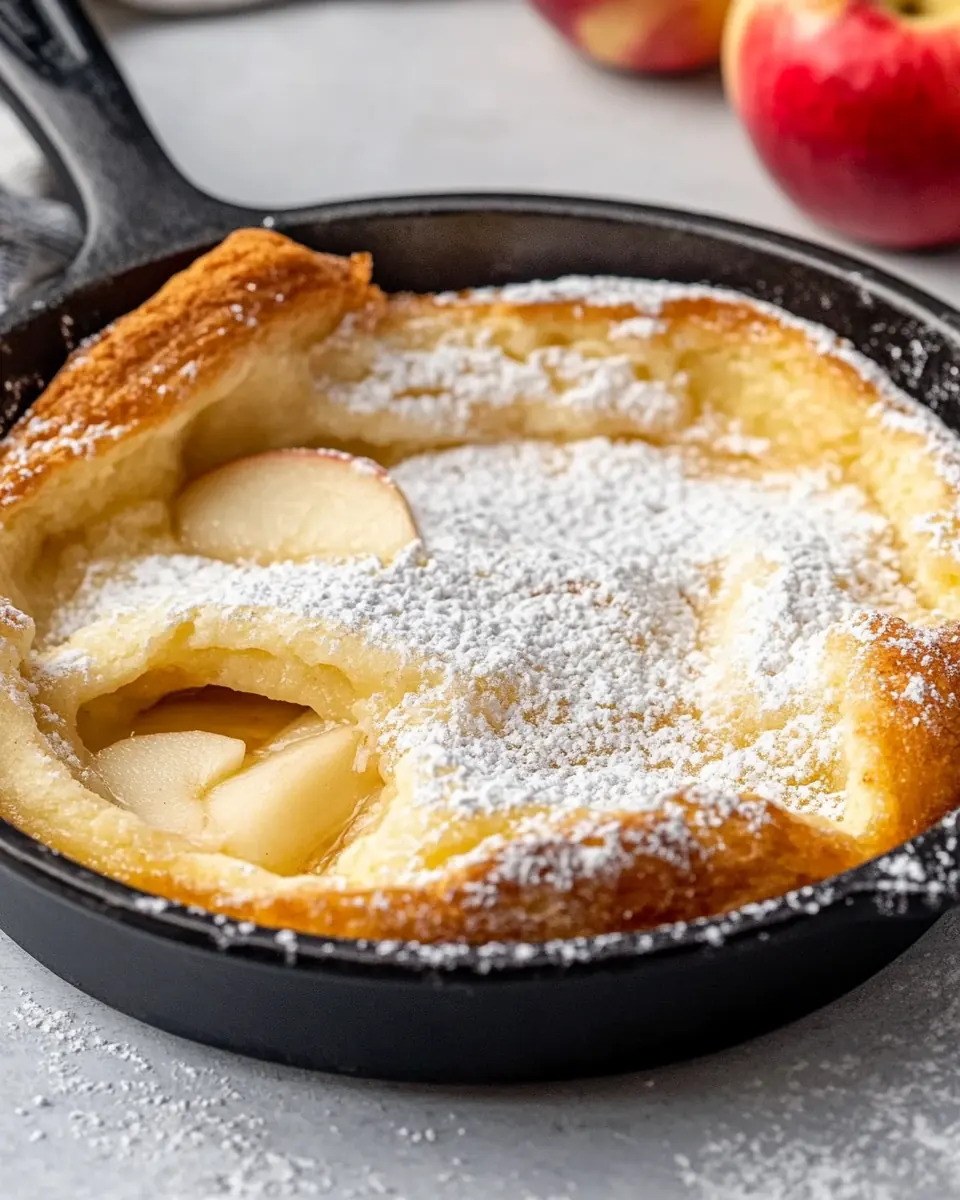
Pour the batter over the apples in the skillet. Transfer the skillet to the preheated oven and bake for 20 minutes until puffed and golden brown.: Letting the batter rest briefly allows the flour to hydrate fully, creating a smoother mouthfeel and more even structure. During this pause, you may notice small bubbles at the surface and a glossy sheen developing, indicating the batter is well combined. Avoid leaving it out too long, as separation can occur, and always give it a gentle stir before using. A potential pitfall is letting it sit uncovered for too long, which can form a skin on top.
Carefully remove the skillet from the oven. Dust with confectioners’ sugar if desired. Slice and serve warm.: When the unsalted butter melts, it will foam and give off a nutty aroma as the milk solids brown lightly, which builds flavor. Swirl the skillet so the butter coats the bottom and sides, ensuring even crisping. Do not let the butter burn, as a bitter note will ruin the delicate balance of the dish. A frequent mistake is using too high heat, which scorches the butter instead of providing a gentle sizzle for the apple .
Add sliced apples and cook until softened, about 5 minutes: The apple slices will sizzle softly, release juices, and begin to bend at the edges; you will also detect a gentle caramel scent as sugars begin to concentrate. Cooking briefly keeps some texture in the fruit while concentrating its flavor. Avoid overcooking so the slices do not become mushy, and spread them so they cook evenly. One common error is crowding the pan, which steams the fruit instead of allowing it to caramelize.
Pour the batter over the apples in the skillet: As the batter hits the warm skillet, you may hear a soft hiss and see it settle around the apple slices, beginning to bake at the edges immediately. This contact with hot fat creates that lacy, crisp perimeter while encasing the fruit in a tender custard. If you pour slowly and evenly, the batter will nestle between slices for even pockets of flavor. A mistake to avoid is pouring onto a cold pan, which prevents proper browning and reduces rise.
Transfer the skillet to the preheated oven and bake for 20 minutes until puffed and golden brown: During baking you will see the batter swell, creating dramatic, golden edges, and the center will set into a custard. The aroma will deepen into a heady cinnamon and butter scent, and the top should take on an even golden color. Resist opening the oven while it rises, as this can cause collapse. A common misstep is removing it too early, when the center is still wobbly, resulting in a soggy finish.
Carefully remove the skillet from the oven: Use oven mitts and set the skillet on a heatproof surface; the handle and rim will be intensely hot. The baked surface should be puffed and slightly crackled at the edges, and the underside will have crisped against the pan. Stand back when first opening the oven to avoid the hot steam. Avoid transferring the skillet to a cold surface that might shock and slightly deflate the puff.
Dust with confectioners’ sugar if desired: When you dust with confectioners’ sugar , it melts slightly on the warm top, creating an elegant sheen and a touch of sweetness. This final flourish enhances presentation without altering texture; apply just before serving to prevent dissolving. One mistake is adding it too early, which will vanish into the surface and not have the desired visual effect.
Slice and serve warm: Serving warm allows you to enjoy the contrast between the crisp edges and custardy center along with the softened apple . The first bite should be warm, slightly tangy from the fruit, and fragrant with spice. If you let it cool, the texture becomes denser and less lively, so plan to serve soon after baking. A common error is slicing after it has fully cooled, which reduces the sensory appeal.