In a food processor (or by hand), mix together the flour, salt, and sugar.: Right away you will notice the dry aroma of flour and the faint sweetness of sugar , a plain canvas before the fats arrive. Mixing these dry ingredients ensures even seasoning and browning later on. If you use a food processor the pulsing action keeps the mixture cool, whereas hand mixing gives you control over texture. A common pitfall is uneven salt distribution, which can make bites taste inconsistent; take a moment to stir thoroughly so the seasoning feels uniform.
Add shortening and butter and pulse (or cut) until it's crumbly (and resembles coarse cornmeal).: As the cold butter and shortening mingle with the dry mix you will see pea sized pieces and a sandy texture, that is exactly what you want. The combination of fats gives both flavor and flakiness, and those visible flecks of butter are what turn into flaky pockets while baking. Avoid letting the fats soften or melt in your hands, as that will reduce flakiness; if things warm up, pop the bowl into the fridge for a few minutes.
Slowly add and pulse the water into the flour mixture. Pulse until the mixture comes together. You may not need all the water.: When you introduce the very cold water , the dough will begin to bind into clumps that hold shape when pressed. The sensory cue I watch for is a slightly tacky surface that is not wet. Adding water slowly prevents a gluey dough. One frequent error is over hydrating which leads to a sticky, tough crust; stop adding water as soon as the dough forms.
Divide dough into two balls, wrap in plastic, and refrigerate until cold, about 2 hours.: Chilling firms the fats and relaxes the gluten, so the crust will roll out without shrinking and will be tender when baked. You will feel the dough become cool and slightly firm to the touch after refrigeration. Rushing this step often causes the dough to tear while rolling, so be patient and let it rest sufficiently.
Make the filling by mixing apple slices, sugar, flour, and cinnamon.: Tossing the peeled, cored, and sliced apples with sugar , flour , and cinnamon brings a juicy, fragrant filling. Smell the spices bloom as the sugar draws moisture from the fruit. Ensure the coating is even so every bite tastes balanced; clumps of flour or cinnamon can create gritty spots, so toss thoroughly.
Preheat oven to 400º.: Preheating sets the stage for proper oven spring and crust color, and you will want the oven to be at full temperature when the pan goes in. A well preheated oven produces a golden crust and tender cooked apples . A typical oversight is placing the pan in too cool an oven, which can lead to pale crusts and undercooked filling, so give your oven time to reach temperature.
Roll one ball of dough large enough to fit the bottom of a jellyroll pan. Arrange apples over dough. Roll out the second ball of dough and cover the apples. Pinch edges to seal.: Rolling the bottom layer thin and even ensures a sturdy base that bakes through. Layering the sliced apples in an even layer helps them cook uniformly and keeps the bars from becoming top heavy. When sealing, press the edges firmly; a poor seal can lead to leaking juices. Watch for thin spots in the dough, they can balloon during baking, so patch them before the pan goes in.
Whisk egg whites and brush over the crust (only if you don't want to use the glaze). Cut vents in several places.: Brushing with whisked egg white gives a glossy finish and helps coarse sugar adhere, producing a crunchy top. Making several vents allows steam to escape so the filling does not soak the crust beneath. A common mistake is under venting, which can cause the filling to bubble up and crack the top layer; be generous with vents.
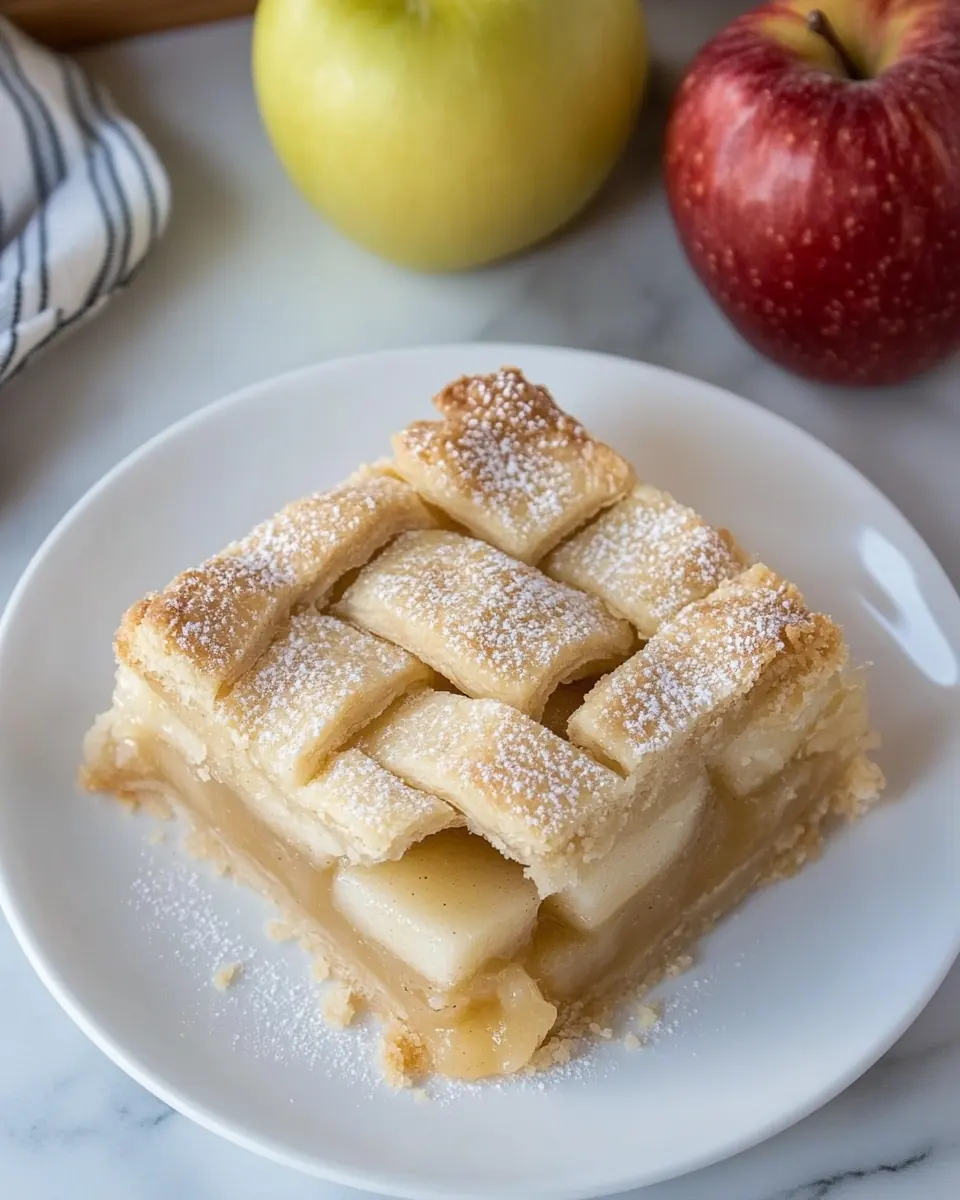
Alternatively, you can cut strips of dough out of the rolled dough and apply a lattice topping.: A lattice gives classic pie aesthetics and creates extra crisp surface edges that brown attractively. As the lattice bakes, the smell of caramelizing sugar and butter becomes pronounced. Be mindful of even spacing so the topping cooks consistently; uneven strips can bake at different rates, leaving some edges overdone.
If you don't want to use the glaze, brush the crust with the egg whites and sprinkle with coarse sugar.: Coarse sugar adds a satisfying crunch and sparkles under the oven light, contrasting the tender filling. The sensory payoff is a lightly crackling top that sings when you cut a slice. Avoid using too much sugar which can make the crust overly crunchy and overly sweet, altering the balance with the fruit.
Bake for 35 minutes or till the crust is brown and the apples are tender.: During baking you will notice the aroma deepen and the top turn a golden brown, that color is your cue. The filling should be bubbling slightly near vents and the apples will be tender when pierced. Overbaking can dry the filling and toughen the crust, while underbaking yields a soggy center; check visually and with a fork in the apples.
To make the glaze, mix powdered sugar, vanilla and add hot water till you reach your desired consistency. Drizzle or brush over the top crust.: The glaze smooths into glossy ribbons and introduces an extra sweet note and sheen that looks professional. Use hot water gradually until you achieve a thin, drizzling consistency. A common slip is making the glaze too thin which causes it to run off; if that happens, let the bars cool and the glaze will set more slowly but still provide shine.
Serve warm or cold.: Serving temperature changes the experience, warm bars yield a softer filling with melting edges, while chilled bars are firmer and easier to slice. I often serve some warm for immediate enjoyment and save extras chilled for neat slices. Avoid cutting too soon when warm, as the filling may not have settled and slices can fall apart.