Grease a casserole dish and preheat oven to 350 degrees.: As you prepare, notice the scent of a freshly warmed oven as it approaches 350 degrees , which creates a reliable environment for even baking. Greasing the dish ensures the casserole will release cleanly and form a slightly caramelized edge where the filling meets the pan, resulting in a pleasing contrast of texture. A common misstep is not preheating fully, which can lead to longer bake times and a soupy center, so wait until the oven registers the temperature before sliding the dish in.
Melt butter in a large pan over medium heat. Add asparagus, mushrooms, and onions and cook, stirring occasionally, for about 6 minutes.: When the butter melts, it should foam gently and carry the aromas of the onion and mushrooms as you add them. You will hear soft sizzling and eventually a gentle hiss as moisture evaporates, and the vegetables will begin to glisten. The asparagus will turn a brighter green, an excellent visual cue that it is cooking correctly. Avoid crowding the pan because steaming rather than browning reduces flavor development.
Sprinkle flour over vegetables and cook, stirring continuously, for 1 to 2 minutes.: As you sprinkle the all purpose flour , it should form a thin dusting that quickly absorbs the pan juices. Stirring continuously creates a roux like base that loses the raw flour taste and will thicken the sauce. You will smell a toasty, nutty note when the flour is cooked enough. If you skip this step or do not cook long enough, your sauce may taste pasty or raw.
Gradually stir in milk. Cook until thickened.: Pour the milk in slowly while stirring, and watch the mixture change from translucent to glossy and slightly thickened, coating the back of a spoon. You may hear the gentle bubbling as the sauce reaches a simmer, and the steam will carry a warm, creamy aroma. Stirring prevents lumps, and simmering just until thick ensures the sauce will cling to the vegetables rather than pool in the bottom of the casserole.
Reduce heat to low and mix in mayonnaise, sour cream, both cheeses, salt, lemon pepper, and paprika. Remove from heat.: Lowering the heat before adding the mayonnaise and sour cream keeps them from separating, and you will feel the sauce relax into a silkier texture as the cheddar cheese and swiss cheese melt in. The aroma becomes richer and more complex, and the color shifts to a warm, pale gold. A frequent mistake is adding these ingredients over high heat, which can cause graininess or breakage in the sauce.
Crush about 1/3 of the can of french-fried onions and mix them into the asparagus mixture.: Crushing a portion of the french fried onions and folding them into the filling gives intermittent crunchy pockets and a deeper toasted onion note throughout. As you mix, you will see little golden fragments dispersed in the creamy sauce, and the textural balance is more interesting. If you skip crushing, the onions will only provide surface crunch and you will miss those integrated bursts of texture.
Transfer mixture to prepared casserole dish.: Spoon the warm mixture into your greased dish and level it with a spatula, noticing how the sauce settles and the vegetables nestle in. The dish will already radiate steam and savory aroma, signaling it is ready for the oven. Be careful not to overfill the vessel, leaving room for bubbling without spillover, otherwise you risk a messy oven and lost topping.
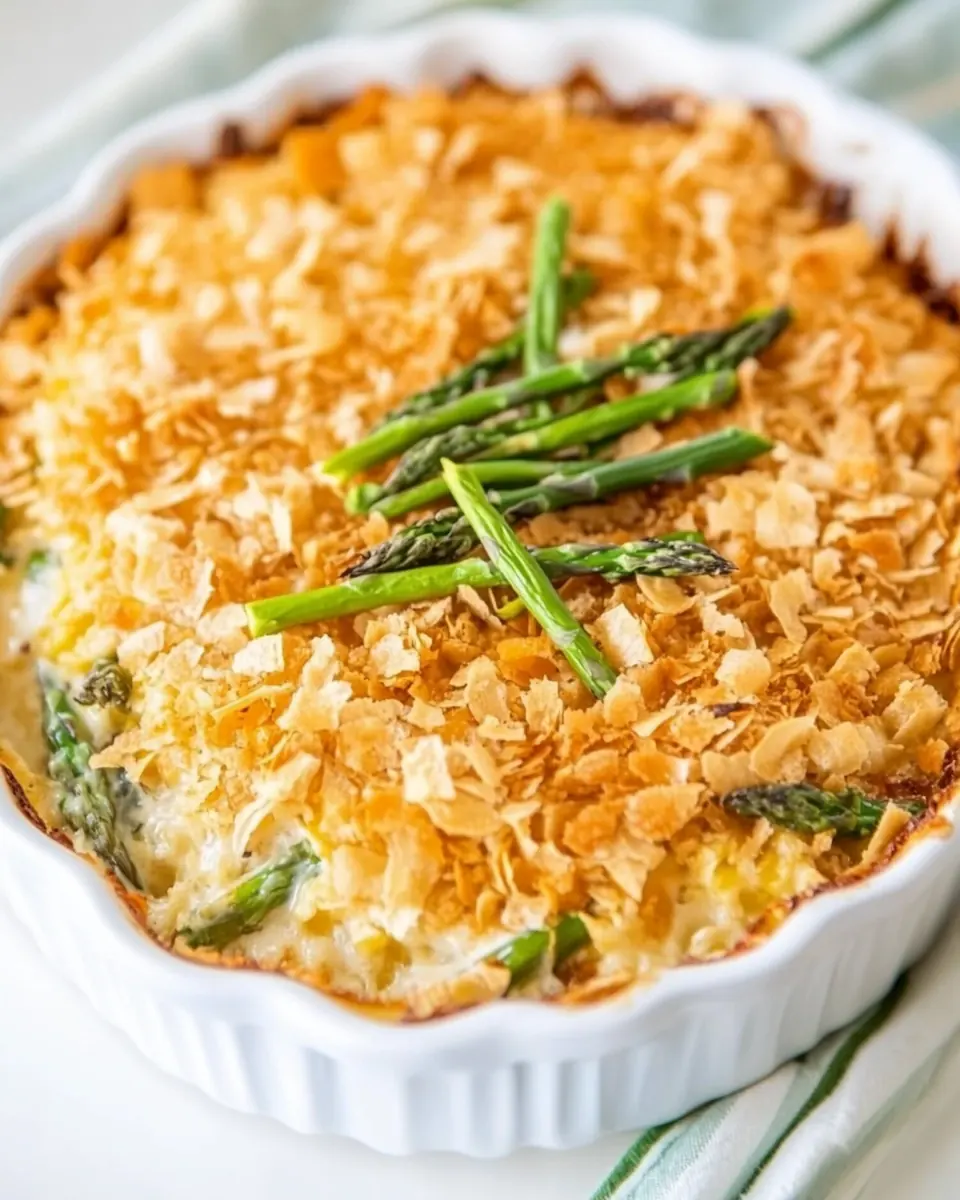
Sprinkle remaining french-fried onions on top.: Scatter the remaining french fried onions evenly to form a crunchy crown; this will brown and crisp in the oven, offering that prized contrast. You want an even layer so no one area becomes overly crunchy or under toasted. If you press them into the surface before baking, they may sink and lose their distinct texture.
Place in oven and bake for 30 minutes.: As the casserole bakes for 30 minutes , the top should bubble lightly and take on a golden hue, while the interior continues to set. You will hear gentle bubbling and smell a toasty, cheesy aroma filling the kitchen. A knife inserted near the center should come out with thick, saucy coating but not wet pools. Opening the oven too often will lower the temperature and extend baking time, so resist peeking frequently.