In a pot of boiling water, blanch the asparagus for 5 minutes. Immediately immerse them in a bowl of ice water then let them cool. Drain the water when the asparagus have reached room temperature. Chop then set aside.: Shortly after submerging the asparagus , you should hear a gentle hush as bubbles lap around them, and their color will intensify to a vivid green within minutes, signaling they are nearing the perfect tender crisp texture. Blanching softens the fibrous stalks, making them easy to bite while preserving structure. A common pitfall is overcooking, which turns them limp and dull, so set a timer and watch carefully.
In a bowl, prepare the frittata by whisking the eggs with the Parmesan, salt, and pepper then set aside.: The shock of cold water will stop the cooking instantly and lock in that brilliant color, and you will feel the sudden chill transfer through the stalks when you lift them from the ice bath. Cooling also firms the texture so they slice cleanly. Forgetting this step can leave you with overdone asparagus that loses its bright flavor and pleasing snap.
In a warm saucepan with the extra virgin olive oil, pour the frittata mixture.: As they drain, you can notice the surface beads of water diminish and the scent shift to a fresher, greener aroma, which means they are ready for chopping. Proper draining prevents watery pockets in the frittata that can make the custard weep. If you skip draining well enough, the extra moisture can make the eggs take longer to set.
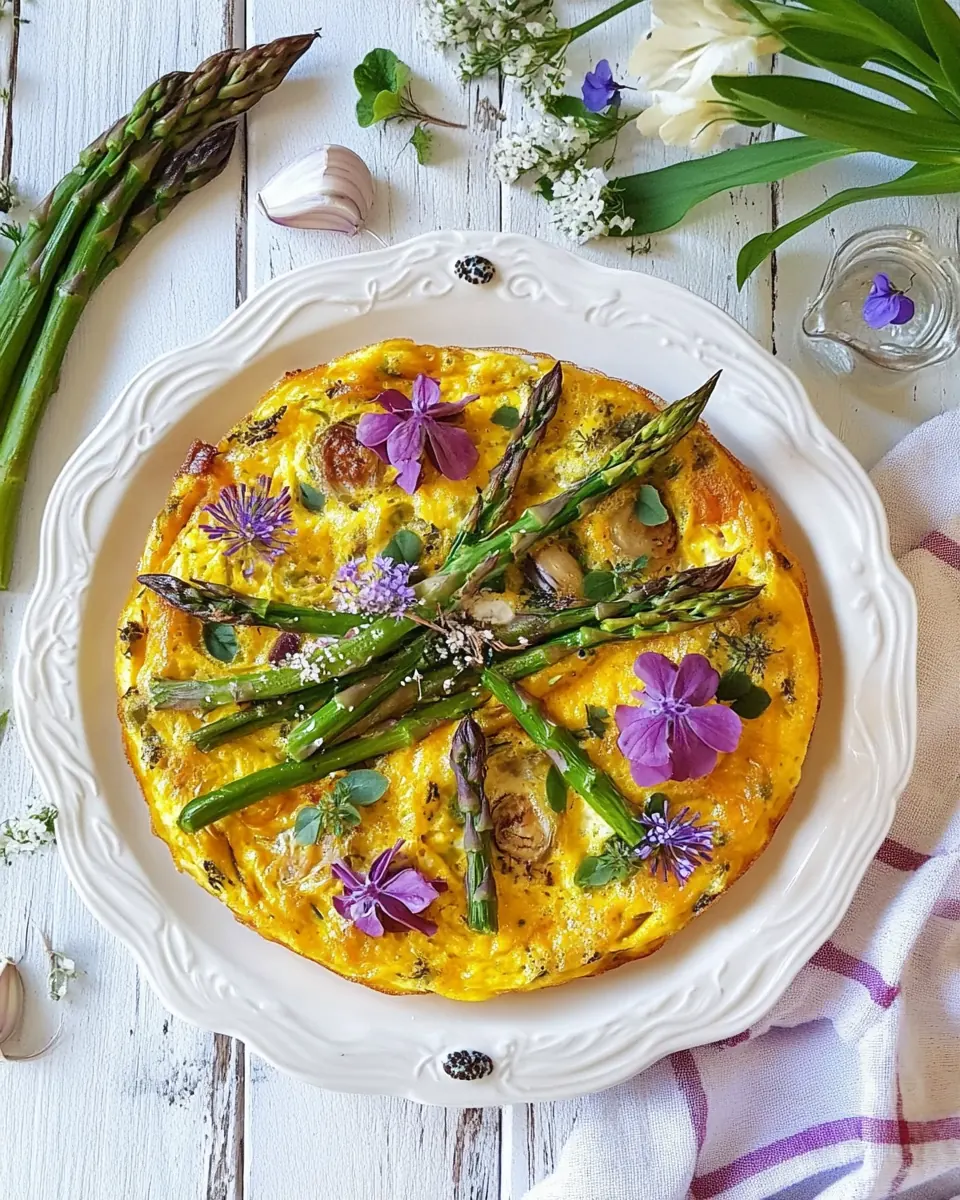
When the frittata is halfway cooked, distribute the asparagus and the herb blossoms.: Cutting the cooled asparagus into bite sized pieces reveals clean, fibrous interiors and a crisp texture that will distribute evenly through the frittata. Uniform pieces ensure consistent bites and balanced cooking. Chopping unevenly could leave some bits overcooked while others remain too firm.
When the bottom part is cooked and the top part is already solid, turn the frittata by placing a plate on top of the saucepan (the plate should be bigger than the saucepan), reverse quickly and let the frittata fall on the plate.: As you whisk, the mixture should gain a slightly glossy sheen and a homogenous pale yellow color, with the grated parmesan cheese melting into small pearls of flavor. Proper whisking helps the custard set evenly and creates a smooth mouthfeel. Overbeating can introduce too much air, producing an overly puffy texture that collapses, so whisk just until combined.
Put back the frittata on the saucepan carefully by sliding it inside. Cook for another minute.: When the extra virgin olive oil shimmers gently, but is not smoking, pour the custard in and tilt the pan to level the mixture, listening for a soft sizzle that signals the edges are beginning to set. That sound and the thin film forming around the perimeter are your cues to lower the heat for a gentle, even cook. If the pan is too hot you will get a dark crust and an undercooked center.
Transfer the frittata to the serving plate and garnish. Serve while hot.: At the halfway mark you will notice the custard firming but still slightly wobbly in the center, which is the ideal time to tuck in the asparagus and scatter the chive blossoms and sage blossom . This timing preserves the blossoms delicate color and ensures the vegetables stay tender. Adding them too early will wilt the flowers and water down their aroma.
When the bottom part is cooked and the top part is already solid, turn the frittata by placing a plate on top of the saucepan (the plate should be bigger than the saucepan), reverse quickly and let the frittata fall on the plate.: You will feel a satisfying release when the set underside releases from the pan, and the surface that was facing up should appear glossy but firm. Using a slightly larger plate allows a smooth flip; hesitating during the reversal can cause the frittata to fold or break. If it tears, don’t panic, you can nestle it back together and continue cooking gently.
Put back the frittata on the saucepan carefully by sliding it inside. Cook for another minute.: As you slide the frittata back into the warm pan, listen for a soft reconnection hiss and watch the edges seal, which adds a little caramelized edge without overcooking the interior. That minute helps finish any residual uncooked custard and melds the flavors. Cooking much longer risks drying out the texture and losing the delicate floral notes.
Transfer the frittata to the serving plate and garnish. Serve while hot.: The final plate transfer should feel celebratory, with the aroma of warm parmesan cheese and olives oil rising, and the blossoms bright against the golden custard. Serving warm ensures the texture is silky and the flavors are most expressive. Letting it sit too long will cool the fats and mute the aromatics, so aim to serve promptly.