Preheat the oven to 400 degrees Fahrenheit.: Warmth and anticipation set the stage, and you should notice a gentle oven hum as the temperature climbs. The hot oven ensures the feta begins to brown on arrival, creating those golden, caramelized spots that signal rich flavor development. A common mistake is not allowing the oven to fully come up to temperature, which can leave the cheese unevenly baked; wait until the oven reaches a steady heat, and if your oven has hotspots, rotate the dish halfway through the initial bake.
Transfer the pecans to a small skillet and heat them over medium heat on the stove top, stirring occasionally, until toasted and crunchy, about 1 to 3 minutes. Remove the pecans from the stove top and immediately transfer them to a bowl or measuring cup. Add in the fig preserves and mix the preserves and nuts together.: As the pecans toast, you will smell a warm, toasty aroma that is slightly sweet and nutty, and you will hear a faint sizzling as moisture leaves the nuts. Toasting enhances oils and deepens flavor, so stop when the scent turns fragrant and the nuts brown lightly, then transfer them immediately to avoid burning from residual heat. Stirring them into the fig preserves melds texture and distributes flavor evenly, creating a sticky, crunchy topping. A troubleshooting tip is to watch the pecans closely, because they can go from perfect to bitter in seconds; use medium heat and keep them moving in the pan.
Remove the blocks of feta from their packaging and place them in a small oven-safe dish. I recommend using a small casserole dish. Drizzle the feta blocks with avocado oil, then sprinkle them with dried oregano and black pepper.: The oil will gloss the top and encourage even browning, while the herbs and pepper provide aromatic complexity and a subtle bite against the feta saltiness. You'll notice the surface take on a silky sheen after the drizzle, and the herbs will sit prettily on top before they bloom in the oven. A common error here is using too much oil or overcrowding the dish, which prevents proper caramelization; keep the amount modest and use a dish that allows heat to circulate around the cheese.
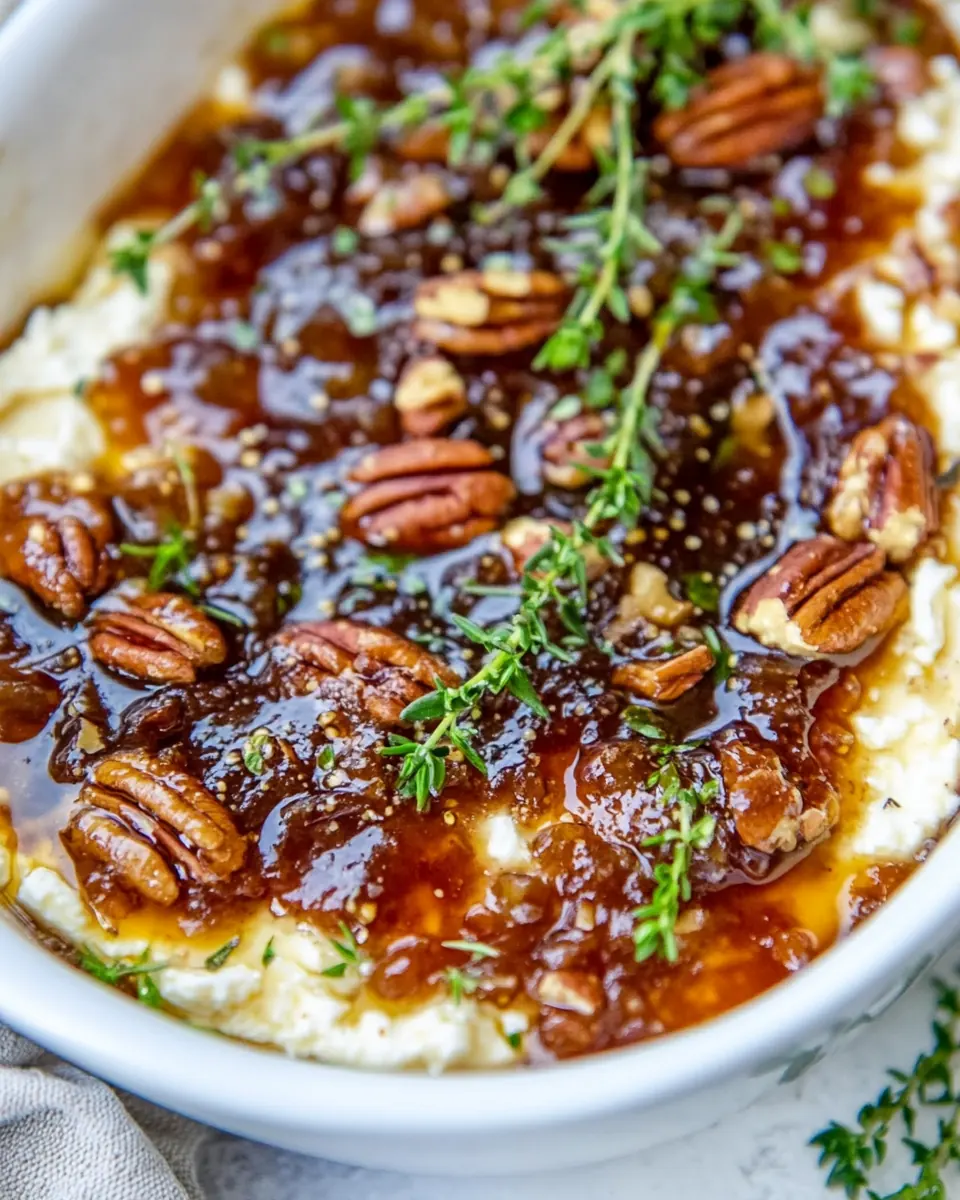
Bake at 400 for 20-25 minutes or until cheese is golden brown, then remove the feta from the oven. Decrease the oven temperature to 350 degrees F. Transfer the feta to the same serving dish you intend to use for serving the dip and stir it with a spoon until creamy. Pour the fig spread and pecans on top of the feta and bake for another 12 to 17 minutes at 350 or until the topping is hot and the cheese is bubbly.: During the initial bake you will see the edges of the feta soften and small bubbles appear; golden brown spots indicate the Maillard reaction has added savory depth. When you stir it, the texture should transform into a silky, spreadable mass. Adding the jam and nuts and returning the dish to a slightly lower heat warms the topping without overbrowning it, and the bubbling lets flavors marry. Avoid the pitfall of skipping the stirring step, because an unmixed slab will remain uneven in texture; gentle stirring integrates the browned bits into the creamy interior for the best mouthfeel.
Remove feta dip from the oven and transfer it to a trivet, kitchen towel, or baking sheet and alert your guests that the dish is very hot. Sprinkle the fresh thyme over the hot dip.: The aroma at this point is layered, with toasted nuts, sweet jam, and roasted cheese notes combining into an inviting perfume. Letting the dip rest briefly allows the surface to settle so it is easier to spoon. Fresh thyme added at the end offers a bright herbal lift that contrasts the rich topping. A common mistake is serving immediately without warning guests about the heat, which can lead to burnt tongues; set the dish on a trivet and mention that it is hot before digging in.
Serve baked feta dip with toasted baguette, pita bread, and/or crackers.: The final act is all about texture and balance, as crisp, warm bread provides a vehicle for the creamy, sweet, and crunchy elements. You should hear gentle scraping as guests spread the dip, and the contrast between warm cheese and cool air is delightful. Offer a few dippers so people can choose their preferred bite size. Avoid serving with soggy or overly dense bread, because it will mask the piecemeal contrasts that make this recipe shine.