Preheat the oven to 375° F. Grease 2 quart or 13" x 9" baking dish. Set aside.: As the oven warms, you should notice a faint dry heat filling the kitchen, promising that the bubbling stage will be even and consistent. Preheating is essential because a cold oven would delay the cheese melting and prevent the top from setting properly. Greasing the dish ensures the finished casserole releases cleanly, which makes serving easier and preserves crusty edges. A common mistake is not preheating fully, which can lead to uneven baking and a longer time in the oven. If you open the oven too often during baking you can lose heat, so avoid peeking repeatedly.
Bring a medium pot of water to a boil. Cook gnocchi in water for 2 minutes. Remove and set aside.: When the water vigorously boils you will hear large rolling bubbles and the steam will lift aromas, signaling readiness. The gnocchi will float and puff slightly when cooked, indicating they are ready; overcooking makes them mushy. After draining, they should still feel pillowy, not limp, so they can absorb sauce without disintegrating. A frequent error is leaving boiled gnocchi in hot water, which softens them too much. Quickly drain and set them aside so they retain shape when mixed into the sauce.
In a large skillet, heat up olive oil.: Warm olive oil becomes glossy and slightly shimmering when ready, releasing a subtle fruity aroma. Heating the oil prepares a medium for even sautéing of aromatics and meat, and it prevents sticking. If the oil smokes, the pan is too hot and can impart bitter flavors, so lower the heat. Another pitfall is adding ingredients while the oil is still cold, which leads to uneven sweating rather than gentle caramelization.
Add onion and saute until almost translucent.: As the onion softens you will see it turn from opaque to translucent and its aroma will shift to a mild sweetness. This step gently builds depth without creating bitterness. Cook over medium heat and stir occasionally so edges do not brown prematurely. A mistake to avoid is rushing with high heat, which will brown the onion too quickly and change the intended flavor profile.
Add garlic and saute for 2 minutes, stirring often.: The scent of sizzling garlic should become fragrant and inviting within moments, releasing a warm, savory note. Stirring prevents sticking and ensures the garlic softens evenly. Cook briefly to soften the raw edge, because burnt garlic tastes acrid and can ruin the sauce. Keep the heat moderate and watch closely since garlic can transition from golden to burnt rapidly.
Add Italian sausage and cook until brown, then 4 to 5 minutes longer OR until darker brown bits form at the bottom of the pan (you want the Maillard reaction) which will add even more flavor.: As the Italian sausage sizzles, the kitchen will fill with a meaty, savory aroma and small brown crumbs will collect on the pan bottom, which are flavor gold. Browning concentrates flavors and releases caramelized juices that enhance the sauce, so be patient and let the meat develop color. Stir occasionally to brown evenly. A common error is stirring too frequently which prevents good browning, or cooking at too low a temperature so the sausage stews rather than caramelizes.
Add Italian seasoning and crushed tomatoes. Season sauce with salt and pepper. Stir everything together and bring to a simmer.: When the crushed tomatoes meet the browned bits, a rich, savory steam rises and the sauce will darken slightly as flavors meld. Simmering gently concentrates the sauce and helps meld the herb notes from the Italian seasoning . Salt brightens the tomato and tames any bitterness, while black pepper contributes a background warmth. Avoid a rolling boil which can break down the texture too aggressively; gentle simmering yields a balanced, cohesive sauce.
Add gnocchi and stir with the sauce. Remove from heat and pour into prepared baking dish.: The moment you fold in the gnocchi , you should see them coated and glossy, the sauce clinging to every pillowy ridge. This contact helps the gnocchi absorb flavor without becoming waterlogged. Pouring into the prepared dish distributes the mixture evenly for even baking. A typical misstep is overcrowding the pan, which prevents uniform browning of the cheese and can lead to soggy pockets.
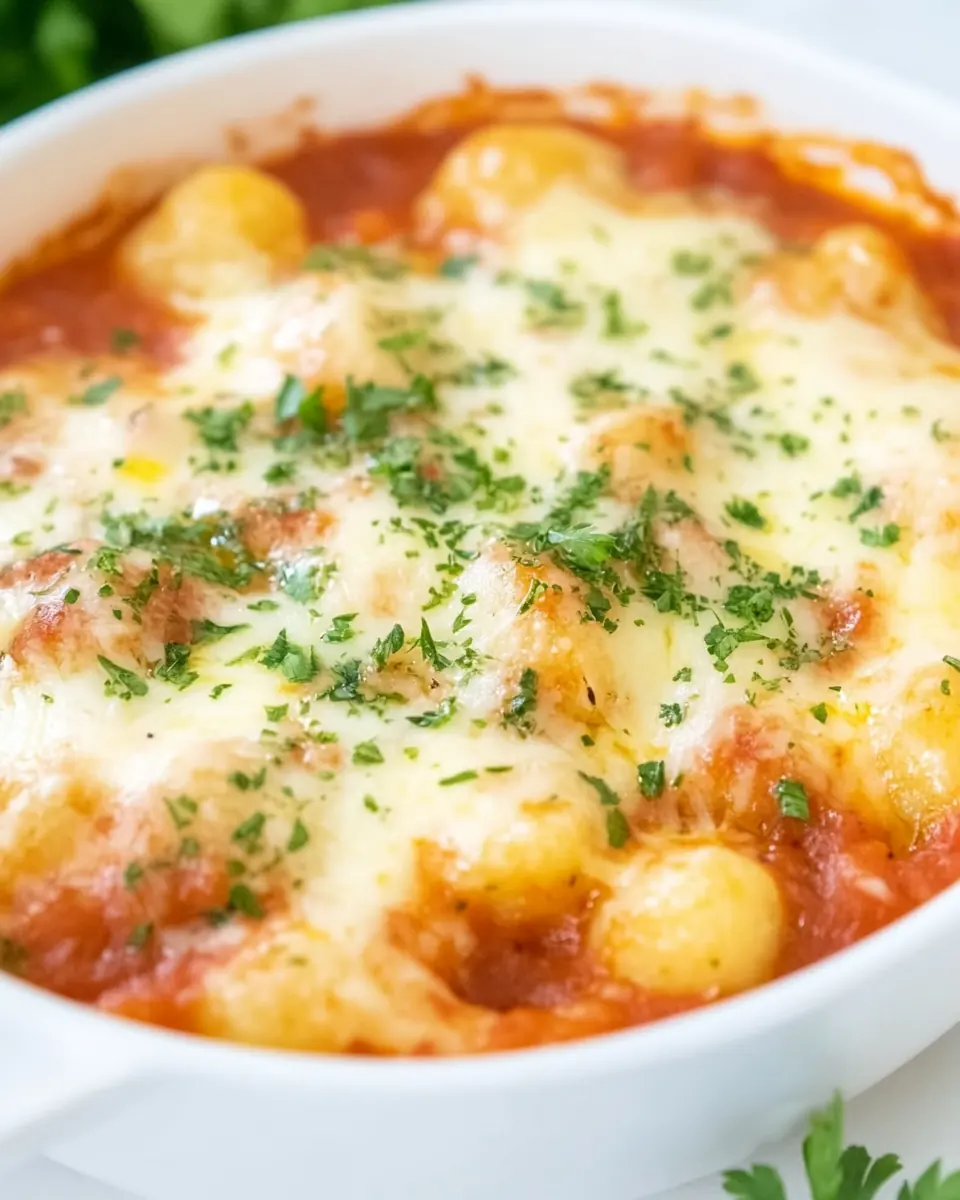
Top gnocchi with cheese and bake in the oven for 20 minutes OR until bubbly along the edges and the cheese is melted.: As the dish bakes, the top will transition from creamy to bubbling, with edges showing golden speckles and a pleasing crust forming. The sound of light bubbling and the scent of melting cheese are good indicators of readiness. This step melds textures, melts the cheeses into one cohesive layer, and creates a visually appealing surface. Avoid underbaking, which leaves the cheese too loose, and overbaking, which can dry out the gnocchi .
Remove from oven, let cool for 10 minutes, then serve. Garnish with fresh basil or Italian parsley.: Cooling allows the casserole to settle so it slices neatly and the flavors harmonize; the aroma will remain warm and inviting as you plate. Garnishing with fresh herbs adds color and a fresh contrast to the rich casserole. A mistake people make is serving immediately, which leads to a runny texture and potential burns, so patience improves both presentation and flavor.