Preheat oven to 325 degrees F.: As the oven warms, you will notice a low hum and a gentle building of heat that prepares the nuts for toasting. Getting the oven to the right temperature ensures even, controlled roasting so the pecan halves develop a deep, nutty aroma without charring. A common mistake is rushing this step by using too high a temperature, which can scorch the nuts and create a bitter note. If you do not have an oven thermometer, wait a minute after the preheat signal so the interior stabilizes.
Roast pecans for 12 minutes, remove from oven and allow to cool.: During roasting you will hear a soft pop and smell the nuts shift from raw to toasty, releasing oils that smell warm and slightly sweet. Cooling is critical because warm nuts can release too much oil when blended, making the pesto greasy. A typical error is blending immediately, which can change the texture and heat the sauce. Spread the pecan halves in a single layer on a sheet to ensure even browning, and check at the 8 to 10 minute mark to prevent overcooking.
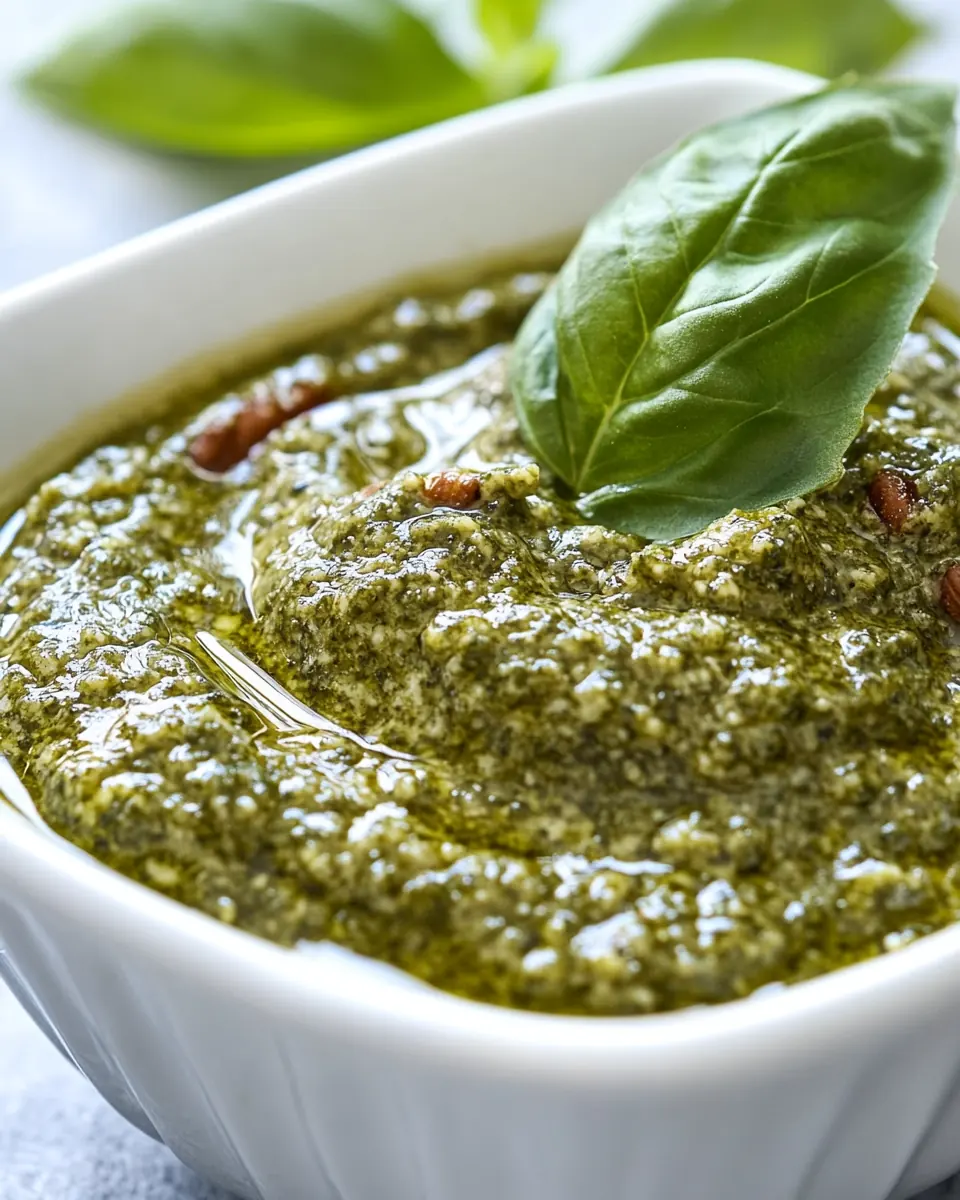
Add basil to food processor or blender and pulse until finely diced. Add garlic, parmesan, salt, pepper, and pecans. Pulse until well combined. Pour in oil, pulse until incorporated. Store in a glass jar. Refrigerate until ready to serve. Stir pesto before serving.: As you pulse, the vivid green quickly becomes fragrant and slightly glossy. This pulsing preserves some texture while breaking down the leaves to a fine chop. Overprocessing here can turn the basil into a puree with a muted fresh flavor, so work in short bursts and scrape down the bowl if needed. Keep the blade from overheating by giving the motor brief rests between pulses.
Add garlic, parmesan, salt, pepper, and pecans.: Once combined, these ingredients start to knit together, creating savory complexity. The garlic gives a sharp edge, the parmesan cheese adds savory depth, the pecan halves bring toasted body, and the salt enhances all layers. A mistake is adding too much salt before tasting, given the saltiness in the cheese. Pulse gently so the mixture remains slightly coarse rather than completely smooth, which helps the final sauce cling to food.
Pulse until well combined.: At this stage you should see a cohesive mixture that is textured, not soupy, with tiny flecks of nut and herb. The sound changes from loud chopping to a softer, more uniform whir as the pieces integrate. Over-pulsing can overheat the mixture and dull the bright green color, so stop when the components hold together. If the mixture seems dry, it will accept extra virgin olive oil in the next step, so resist adding liquid here.
Pour in oil, pulse until incorporated.: Adding the extra virgin olive oil slowly allows the sauce to emulsify into a glossy, spreadable consistency. You will see the mixture smooth and the color deepen to a vibrant green. Pour in a steady stream while pulsing to avoid separation. A frequent misstep is adding the oil too quickly, which can make the texture thin; if that happens, add more chopped pecan halves to thicken the sauce slightly.
Store in a glass jar.: Transfering the pesto into a clean glass jar helps preserve flavor and makes the sauce easy to access. Press the surface flat and pour a thin layer of extra virgin olive oil on top to minimize air contact. Storing in plastic can trap odors, so glass is preferred. Leaving the jar uncovered in the fridge can lead to oxidation, so always seal it well.
Refrigerate until ready to serve.: Chilling settles the flavors and firms the texture, bringing the pesto to a pleasantly spreadable consistency. The aroma will mellow slightly, and the sauce will thicken, which helps it cling to pasta or bread. A common issue is refrigerating before the oil has fully integrated, which can lead to separation; stir gently before chilling to make sure it is evenly mixed.
Stir pesto before serving.: A final stir re-emulsifies any oil that has floated and wakes up the flavors, releasing the perfume of fresh basil . Doing this also helps you assess salt and texture, so you can adjust before plating. If the sauce seems too firm from chilling, let it sit at room temperature for a few minutes and stir again to soften it for easier tossing with hot pasta.