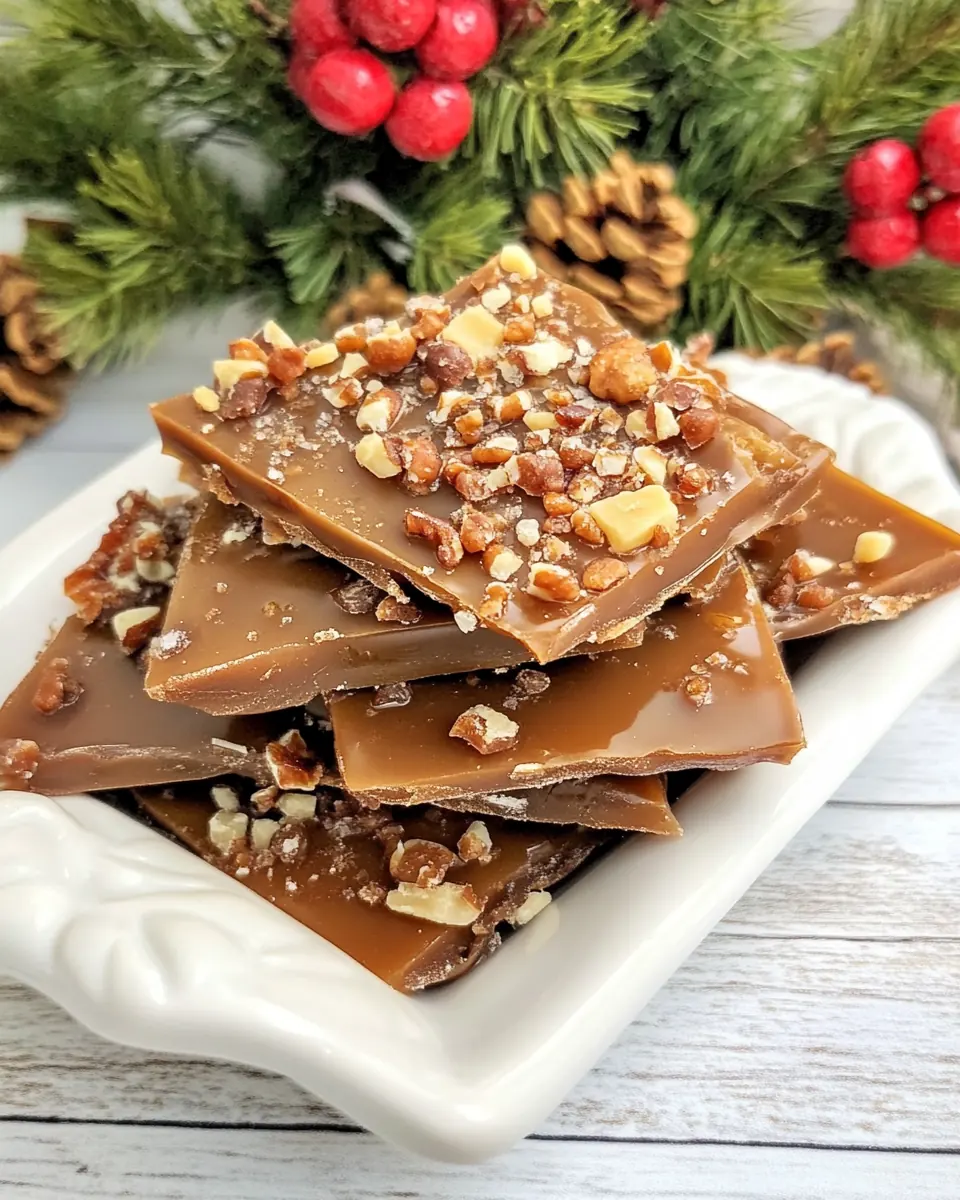
Cover a baking sheet with a Silpat or lightly grease with Pam.: You will notice the surface is ready when the Silpat lies flat or the greased sheet has an even, slightly shiny sheen, which helps the toffee release cleanly after chilling. This step prevents sticking and keeps shards intact when you break them. A common error is skipping this, which makes removal difficult, so always prepare the sheet first.
Cut butter into pieces and mix with sugar, corn syrup, and water.: As you assemble the bowl of ingredients, the texture will be a uniform, pale paste before heat, and you will smell the faint sweetness of sugar with the creaminess of butter. Breaking the butter into pieces helps it melt evenly so the mixture combines without hot spots. If pieces remain large, some butter can separate, so cut uniformly.
Bring to boil over medium-high heat, stirring until sugar is dissolved. Insert a candy thermometer and allow to boil, stirring occasionally, until the liquid turns amber and the temperature reaches 290º.: Early on you'll hear a steady simmer, and the mixture will thin as the sugar dissolves. The crucial sensory change is color shifting to a warm amber and a deeper caramel aroma as it approaches 290º. The thermometer is critical because a few degrees determine whether you get a crisp snap or a too soft center. Avoid constant vigorous stirring once boiling starts, which can encourage crystallization, and watch for sudden foaming.
Remove from heat immediately and add vanilla. Stir to combine and pour onto prepared sheet.: The moment you take the pot off the stove you will notice the bubbling calm down and the aroma intensify; adding the vanilla now preserves its fragrance. Pouring quickly but carefully creates an even, glossy sheet. A common slip is lingering on the heat too long, which deepens color and can burn the toffee, so transfer promptly.
Allow to cool for about a minute, then sprinkle with chocolate. Allow the heat to melt the chocolate, then smooth out with a spatula.: Watch the chocolate begin to soften from contact with the hot toffee before it fully melts into a shine; this is the sensory cue to start smoothing. Using a spatula, you can coax the chocolate into a thin, even layer. If you wait too long, the chocolate will not melt and will remain lumpy; if you try to force melted chocolate that is too hot, it can become runny and hard to set evenly.
Sprinkle with nuts and gently pat down so nuts adhere to chocolate.: As you scatter the toasted pecans , you'll hear a light crunch and see bits sink a touch into the warm chocolate, creating a textured top. Gentle pressure helps them stick without embedding fully. Pressing too hard will push the nuts through the chocolate, causing uneven coverage, so pat just enough for adhesion.
Chill for 2 hours, then break into small pieces. Store in refrigerator.: Chilling solidifies the chocolate and toffee into a firm, snap able sheet; you will feel a cool firmness at the edges when it is ready. Breaking it produces clean, crisp shards that reveal a glossy chocolate layer over a uniformly amber base. Leaving it at room temperature for too long can soften the chocolate, and storing it warm will reduce the crispness, so keep it chilled.