In a small bowl, combine paprika, garlic powder, dried oregano, onion powder, cayenne pepper, chili powder, black pepper, brown sugar, cumin, and salt.: You will notice the dry aroma intensify as you mix, a fragrant medley that signals the backbone of the dish. Mixing evenly matters because each pinch contributes to the final crust and flavor harmony. Use a spoon to break up any clumps, especially in the brown sugar and paprika. A common mistake is uneven mixing, which causes pockets of overly sweet or overly spicy coating on the shrimp . If clumps appear, rub the mix between your fingers to aerate and distribute the spices uniformly.
Place shrimp in a bowl and drizzle with olive oil. Add the mixed spices and toss to coat evenly.: The oil acts like glue, helping the spice blend adhere and bloom when it hits heat. As you toss, you should see the shrimp go from pale to mottled with the rub, a visual cue that seasoning is thorough. Work quickly so the shrimp do not sit long and draw out moisture which can reduce crisping. A common issue is overcoating, which creates a heavy paste that can prevent a clean sear. Shake off excess before the pan so you preserve the right texture.
Heat a skillet over medium-high heat. Add seasoned shrimp and cook for about 2-3 minutes on the first side, adding more oil to the pan if needed.: The skillet should be hot enough that the shrimp sizzles on contact, producing an immediate fragrant browning sound. That initial sear creates the crust, locking in juices. Watch the color transition at the edges; they will turn opaque and golden where the spices caramelize. A frequent pitfall is overcrowding the pan which traps steam, leading to a softer exterior rather than a blackened crust. If you hear no sizzle, raise the heat slightly and ensure the pan surface is dry before adding more shrimp .
Mix in minced garlic and flip the shrimp, cooking them another 2-3 minutes or until cooked through and opaque.: The garlic added at this stage browns gently without burning, releasing sweet roasted notes that mingle with the charred spices. When flipping, listen for the change in sizzle and check the underside for a deep, evenly browned crust. The shrimp will curl slightly and firm up as the flesh becomes opaque. Avoid overcooking, which makes shrimp rubbery and dry; remove from heat as soon as the center shows no translucence. A common error is adding garlic too early, causing bitterness from burning, so time it as recommended.
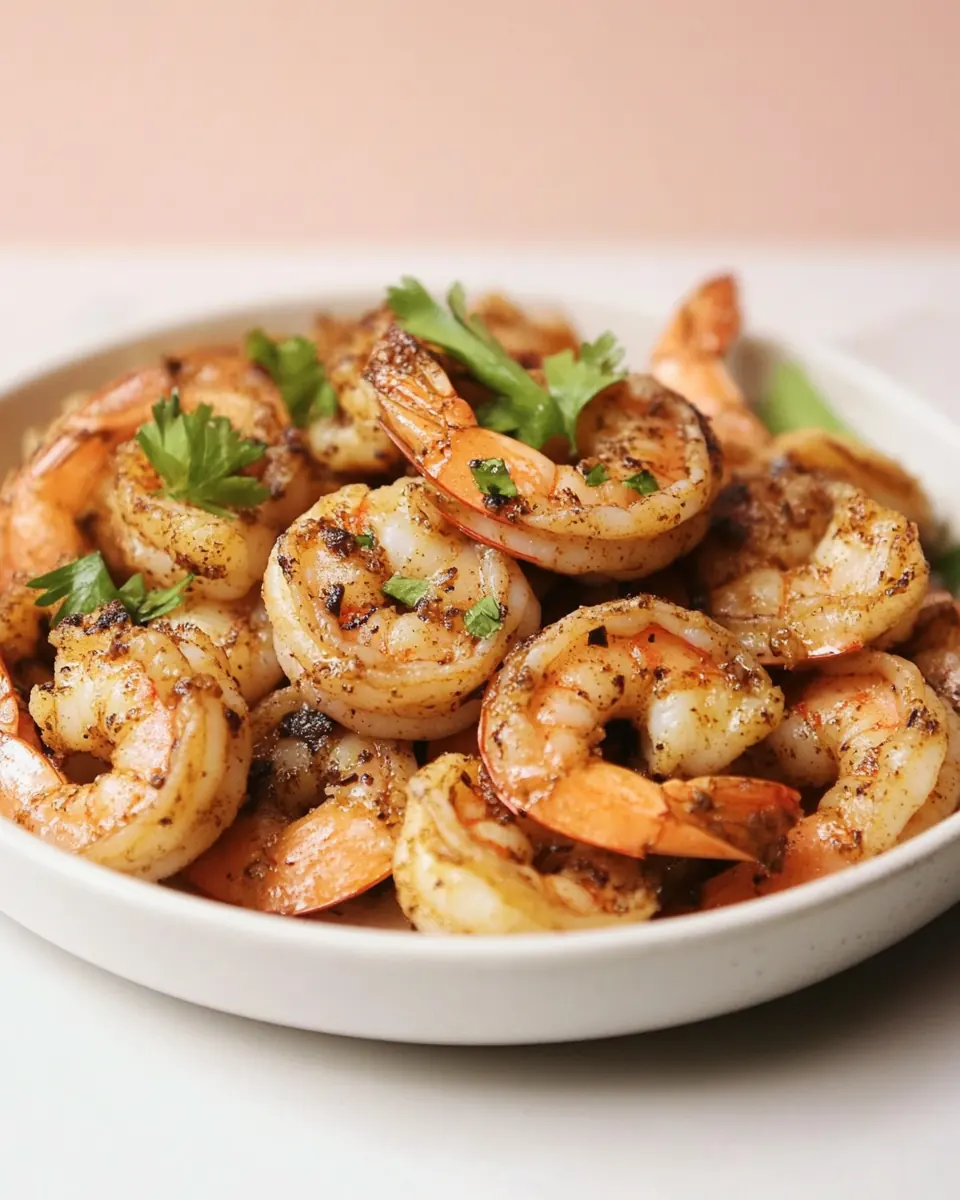
Remove the shrimp from the skillet and sprinkle with freshly chopped cilantro.: The final toss of cilantro releases a bright, herbaceous scent that contrasts beautifully with the warm spice mix. As you plate, the garnish adds color and a fresh finish that lightens each bite. Let the shrimp rest for a minute so the residual heat finishes cooking without pounding the crust. A mistake to avoid is piling the shrimp in a heap straight from the pan which can steam them and soften the blackened edges. Arrange with a little space so the crust remains crisp.