Preheat oven to 350 degrees Fahrenheit. Line a baking sheet with parchment paper or lightly spray with non-stick cooking spray.: The warm oven gives the cookies an even rise and gentle browning. You should feel a small burst of heat when you open the oven, and the racks should be centered so hot spots do not overbrown one side. Preheating ensures the cookies begin baking immediately and develop the proper texture, rather than slowly heating and spreading too much. A common mistake is skipping preheat, which can lead to flat, greasy cookies. If you notice uneven browning, rotate the tray halfway through baking.
Using a hand or stand mixer, whisk together the 1 cup sugar, 1/2 cup softened unsalted butter, and 4 ounces cream cheese until smooth and creamy. Add in 1 egg and 1 teaspoon vanilla and beat until just incorporated.: As you cream the sugar , butter , and cream cheese , pay attention to texture changes: the mixture should go from grainy to glossy and light, with small air pockets that feel silky between your fingers. The scent will shift from sweet to a more buttery, tangy aroma. This aeration is why the cookies are tender, so don't rush. Overbeating after adding the egg can incorporate too much air and alter the crumb, while under-mixing leaves lumps of cream cheese . If you see streaks of unmixed fat, scrape the bowl and mix briefly until even.
In another bowl combine 2 1/2 cups all-purpose flour, 1 teaspoon baking soda, 1 teaspoon baking powder, and 1/4 teaspoon salt. Beat the flour mixture into the butter mixture until incorporated. Gently fold in the 2 cups blueberries.: Whisking these dry ingredients together distributes the leaveners so the cookies rise evenly and have a uniform crumb. You will notice the flour takes on a lighter, aerated appearance after whisking. This step prevents pockets of baking soda or powder, which can create bitter or unevenly risen spots. A frequent error is dumping dry and wet without mixing, so take the extra moment to whisk thoroughly.
Drop heaping tablespoons of dough onto the cookie sheet. Bake for 10-12 minutes. Let cool on a wire rack.: When you add the dry flour to the creamed base, the dough will thicken and look matte rather than glossy; this is the cue that gluten is developing just enough to hold shape. Use slower mixing to avoid overworking the dough, which would make it tough. As you gently fold in fresh blueberries , do so with a spatula to preserve the berries intact; you'll see small purple specks and occasional juice streaks. A common slip is to mash the berries, which can turn the dough blue and overly wet; fold minimally to keep pockets of fruit.
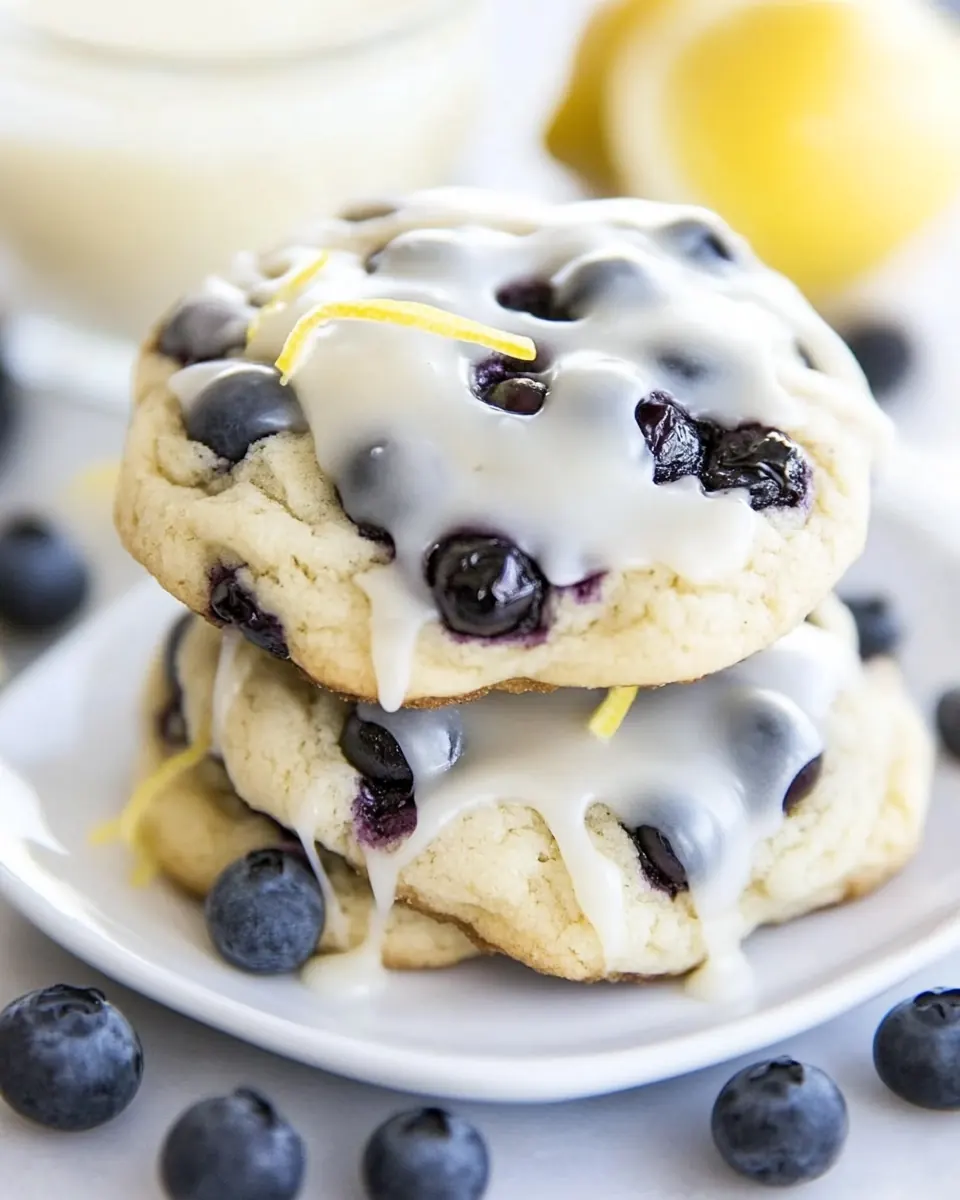
Whisk together the 1 1/2 cup powdered sugar, 1 tablespoon lemon juice, 1 tablespoon milk, 1 teaspoon vanilla, and the zest of one lemon. Drizzle on top of cookies.: As the cookies bake, you will hear a faint quieting as moisture evaporates and the tops set; visually the edges should become lightly golden while the centers remain pale and slightly domed. The aroma will shift to warm, sweet butter and fruit. Pulling them too early leaves them doughy, while overbaking dries them out. A reliable test is to press the edge gently; it should spring back. After pulling from the oven, let them rest on the sheet for a few minutes before transferring to a wire rack , because carryover heat continues to finish the centers. Avoid stacking while hot, which traps steam and softens the exterior.
Whisk together the 1 1/2 cup powdered sugar, 1 tablespoon lemon juice, 1 tablespoon milk, 1 teaspoon vanilla, and the zest of one lemon. Drizzle on top of cookies.: The glaze comes together into a glossy, slightly thick ribbon that holds shape briefly before smoothing. The aroma of fresh lemon zest and juice will lift the sweetness, and the powdered sugar will give it a smooth mouthfeel. If the glaze seems too thin, add a touch more powdered sugar to thicken; if too thick, a drop more milk will help. Drizzle in a steady motion so each cookie gets an even coating, and allow the glaze to set for several minutes. A mistake I see is adding too much liquid, which causes the glaze to run off; add liquids sparingly until you reach the desired consistency.