In a large pot, preferably a Dutch oven, heat the oil over medium heat until shimmering. Add the butter and stir until melted.: The pan will give off a faint, glossy shimmer from the olive oil , and the moment the butter melts it will foam gently and soften the surface sheen. You should hear a quiet, almost whispering hiss, not a loud crackle, which tells you the temperature is steady and suitable for softening aromatics. This layer of fat is important because it helps carry flavors from the vegetables into the liquid, producing a rounded mouthfeel later. If the pan gets too hot you risk browning the butter and creating bitter notes, so reduce heat if you see darkening or smell burning. Stir continuously until the butter fully integrates into the oil and forms a glossy base. A common mistake is rushing this step and cranking up the heat which leads to uneven cooking of the vegetables and an acrid scent, so be patient and watch the color of the butter.
Add the leek, carrot, celery, and garlic. Cook, stirring frequently, until they are tender, about 8 minutes.: You will notice the smell shift from neutral fats to sweet vegetal aromatics as the leek , carrot , and celery soften. Stirring releases steam and prevents sticking, and after several minutes the edges of the vegetables take on a translucent sheen. The garlic should become fragrant without browning; if you smell a toasty garlic aroma, pull back the heat to avoid bitterness. These softened vegetables form the savory backbone, so patience here pays dividends in depth of flavor. If pieces brown too quickly it can change the final profile, so aim for gentle sweating rather than searing. Taste a small piece to ensure it is tender, and adjust time as needed, remembering stovetops can vary.
Stir in the broccoli.: At this point you will add the chopped broccoli , and the pot should exhale a bright, green scent as the steam rises. Visually the mixture gains volume and color, and the broccoli will sit among the softened vegetables. This is the stage where the soup begins to take its primary identity, so distribute the florets evenly for consistent cooking. If the pot feels crowded, stir to settle pieces and ensure even contact with the warm fats. A mistake here is adding particularly large chunks that remain undercooked later, so aim for similar sized florets and slices of stem for even tenderness.
Sprinkle the broccoli mixture with the flour and mix well.: You will dust the vegetables with flour , which will look like a light pale film at first, then hydrate as you stir. The flour binds with the fats and forms a roux like coating that thickens the soup when the liquid is introduced. As you mix, it may take a minute for the flour to fully disappear into the vegetables; watch for a faint toasting aroma which indicates the raw flavor is cooking out. If you skip this or do not cook the flour briefly, the finished bowl can taste pasty, so take a moment to combine thoroughly and cook for a short interval until the raw flour scent mellows.
Stir in the broth and bring to a simmer over medium-high heat.: When the chicken broth hits the pan you will hear a gentle bubbling as it warms, and the mixture loosens into a soupy consistency. Bringing it to a simmer activates the thickening power of the flour and extracts deeper flavor from the vegetables. You should see small, steady bubbles breaking the surface, not a vigorous rolling boil which can break down texture too quickly. Allowing everything to come together at this temperature helps the starches release evenly. A common error is boiling too hard which can make the broccoli overcook and the soup thin or grainy, so aim for a gentle simmer.
Reduce the heat to medium and simmer, with the lid on, but ajar, until the broccoli is very tender, about 20 minutes. Remove from the heat.: As the pot simmers with the lid slightly open, fragrant steam will escape and the kitchen will fill with a rounded, vegetal aroma. The broccoli should become very tender so it mashes easily with a spoon. This long simmer is crucial because it softens stems and allows flavors to meld into a unified base. If you close the lid fully you may trap too much moisture, and if you simmer on too high a setting the edges can overcook unevenly. Test tenderness by piercing a stalk with a fork; it should yield with little resistance. Remove the pot from the heat to stop further cooking once tenderness is achieved.
Purée the soup with a hand-held immersion blender, or very carefully, working in batches, transfer the soup to a blender and purée.: You will notice an immediate change as the vegetables transform into a smooth texture, and the color will brighten into a vibrant green. Use an immersion blender for control, pulsing until you reach a velvety consistency, or work in blender batches, venting the lid slightly to avoid pressure build up. The purée stage determines the mouthfeel, so blend until silky but not overly frothy. One mistake people make is blending too aggressively which can introduce air and change the texture; pulse gently and stop when the texture looks silky and even. If the soup is too thick after blending, return it to the pot and stir in a little extra broth to reach the desired consistency.
Add the soup back into the pot and simmer over medium-low heat.: Returning the puréed soup to the pot lets flavors knit and residual steam evaporate slightly, concentrating taste. On medium low you want a gentle heat that keeps the soup warm without boiling, because high heat can alter cheese melting later. As it simmers, the aroma deepens and the surface may show small, even bubbles. Stir occasionally to prevent sticking to the base, and keep the temperature steady. A frequent misstep is raising the heat too high here, which will make the next step of adding cheese problematic, so be deliberate and patient.
A handful at a time, add the Cheddar cheese to the soup, and let it melt.: Add the shredded cheddar gradually, letting each addition melt fully before adding more, which keeps the texture smooth and prevents clumping. You will see the cheese soften and fold into the soup, turning it creamier and giving off a warm, savory aroma. Stir continuously in a figure eight motion so the melted cheese integrates and the fat emulsifies into the liquid. If you dump all the cheese in at once, it can seize into stringy clumps, so take your time and maintain a gentle heat. Taste as you go for the ideal cheese intensity.
Season with salt and pepper.: At the end you will bring forward the seasoning using Kosher salt and black pepper . Season slowly, tasting frequently, because the chicken broth and cheddar already contribute salt. The black pepper adds warmth and balance, so crack it fresh if possible for brightness. Over seasoning is a common error, and if it happens you can dilute slightly with extra broth, but it is easier to add than to subtract, so proceed conservatively and adjust to your preference.
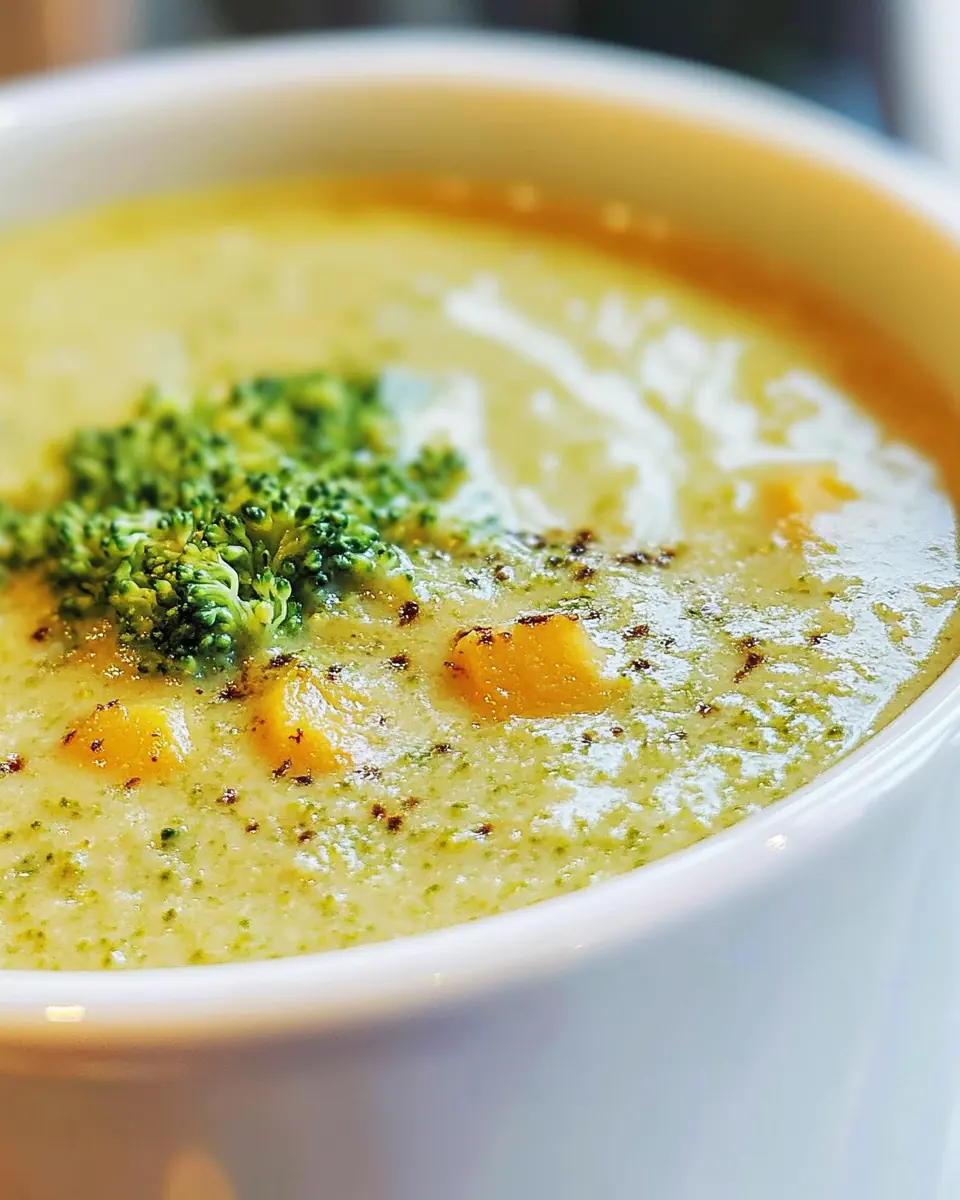
Serve piping hot topped with a few blanched florets!: The final presentation includes a few reserved blanched broccoli florets placed on top which add visual contrast and a fresh, crunchy bite. Serve immediately while the soup is steaming; you should see gentle wisps of steam rising and smell the complete bouquet of vegetables and cheese. If you let it sit too long, the surface can form a slight skin and the texture may tighten, so plan to serve right away. A tip is to ladle into warm bowls so the soup remains hot longer at the table.