Preheat the oven to 350 degrees Fahrenheit. Grease a 9×13 pan and line with parchment paper leaving a 1-inch overhang on both sides.: As the oven warms you'll notice the room starting to feel warm, which helps set your timeline. Greasing and lining the pan prevents sticking and the parchment overhang creates handles, which makes lifting the finished bars simple and neat. This preparatory step matters because it keeps the edges from tearing when you remove the brownies, and it enables clean slicing after chilling. A common mistake is skipping the parchment which leads to broken edges when lifting, so take the extra two minutes now for flawless presentation.
In a large bowl, melt 6 ounces dark chocolate, and 3/4 cup unsalted butter together in 30-second intervals. Once fully melted, stir in 1 1/4 granulated sugar, 1/3 cup dark brown sugar, and 3 large eggs.: You'll hear soft pops from the microwave as the chocolate softens, and when stirred the mixture should become glossy and smooth, signaling proper emulsion. Adding the sugars and eggs to warm chocolate creates a rich, velvety batter; the sugars dissolve into the warm fats and the eggs help bind and give structure. Stir fully so the eggs are incorporated without scrambling, the mixture should be warm not hot. A typical pitfall is overheating the chocolate which can seize, so heat in short bursts and stir between intervals to maintain control.
In a medium bowl, sift together 3/4 teaspoon salt, 1 tablespoon cornstarch, 1/4 teaspoon baking powder, 1/4 cup cocoa powder, and 1 cup all-purpose flour. Add the dry ingredients to the wet and mix until combined.: Sifting creates a light, lump free blend that distributes the leavening and starch evenly, preserving the desired dense yet tender texture. When you fold the dry ingredients in, aim for a uniform batter with no streaks of flour; overmixing will develop gluten and make the brownie tough, while undermixing leaves pockets of dry ingredients. The batter should look shiny and slightly thick, not aerated. Avoid vigorous stirring which changes the texture; gentle folding until just combined is the key.
Add the brownie batter to the prepared pan and smooth with a spatula. Bake for 40-45 minutes or until a toothpick comes out clean from the center.: Spreading the batter evenly ensures consistent baking and uniform thickness, which helps the center set at the same rate as the edges. During baking you'll notice a faint crackle on top and a deep chocolate aroma filling the kitchen, signs that the brownies are nearing readiness. Insert a toothpick in the center; it should come out with a few moist crumbs but not batter. A frequent error is baking too short, leaving a gummy center, so allow the full bake time and check carefully at the end.
Let the brownies cool completely before adding the other layers.: Cooling allows the internal steam to dissipate and the crumb to firm up, preventing the filling from sinking in or becoming runny. I usually let the pan rest on a rack until it reaches room temperature, which makes spreading the peanut layer neater. Rushing this step leads to sliding layers and a messy top, so resist the urge to speed things up with a freezer blast which can create condensation.
Add 2 cups creamy peanut butter and 1/3 cup unsalted butter to a large bowl and beat with a hand mixer until smooth.: When you beat the softened creamy peanut butter with unsalted butter , the texture transforms into a light, spreadable cream that holds shape. You'll hear the mixer hum and watch the mixture turn silkier, losing any separation. This initial creaming is essential for a cohesive filling that won't weep. If the mixture feels grainy, continue beating briefly; if it's too loose, chilling it slightly helps.
Add 1 1/2 teaspoon vanilla extract, 2 cups powdered sugar, and 2 tablespoons milk and mix until combined and creamy.: Incorporating the powdered sugar thickens the filling while the milk adjusts spreadability, resulting in a smooth, pipeable consistency. The filling should be sweet and balanced, with the vanilla extract brightening flavors. If it becomes overly stiff, add a touch more milk; if too thin, add a little more powdered sugar. A common slip is adding liquid too quickly which makes the mixture runny, so add gradually and test texture as you go.
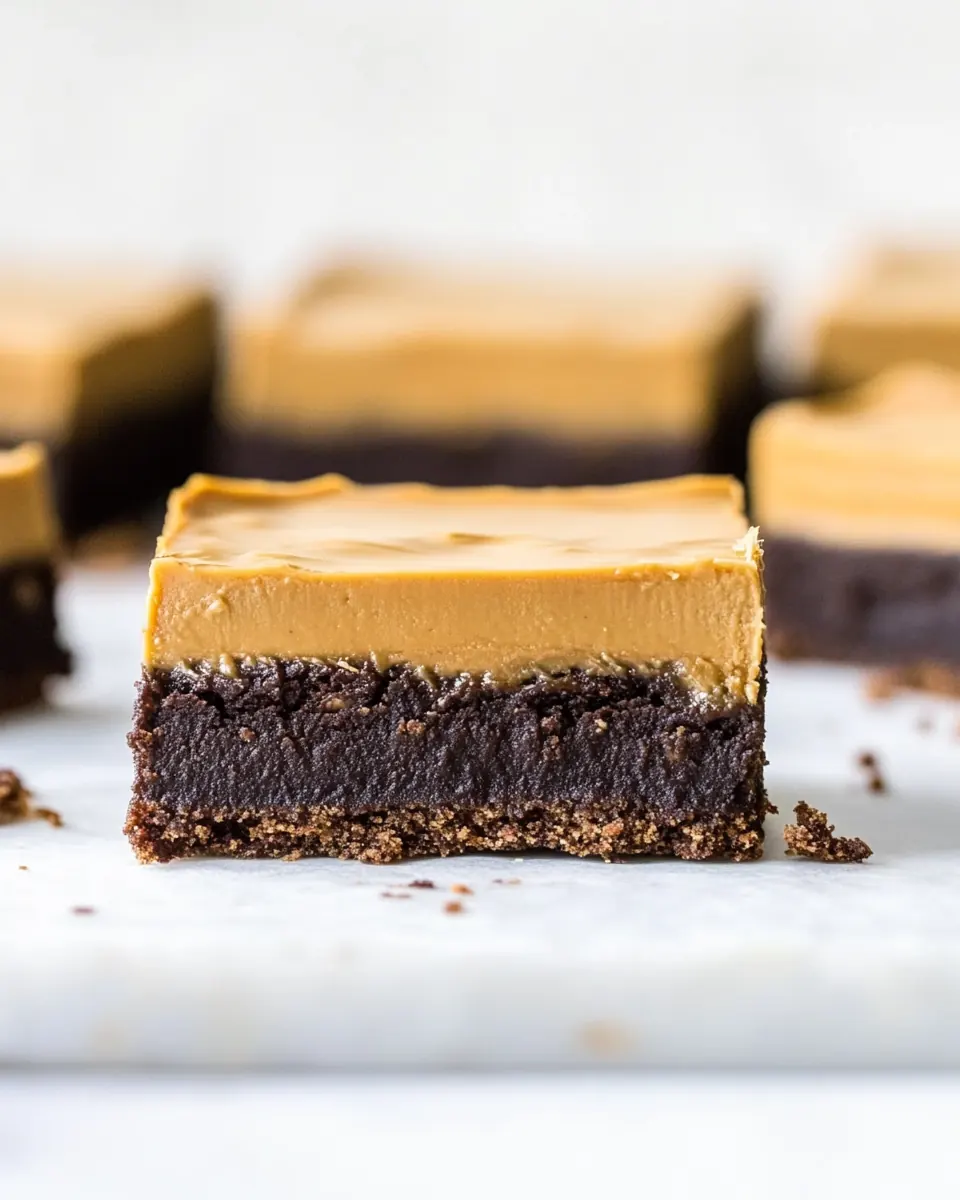
Scoop or spoon the peanut butter mixture on top of the cooled brownies and use an offset spatula or knife to spread it evenly over the top, making it as smooth as you can.: The act of spreading is tactile and satisfying, you'll feel the resistance of the filling against the spatula and aim for a flat, even layer. Smooth edges and uniform thickness ensure the final ganache lays evenly, producing neat slices. If the filling is slightly warm it will smudge, so always make sure the brownie base is cool. A mistake here is piling too much filling in the center which creates uneven slices, so distribute it evenly from edge to edge.
Place 1 1/2 cups semi-sweet chocolate chips and 2 tablespoons vegetable oil in a bowl and heat in the microwave at 20-second intervals, stirring until melted and smooth. It should be about 40-60 seconds total.: As you heat, stir frequently to achieve a glossy, lump free ganache; the vegetable oil helps thin and shine the melted chips. The mixture should look smooth and ribbon off the spoon, indicating proper temper and viscosity. Overheating can burn the chocolate and make it grainy, so short bursts and consistent stirring are essential. If you see steam, stop and stir, cooling slightly before continuing.
Pour the ganache over the peanut butter topping and smooth. Place the pan in the fridge for at least 30 minutes to chill.: Pouring the warm ganache creates a reflective top that levels naturally, and smoothing once or twice ensures full coverage. Chilling firms the layers and produces clean slices, the ganache will set to a firm yet tender bite. Avoid leaving the pan at room temperature too long because the filling can soften and the top may not set correctly. A common error is slicing before fully chilled which yields messy, smudged bars.
Once the ganache is set, remove it from the fridge and lift the brownies from the pan. Slice into pieces and serve.: When the ganache is firm, lift using the parchment overhang and transfer to a cutting surface. Use a sharp knife, warmed briefly under hot water and dried between cuts, for clean edges. You'll hear a quiet snap and see neat layers when you slice. Cutting too early causes crumbling and uneven squares, so ensure proper chilling for the best presentation.