In a high-speed blender, combine the banana, eggs, rolled oats, baking powder, and salt. Secure the lid and blend until very smooth, stopping to scrape down the sides if needed. Add 1 tablespoon of water if the batter looks thick, but avoid adding more liquid when possible, as it can make the pancakes rubbery in texture.: You will hear the blender whir and see the mixture transform from chunked fruit and dry oats into a glossy pale batter, with tiny streams swirling in the vortex. The aroma is faintly sweet from the banana , and the texture should feel creamy when you dip a spoon in. This smoothness is crucial so the batter spreads evenly and forms clean round shapes for bunny parts. If the batter appears lumpy, stop blending and scrape the sides, then pulse again to avoid overmixing which can make the pancakes rubbery. A common mistake is adding too much water because the batter seems thick at first; add only a tablespoon at a time and trust that resting will hydrate the oats further.
Heat a griddle or skillet over medium heat. You'll know it's ready to cook the pancakes when a drop of water instantly sizzles when it touches the hot surface.: As the pan warms up you may notice a faint toasty scent, and when the surface is correct a quick water drop will dance and evaporate, signaling even heat distribution. This moment matters because a properly heated pan gives the batter contact that sears the exterior, producing those tiny bubbles and a gentle browning that signals doneness. If the pan is too cool the batter will spread and cook slowly, resulting in flat, pale pancakes; if it is too hot they will brown too quickly and remain undercooked inside. A common error is setting the heat too high to hurry things along, which sacrifices the tender interior for a burnt exterior.
Grease the skillet with cooking spray, then add a 1/4 cup of pancake batter to the center of the pan. Spread it out into a circle with the back of a spoon, if needed. (Depending on the size of your skillet, you may be able to cook two or more pancakes at the same time.) When bubbles start to form in the center of the pancake, slide a flipper under the pancake and flip it over to cook the other side. When the pancake puffs up the center, you'll know it's done.: Listen for a soft, steady sizzle as the batter meets the hot surface, and watch as tiny bubbles appear and slowly pop, creating a dotted pattern on the pancake top. The edges will firm and gain a light golden hue, offering visual confirmation that it is time to flip. Smell a gentle toasty note, not burnt, which means glutenizing and caramelization are happening. Why this approach matters: even spreading ensures uniform thickness so ears and heads cook consistently. Avoid flipping too soon; flipping before bubbles form leads to gooey, undercooked centers, while waiting too long causes excessive browning.
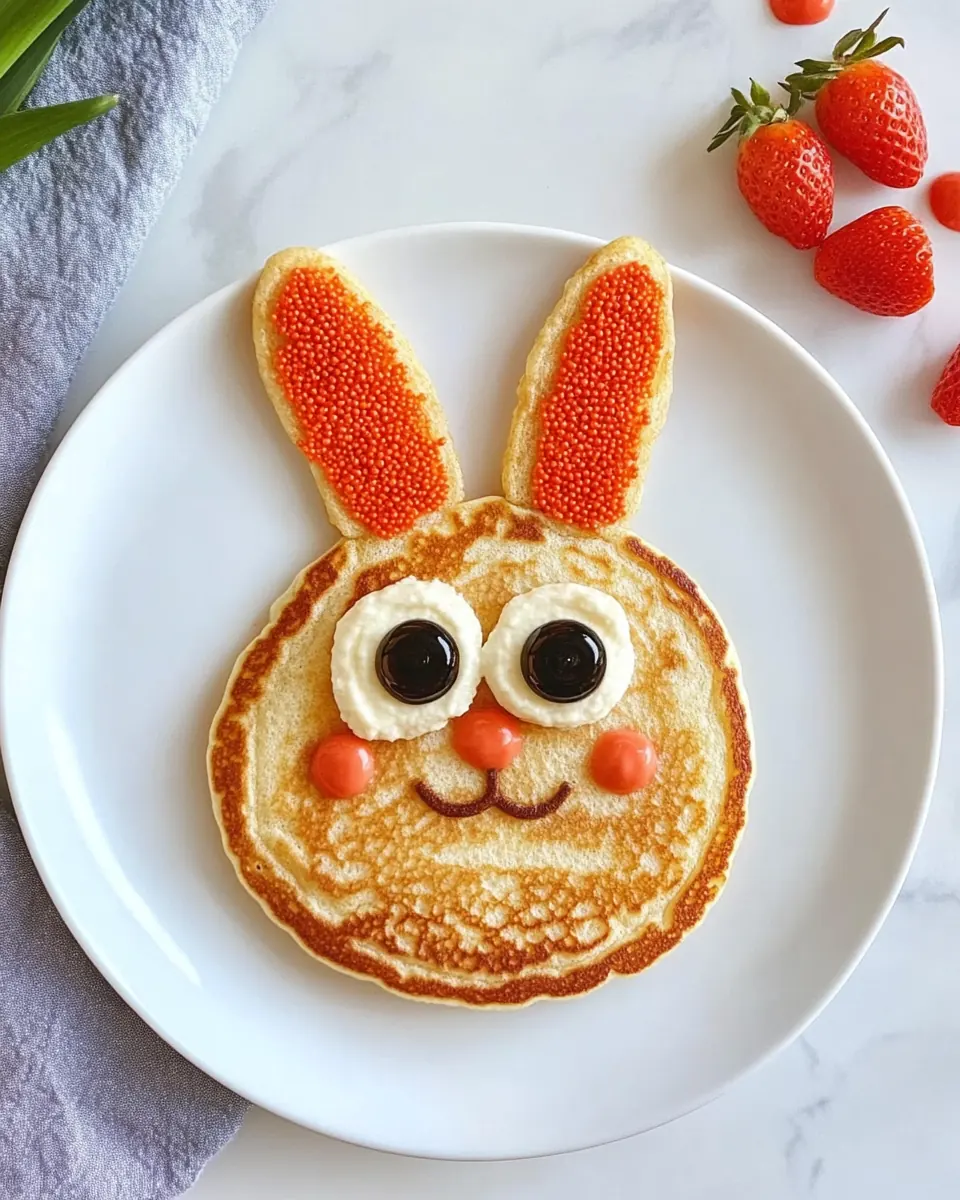
Repeat the cooking process with the remaining pancake batter. Use different amounts of batter to create various bunny parts. Use a 1/4 cup batter to make a large head or bunny butt. Use 2 tablespoons of batter to create a smaller circle bunny head, and use 1 tablespoon of batter to create each ear and bunny foot. For the bunny ears, pour the batter into long strips instead of circles. For the bunny feet, place a sliced banana and mini chocolate chips into each small circle while cooking. Alternatively, you can add these as a topping at the end.: As you cook multiple pieces you will notice how heat retention affects the next batch, and the pan may need a quick wipe or re greasing to maintain a clean surface. The visual cue for success is consistent color and bounce when pressed gently in the center, which indicates springiness. Making ears in strips creates slender, lightly browned pieces that contrast with round heads. A typical pitfall is crowding the pan with too many shapes at once, which lowers pan temperature and produces uneven doneness; work in batches if necessary.
This recipe will make 2 servings if you plan on making 2 full bunnies, complete with a bunny butt (1/4 cup batter), small head (2 tablespoons batter), 2 ears (1 tablespoon each), and 2 feet (1 tablespoon each). Or you can make roughly 3 bunny heads (1/4 cup batter) plus 3 sets of bunny ears (1 tablespoon per ear).: When measuring portions, you will see how different volumes create proportionate shapes; the larger 1/4 cup portions puff and brown more noticeably, while tablespoon portions cook quickly, developing subtle color and slightly crisp edges. Pay attention to timing because small pieces finish faster and can go from golden to overdone in seconds. A frequent mistake is assuming all pieces finish together; keep a close eye on small components and remove them earlier to avoid dryness.
Decorate the bunnies with any toppings you love, using whipped cream as a fluffy bunny tail, blueberries or chocolate chips for eyes, a sliced strawberry for a bowtie, a banana slice for a snout or paws, julienned carrots for whiskers, and mini chocolate chips for bunny nails.: The final assembly is tactile and sensory rich, with the cool soft whipped cream contrasting the warm pancake surface, and the bright pop of strawberry adding fragrant sweetness. Arrange toppings gently so they sit on the pancake without sliding, and press small chips slightly into warm batter to anchor them. Why it matters: thoughtful placement keeps features intact during serving and creates a pleasing visual. One common issue is adding whipped cream too soon; it will melt and lose its shape, so wait until plates are nearly ready before topping.