Preheat the oven to 400 degrees Fahrenheit.: You will notice the oven warms the kitchen with a dry heat that helps the crust bake quickly and become tender. Preheating ensures the pastries begin setting the moment they enter, which encourages flakiness. If you skip proper preheating, the shells can become soggy as heat gradually builds, so always wait until the oven reaches the full temperature.
In a medium bowl, stir 1 1/4 cup flour and 1/4 teaspoon salt together. Use a pastry cutter to cut in 1/3 cup shortening until it is pea-sized.: The texture of the mixture should look sandy with small chunks of fat resembling peas. You will hear a faint rubbing sound as the fat distributes through the flour. This step is important because those pea sized fat pieces create pockets that steam while baking, producing a tender, flaky shell. Avoid overworking the mixture into a uniform paste, or the crust will lose its delicate texture.
Add 4 to 5 tablespoons ice water, one tablespoon at a time, tossing with a fork. Add water and mix until all the flour is moistened and it comes together in a shaggy dough. Use your hands to knead the dough just until it comes together into a ball. Be careful not to over-knead it. This will lead to a tough dough.: The dough will come together into a shaggy mass and then into a soft ball as you add cold water. You should feel the mixture hold together without being sticky. The cold keeps the fat from melting into the flour, preserving layers. A common error is adding all the water at once, which can lead to an overly wet, tough dough.
Roll the dough out on a lightly floured surface, turning and flouring the dough as needed until the dough is about 1/4 inch thick.: The dough should be smooth but not overworked. Use gentle presses and folds, and stop when it forms a cohesive ball. You will sense a cool, slightly tacky feel. Over kneading activates gluten, which makes the crust chewy instead of flaky, so limit handling.
Use a 3-inch circle cutter to cut out 12 circles of dough. If necessary, gently press the scraps of dough together and let it rest for 5 minutes before rolling out again to cut out additional circles.: The dough should roll easily and show a uniform thickness, with a matte finish from the light dusting of flour. Turning the dough prevents sticking and keeps the roll even. If the dough becomes soft or gummy, chill it briefly; warm dough is harder to work with and may tear.
Press the circles of dough into a lightly greased muffin tin so each muffin well looks like an individual tart shell. Set in the fridge while you prepare the filling.: You will see clean edges on the circles if your cutter is sharp and you press straight down. Gently lift each circle to avoid stretching. If scraps remain, press them together lightly and let the dough relax for 5 minutes before rolling again. Forcing the dough after repeated rolling can make it tough.
Add 1/4 cup unsalted butter to a large measuring cup and heat in the microwave for 15-20 seconds or until fully melted.: When pressed, the dough should snugly line the well and have a smooth inner surface. Chilling the tin with the shells helps keep the shape while you prepare the filling. Without chilling, the shells can slump and create uneven walls, so pop the tray in the fridge for a few minutes if needed.
Whisk in 1/4 cup dark brown sugar, 1/2 cup light corn syrup, 1 large egg, and 3/4 teaspoon vanilla extract. Pour the filling evenly into the chilled dough.: The butter should be warm and completely liquid, fragrant with a rich aroma. Melting it gently prevents burning. If the butter is too hot, it can start cooking the eggs when mixed, so allow it to cool slightly before combining with the other ingredients.
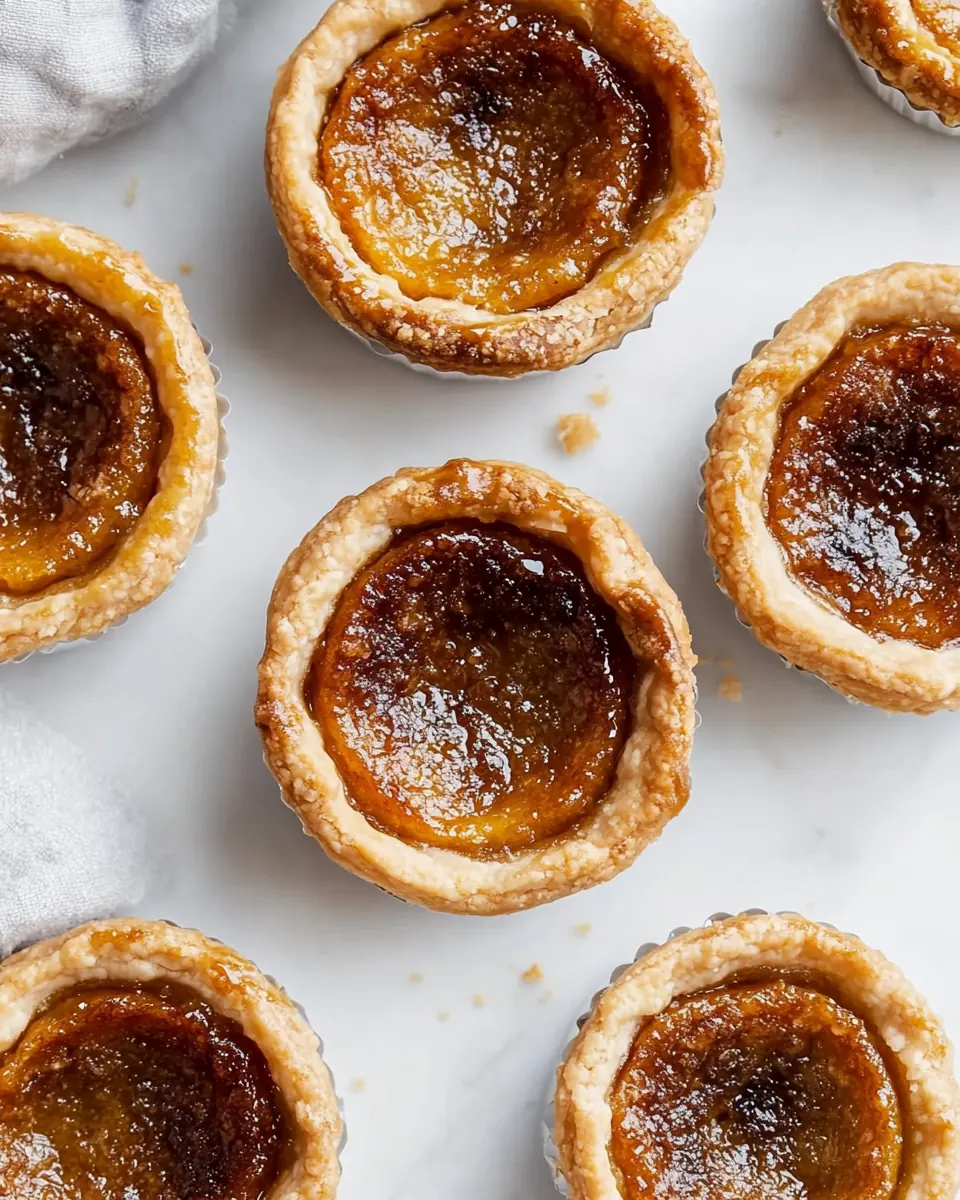
Bake for 15-18 minutes or until the filling is set. Let cool completely before serving.: The mixture will become glossy and smooth, with the scent of caramel and vanilla rising as you whisk. It should pour easily but hold together rather than run like water. Proper mixing ensures even sweetness and prevents pockets of unmixed sugar. A typical mistake is under whisking, which leaves grainy sugar; whisk until silky.
Pour the filling evenly into the chilled dough.: As you spoon the filling, you should hear a soft glug and see the glossy surface settle into each shell. Fillings will slightly mound but should not overflow the rims. Fill too full and the filling may bubble over during baking, creating uneven baking and a mess to clean, so aim for even, moderate portions.
Bake for 15-18 minutes or until the filling is set.: During baking you will notice the edges of the shells turning a light golden color and the filling moving from glossy to a taut, slightly matte surface. The kitchen will smell sweet and buttery. To test for doneness, the centers should wobble only slightly when nudged. If you underbake, the filling will be too runny; if you overbake, it can become dry and crystallized, so watch carefully in the final minutes.
Let cool completely before serving.: Cooling allows the filling to finish setting so slices hold their shape. You will feel the tart come to room temperature, and the texture will change from tacky to pleasantly firm. Removing them too soon can cause the centers to spill, so be patient and let them rest until they are comfortable to touch and slice cleanly.