Combine cajun seasoning in a shallow bowl. Add the steak bites and toss to evenly coat.: The moment you mix the spices, the aroma will shift from dry powdered notes to something more integrated, with paprika giving a warm smell and the herbs adding an earthy lift. I often rub the blend between my fingers to wake up the oils in the spices, which helps them cling to the steak . Why this matters, because an even coating ensures every cube gets that flavorful crust during searing. A common mistake is over mixing wet ingredients into this dry mix, which can make clumps; keep it dry and free of moisture.
Heat 2 teaspoons oil in a skillet or pan over medium-high heat until hot.: As you toss, you will feel the seasoning adhere to the meat, and you may notice little specks of spice sticking to the surface. This tactile step helps ensure all pieces sear evenly, creating an even distribution of flavor. If pieces are unevenly coated you risk some bites tasting bland while others are overly spiced. Avoid crowding the pieces together at this stage, because moisture will prevent a good sear.
Sear the steak bites in batches for 2-3 minutes each side until edges are crispy and browned, adding extra oil as needed. Set aside.: You will see the oil shimmer and possibly a faint wispy smoke when it is ready, signaling a high enough temperature to sear. A properly heated pan promotes rapid Maillard reaction, creating the crisp, brown edges you want. A common pitfall is not preheating long enough, resulting in steaming rather than searing, so be patient until you see the glint in the oil.
Reduce heat to medium. Add butter to the skillet and heat until melted. Sauté the chopped garlic until fragrant (about 30 seconds), while scraping up any browned bits from the pan.: The sizzle is your guide, a loud, energetic sound means the sugars and proteins are browning correctly. Watch for deep golden brown edges and tiny caramelized bits forming; that contrast in texture is the hallmark of a great bite. When you sear in batches the pan stays hot, preventing crowding which would lower the temperature. One common mistake is flipping too often, which interrupts crust formation, so let each side develop undisturbed.
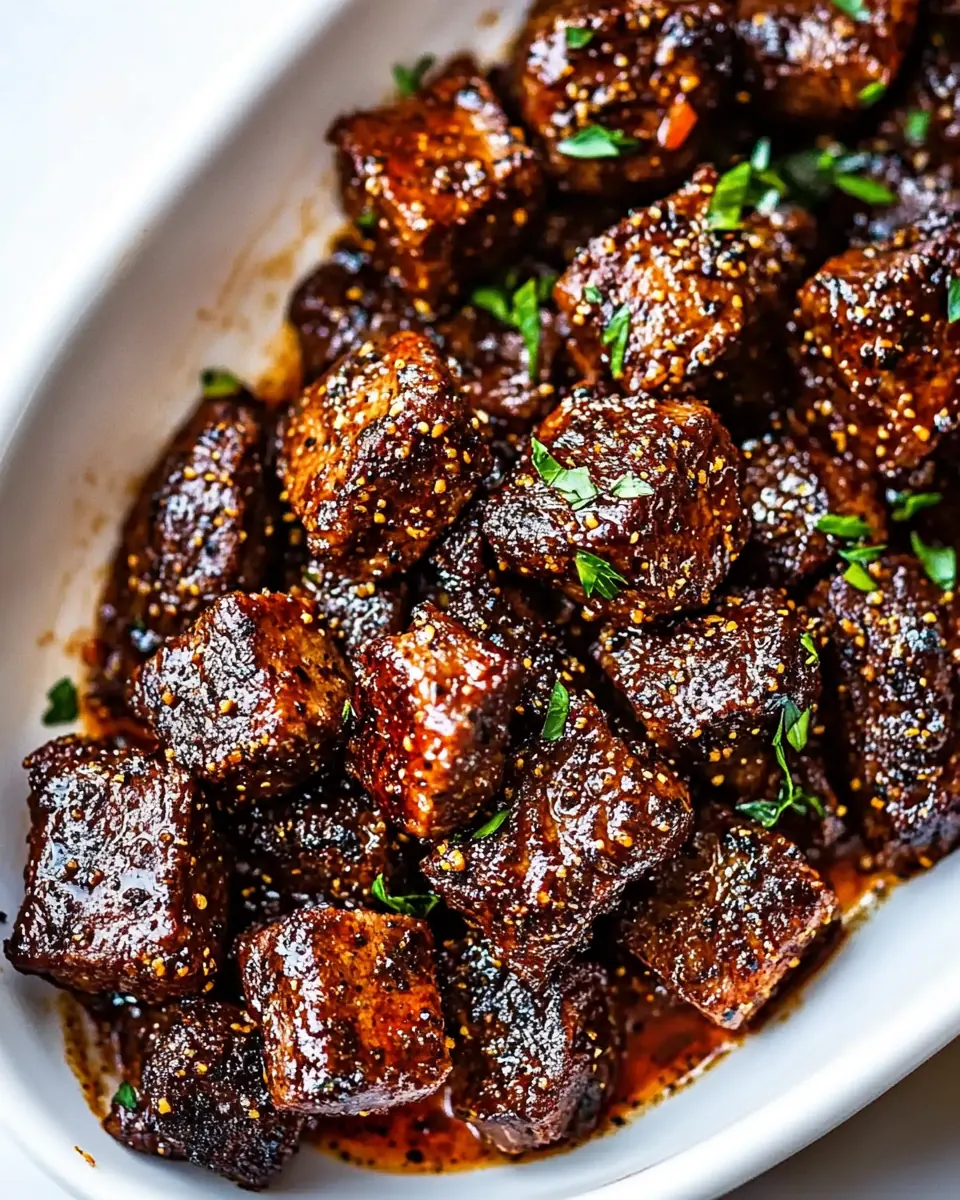
Take the pan off the heat. Throw the steak bites back in and toss through the garlic butter to evenly coat.: As the cooked pieces rest on a plate, you will notice steam rising and juices redistributing; resting helps the interior remain juicy. Leaving them in the pan risks overcooking once the residual heat continues to work on the meat. A typical mistake here is leaving the meat in a crowded pile, which can trap steam and soften the crust; spread them slightly so they cool just enough before the final toss.
Serve warm.: Dropping the heat creates a gentler environment to melt butter and to sauté garlic without burning it. This control preserves the sweet nutty notes of the butter and the aromatic piquancy of the garlic . A misstep is keeping the heat too high, which can scorch the butter and make the garlic bitter, so watch the pan and lower the flame promptly.
Add butter to the skillet and heat until melted: When the butter melts and foams slightly, it releases a rich, toasty scent that adds depth. Allowing it to warm gently creates a silky medium to carry the garlic flavor into the pan juices. Avoid letting the butter brown heavily unless you want deeper nutty notes; for this recipe I usually keep it just melted and shimmering.
Sauté the chopped garlic until fragrant about 30 seconds while scraping up any browned bits from the pan: The first 30 seconds will release an intense aroma that signals readiness, and scraping the browned bits lifts concentrated flavor into the butter . This creates a glossy, flavorful sauce that coats the meat. Watch carefully because garlic can go from fragrant to burnt very quickly; if it browns too fast, take the pan off the heat to cool for a moment.
Take the pan off the heat: Removing the pan from direct heat prevents overcooking the garlic as you combine components, and it lets residual warmth bring everything together gently. This pause protects the delicate aromatics while you handle the steak . A common error is keeping the pan on heat while tossing, which risks further cooking the meat and burning the garlic.
Throw the steak bites back in and toss through the garlic butter to evenly coat: At this stage you will see the butter sheen the meat, and hear a soft, satisfying sizzle as juices meet fat. Tossing helps the flavors marry and ensures each cube has that glossy finish. This step deepens the spice profile and brings forward a savory, slightly sweet coating. Avoid over tossing vigorously which can tear the crust off the meat; a gentle fold is all you need.
Serve warm: Serve right away so the contrast between warm buttery sauce and the crisped edges is at its peak. The scent will be inviting and the texture will be at its best when enjoyed immediately. A mistake I see is letting the bites sit too long, which softens the crust and mutes the freshness of the garlic and butter .