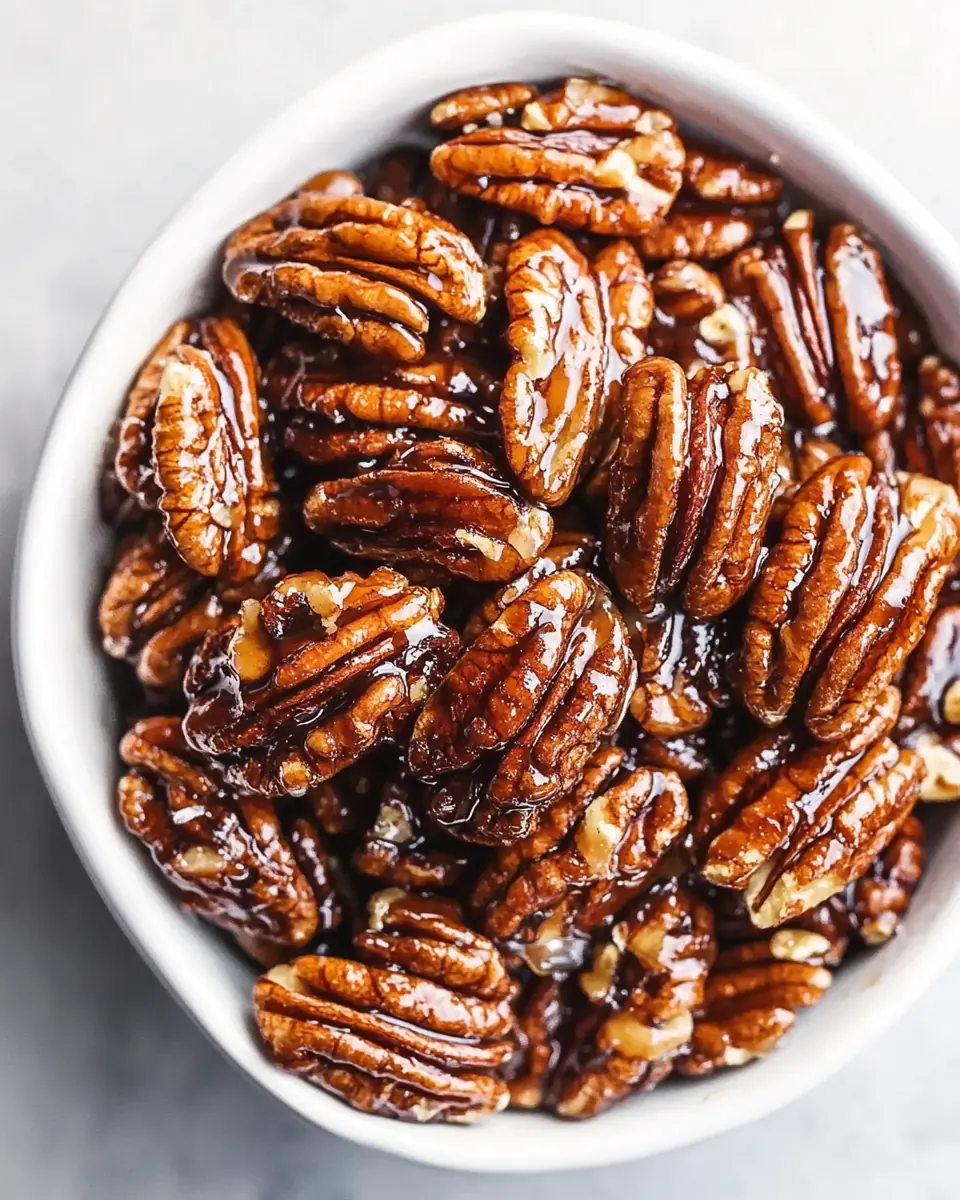
In a nonstick skillet over medium high heat, melt together brown sugar and water until rapidly bubbling. Add pecans, stirring thoroughly to coat. Cook, stirring, for 3-4 minutes, until fragrant and most of the liquid has evaporated. (But not so long at the sugars burn.): The moment the sugar-water mixture begins to bubble rapidly, you will notice a thin, steady sizzle and a warm sweet steam rising, signaling the syrup is reaching the right stage; this bubbling concentrates the sugars and creates the glassy coating we want, and you should keep the skillet moving with a gentle swirl so the heat distributes evenly, preventing hot spots that scorch; one mistake people make here is leaving the pan unmoved, which causes localized burning and a bitter taste, so stay present and use medium high heat to keep progress steady without rushing to a dark caramel.
Spread pecans into a single layer onto a parchment-lined baking sheet, and use a fork to separate them. Let stand at room temperature for about an hour, until fully cooled, set, and dry. (Pecans will be only very slightly tacky to the touch.): As soon as the pecans hit the pan you will hear a louder, cheerful crackle and see the syrup cling and gloss the nuts, creating small beads that travel across the pecan surfaces; stirring ensures every crevice gets a thin layer of syrup that will set crisp, and the motion helps prevent clusters from forming too early; avoid dumping in too many pecans at once, which can cool the syrup suddenly and leave sticky, undercoated spots, so add them in a single measured portion as the recipe directs.
Break apart any pecan clusters and store in an airtight container at room temperature for up to a week, in the refrigerator for a couple of weeks, or in the freezer for up to 2 months.: During these minutes the air will fill with a toasty, sugary aroma and the syrup will thin into a satin sheen that no longer collects as large droplets, indicating moisture has evaporated; you should notice the surface of the pecans transform from wet glistening to a drier lacquer that still looks shiny, and that is the cue to stop cooking; a common misstep is waiting too long, which leads to dark spots and a burnt aftertaste, so watch closely as the fragrance becomes nutty and deep rather than sharp or acrid.
Spread pecans into a single layer onto a parchment-lined baking sheet, and use a fork to separate them: When you transfer the pecans, arrange them with space between pieces so they set individually, and the fork helps tease apart any that are clinging together while the coating is still warm and tacky; visually you want distinct, glossy nuts that will crisp as they cool, and the fork action reduces big clusters and creates more uniformly coated pieces; if you skip spacing, the puddled sugar will bind clusters that are hard to separate later, so work methodically and separate while still warm.
Let stand at room temperature for about an hour, until fully cooled, set, and dry: As the pecans rest, the coating hardens into that satisfying brittle shell, and you will feel a faint stickiness at first that fades to a crisp snap; the aroma mellows into a warm toasted note and the texture firms, which is why patience here rewards you with peak crunch; a frequent error is trying to speed this step in the fridge, which can cause condensation and a soft coating, so allow them to cool at room temperature undisturbed.
Break apart any pecan clusters and store in an airtight container at room temperature for up to a week: Once fully set, gently separate clusters by hand or with a quick fork lift, and keep the nuts in an airtight container away from heat to preserve their snap; the room temperature storage keeps the texture stable and the flavor balanced for everyday use; storing in a warm spot or leaving the lid off invites moisture and softening, so seal them tightly and check occasionally for any sticking to ensure they remain crisp.