Trim the meat of excess fat and slice or butterfly the meat into a sheet about 3/8-inch thick (see NOTES below).: The aroma at this stage is subtle, mostly metallic and raw beef scent, and your hands will feel the grain of the muscle as you work. Trimming excess fat prevents flare ups on the grill and ensures the meat cooks evenly, while butterflying creates an even thickness for uniform doneness. A common mistake is leaving thick pockets of fat which cause uneven cooking and flare ups. When slicing, look for a consistent thickness so one area does not char while another remains undercooked, and keep your cutting surface stable to maintain control.
Place the meat between two sheets of plastic wrap and carefully pound it with a meat-tenderizer mallet or rolling pin to a 1/4-inch thickness.: You will hear a dull thud as the mallet meets the plastic, and the meat will surrender under pressure, becoming visibly flattened and slightly glossy from released juices. Pounding to 1/4-inch creates a tender texture and allows flavors to penetrate quickly, which matters for short marination times. Avoid over pounding which can turn the meat mealy and mushy; stop when the surface is even and you can see fibers relaxed. Use even strokes and rotate the meat so pressure is uniform, and wipe up any juices to maintain a sanitary workspace.
Coat the meat with lime juice and brush it lightly with oil. Sprinkle chile powder, jalapeno, garlic, scallion and black pepper evenly on both sides of the meat. Allow to marinate at room temperature for 20 to 30 minutes.: At this point the kitchen will smell of citrus and spice, with a bright lime perfume tempered by chipotle smokiness and the sharp warmth of garlic . The acid from the limes begins to change the surface texture of the meat, tenderizing protein and helping spices adhere, while the oil promotes even browning. Marinating at room temperature for the recommended time speeds flavor absorption without risking food safety; do not exceed the time excessively or the surface can become mushy from acid. A typical problem is uneven spice distribution, so use your hands or a brush to ensure the seasoning is fully spread across both sides.
Preheat your grill to medium. Sprinkle the salt on all sides of the meat, and grill alongside the green onions until the beef is just cooked through and the onions are beginning to brown. Remove the meat from the grill and let it rest for 5 minutes.: You'll hear a lively sizzle as the meat hits the grates and smell a toasty, caramel aroma as the sugars and proteins react. Properly preheating to medium ensures a sear without burning, and adding salt right before grilling intensifies the crust formation. Watch the green onions as they char, they should show browned blisters but not turn to ash. A frequent misstep is flipping too early which prevents a proper crust from forming; let the meat develop a seared surface before turning. Resting for 5 minutes allows juices to redistribute, so slices remain juicy rather than leaking onto the plate.
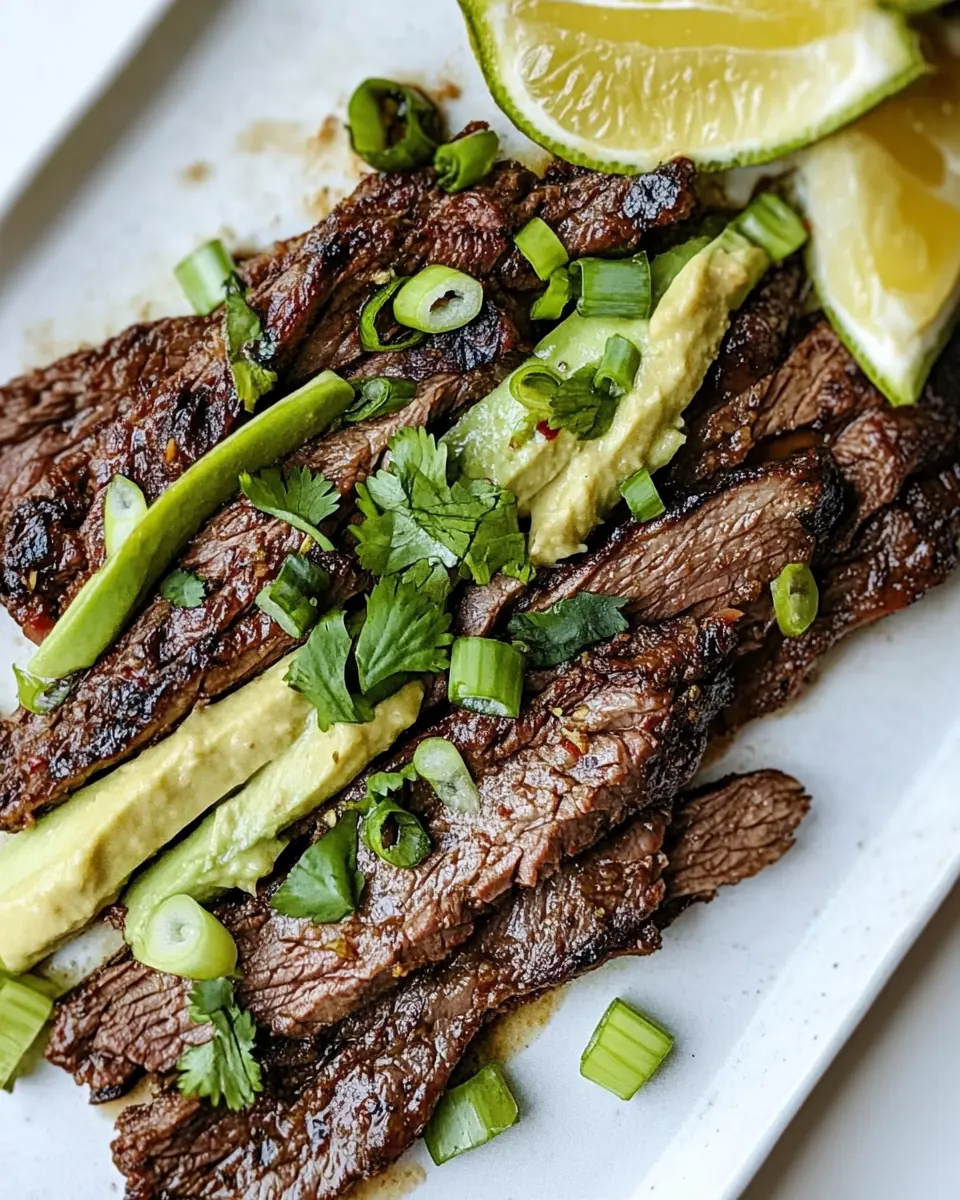
Slice the beef in long, thin slices approximately 1/4-inch thick. Arrange on a plate, top with grilled green onions and garnish with lime wedges.: The sound here is quieter, a soft knife glide through tender cooked meat, and the cut surfaces should reveal a slight pinkness depending on doneness preference with a deeply browned exterior. Slicing against the grain shortens muscle fibers, making each bite more tender and pleasant to chew, and the long thin slices are perfect for building tacos. Avoid cutting too thick which makes the meat chewy, or too thin which can dry quickly. Plate the slices attractively and finish with the smoky green onions and fresh lime for brightness.
You can certainly eat the carne asada on its own, but if you'd like to make tacos out of it… warm up the tortillas and add your desired fixings!: Warming the tortillas until they are pliable releases a toasty scent and helps them cradle the meat without cracking. The contrast between the warm tortilla, the juicy slices of beef , and cold toppings like guacamole or salsa creates a pleasing temperature and texture interplay. A common oversight is overloading the tortilla which makes it hard to eat; aim for balance so each taco highlights the meat. Use gentle folds and serve immediately so the tortilla remains warm and tender.