In a mixing bowl, combine flour, baking powder, salt, cinnamon, nutmeg, and brown sugar.: The dry mixture should smell faintly spiced and warm when the cinnamon and nutmeg are evenly distributed. When you sift or whisk these ingredients together, you eliminate pockets of leavening or spices, which ensures even rise and consistent flavor. Pay attention to texture, the flour should feel light and free of lumps. A common mistake is adding wet ingredients too soon, which can lead to uneven distribution and pockets of baking powder that cause big air holes or a metallic taste.
In a separate bowl, whisk together the milk and vanilla. Peel and grate carrots then add to the milk, along with the crushed pineapple (drained), oil, and 1 tablespoon of melted butter. Mix well.: As you whisk the milk and vanilla , the surface will become glossy and slightly fragrant, signaling readiness. When you fold in the grated carrot and drained crushed pineapple , notice the batter gaining flecks of orange and little pockets of fruit, this texture helps the pancakes remain moist. The melted butter and olive oil create silkiness and help with browning on the griddle. Avoid over mixing at this stage to prevent a dense final texture, and be sure the canned crushed pineapple is well drained to prevent a soupy batter.
Gradually add dry ingredients to the wet, stirring until just combined.: At this point the batter will transition from glossy and loose to slightly thick with visible specks of spice and bits of carrot . Stir gently until you see no large streaks of flour , small lumps are fine and will disappear during cooking, which helps keep pancakes tender. Over mixing is the most common misstep here, it develops gluten and yields a tougher bite. If the batter seems too thick, a tablespoon of extra milk will loosen it without sacrificing structure.
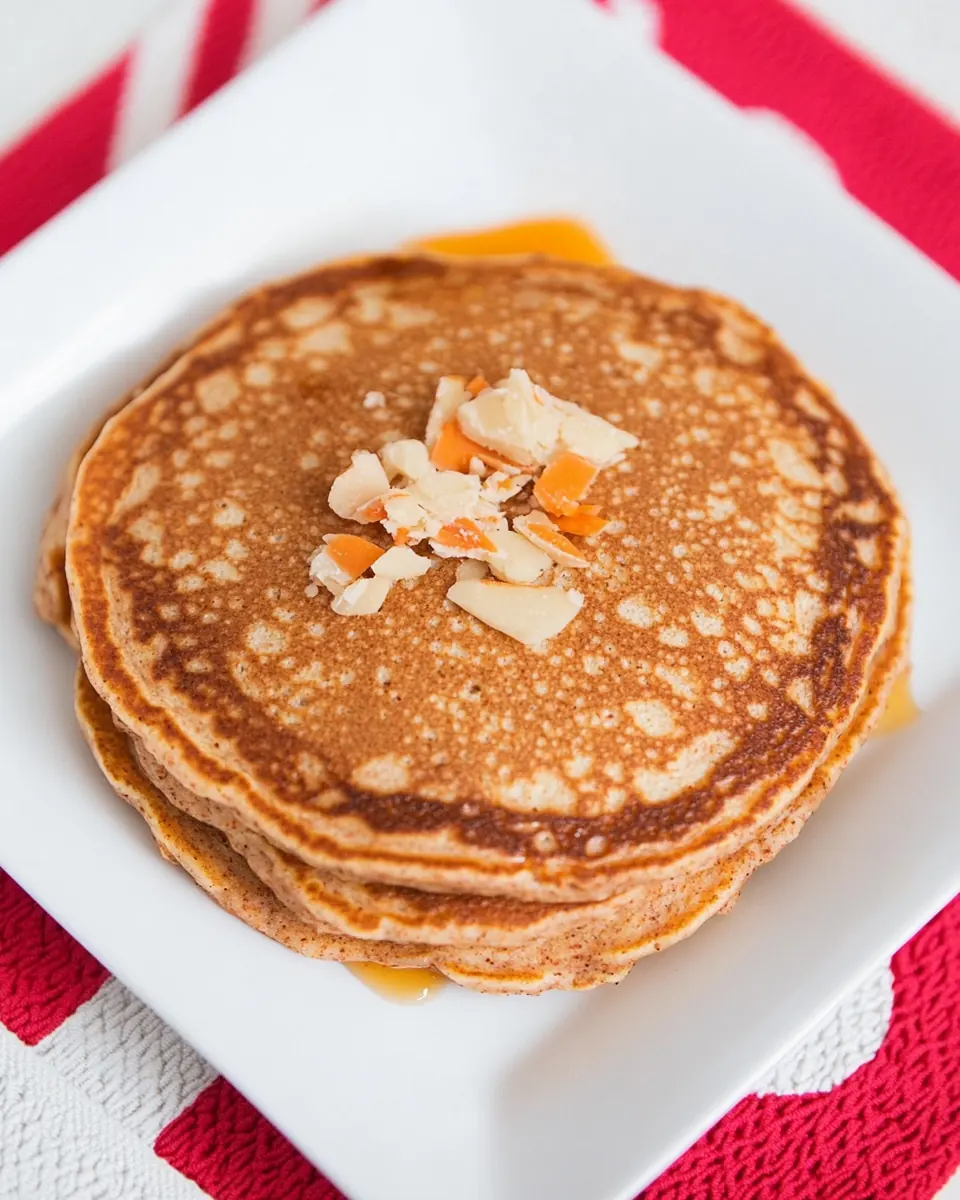
Spray a large skillet with cooking spray and heat over medium. Pour batter by 1/4 cup fulls and cook until bubbly. Flip and cook for an additional 1-2 minutes until both sides are golden. Continue until all batter has been used.: When your skillet reaches the right temperature, it will give a soft hiss as batter hits the surface, and small bubbles will form across the top within a minute or two. That bubbling is the key visual cue that the interior is setting and the bottom is forming a golden crust. The scent will shift from raw batter to toasty and spiced, with hints of cinnamon . Too hot a pan will cook the exterior too quickly, leaving raw centers, while too cool a pan will make the pancakes pale and flat.
Top with remaining butter and maple syrup. Serve sliced bananas on the side.: When you flip, the underside should be a deep, even golden brown with slight caramelization from the brown sugar . The second side cooks faster, so listen for a gentler sizzle and watch for that same golden color to appear. The aroma will become richer and more complex, with the nutmeg and cinnamon coming forward. Avoid flipping repeatedly, that encourages deflation and an uneven finish.
Top with remaining butter and maple syrup serve sliced bananas on the side: The final touch of melted butter and a drizzle of pure maple syrup adds gloss and a pleasant sticky sweetness, which highlights the spices and fruit. The sliced banana offers contrast in texture and temperature, staying cool against the warm pancake stack. A common error is pouring syrup too early, which can make pancakes soggy, so wait until plating to preserve the crisp edges and tender interior.