Put your chopped carrots in a pot of water. Boil them until they’re soft, which should take about 20-25 minutes. Once the carrots are soft, drain the water and let them cool down. This is important before adding the eggs.: As the pot comes to a simmer, you will hear a gentle bubbling that signals the carrots are cooking; the kitchen will begin to smell sweet and earthy. Boiling softens them so they blend into a smooth purée, which is essential for a uniform texture. A common mistake is overcrowding the pot, which can make cooking uneven; give the pieces space and use enough water to cover them. Use a slotted spoon to check tenderness by piercing a piece; it should yield without resistance. If you overcook, the carrots can become waterlogged and dilute flavor, so aim for tender but not falling apart. Drain promptly to prevent soggy purée, and let them cool slightly so the heat does not scramble the eggs when mixed.
Preheat your oven to 350°F (180°C), and grease a 2 quart baking dish with butter or cooking spray.: During this time the steam carries the vegetable aroma, and you may notice a slight deepening of color as the carrots break down. Cooking to the right point matters because undercooked pieces will leave unwanted texture, while overcooked ones can waterlog the mixture. Stir once or twice to ensure even cooking and test multiple pieces for consistency. A mistake to avoid is assuming the outer pieces are done; always check the center of a thicker piece. Timing can vary with size of pieces, so cut the carrots evenly for predictable results.
Place the cooled carrots in a food processor and blend until smooth. Add the eggs, melted butter, granulated sugar, vanilla, ground cinnamon, nutmeg, all-purpose flour, baking powder, and salt to the food processor. Blend until smooth and everything is mixed together.: Cooling is an important step because adding warm carrots directly to the bowl with eggs risks cooking them prematurely, which can cause curdling. As they cool, the aroma will become more concentrated and the texture will firm slightly, helping them puree more predictably. A common slip is rushing this step; if you add eggs too soon you may end up with a grainy texture. Let the heat dissipate until the pieces are just warm to the touch before blending.
Pour the carrot mixture into your greased baking dish.: A properly preheated oven ensures even baking, and greasing the dish helps release the souffle cleanly. You will feel confident when you hear the oven click at temperature and smell the hint of warmth. If the dish is not greased well, the edges can stick and tear when serving, so be thorough. Avoid placing the dish in an oven that has not reached the temperature; inconsistent heat can prevent the proper set and browning that make the top attractive.
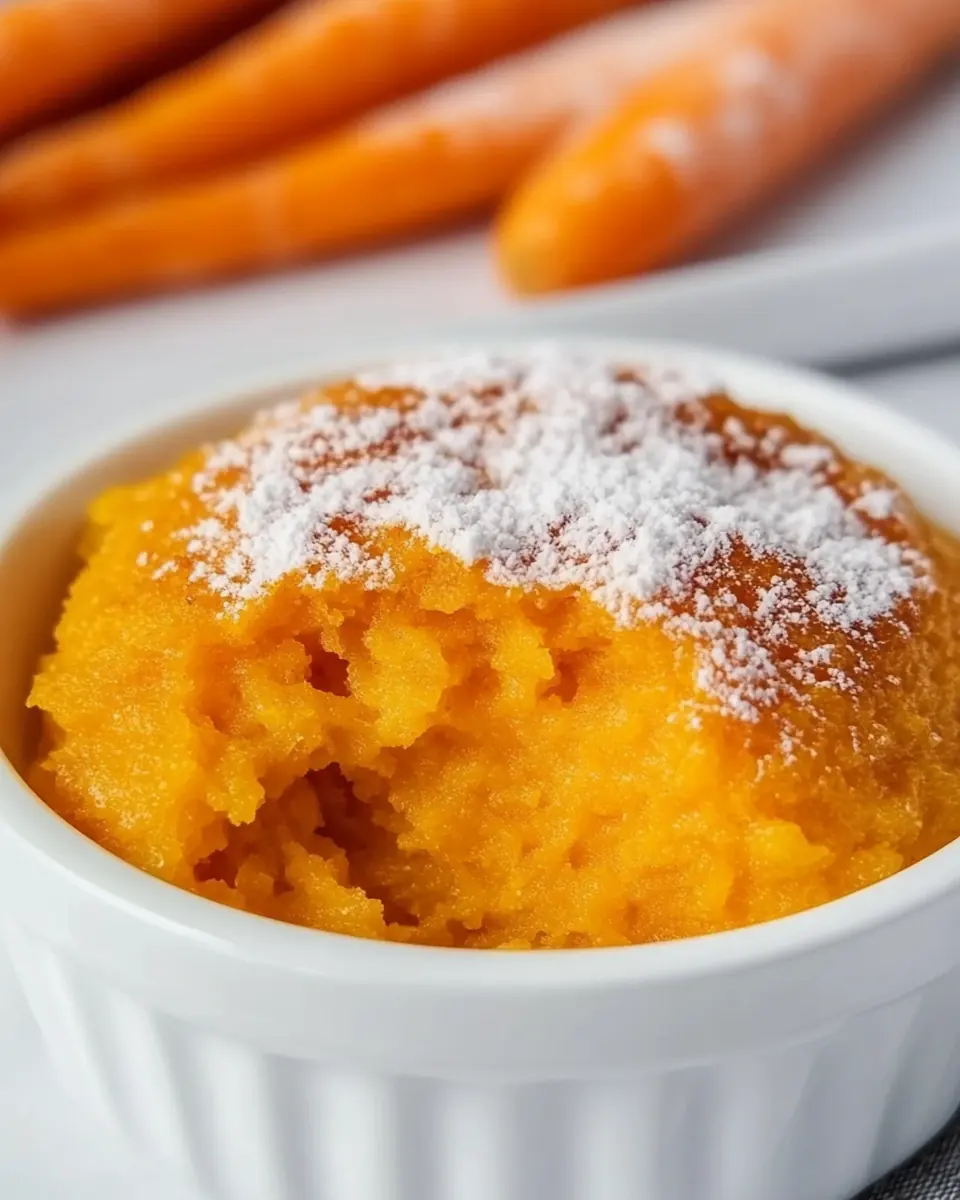
Place the baking dish in the oven and bake for 40-45 minutes or until the top begins to turn golden brown and no longer shiny. Remove from the oven, allow to cool for a few minutes and sprinkle with powdered sugar before serving.: As you blend, the texture becomes velvety and the sweet smell intensifies. The smoothness here determines the mouthfeel of the final souffle, so take your time to achieve a creamy consistency. If your processor struggles, pause and scrape down the sides to ensure everything is evenly pureed. A common error is underprocessing, which leaves fibrous bits that change the expected custardy texture. If you do not have a processor, a powerful blender or careful mashing will work though the texture will differ.
Add the eggs, melted butter, granulated sugar, vanilla, ground cinnamon, nutmeg, all purpose flour, baking powder, and salt to the food processor: When these ingredients come together, the aroma becomes layered and warm, with hints of spice and vanilla. The eggs act as emulsifiers, creating a unified batter, while the butter enriches the mouthfeel and the flour provides subtle structure. Mixing thoroughly prevents pockets of dry flour and ensures the leavening is evenly distributed. A mistake people make is adding cold melted butter straight from the pan; let it cool a touch so it does not affect the eggs. Blend until homogeneous and silky, stopping to scrape down the sides as needed.
Blend until smooth and everything is mixed together: You will notice the mixture become glossy and uniform, and a spoon dipped in will show a consistent texture without visible streaks. This cohesive batter will bake into an evenly set souffle with a tender crumb. If the mixture shows separation or lumps, keep blending and scrape the bowl to reincorporate. Overblending can introduce excess air which changes texture, so aim for smoothness without aerating too much. If the batter seems too loose, check measurements; too much liquid will prevent proper setting.
Pour the carrot mixture into your greased baking dish: As you pour, the batter will settle and the surface should be relatively even; the glossy top is a good sign of proper emulsification. Gently smooth with a spatula if necessary, being careful not to press out any lightness you created. A common oversight is using a dish that is too large, which can make the souffle shallow and affect baking time. Make sure the batter fills the dish to an appropriate depth for an even bake.
Place the baking dish in the oven and bake for 40 to 45 minutes or until the top begins to turn golden brown and no longer shiny: During baking you will see the surface transition from glossy to matte and the top take on a light golden color. The house fills with the scent of warmed carrots , cinnamon , and vanilla . The center should be set yet tender, and a thin knife inserted near the center should come out clean or with minimal moist crumbs. A mistake is opening the oven too often which can cause an uneven bake and prevent a good set. Trust the process and check toward the end of the time window for doneness.
Remove from the oven, allow to cool for a few minutes and sprinkle with powdered sugar before serving: After removing it you will notice a gentle sigh of steam and the surface consolidating as it cools, which makes slicing easier. The brief rest lets residual heat finish the setting while preserving moisture. Dusting with powdered sugar adds a delicate sweetness and visual appeal. Cutting too soon can cause it to collapse slightly, so give it those few minutes of rest. Serve warm for the best sensory experience, enjoying the soft texture and aromatic spices.