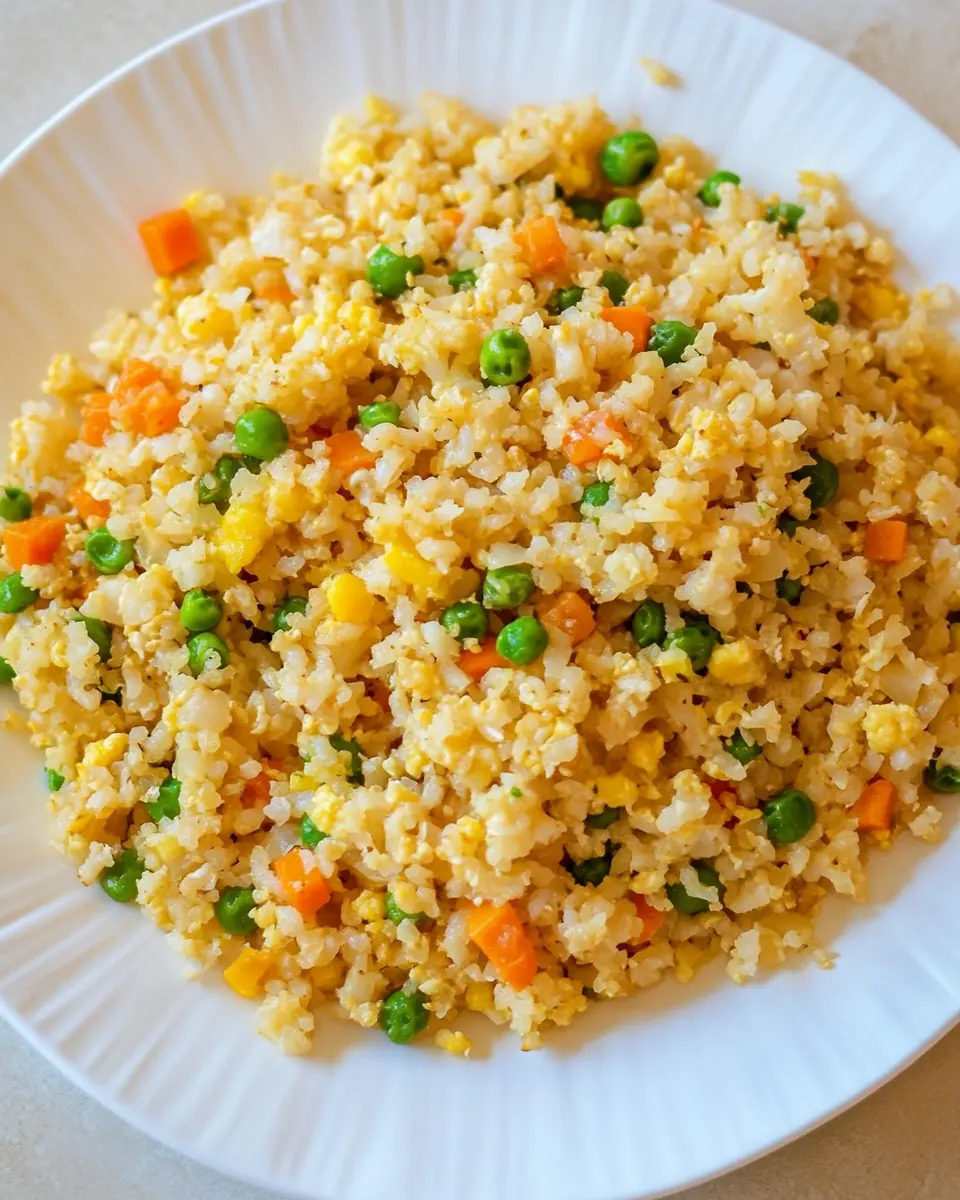
If using frozen cauliflower rice, do not defrost it first. In a nonstick pan, sauté the onion, carrot, and garlic in a little oil or water over medium heat until the onion begins to brown. Stir in the remaining ingredients except sesame oil, and cook until the cauliflower browns and carrots are soft. Stir in the oil, and season with salt and pepper as desired. For spicy cauliflower rice, add sriracha or hot sauce to taste. Serve hot, and enjoy. Leftovers can be stored in a covered airtight container in the refrigerator for 3-4 days.: The moment you add frozen cauliflower to a hot pan you will hear a sizzle as moisture releases, which helps steam and then evaporate liquid, preventing mushiness. Visually watch for the ice to melt and the bits to loosen, you want them to separate rather than clump. A common mistake is defrosting first, which makes the cauliflower waterlogged and slows browning, so keep it frozen when the recipe calls for that approach.
In a nonstick pan, sauté the onion, carrot, and garlic in a little oil or water over medium heat until the onion begins to brown: Soon after the vegetables hit the hot surface you will smell sweet onion and savory garlic, and the edges of the onion will turn translucent then golden. The sound is a gentle sustained sizzle, not aggressive splatter. Browning creates caramelized notes, which deepen the overall flavor. A misstep is cooking too low, which yields soft, pale veg, or too high, which risks burning the garlic; maintain medium heat for even color and aroma.
Stir in the remaining ingredients except sesame oil, and cook until the cauliflower browns and carrots are soft: As you fold in the cauliflower , peas , and soy sauce , you will see the sauce coat each piece and start to evaporate. Keep the pan moving so bits contact the surface and form small browned patches, that toasted edge gives a roast like depth. Taste for carrot tenderness to know when it is done. Overcrowding the pan prevents browning, so if your pan is stuffed, cook in batches to preserve texture.
Stir in the oil, and season with salt and pepper as desired: Adding the optional toasted sesame oil at this stage releases a warm, nutty perfume that lifts the dish. Season carefully because soy sauce already contributes saltiness, so add a pinch, taste, and adjust. If you skip tasting, you may over salt the dish, so sample a spoonful before final seasoning.
For spicy cauliflower rice, add sriracha or hot sauce to taste: A small drizzle will introduce a bright heat that contrasts with the savory base. Start with a little, mix thoroughly, and wait a moment for flavors to meld before adding more, because the heat builds as it warms. Too much at once can overwhelm the other flavors, so proceed gradually and keep tasting.
Serve hot, and enjoy: The aroma will be warm and inviting, with toasted sesame notes if used, and the plate should show flecks of browned cauliflower and colorful vegetables. Serving immediately preserves the delicate crispness of some pieces, whereas letting it sit can soften the texture. If you leave it too long before serving, reheat briefly over medium heat to revive the browned edges and tighten the texture.
Leftovers can be stored in a covered airtight container in the refrigerator for 3 to 4 days: Cool the rice quickly before sealing to preserve texture and safety, then chill. When reheating, sprinkle a little water or add a splash of oil and warm over medium heat to refresh the texture and avoid drying out. A common issue is microwaving straight from cold which can steam it into a mushy consistency, so reheat gently on the stove when possible.