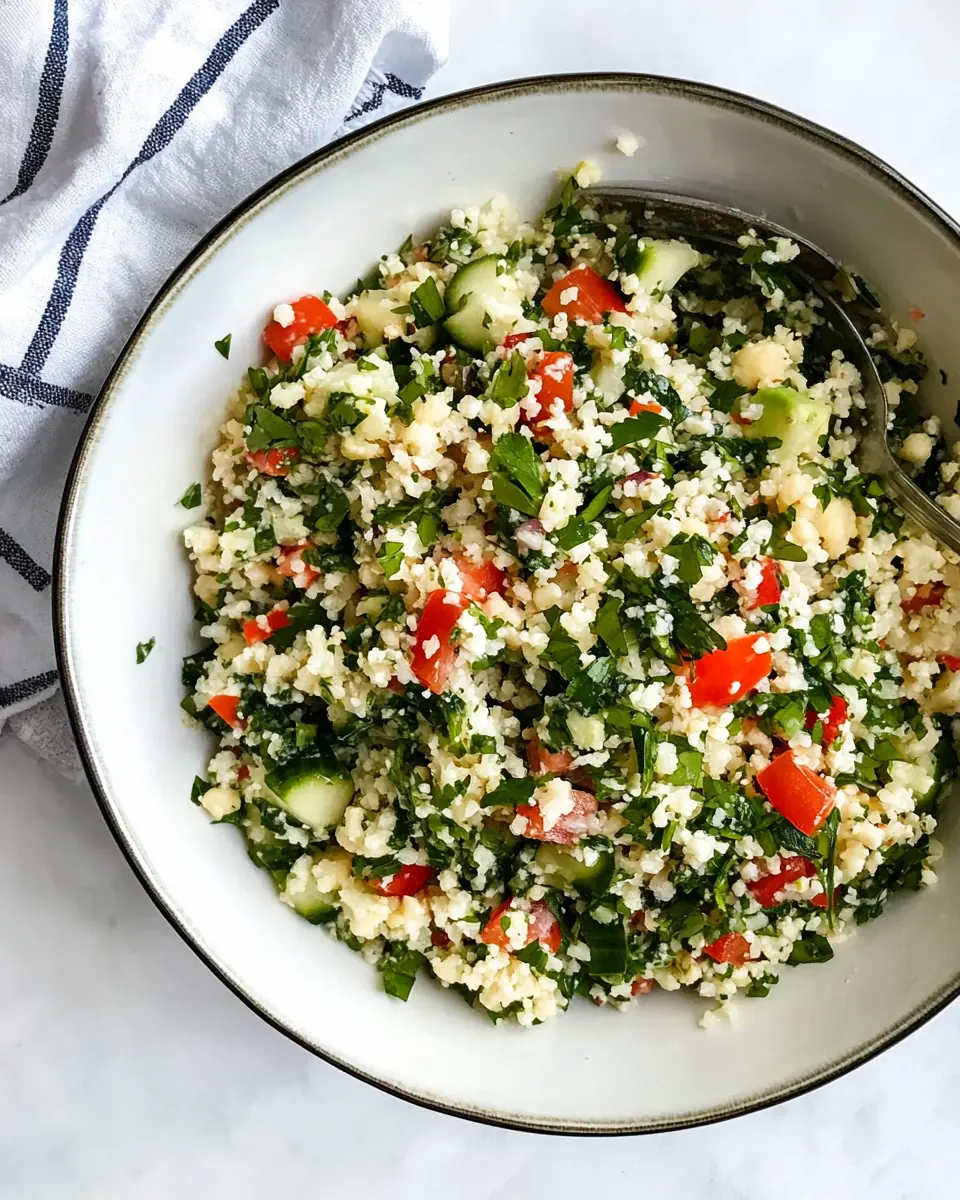
Add the cauliflower to a food processor fitted with an 'S' blade. Secure the lid and process briefly, just until the cauliflower looks crumbly and resembles rice. Set it aside.: When you pulse the cauliflower briefly, you should hear light chopping sounds and see small, rice like pieces forming; stop while there is still a little texture, not a puree. The floral, slightly nutty aroma will intensify as you process, and the visual cue is that the pieces resemble grains. This technique matters because overprocessing creates a soggy mash, so pulse in short bursts and check often. A common mistake is running the processor too long, which warms and breaks down the vegetable, so err on the side of underprocessed and adjust by hand if needed.
In a large bowl, combine the olive oil, lemon juice, garlic, and salt. Then pour in the riced cauliflower, cucumber, tomato, green onion, parsley, and fresh mint. Stir well so everything is well coated in the dressing.: You will notice a finer, more uniform texture and a faint scent of cut cauliflower . The goal is a delicate chew that holds dressings without collapsing. This approach keeps the salad lively and prevents a pasty mouthfeel. Avoid the temptation to blitz continuously; frequent pauses and visual checks ensure the right crumb consistency.
Taste the mixture and season with additional salt or lemon juice, as needed. (I usually add another 1/2 teaspoon of salt, but this will vary depending on the size of your veggies.): After pulsing, let the riced cauliflower rest in a bowl at room temperature for a few minutes so any loose moisture settles. You may feel a faint vegetal scent, which is normal; it will mellow once combined with the dressing. This pause helps you assess if the texture needs an extra pulse or gentle fluffing with a fork. The common oversight here is mixing immediately into a heavy dressing, which can make the crumbs soggy if they are still warm from overprocessing.
Serve this salad right away, or let it marinate in an airtight container in the fridge. It will keep well for up to 5 days in the fridge and pairs perfectly with hummus, falafel, and more.: As you whisk these, you will see the dressing emulsify slightly and hear the clink of the bowl. The lemon aroma should be bright and cut through the oil, while minced garlic brings savory depth. Emulsifying helps the dressing cling to the riced cauliflower and herbs for even flavor. A pitfall is adding too much salt up front; mix and taste before seasoning further.
Then pour in the riced cauliflower, cucumber, tomato, green onion, parsley, and fresh mint: When you add each component, notice the contrast of textures, from the tender riced cauliflower to the crisp cucumber . Gently toss so the dressing coats everything, watching the herbs glint as they become glossy with oil. The visual should be a mosaic of green and jewel toned tomato pieces. Over mixing aggressively can bruise the herbs and release excess liquid, so fold gently to keep the components distinct.
Stir well so everything is well coated in the dressing: As you toss, you should catch whiffs of lemon and herb, and feel the salad come together in your hands or with a spoon. Coating evenly ensures each bite has balanced seasoning. This technique matters because patchy dressing leads to uneven tasting bites. A common error is skipping a final gentle toss, which leaves pockets of dry cauliflower or overly wet tomato.
Taste the mixture and season with additional salt or lemon juice, as needed: Now the sensory testing begins, with a sample that reveals where the salad sits on the acid and salt spectrum. If it feels flat, a squeeze more lemon juice brightens it; if muted, a pinch more sea salt sharpens the flavors. Tasting at this stage is crucial because raw vegetables vary in sweetness and juiciness. Avoid over seasoning in one go; small incremental adjustments are safer.
I usually add another 1/2 teaspoon of salt, but this will vary depending on the size of your veggies: This is a guideline rather than a rule, and the actual amount depends on how juicy your tomato and cucumber are. You should notice a clear, lively finish when the seasoning is right. The reason small adjustments matter is that salt elevates brightness and reduces bitterness, which is especially important with lots of parsley . A mistake to avoid is assuming measuring guarantees balance without tasting.
Serve this salad right away, or let it marinate in an airtight container in the fridge: Freshly tossed, the salad offers crisp contrasts, while resting allows flavors to meld and softens the edges. When chilled, the parsley and mint infuse the riced cauliflower , producing a more unified flavor. If storing, use a sealed container to prevent fridge odors from mingling. A typical slip is leaving it uncovered, which dries out the herbs and dulls the overall flavor.
It will keep well for up to 5 days in the fridge and pairs perfectly with hummus, falafel, and more: Stored properly, the salad maintains texture for several days, and the perfume of herbs remains vibrant. The long fridge life makes it a great make ahead option for lunches and gatherings. Watch for excess moisture over time, and drain any pooled liquid before serving. A frequent mistake is keeping it beyond freshness; when herbs look limp or off smelling, discard.