Cauliflower Tabbouleh Salad
Cauliflower Tabbouleh Salad arrived in my kitchen the same way most small revolutions begin, with curiosity and a bag of cauliflower I did not want to waste.
I remember the afternoon clearly, rain tapping against the window while I chopped herbs with a rhythm that felt almost musical. I wanted the bright, herby tang of a classic tabbouleh, but without the wheat, and that’s when I tested pulsing florets in the food processor. The first forkful surprised me, the texture playful, the lemon and extra virgin olive oil balancing the raw, nutty edge of the cauliflower. It felt like a fresh take on something beloved.
Family members came through the kitchen asking what smelled so clean and bright, and before long a bowl disappeared faster than I expected. I started tweaking little things, more parsley here, a touch more mint there, until the salad danced between crisp and tender, herbal and citrusy. It became my go to for lunches and potlucks, a recipe that travels well and keeps its personality in the fridge.
What I love most is how adaptable it is, how the core idea of tabbouleh can be honored without being bound to bulgur. The result is fresh, light, and a bit more modern, perfect for days when you want brightness without heaviness. I hope when you make this, you find the same small joy I did, that quick, satisfying moment when a simple bowl becomes the centerpiece of a meal.
Recipe Snapshot
15 mins
15 mins
0 mins
Easy
150 kcal
Mediterranean
Vegan, Gluten-Free
Salads
Food processor, Large bowl
What Makes This Cauliflower Tabbouleh Salad Special
Bright Herb Forward Flavor
I adore how Cauliflower Tabbouleh Salad lets the herbs shine. When you finely chop the parsley and mint, each bite releases a green perfume that lifts the whole salad. I often find myself leaning in just to inhale the freshness before tasting.
Light But Satisfying Texture
The riced cauliflower gives a delicate chew that mimics grain without the heaviness, so you feel satisfied rather than weighed down. I love serving it when I want something filling yet bright, because it holds together and does not turn mushy quickly.
Speed and Simplicity
This recipe comes together fast, and that is a big part of its charm. From chopping to tossing, it is a relaxed, under an hour project that still impresses. I appreciate recipes that respect time without sacrificing flavor, and this salad fits that bill every time.
Flexible and Crowd Friendly
I’ve brought this to picnics and weeknight dinners, and it adapts to the table. It pairs beautifully with dips like hummus and stands up next to heartier mains. I like that I can scale it up and it keeps its character.
Make Ahead Convenience
One of my favorite practical wins is that the flavors improve slightly after a short rest. If I prepare it the night before, the lemon settles in and the salad tastes cohesive the next day. This reliability makes it a staple in my fridge.
Cauliflower Tabbouleh Salad Shopping List
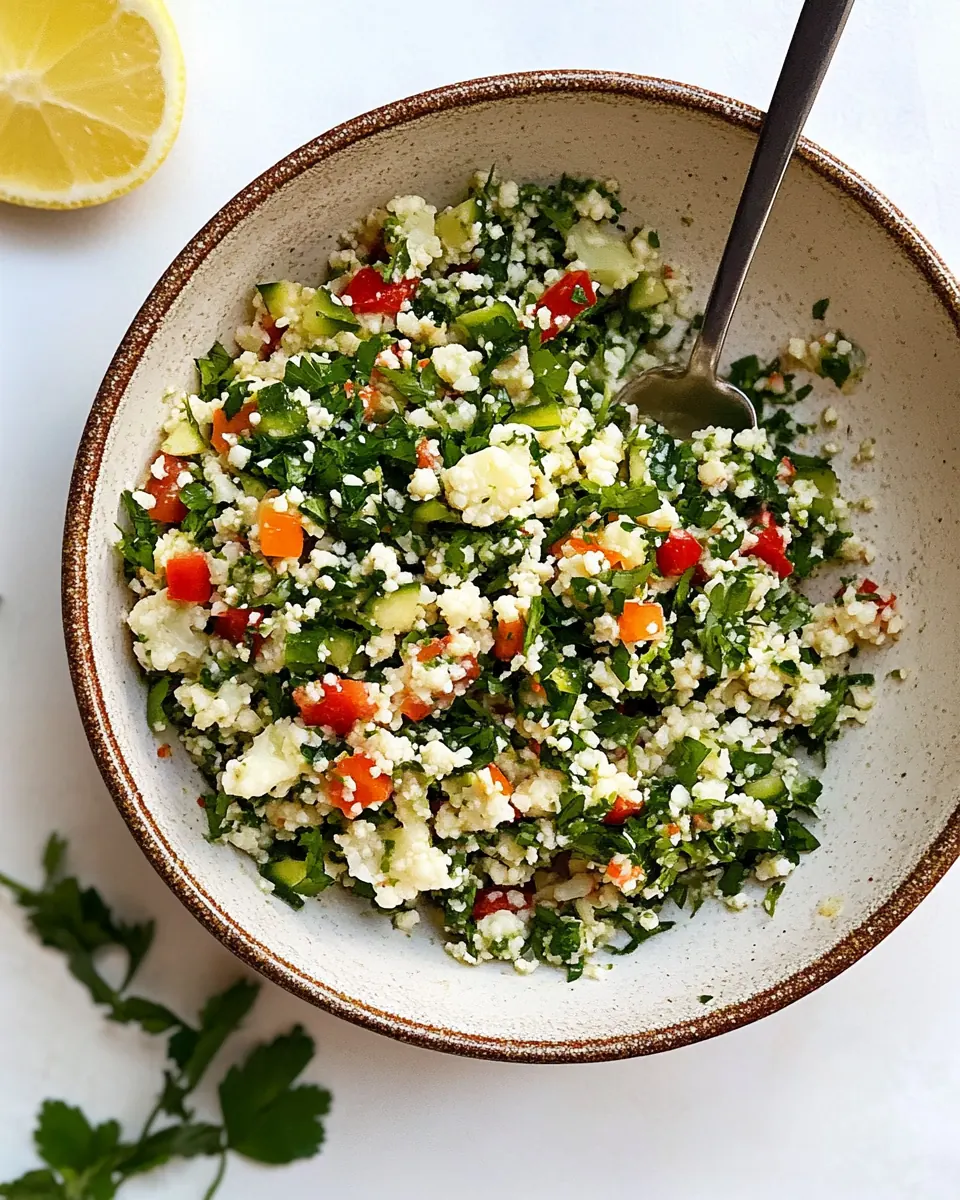
These ingredients work together by layering texture and bright herbal notes. The star is cauliflower, which provides a rice like base. The parsley and mint add verdant aroma, while the lemon juice and extra virgin olive oil tie everything together with acidity and mouthfeel. Small players like cucumber and green onions bring crunch and bite, and a touch of sea salt sharpens the flavors.
- 1 pound cauliflower florets: Provide texture and mild nutty flavor when pulsed or finely chopped, acting as the grain substitute in tabbouleh. Steam or briefly pulse to soften slightly while retaining small, couscous-like pieces that absorb dressing flavors. Offer bulk and a low-carb alternative that pairs well with herbs and citrus.
- 2 tablespoons extra virgin olive oil: Add richness and help bind the dressing while carrying aromatic flavors throughout the salad. Drizzle over warm cauliflower shortly after cooking or whisk with lemon juice and garlic to create a bright, silky vinaigrette. Contribute healthy fats that mellow acidity and enhance mouthfeel.
- 3 tablespoons fresh lemon juice: Brighten the salad with acidity and balance richer components by cutting through oils and herbs. Squeeze fresh over the cauliflower and into the dressing for a clean, citrusy lift. Provide both flavor and subtle tenderizing effect on raw vegetables.
- 1 garlic clove, minced: Deliver pungent, savory depth when minced and combined into the dressing or tossed with the salad components. Infuse the olive oil and lemon with aromatic sharpness that complements herbs and raw vegetables. Use sparingly to avoid overpowering delicate parsley and mint.
- 1 teaspoon fine sea salt, plus more to taste: Season the salad base and help draw out moisture from chopped vegetables, ensuring balanced flavors. Sprinkle into the dressing and adjust to taste after combining all ingredients for proper seasoning. Enhance the overall brightness while supporting the herbs' freshness.
- 1 cucumber, chopped: Contribute cool, crisp texture and a mild vegetal flavor that contrasts with soft cauliflower and herbs. Chop into small, uniform pieces so moisture and flavor distribute evenly throughout the salad. Provide a refreshing counterpoint to lemon and garlic.
- 1 large tomato, chopped (see notes): Offer juicy acidity and a slightly sweet, tangy component that complements parsley and mint. Chop and drain excess seeds if desired to avoid watering down the salad, then toss with other vegetables and dressing. Add seasonal color and brightness to the dish.
- 3 green onions, chopped: Introduce a mild oniony bite and subtle crunch that blends with herbs and dressing for balanced flavor. Slice thinly or chop fine to distribute their savory notes without overwhelming the salad. Enhance aromatic complexity while keeping the overall texture light.
- 1 cup fresh parsley, finely chopped: Provide the primary herbaceous backbone with bright, slightly bitter, and peppery notes that define tabbouleh. Finely chop to release essential oils and mix thoroughly so the parsley melds with lemon, oil, and other vegetables. Deliver freshness and vibrant green color throughout.
- 1/4 cup fresh mint, chopped: Contribute cool, sweet, and aromatic lift with a refreshing menthol-like finish that complements parsley and lemon. Chop finely to evenly infuse the salad with its bright flavor without dominating other herbs. Provide contrast and enhance the overall herbaceous profile.
How to Cook Cauliflower Tabbouleh Salad
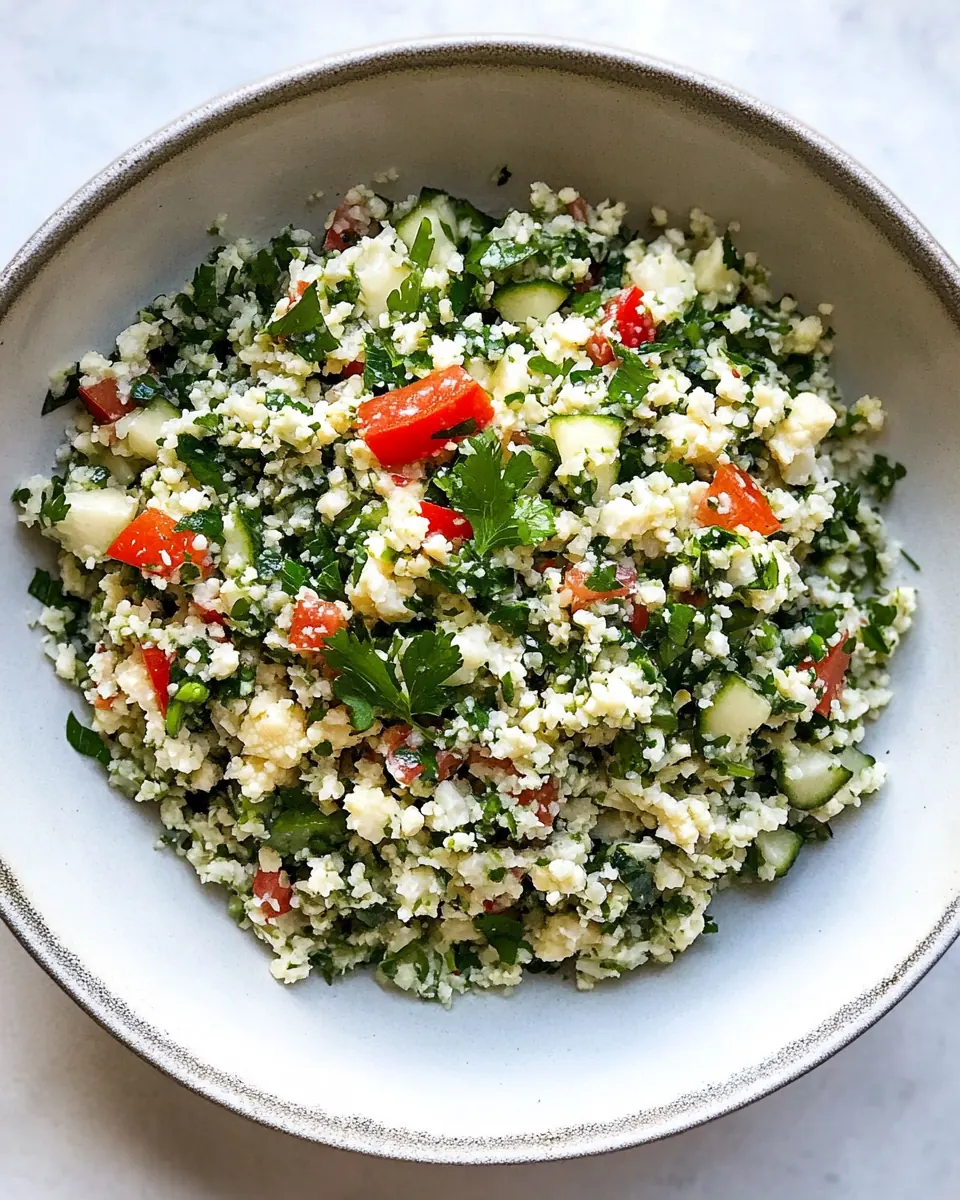
Working through these steps is quick and satisfying, and the directions are forgiving if you pay attention to texture and seasoning. I like to build the salad in stages, tasting as I combine so the acid and salt come through. Keep the herbs fresh and the cauliflower lightly processed for the best result.
- Add the cauliflower to a food processor fitted with an 'S' blade. Secure the lid and process briefly, just until the cauliflower looks crumbly and resembles rice. Set it aside.: When you pulse the cauliflower briefly, you should hear light chopping sounds and see small, rice like pieces forming; stop while there is still a little texture, not a puree. The floral, slightly nutty aroma will intensify as you process, and the visual cue is that the pieces resemble grains. This technique matters because overprocessing creates a soggy mash, so pulse in short bursts and check often. A common mistake is running the processor too long, which warms and breaks down the vegetable, so err on the side of underprocessed and adjust by hand if needed.
- In a large bowl, combine the olive oil, lemon juice, garlic, and salt. Then pour in the riced cauliflower, cucumber, tomato, green onion, parsley, and fresh mint. Stir well so everything is well coated in the dressing.: You will notice a finer, more uniform texture and a faint scent of cut cauliflower . The goal is a delicate chew that holds dressings without collapsing. This approach keeps the salad lively and prevents a pasty mouthfeel. Avoid the temptation to blitz continuously; frequent pauses and visual checks ensure the right crumb consistency.
- Taste the mixture and season with additional salt or lemon juice, as needed. (I usually add another 1/2 teaspoon of salt, but this will vary depending on the size of your veggies.): After pulsing, let the riced cauliflower rest in a bowl at room temperature for a few minutes so any loose moisture settles. You may feel a faint vegetal scent, which is normal; it will mellow once combined with the dressing. This pause helps you assess if the texture needs an extra pulse or gentle fluffing with a fork. The common oversight here is mixing immediately into a heavy dressing, which can make the crumbs soggy if they are still warm from overprocessing.
- Serve this salad right away, or let it marinate in an airtight container in the fridge. It will keep well for up to 5 days in the fridge and pairs perfectly with hummus, falafel, and more.: As you whisk these, you will see the dressing emulsify slightly and hear the clink of the bowl. The lemon aroma should be bright and cut through the oil, while minced garlic brings savory depth. Emulsifying helps the dressing cling to the riced cauliflower and herbs for even flavor. A pitfall is adding too much salt up front; mix and taste before seasoning further.
- Then pour in the riced cauliflower, cucumber, tomato, green onion, parsley, and fresh mint: When you add each component, notice the contrast of textures, from the tender riced cauliflower to the crisp cucumber . Gently toss so the dressing coats everything, watching the herbs glint as they become glossy with oil. The visual should be a mosaic of green and jewel toned tomato pieces. Over mixing aggressively can bruise the herbs and release excess liquid, so fold gently to keep the components distinct.
- Stir well so everything is well coated in the dressing: As you toss, you should catch whiffs of lemon and herb, and feel the salad come together in your hands or with a spoon. Coating evenly ensures each bite has balanced seasoning. This technique matters because patchy dressing leads to uneven tasting bites. A common error is skipping a final gentle toss, which leaves pockets of dry cauliflower or overly wet tomato.
- Taste the mixture and season with additional salt or lemon juice, as needed: Now the sensory testing begins, with a sample that reveals where the salad sits on the acid and salt spectrum. If it feels flat, a squeeze more lemon juice brightens it; if muted, a pinch more sea salt sharpens the flavors. Tasting at this stage is crucial because raw vegetables vary in sweetness and juiciness. Avoid over seasoning in one go; small incremental adjustments are safer.
- I usually add another 1/2 teaspoon of salt, but this will vary depending on the size of your veggies: This is a guideline rather than a rule, and the actual amount depends on how juicy your tomato and cucumber are. You should notice a clear, lively finish when the seasoning is right. The reason small adjustments matter is that salt elevates brightness and reduces bitterness, which is especially important with lots of parsley . A mistake to avoid is assuming measuring guarantees balance without tasting.
- Serve this salad right away, or let it marinate in an airtight container in the fridge: Freshly tossed, the salad offers crisp contrasts, while resting allows flavors to meld and softens the edges. When chilled, the parsley and mint infuse the riced cauliflower , producing a more unified flavor. If storing, use a sealed container to prevent fridge odors from mingling. A typical slip is leaving it uncovered, which dries out the herbs and dulls the overall flavor.
- It will keep well for up to 5 days in the fridge and pairs perfectly with hummus, falafel, and more: Stored properly, the salad maintains texture for several days, and the perfume of herbs remains vibrant. The long fridge life makes it a great make ahead option for lunches and gatherings. Watch for excess moisture over time, and drain any pooled liquid before serving. A frequent mistake is keeping it beyond freshness; when herbs look limp or off smelling, discard.
Tips and Variations
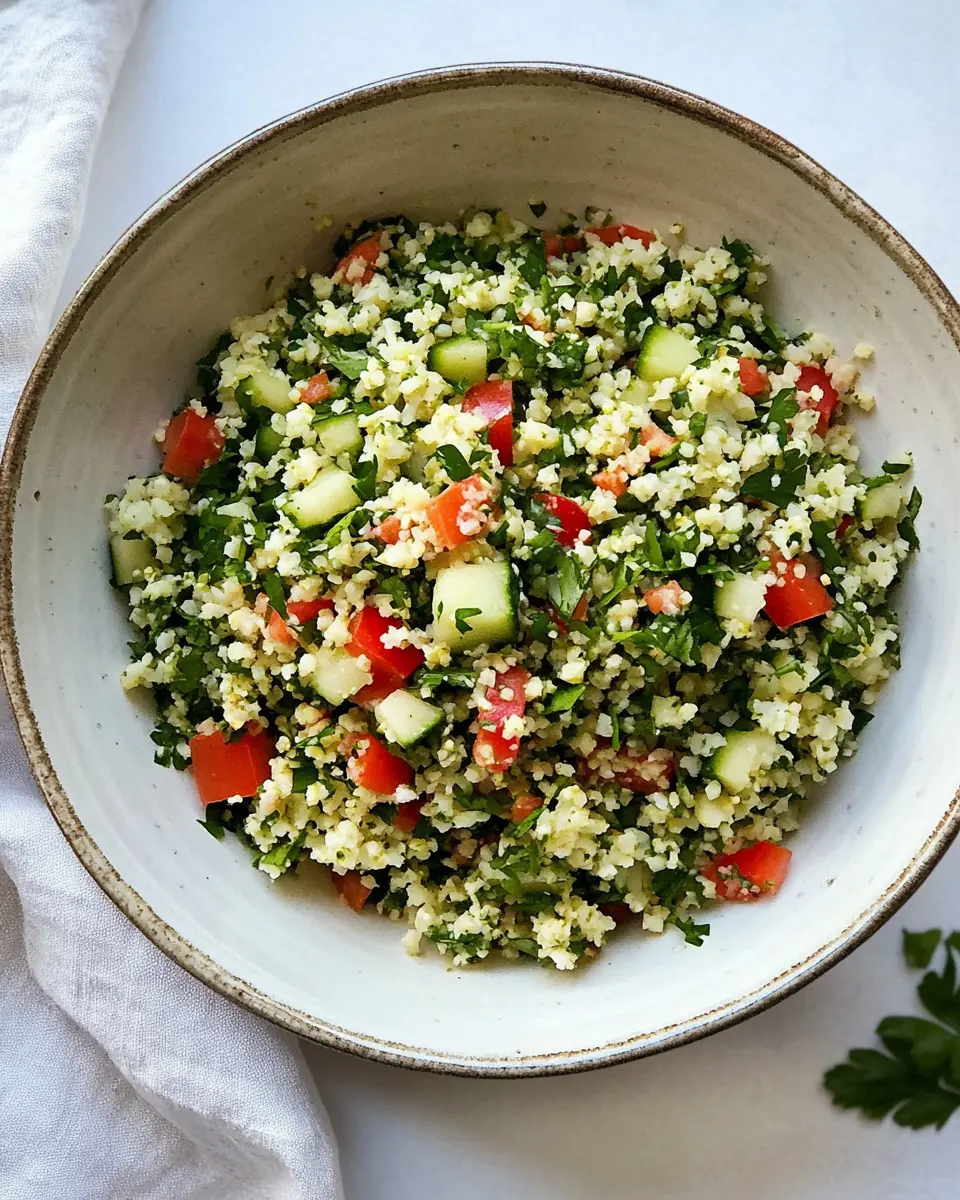
I like to think of small tweaks as personality choices for this salad. Below are practical tips and variations that keep the core of Cauliflower Tabbouleh Salad intact while offering flexibility for texture, seasoning, and storage.
- Use room temperature cauliflower when pulsing, it achieves a cleaner rice like texture than chilled florets that can clump together.
- Swap tomatoes when out of season as noted, use one cup of cherry tomatoes halved to maintain sweetness and reduce excess moisture.
- Control garlic intensity by smashing the clove into the dressing, this mellows sharp raw edges while preserving flavor.
- Adjust herb ratio to taste, increasing mint for a cooler profile or boosting parsley for an earthier note.
- Prevent sogginess by seeding tomatoes and draining cucumbers if they release a lot of liquid before combining.
- Scale confidently because the salad holds up well in the fridge, just refresh with a squeeze of lemon before serving if it tastes muted.
Side Dish Ideas for Cauliflower Tabbouleh Salad
This salad makes a versatile partner for many meals and occasions. Below are thoughtful serving ideas, seasonal pairings, and storage notes to help you present the dish beautifully whether it is a casual lunch or a festive table.
- Light lunch pairing: Serve a bowl of Cauliflower Tabbouleh Salad with a side of warm pita and a scoop of plain yogurt for a satisfying midday meal that balances cool herbs with creamy texture.
- Family dinner accompaniment: Offer it alongside roasted vegetables or grilled proteins for a bright contrast that lifts richer dishes and refreshes the palate.
- Ramadan iftar option: This salad is a refreshing starter to break the fast, providing hydration and gentle flavors before heartier mains, and it stores well if prepared earlier in the day.
- Picnic and potluck contribution: Bring it chilled in an airtight container and toss lightly before serving; its vibrant color and herbaceous aroma make it an appealing, healthy choice for gatherings.
- Seasonal pairing: In spring and early summer, lean into fresh herbs and peak tomatoes to highlight seasonal brightness; in cooler months, emphasize the preserved lemon like acidity by using slightly more lemon juice.
- Storage tips: Keep the salad refrigerated in an airtight container for up to five days, and remove any pooled liquid before serving to maintain texture and visual appeal.
FAQ
Conclusion
This Cauliflower Tabbouleh Salad stands out for its bright herb profile and satisfying, grain like texture without the gluten. I encourage you to try it because it is quick to assemble, stores well, and brings a fresh contrast to many meals. Whether you serve it as a light lunch, a family side, or a make ahead option for gatherings, it reliably delivers bright flavors and pleasant textures that make eating vegetables feel celebratory.
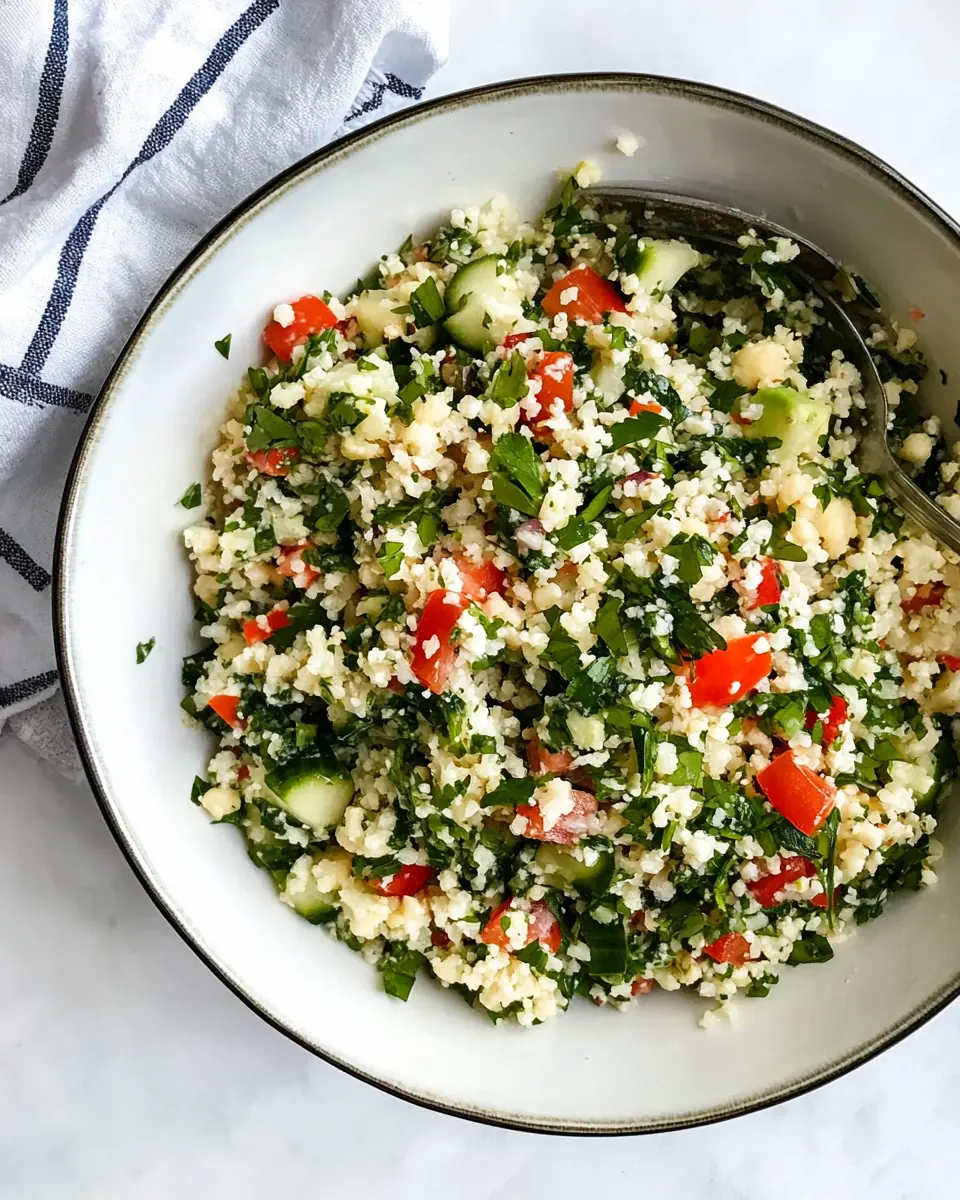
Cauliflower Tabbouleh Salad
Ingredients
Equipment
Method
- Add the cauliflower to a food processor fitted with an 'S' blade. Secure the lid and process briefly, just until the cauliflower looks crumbly and resembles rice. Set it aside.: When you pulse the cauliflower briefly, you should hear light chopping sounds and see small, rice like pieces forming; stop while there is still a little texture, not a puree. The floral, slightly nutty aroma will intensify as you process, and the visual cue is that the pieces resemble grains. This technique matters because overprocessing creates a soggy mash, so pulse in short bursts and check often. A common mistake is running the processor too long, which warms and breaks down the vegetable, so err on the side of underprocessed and adjust by hand if needed.
- In a large bowl, combine the olive oil, lemon juice, garlic, and salt. Then pour in the riced cauliflower, cucumber, tomato, green onion, parsley, and fresh mint. Stir well so everything is well coated in the dressing.: You will notice a finer, more uniform texture and a faint scent of cut cauliflower . The goal is a delicate chew that holds dressings without collapsing. This approach keeps the salad lively and prevents a pasty mouthfeel. Avoid the temptation to blitz continuously; frequent pauses and visual checks ensure the right crumb consistency.
- Taste the mixture and season with additional salt or lemon juice, as needed. (I usually add another 1/2 teaspoon of salt, but this will vary depending on the size of your veggies.): After pulsing, let the riced cauliflower rest in a bowl at room temperature for a few minutes so any loose moisture settles. You may feel a faint vegetal scent, which is normal; it will mellow once combined with the dressing. This pause helps you assess if the texture needs an extra pulse or gentle fluffing with a fork. The common oversight here is mixing immediately into a heavy dressing, which can make the crumbs soggy if they are still warm from overprocessing.
- Serve this salad right away, or let it marinate in an airtight container in the fridge. It will keep well for up to 5 days in the fridge and pairs perfectly with hummus, falafel, and more.: As you whisk these, you will see the dressing emulsify slightly and hear the clink of the bowl. The lemon aroma should be bright and cut through the oil, while minced garlic brings savory depth. Emulsifying helps the dressing cling to the riced cauliflower and herbs for even flavor. A pitfall is adding too much salt up front; mix and taste before seasoning further.
- Then pour in the riced cauliflower, cucumber, tomato, green onion, parsley, and fresh mint: When you add each component, notice the contrast of textures, from the tender riced cauliflower to the crisp cucumber . Gently toss so the dressing coats everything, watching the herbs glint as they become glossy with oil. The visual should be a mosaic of green and jewel toned tomato pieces. Over mixing aggressively can bruise the herbs and release excess liquid, so fold gently to keep the components distinct.
- Stir well so everything is well coated in the dressing: As you toss, you should catch whiffs of lemon and herb, and feel the salad come together in your hands or with a spoon. Coating evenly ensures each bite has balanced seasoning. This technique matters because patchy dressing leads to uneven tasting bites. A common error is skipping a final gentle toss, which leaves pockets of dry cauliflower or overly wet tomato.
- Taste the mixture and season with additional salt or lemon juice, as needed: Now the sensory testing begins, with a sample that reveals where the salad sits on the acid and salt spectrum. If it feels flat, a squeeze more lemon juice brightens it; if muted, a pinch more sea salt sharpens the flavors. Tasting at this stage is crucial because raw vegetables vary in sweetness and juiciness. Avoid over seasoning in one go; small incremental adjustments are safer.
- I usually add another 1/2 teaspoon of salt, but this will vary depending on the size of your veggies: This is a guideline rather than a rule, and the actual amount depends on how juicy your tomato and cucumber are. You should notice a clear, lively finish when the seasoning is right. The reason small adjustments matter is that salt elevates brightness and reduces bitterness, which is especially important with lots of parsley . A mistake to avoid is assuming measuring guarantees balance without tasting.
- Serve this salad right away, or let it marinate in an airtight container in the fridge: Freshly tossed, the salad offers crisp contrasts, while resting allows flavors to meld and softens the edges. When chilled, the parsley and mint infuse the riced cauliflower , producing a more unified flavor. If storing, use a sealed container to prevent fridge odors from mingling. A typical slip is leaving it uncovered, which dries out the herbs and dulls the overall flavor.
- It will keep well for up to 5 days in the fridge and pairs perfectly with hummus, falafel, and more: Stored properly, the salad maintains texture for several days, and the perfume of herbs remains vibrant. The long fridge life makes it a great make ahead option for lunches and gatherings. Watch for excess moisture over time, and drain any pooled liquid before serving. A frequent mistake is keeping it beyond freshness; when herbs look limp or off smelling, discard.
Notes
- Use room temperature cauliflower when pulsing, it achieves a cleaner rice like texture than chilled florets that can clump together.
- Swap tomatoes when out of season as noted, use one cup of cherry tomatoes halved to maintain sweetness and reduce excess moisture.
- Control garlic intensity by smashing the clove into the dressing, this mellows sharp raw edges while preserving flavor.
- Adjust herb ratio to taste, increasing mint for a cooler profile or boosting parsley for an earthier note.
- Prevent sogginess by seeding tomatoes and draining cucumbers if they release a lot of liquid before combining.
- Scale confidently because the salad holds up well in the fridge, just refresh with a squeeze of lemon before serving if it tastes muted.