Stale the bread by setting it out on a cooling rack uncovered overnight.: You will notice the slices lose surface moisture and become slightly firmer, which helps them absorb the custard without disintegrating. The drier crumb acts like a sponge, drawing in the custard so the center sets rather than becoming saturated. One common mistake is skipping this step, which can cause the bread to become mushy when soaked. If you need a faster option, briefly dry the slices in a low oven, but be careful not to toast them into crispness. When done properly the bread should bend slightly without falling apart, indicating readiness for soaking.
Whisk milk, egg yolks, sugar, melted butter, salt, and vanilla in large bowl until well blended. Transfer milk mixture to 13×9-inch baking pan.: As you whisk, pay attention to the custard's texture, it should look homogenous and slightly glossy, with no streaks of yolk. Smell the mixture for a warm, sweet vanilla aroma that signals the flavor base is right. The pan gives an even shallow pool to submerge slices evenly; a deep bowl can hide pockets of custard. A frequent oversight is inadequate whisking, which leaves lumps of yolk, so whisk until smooth. Use a shallow pan so each slice soaks uniformly and you avoid under soaked centers.
Working with 3 slices of bread at a time, dip into custard for 20 seconds. Using a spatula turn bread over and soak for another 20 seconds. (Bread should be saturated but not falling apart.) Transfer soaked bread to baking sheet or tray and continue until all bread is soaked.: The sound here is almost imperceptible, a soft dribble as the custard cling drains off the edges. You want the slices fully saturated but still holding their shape, a tactile balance you’ll learn to feel. Over soaking is a trap, it leads to heavy, collapsing pieces that will not crisp well. If you see the bread sloughing apart, reduce soak time. Arrange soaked slices spaced apart so the surface moisture can settle rather than turning into steam that makes them soggy.
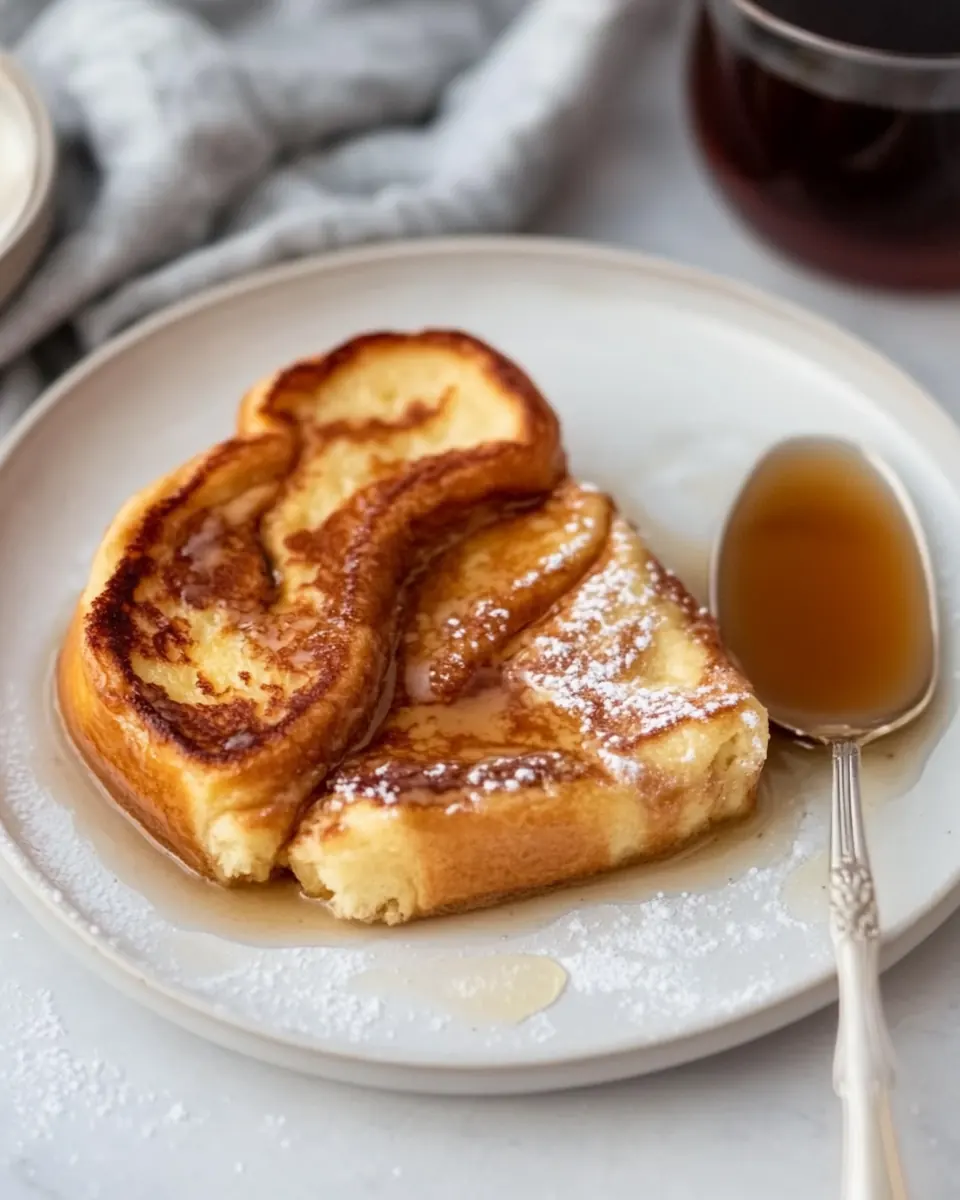
Heat 1/2 tablespoon of butter in a 12-inch skillet over medium-low heat. When foaming subsides, use slotted spatula to transfer 2 slices soaked bread to skillet until golden brown, 3 to 4 minutes. Flip and continue to cook until second side is golden brown, 3 to 4 minutes longer. Wipe out skillet with paper towels. Repeat cooking remaining bread, 2 pieces at a time, adding 1/2 tablespoon of butter for each batch. The French toast should be served immediately, but can be kept warm in a 200-degree oven until served.: Listen for a gentle sizzle and watch the butter foam calm, that indicates the pan has reached the right temperature. A slow golden browning develops and a faint nutty aroma emerges as the milk sugars caramelize. If the butter smokes, the pan is too hot and the exterior will char before the interior sets. Keep the heat controlled and give each batch enough time to develop color; rushing at higher heat ruins the custard center.
Flip and continue to cook until second side is golden brown, 3 to 4 minutes longer.: When you flip, the surface should release easily and reveal a deep golden hue. The interior should feel slightly springy when pressed gently, an indication the custard has set but not dried. Avoid repetitive flipping, which interrupts browning and can cause uneven texture. A mistake to watch for is flipping too soon, before the crust forms; this can lead to tearing. Let the edge set fully before turning for a neat finish.
Wipe out skillet with paper towels. Repeat cooking remaining bread, 2 pieces at a time, adding 1/2 tablespoon of butter for each batch.: Wiping the skillet removes browned bits that can burn and impart bitterness to subsequent batches, helping maintain consistent flavor. Each time you add a small pat of butter , the pan regains its nutty sheen, ensuring every batch browns evenly. Overcrowding or failing to refresh the fat results in uneven color and texture. Keep the rhythm of two slices per batch so you maintain control of temperature and finish with uniformly golden pieces.
The French toast should be served immediately, but can be kept warm in a 200 degree oven until served.: If holding the cooked slices, place them in a single layer on a rack in a low oven to retain crisp edges while keeping interiors tender. The warm, enveloping smell of buttered toast in the oven is a cue that you can serve all plates together. A common pitfall is stacking the slices, which traps steam and softens the crust. Keep them separate and give guests the crispiest experience, finishing with a flourish of syrup or fruit as desired.