Rinse the glutinous rice under cold running water until the water runs clear.: As you rinse, notice the water changing from cloudy to clear, which signals surface starch being removed. This process prevents the final porridge from getting overly gluey while still allowing the rice to become pleasantly sticky. I usually swish the rice three to five times, feeling the grains separate under my fingers. A key why here is that excess starch causes uneven thickening and a gummy texture; if you skip rinsing you might end up with a porridge that is pasty rather than chewy. Be careful not to mash the grains while rinsing, or they will release extra starch and break down during cooking.
In a saucepan, combine rinsed rice and 4 cups water. Bring to a boil over medium-high heat.: You'll first see steam and the surface begin to ripple as it approaches a boil, then larger bubbles will break steadily. This high initial heat helps the grains absorb water fairly quickly, starting the gelatinization that gives the rice its soft, chewy interior. I pay attention to the sound a rolling simmer makes, and when it reaches that stage I reduce heat next. A common mistake is keeping it at a full boil, which can cause the liquid to reduce too fast and the rice to stick to the pan, so monitor the flame and stir gently if the surface is frothy.
Lower the heat to medium-low. Add the unsweetened cocoa powder and mix until dissolved.: When you lower the heat, the simmer will become gentler and the smell of warm cocoa will start to emerge. Sprinkle the unsweetened cocoa powder gradually and stir steadily so it fully dissolves into the cooking liquid, forming a glossy chocolate broth around the grains. The why is that adding cocoa at moderate heat prevents it from burning and keeps flavors bright. If cocoa is added in a lump or at very high heat, it can clump and create dry pockets of bitter powder; whisking ensures a uniform color and taste.
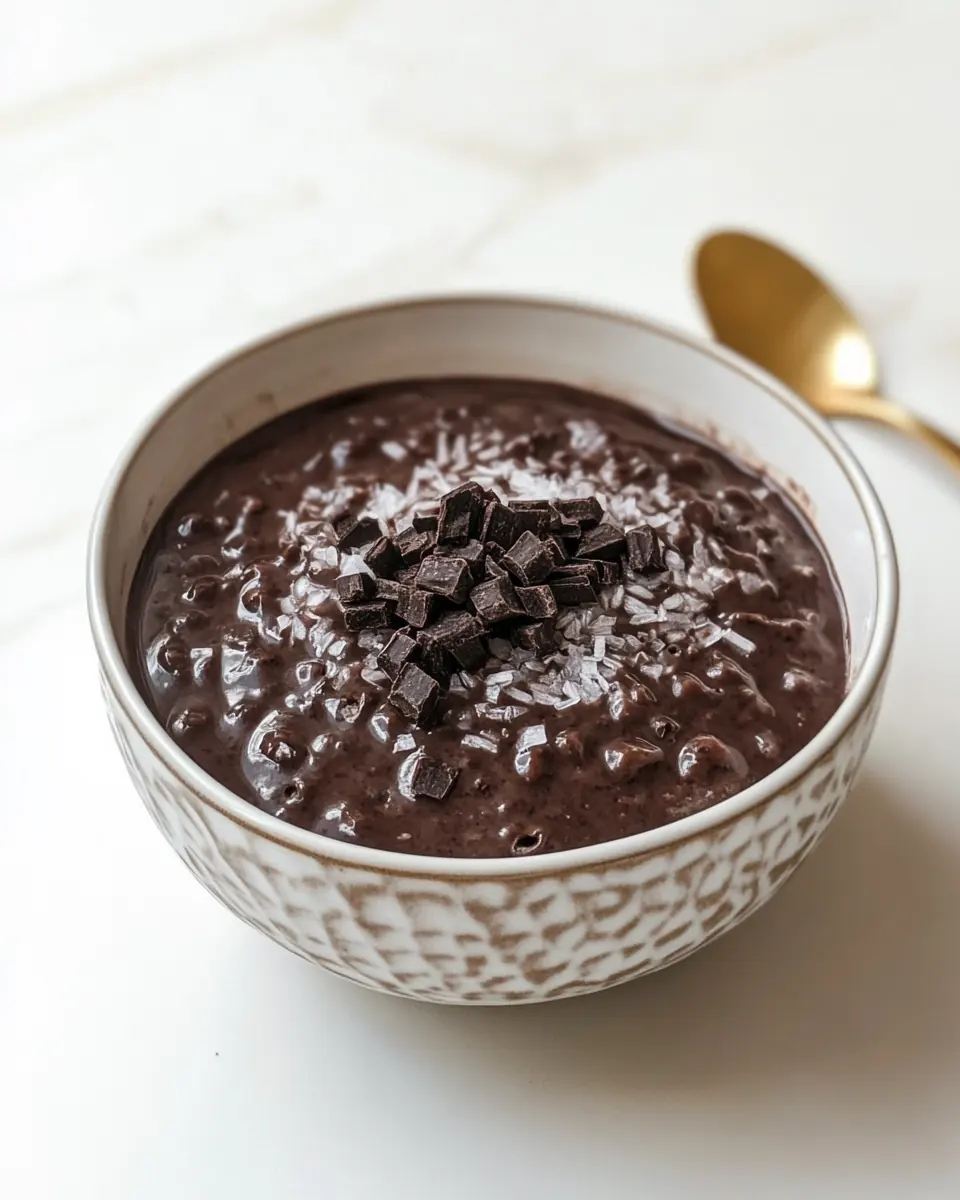
Continue to cook, stirring occasionally to prevent sticking, until the rice is tender and the mixture has thickened, about 15-20 minutes.: During this phase the mixture will transition from soupy to porridge like, and you will see the grains swell and the liquid becoming viscous. Expect soft, chewy rice grains suspended in a glossy chocolate sauce; when you lift the spoon you should see the mixture coat it. The sensory cues are smell of toasted cocoa, gentle bubbling, and visual thickening. Stirring occasionally prevents the bottom from scorching and helps you monitor the texture. Avoid constant furious stirring since that can break the grains down; instead use a gentle fold every few minutes. Overcooking here leads to a too thick consistency that becomes gluey, while undercooking leaves the rice hard in the center.
Mix in the vanilla extract and granulated sugar, adjusting to your preferred sweetness. Continue cooking for an additional 2 minutes, stirring until the sugar has completely dissolved.: Once the grains are tender, the sweet and aromatic finish begins. Add the vanilla extract so its floral note blooms in the warm liquid, and sprinkle in granulated sugar slowly, tasting as you go. The extra two minutes allow sugar to fully integrate and the flavors to meld. The smell will shift to a balanced chocolate sweetness, and the texture will smooth further. A common error is adding all the sugar at once without tasting, which can oversweeten the bowl; adjust gradually. Also avoid high heat during this step because sugar can scorch, altering the clean chocolate tone.
Remove from heat. Ladle champorado into bowls, drizzle with evaporated or condensed milk if desired, and serve warm.: After removing from the heat, observe the porridge settling and the steam softening. Transfer to bowls while hot so the surface retains its shine and the aroma remains fresh. A swirl or drizzle of evaporated milk or condensed milk adds a creamy counterpoint and melts into ribbons over the warm chocolate. Serve immediately for the best textural contrast between warm porridge and cooler milk topping. One mistake to avoid is letting the porridge sit too long in the pot, which will thicken as it cools and may clump; if that happens, reheat gently with a splash of water to loosen it.